Category: Army History

  • Eve of Battle–August 26, 1776

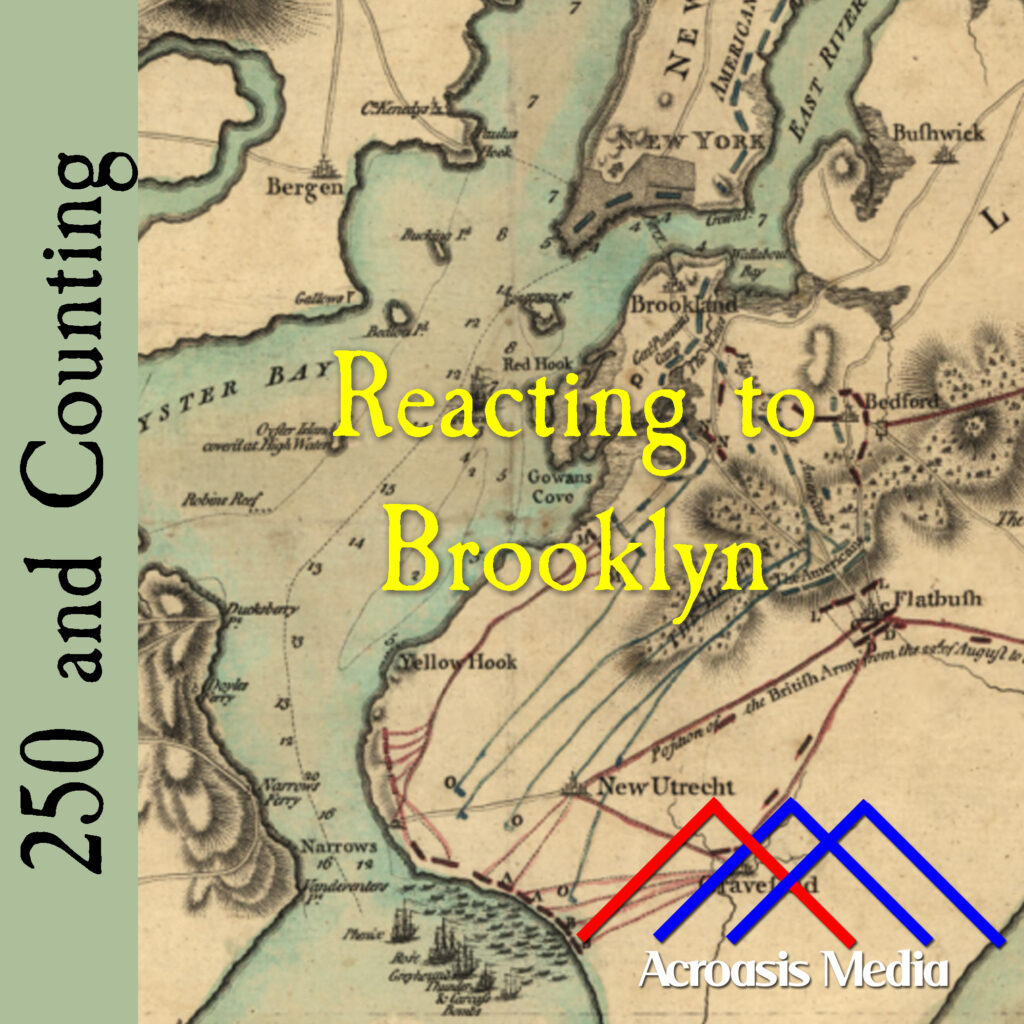
    Cover art for August 26, 1776: A map of Brooklyn by Bernard Ratzer, ca. 1766-67. The Guan Heights are marked as ovals at center right.

    At this point, both George Washington and General William Howe know that they’re literally on the eve of battle, and they’re making their final preparations.

    The British, along with the Hessians, were making plans to move along the Jamaica Pass (it’s the road just above the Acroasis logo in today’s art), which, while they didn’t know it, was relatively lightly guarded by the Continental Army.

    Washington’s tactic was to hold on to the Heights of Guan (the ovals to the right of the episode title, representing hills) and fortify Brooklyn Heights (far left center, about where the Brooklyn Bridge is today). It wasn’t a bad idea, but it didn’t match the British plans. And that’s largely where things went wrong. We’ll be talking about that in greater detail tomorrow.

  • Meet The New Boss–August 24, 1776

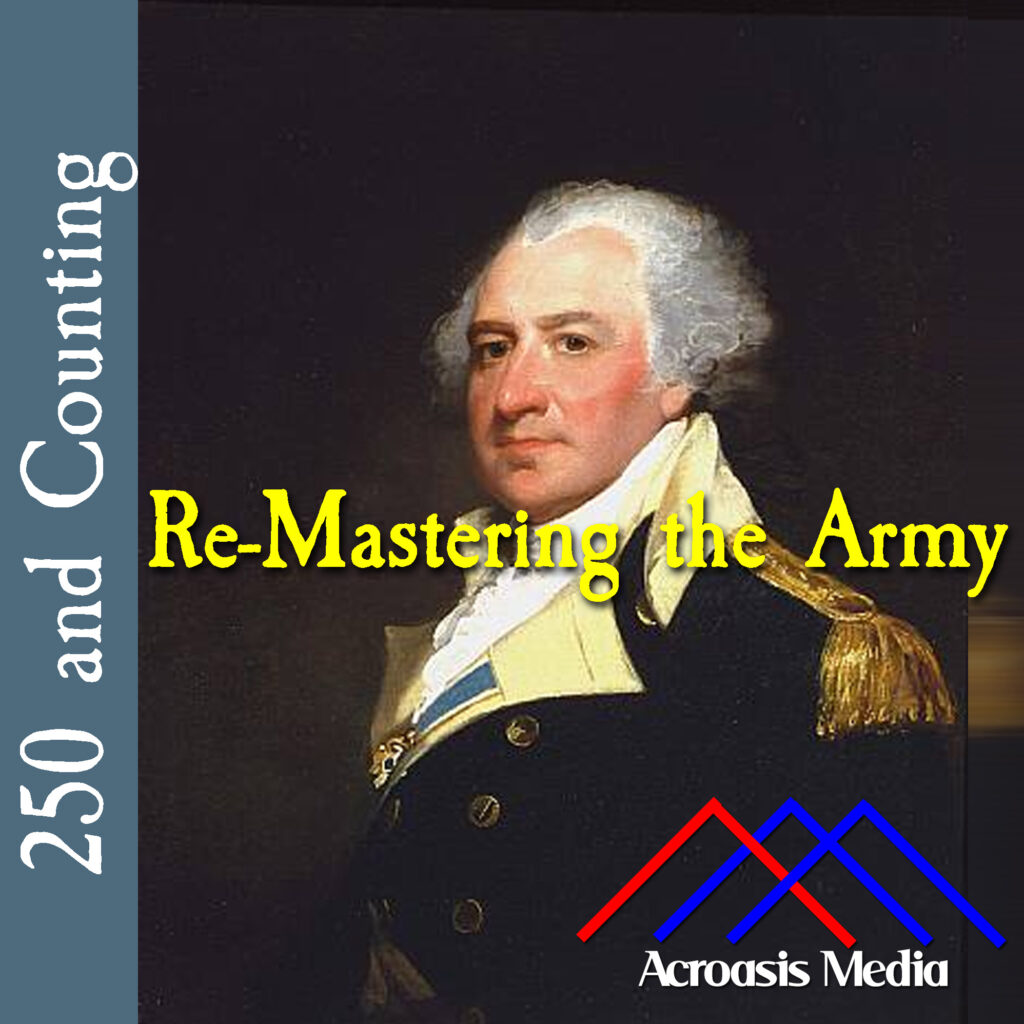
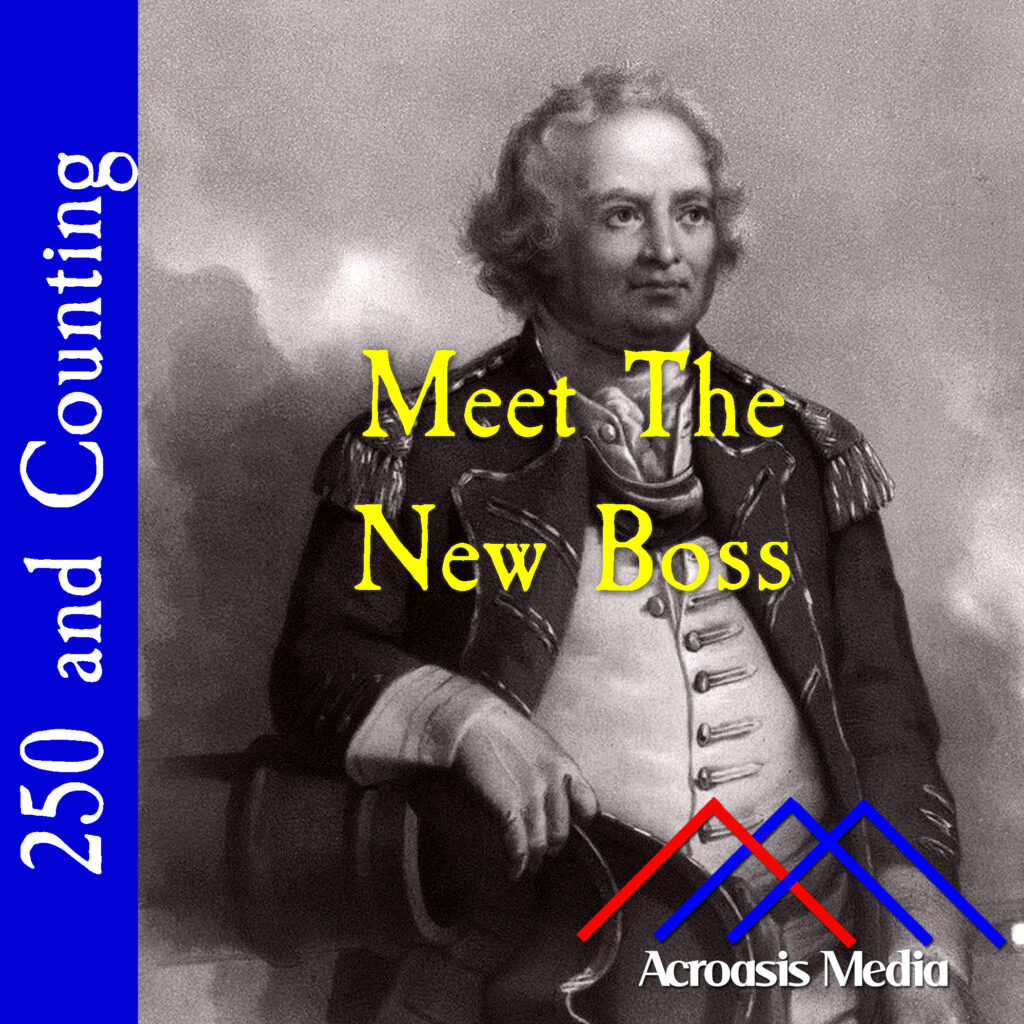
    Cover art for August 24, 1776: Engraving of Israel Putnam during the Revolution. via Library of Congress.

    That George Washington chose to add Israel Putnam to his leadership rolls in Brooklyn isn’t specifically mysterious. What is mysterious is that Putnam was added rather than used as a replacement for someone else.

    As a result of that move, there were essentially two men in charge on Long Island, with Putnam as the theater commander and General John Sullivan, who’d arrived only a couple of days earlier, in charge of ..something else?

    I’m reminded of a story from when I was a youngster and my family went up to Fort William Henry, on Lake George in upstate New York. It was built by the British during the French and Indian War, but it wasn’t built to withstand artillery, so when the battle started, the fort had to surrender pretty quickly. At any rate, one of the docents, dressed in period clothing, demonstrated how a flintlock rifle worked: he set up the powder, etc, put a musket ball into the gun (my memory is hazy on the specific details here), then he took aim, out toward the lake so nobody would get hit…and the gun misfired, the hammer simply banging down ineffectually.

    >click<

    And someone in the tour group, who may have been my mother (is the statute of limitations up yet?) said, “No wonder you lost.”

    Same thing happened on Long Island: poor planning, confusion regarding leadership roles, and being generally outnumbered.

    No wonder we lost. (oop, spoiler alert.)

  • Reacting to Brooklyn–August 23, 1776

    Cover art for August 23, 1776: Map showing Howe's attack upon Washington's forces on Long Island. via Library of Congress.

    The day after the British landed on Long Island, George Washington was disheartened to learn that army provisioning wasn’t at the level he’d expected, despite his orders only a week earlier.

    It was bad enough that he’d been caught a little flatfooted by both the magnitude and the direction of the British movement, now he discovers that troops he’d ordered to move had done so without proper provisions.

    So, he took the time to create new orders regarding army provisioning and ensure that the General Commissary had the manpower to do what it needed to do. He also took the time to write an inspirational note to the troops, which we couldn’t do in a two-minute show, but which read thus:

    The Enemy have now landed on Long Island, and the hour is fast approaching, on which the Honor and Success of this army, and the safety of our bleeding Country depend. Remember officers and Soldiers, that you are Freemen, fighting for the blessings of Liberty—that slavery will be your portion, and that of your posterity, if you do not acquit yourselves like men: Remember how your Courage and Spirit have been dispised, and traduced by your cruel invaders; though they have found by dear experience at Boston, Charlestown and other places, what a few brave men contending in their own land, and in the best of causes can do, against base hirelings and mercenaries—Be cool, but determined; do not fire at a distance, but wait for orders from your officers—It is the General’s express orders that if any man attempt to skulk, lay down, or retreat without Orders he be instantly shot down as an example, he hopes no such Scoundrel will be found in this army; but on the contrary, every one for himself resolving to conquer, or die, and trusting to the smiles of heaven upon so just a cause, will behave with Bravery and Resolution: Those who are distinguished for their Gallantry, and good Conduct, may depend upon being honorably noticed, and suitably rewarded: And if this Army will but emulate, and imitate their brave Countrymen, in other parts of America, he has no doubt they will, by a glorious Victory, save their Country, and acquire to themselves immortal Honor.

    Yes, I said that cowardice “will not be tolerated” in the episode; clearly I under-sold that one.

  • The Battle Begins–August 20, 1776

    Cover art for August 20, 1776: Artillery Retreat from Long Island, chromolithograph by The Werner Company, 1899. via Library of Congress.

    It’s been coming for at least two months, and the Battle of Long Island has finally begun.

    As we’ve noted a few times the past couple of days, George Washington had to make a few educated guesses about what the British were planning to do, but this left his troops thinly spread throughout Brooklyn and Manhattan, which left the Continental Army at a big disadvantage.

    While numerous skirmishes have broken out up and down the coast between the British and American militia forces from time to time, this was Washington’s first major tangle with the British Army. That it didn’t go so great wasn’t his fault; that it didn’t go as badly as it could have is entirely his doing, as we’ll learn in a few days.

  • Maintaining Motivation–August 11, 1776

    Cover art for August 11, 1776: "George Washington In Prayer at Valley Forge," bronze relief by James Edward Kelly, 1904. This can be seen at the front of Federal Hall in New York City.

    George Washington’s means for maintaining motivation in the Continental Army came from two directions: discipline and stirring rhetoric as a means of providing the troops with something to rally for.

    And his Orders of the Day for this day seem to be focused simultaneously on both.

    As noted elsewhere, Washington could be a stickler for protocol, and it shows in his Orders of the Day, which were usually written in the third person. But there was also some room—not a lot, but some—for a little floridness in his writing. For example, here’s an excerpt from today’s orders:

    The Honorable Continental Congress having been pleased to allow a Chaplain to each Regiment, with the pay of Thirty-three Dollars and one third per month—The Colonels or commanding officers of each regiment are directed to procure Chaplains accordingly; persons of good Characters and exemplary lives—To see that all inferior officers and soldiers pay them a suitable respect and attend carefully upon religious exercises: The blessing and protection of Heaven are at all times necessary but especially so in times of public distress and danger—The General hopes and trusts, that every officer, and man, will endeavour so to live, and act, as becomes a Christian Soldier defending the dearest Rights and Liberties of his country.

    In other words, God is here, we’re paying for him to be here, and God is someone you really don’t want to annoy, so get it together, please.

  • Flying Camp Rations–August 9, 1776

    Cover art for August 9, 1776: the broadside issued this day outlining Flying Camp rations. via Library Company of Philadelphia.

    The idea to have a flying camp at all belonged to Geroge Washington. He knew that he was going to be facing huge numbers of British soldiers soon, and he proposed having a mobile unit that could show up wherever they were needed.

    While the soldiers came from three specific states, they were intended to be our first national force, with no specific state basis. Thus, they were recognized as “First Battalion,” “Second Battalion” and so on rather than “Burrell’s Connecticut Regiment” or “Pennsylvania Second Battalion”. That said, because there were specific quotas from each state, the various groups tended to have soldiers from those states and could still be identified as such.

    These men were largely able to focus on the defense of New Jersey while the main Continental Army spent its time in New York. However, several men from Maryland and Delaware were assigned to fight in Brooklyn Heights when the Battle of Long Island broke out, and most of them lost their lives. They did, however, manage to prevent the capture of most of Washington’s army, but it could be viewed as a Pyrrhic victory.

  • A Gift For George, None For Chris–August 7, 1776

    Cover art for August 7, 1776: Composited images of George Washington, Christopher French atop Washington's letter to French on this day.

    I promised you a postscript for the Christopher French story, but let me offer up some broader context first.

    In July 1776, French wrote to George Washington from Connecticut, where he was being held as a prisoner of war. The purpose of the letter was to request parole from his confinement.

    Washington’s reply reads:

    Sir: I am to acknowledge the receipt of your favor of the [the date is missing here but from other documents it was probably the 22nd] July, intimating your expectations of release on the 12th. of this month.

    I have considered your Parole, advised with those whose Knowledge and experience gives weight to their Opinion, and otherwise endeavoured to inform myself how far your Construction of it is founded upon Justice, Reason or Usage; I do not find it warranted by either, My Duty therefore Obliges me to over rule your Claim as a matter of Right. As a matter of favor, Indulgence is not in my Power, even if your General Line of Conduct as a Prisoner had been unexceptionable.

    I have therefore wrote to the Committee of Hartford, sent them a Copy of this Letter and hope you will, without Difficulty, conform to the Regulations already made with respect to Prisoners, by the General Congress.

    It is probable a general Exchange of Prisoners will soon take place, it will then be a pleasing part of my Duty, to facilitate your return to your Friends and connections, as I assure you it is now a painful one to disappoint you, in an Expectation which you seem to have formed, in a full Persuasion of being right and in which on mature Deliberation, I am so unhappy as totally to differ from you. I am Sir etc.

    This much you knew. Here’s the postscript. Christopher French wrote another letter subsequent to the one Washington responded to. In that letter, which Washington received on August 8, it appears that French withdrew his request. Washington immediately sent a second letter, responding to this one:

    Sir: I was unwilling to determine hastily, upon your claim of a Release founded upon your Parole, and therefore delayed the acknowledgment of your favor of the 22d July, until I should fully inform myself. I had accordingly wrote you Yesterday, that I was so unhappy as to differ from you in the construction you had put upon it, but as there was reason to believe, a General Exchange of Prisoners might soon take place, I should chearfully facilitate your return to your Friends.

    Last Night I received your favour of the 5th. August waving your Claim of a Release, which makes any farther Discussion of that matter unnecessary. Your other proposal, of being exchanged for Major Meigs or Col. Allen, will meet with no Objection from me; should you write to General Howe on the Subject the Letter shall be chearfully forwarded and his Answer returned.

    Should any Difficulty arise in the Exchange, I am doubtful, how far I should be authorized, without consulting the Congress, to grant you an Indulgence similar to that of Major Meigs, which I have been informed was allowed in consequence of his saving the Life of a British Officer, either nearly connected with, or much esteemed by General Carlton.

    However, you may assure yourself Sir, that both Duty and Inclination lead me to relieve the unfortunate and that I agree with you, that your long and early Captivity gives you a very just Claim to special Notice, and I shall be happy in furthering your Wishes, as far as my Station will admit. I am Sir, etc.

    In short, Washington was happy to be relieved of the burden of refusing the initial release, but also still more than willing to cooperate should a prisoner exchange take place.

    Such a gentleman!

  • Laying Down The Law–August 4, 1776

    Cover art for August 4, 1776: "Military Flogging," artist unknown, ca. 1844. via Hulton Archive.

    When it came to army discipline, George Washington had some definite opinions. The punishments we hear about were rather harsh by modern standards, but Washington had some problems with his recruits that modern armies don’t tend to have.

    Specifically, (and we’ve mentioned this before), the Continental Army had a relatively short enlistment period, which meant that soldiers were constantly turning over and by the time someone was finally in good shape as a soldier, they were gone and replaced with the next guy who had little idea of what he was doing. So Washington was constantly beset by soldiers who didn’t know how to be soldiers. This often meant that he had to lay down some harsh punishments to help ensure that his message got across.

    The punishments themselves weren’t especially unique; discipline of this nature was meted out in many places. In fact, today’s cover art is actually taken from a British flogging nearly a hundred years later. But Washington and other military leaders of the Revolution cut their teeth on British army discipline, and it didn’t look a lot different: the prisoner was strapped to a frame of some kind; the other soldiers were required to witness; and the drummer boys (at right in this image) did their best to drown out the cries of the man being punished. We had to crop this image to fit the space, but you can also see a pair of legs sticking out from the bottom right: that’s a soldier who has fainted from the stress of watching. And the man at left is a doctor, who is actually monitoring the prisoner’s health to ensure that the punishment isn’t fatal. So he’s got that going for him, which is nice.

  • It’s Only Proper–August 3, 1776

    Cover art for August 3, 1776: detail of "Rules of Civility & Decent Behaviour In Company and Conversation," from 1744, which Washington hand-copied and clearly took to heart.

    George Washington had a deep-set sense of right and wrong, and sometimes his sense of Army decorum could get in his way. Our July 14 episode demonstrated that to a certain extent.

    Other times it demonstrate the high expectations he placed on himself and others. He wanted his officers to be behavior models, especially because so many of the troops were so undisciplined. This only worked to a certain extent; it took the influence of some outside officers for the lessons to really sink in, but we won’t get to talk about that for some time.

    It’s also important to note, as I think today’s episode demonstrates, that Washington did care about the well-being of his men. Not just their physical comforts (he was always trying to get blankets, better food and such for them), but their mental and spiritual comfort as well. It wasn’t all army decorum. So he made allowances for the men to take a day to worship if they so desired, and to be exempt from fatigue duty on Sundays, “until further orders.”

    “Further orders” turned out to be until August 25, when the order was rescinded, but the fact that the order was given in the first place goes a long way.

  • British Forces Gather in NY–July 29, 1776

    Cover art for July 29, 1776: letter from John Adams to Abigail written on this date. Via Massachusetts Historical Society.

    The presence of the British in Staten Island wasn’t a big mystery, but within a month after they first arrived, the number of ships in New York Harbor was well over 100, and still growing.

    And, as George Washington suspected (along with many others), the British began moving up the rivers surrounding Manhattan, working their way up the Hudson River in the effort to use New York as a wedge between New England and the rest of the colonies. Specifically, if supplies couldn’t get through, then it weakens both sides of the line.

    As for New York itself, part of Washington’s problem was that he didn’t know if the British plan was to take New York City (still a small chunk of Manhattan Island at that time), or to move through Long Island. As a result he had to hedge the bet a little bit and send troops in both directions, spreading the Continental Army rather thinly. This may have forced the British to do something quite similar, but they still had Washington vastly outnumbered.