Category: Articles of Confederation

  • Confederation Talk And A Trade–August 6, 1776

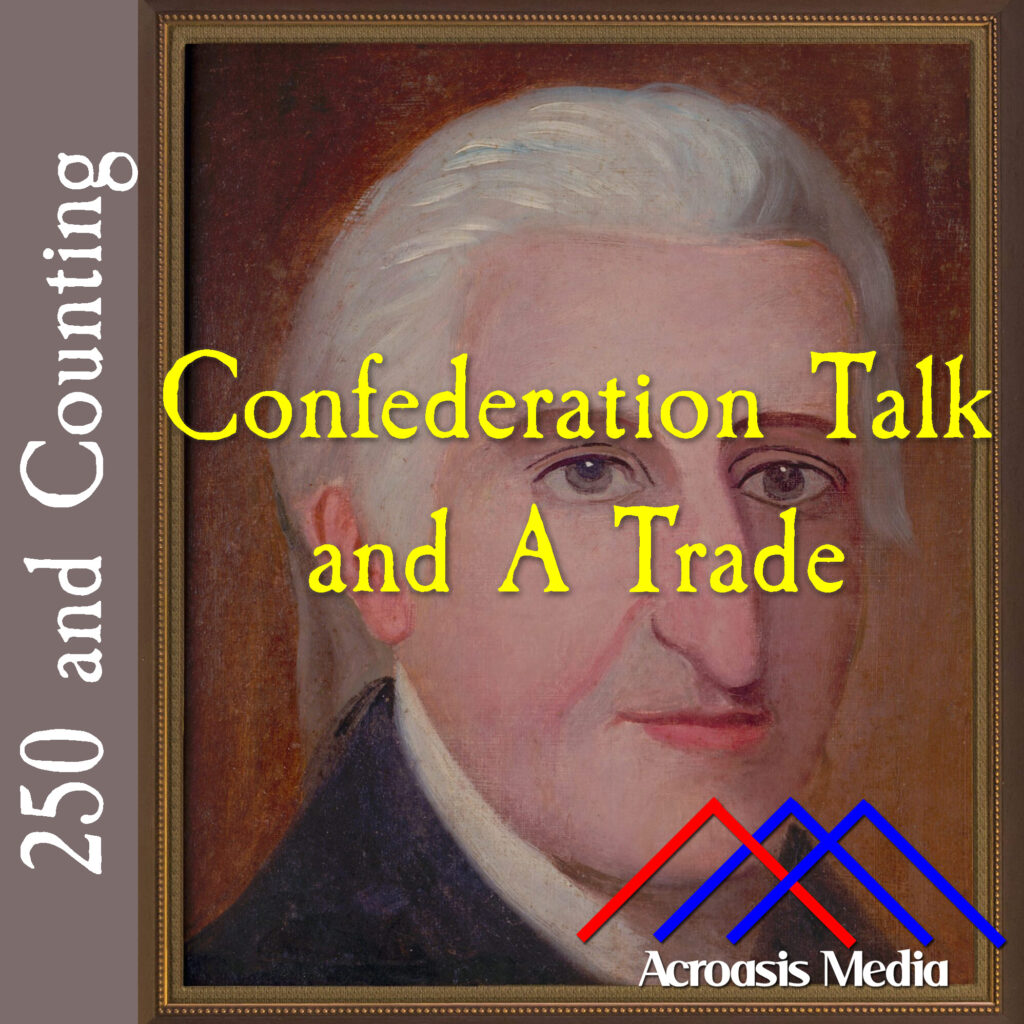
    Cover art for August 6, 1776: Portait of John Morton by Robert Edge Pine, 1820. via University of Virginia.

    We didn’t spend a whole lot of time talking about John Morton, who comes up as part of today’s episode, and he does have an important part in the quest for Independence.

    John Morton’s father died the same year he was born. John had very little formal schooling; most of what he learned, he learned from his stepfather. They had such a good relationship that John named one of his sons after his stepfather.

    Despite his relative lack of education, John Morton was able to advise his neighbors and advocate for them when needed, and help them keep their books. In 1774, while serving as Speaker of the Pennsylvania Assembly, he was voted to be a delegate to the First Continental Congress held in Carpenter’s Hall in Philadelphia. On November 4, 1775, he was elected to the Second Continental Congress which was held in the State House, later renamed Independence Hall.

    In 1776 and 1777, John Morton became Chairman of the Committee of the Whole and was heavily involved in writing the Articles of Confederation, the new nation’s first form of government. Sadly, in March of 1777 John contracted tuberculosis and died on April 1, making him the first of the 56 signers of the Declaration of Independence to die.

  • Getting The Finer Details–July 30, 1776

    Cover art for July 30, 1776: Portrait of Rev. John Witherspoon by Rembrandt Peale, c. 1794. via National Portrait Gallery.

    Both Dr. Benjamin Franklin and the Reverend John Witherspoon made good points when they discussed state representation in Congress under the Articles of Confederation they were trying to put together.

    The interesting thing is that the debate sounds very much like a modern-day discussion with regard to the nations that participate in NATO. Smaller nations are feeling a little “pushed out” by larger nations; the larger nations feel as though they’re dealing with most of the burden. And while those larger nations are correct in that the smaller nations aren’t making the contributions to which they initially agreed, it’s a matter of cure, not disengagement.

    At any rate, as Mike notes, the siguation won’t be fully addressed through the Articles of Confederation; ultimately they kicked the can down the road and, when the AoC finally collapsed, our current bicameral legislature attempted to address the large/wealthy states vs. small/poorer states representation conundrum. The system could still use some fixes (e.g. the current total number of Representatives in the House is unconstitutionally low, by literally a couple of decimal places), but it’s all in pursuit of a more perfect Union. We screwed up today but we’ll get it a little more right tomorrow.

    After Reverend John Witherspoon left Congress, he returned to Princeton, where the campus had been badly damaged by the British. He worked diligently to repair the damage. He was also a member of the New Jersey convention that ratified the US Constitution, and he organized the Presbyterian Church in the United States.

  • Drafting A Confederation–July 25, 1776

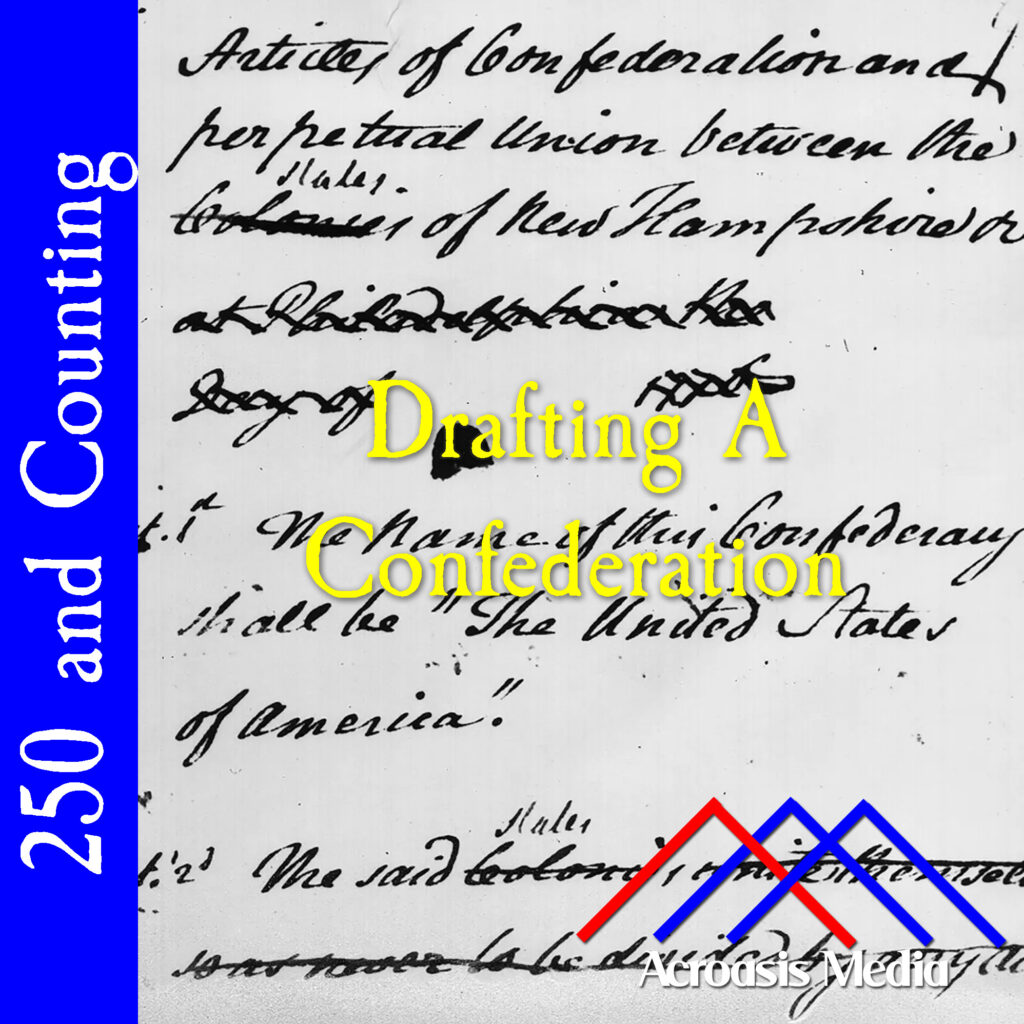
    Cover art for July 25, 1776: part of an early draft of the Articles of Confederation in John Dickinson's handwriting.

    Representatives from each colony were already working on draft Articles of Confederation beginning one day after Thomas Jefferson, et.al. started work on the Declaration of Independence.

    The first draft Articles were presented to the Congress on July 12, and this day was another day of discussion and debate. The ultimate disposition of the articles discussed today is a little bit amusing, as you learn from the episode itself.

    The Founding Fathers were looking for a relatively weak central government, which is why the finished document is relatively short and can actually be boiled down to a dozen brief paragraphs. It took a while to realize it, but this wasn’t the best idea, which explains why the Articles of Confederation were abandoned for a new Constitution.