Category: General Gage

  • What To Do With A Captured Brit?–May 21, 1776

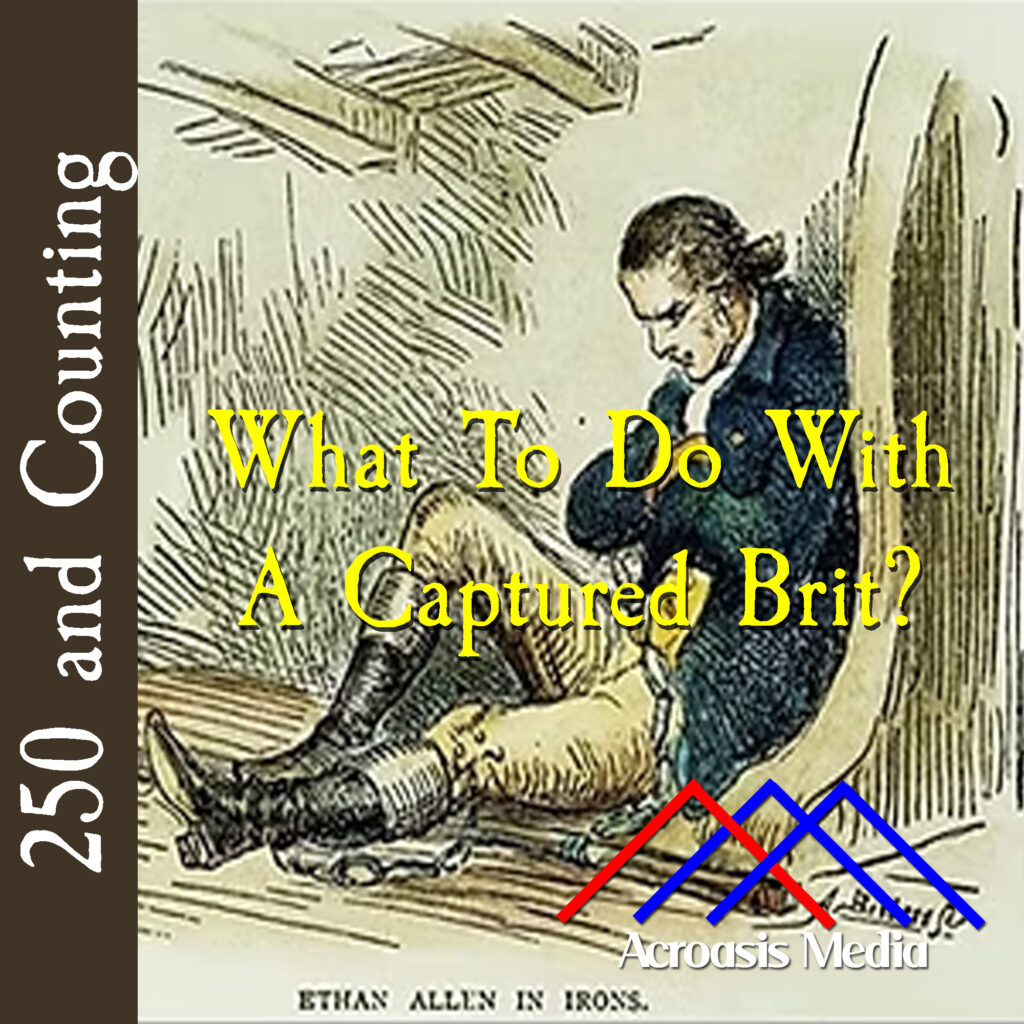
    Cover art for May 21, 1775: Colored engraving of "Ethan Allan in Irons", by Albert Bobbett, ca. 1877.

    Early in the war, it became apparent that the treatment of prisoners was going to be a very lopsided affair.

    British soldiers were treated humanely and with dignity. American soldiers…not so much. As we noted last August, when Americans were captured they weren’t treated as prisoners of war but rather as criminals who didn’t deserve dienity. During the course of the war, over 8000 soldiers died because of the conditions of their confinement.

    Despite this, it appears that the Continental Congress, when asked the question directly, determined that the humane route was the most appropriate one. This didn’t really change the British approach, but at least we had a policy, and we had it in writing.

  • Beginning of the End in Boston–March 4, 1776

    Cover art for March 4, 1776: A map of the Boston area during the siege. from the History Department at the US Military Academy.

    Colonel Henry Knox took about ten weeks to get from Ticonderoga to Cambridge rather than the two he anticipated. But his arrival meant the siege’s end in Boston would come soon.

    Knox had brought something like 60 tons worth of material overland using hand-built sledges and carts drawn by oxen. The last leg of the trip is still a mystery, because Knox’ diary ends about two weeks early. What is known is that as he passed through the occasional town, people would line up to watch. So we know when he was where, but the usual stuff that ran through Knox’ head for that portion of the trip is gone.

    Still, his arrival at Cambridge meant that Washington now had what he needed to fortify his position and do what he needed to drive the British out of Boston. After nearly a year, the siege’s end was actually in sight.

  • The Great Carrying Place–October 11, 1775

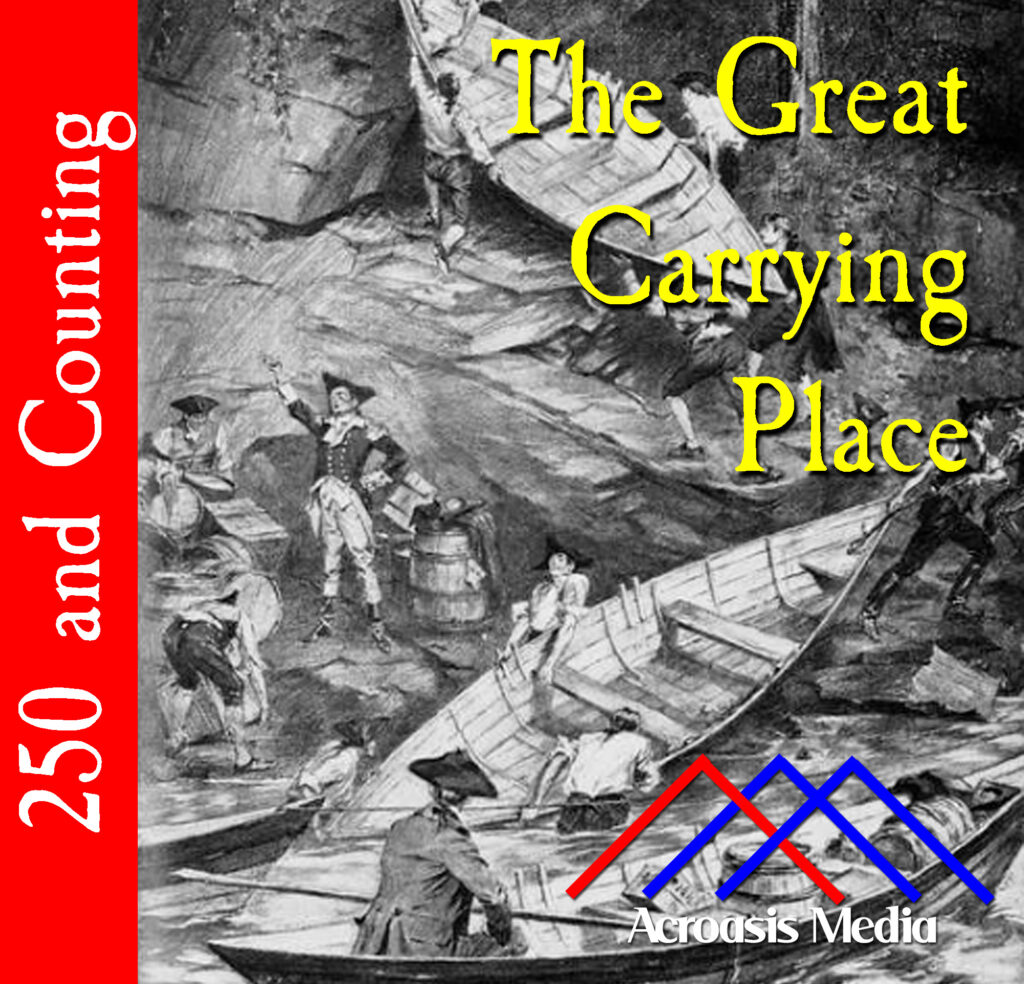
    Cover art for October 11, 1775: "Carrying the bateaux at Skowhegan Falls", drawn by Sydney Adamson; halftone plate engraved by CW Chadwick, 1903.

    Benedict Arnold and Company are still on the move toward Quebec. Over a three-week period they’ve moved fewer than 90 miles, with only…300 to go. Today they’ve reached The Great Carrying Place, a 13-mile walk alternating between woods and knee-deep mud, all while carrying everything they’ll need to get to Canada.

    Back in the Colonies proper, General Gage is being replaced by General Howe. Gage was largely responsible for the Siege of Boston, especially since they weren’t able to break that siege. And then Bunker Hill came along. Sure, the British won but at great cost—a Pyrrhic victory. Once word got back to Britain about that, Lord Dartmouth appointed Howe within a couple of days. Of course, it took several weeks for the news to get back to America, and on September 26 he learned he was being replaced. By this days’ end, Gage was on his way back to Britain.

  • September 1, 1775: Virginia Gazette Headlines

    Cover art for September 1, 1775: photo of a mullet, via Wikimedia.

    Nothing beats the speed of gossip, and apparently the Virginia Gazette on this day had plenty of it to share.

    A few of the stories were quite serious, relating to events in both Virginia and Massachusetts. They closed out with a local story that had a more humorous edge to it…though it’s likely that the people involved had a hard time seeing the humor in it all.

    PS Why is there a picture of a fish in today’s cover art? Well…mullet over a little and see if it comes to you.

  • August 19, 1775: Washington Hates the Rumor Mill

    Cover art for August 19, 1775: Interior of the British prison ship Jersey. Artist: Edward Bookhout, engraved by Felix Darley, created 1855 but meant to represent conditions during the Revolution.

    In 1681, John Dryden said in his poem “Absalom and Achitophel”:

    Beware the fury of the patient man.

    I hear ya, Dryden, because that’s how I operate.

    And apparently George Washington operated the same way, because he initially took the high road, assuming that rumors about how American prisoners were being treated were just that, and giving General Gage the benefit of the doubt.

    But when the rumors began that Washington was mistreating his prisoners…oh, that didn’t sit well with the General at all.

  • August 11, 1775: Washington Gets Serious About POWs

    Cover art for August 11, 1775: A sample of George Washington's handwriting in a letter. It's NOT the letter described in today's episode (hence the blurring).

    While today is perhaps the earliest documented instance of George Washington expressing concern for his captured troops, it certainly wouldn’t be the last. For years he worried about this, largely because the British didn’t always consider the Continental Army to be a genuine army, nor did they consider themselves to be “at war” with America; instead this was some kind of petty grievance that needed to be put down.

    As a result, Washington was in frequent communication with his counterparts on the British side, and several people on the Colonial side, expressing his worry that his men were being treated poorly…or worse.

  • June 15, 1775: The Original G-Man

    Cover art for June 15, 1775: Portrait of George Washington in 1775 by Samuel King

    Jeez, I gotta stop writing these titles late at night.

    Sometimes the history books make it sound like some people just appeared out of nowhere, but they did have pasts. George Washington would be a good example.

    Washington has been nearly invisible since this show started on January 1, but that doesn’t mean that the Congress hollered “Anyone wanna be a general?” and he stepped up first. In fact, he was a delegate to the First Continental Congress in 1774, and for some time he’d been a member of the Virginia House of Burgesses, often simultaneously with the Congress thing. And he did have a commendable military background dating back to the French and Indian War, so appointing him the Commander of Colonial forces wasn’t part of someone’s crazy scheme: they thought he could really do it.

    And do it, he did.

  • April 28, 1775: Jonathan Trumbull Chooses a Side

    Cover art for April 28, 1775: portrait of Governor Jonathan Trumbull, artist unknown but could be his son John Trumbull.

    Jonathan Trumbull was one of only two men to serve as governor of a Colony and of a State. (Nicholas Cooke of Rhode Island was the other.) This, to us, gives him a kind of air that perhaps he could be trusted by all parties to act appropriately.

    And when push came to shove, Trumbull found himself in the position of having to support the Colony rather than the crown, as you’ll see in today’s episode. And as things further deteriorated, he became more focal about supporting the Colony, since the British no longer appeared to view the Colonists as subjects of the Crown but as a genuine enemy to be crushed. (Which is exactly how many in Parliament felt, so.)

  • April 15, 1775: The Short Life of Fort Pownall

    Cover art for April 15, 1775: from "History of the city of Belfast in the state of Maine, From its first settlement in 1770 to 1875." by Joseph Williamson, 1913.

    In retrospect, we feel like we may be picking on this historic site a little bit. In fact, the park surrounding the ruins of Fort Pownall are quite nice for hiking, biking, picnics and, as we mentioned, there are historical markers all over the place so you do get a sense of how important this particular site was.

    At any rate, on April 5 we told you about a detachment sent to the fort to disarm the place; today was the day that they arrived and succeeded, because even if spies knew about it (and they almost certainly did), word was not going to get to the fort in time to prevent what was going to happen.

    N.B. for those of you who download the episodes as they come out, apparently the audio didn’t attach to this post correctly. Our apologies. It should be in your feed now.

  • April 5, 1775: The British Gear Up For War

    Cover Art for April 5, 1775: A 2007 photograph of the Old Powder House in Nathan Tufts Park, Somerville, Massachusetts. Photo by Erik Edson, via Wikimedia Commons.

    Up until now, we’ve presented General Thomas Gage as rather a hard liner who was looking to subjugate the Colonies somehow. Nothing could be further from the truth.

    The fact is, he like being a light-hearted guy, and when he became the Royal Governor of Massachusetts, he discovered exactly what kind of mess he’d stepped into. At that point, anything he did would only make matters worse.