Category: George Washington

  • Battle of Kip’s Bay–September 15, 1776

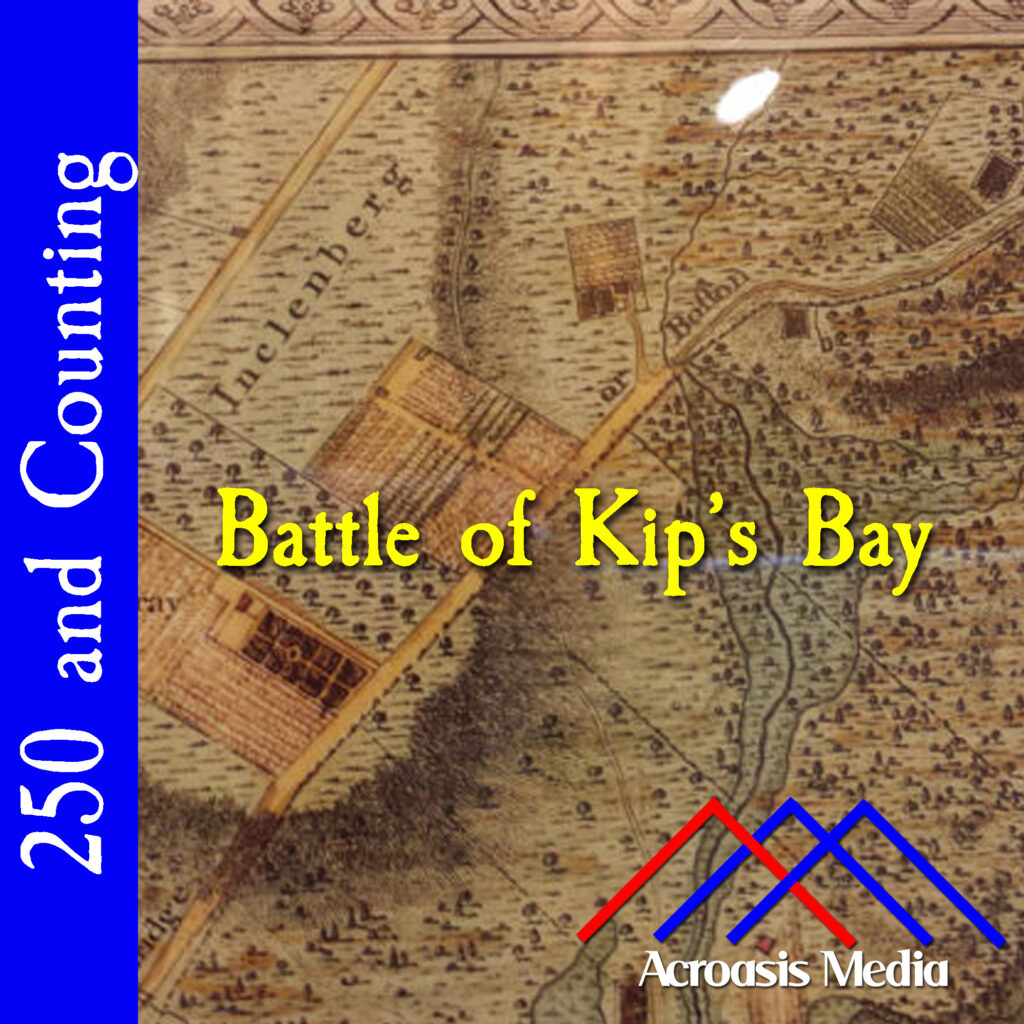
    Cover art for September 15, 1776: Map excerpt of Manhattan detailing an estate called Inclenberg. Map surveyed ca. 1766-7, published as a completed engraving in 1776. via New York Historical Society.

    Calling it “The Battle of Kip’s Bay” may actually be overstating it a little bit; there were 500 militamen from Connecticut in the area when the British landed, and their defenses were blown away almost immediately, after which they panicked and ran.

    But I tell you all about that in the episode. This is my chance to tell you a related story, and nobody knows whether it’s true.

    If you look at today’s artwork, you’ll see a piece of a map and an estate called Inclenberg, about where modern-day Murray Hill can be found. Kip’s Bay is just out of frame to the right. Inclenburg was owned by the Murray family (hence the neighborhood name), who were a family of Quaker merchants who owned a wharf and a fleet of ships at the base of Wall Street.

    Now, the story goes that the original plan was for the British to march across Manhattan, west to east, in order to cut off Washington’s army. As I note in the episode, about a third of them were still to the south in the city and would therefore be trapped and stranded. Then, once they were divided, the British would pursue the rest of them to the north, in Harlem Heights.

    What’s known as a fact is that the British did not complete their traversing of the island; they stopped somewhere around Inclenberg. The legend part of this story is that when they got to Inclenberg, Mary Murray, the socialite who ran the estate, and two of her lovely daughters came out to greet General Howe and his commanders and offered them some afternoon tea.

    Howe and his officers had a wonderful afternoon of hospitality, with tea and entertainment by the girls (singing, ya pervert), and the finest Madeira wine in New York City. In the meantime, Major Aaron Burr led the separated group of troops up through the western side of the city to Harlem Heights, and relative safety.

    It’s really more likely that Howe simply stopped while waiting for more forces to arrive, and that’s the story I tell during the episode. But it’s a fun story, and it is known for sure that General Putnam’s men did escape what would have been certain capture by the British, who had to be absolutely apopleptic to learn that so many soldiers had escaped yet again without their knowing about it.

  • Word From Congress–September 14, 1776

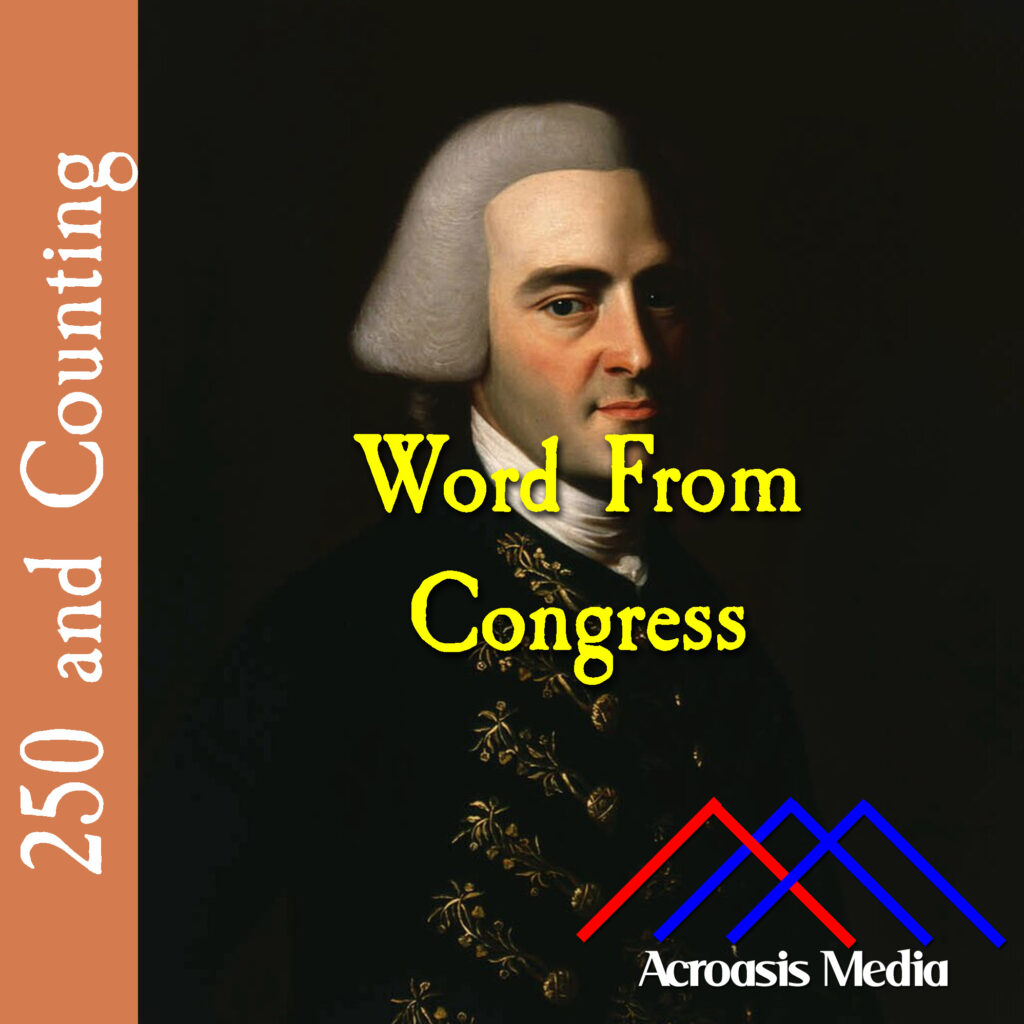
    Cover art for September 14, 1776: portrait of John Hancock by John Singleton Copley, ca 1770-72. via Massachusetts Historical Society.

    Washington was on the brink of retreating from New York City, but he was getting pushback from some of his generals regarding how it should be done.

    Fortunately for him, this Gordian Knot was cut by a letter arriving from John Hancock on behalf of the Continental Congress.

    Nathanael Green and William Heath weren’t necessarily in agreement with Hancock’s recommendations, but orders are orders and everyone prepared to move out based on those.

    But about a week later, something happened to render part of those orders moot.

  • To Stay, Or Not To Stay?–September 12, 1776

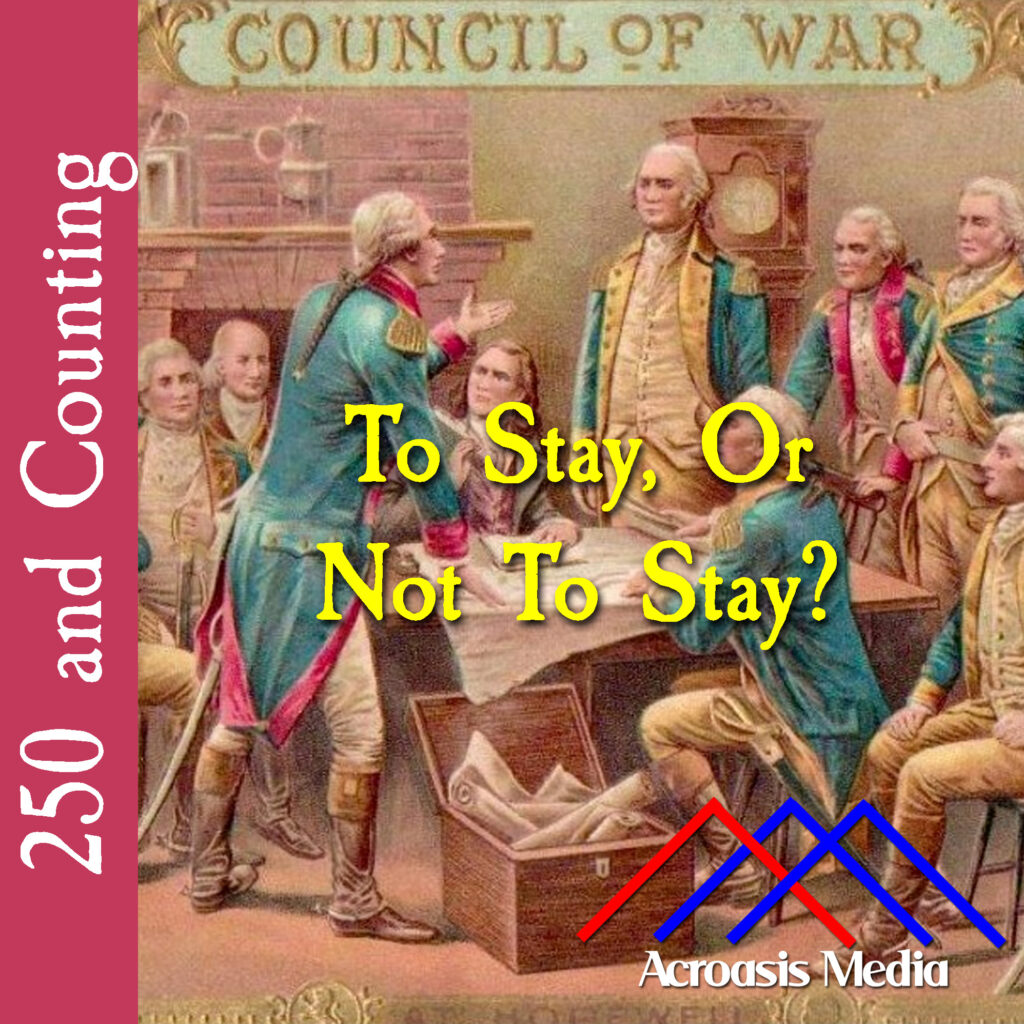
    Cover art for September 12, 1776: "Washington's Council of War at Hopewell," James Edward Kelly, 1884. Cigar Box inner label based on a relief sculpture.

    George Washington’s Council of War finally got to meet on this day in 1776, to figure out what happens next.

    The Battle of Long Island was a rout for several reasons. In addition to the Continental Army being outnumbered by roughly two-to-one, there was poor communication and a couple of tactical errors. And the only reason more soldiers weren’t captured or killed was because poor weather prevented the British from figuring out that they were escaping across the East River until it was far too late.

    So, as any good soldier would, Washington took a moment out to seek advice from his Council of War. Nathanael Greene recommended just getting out of town and regrouping elsewhere, but he also suggested burning the city down to keep it out of British hands. Washington already knew that Congress didn’t like the burning thing.

    Most of Washington’s council recommended leaving the city, but Washington still wanted to ensure that some portions of the city were fortified and made appropriate plans. Unfortunately those plans fell apart rather quickly, as we’ll soon learn.

  • More Bad News–September 10, 1776

    Cover art for September 10, 1776: portrait of William Heath, artist and creation date unknown, via New York Public Library print collection.

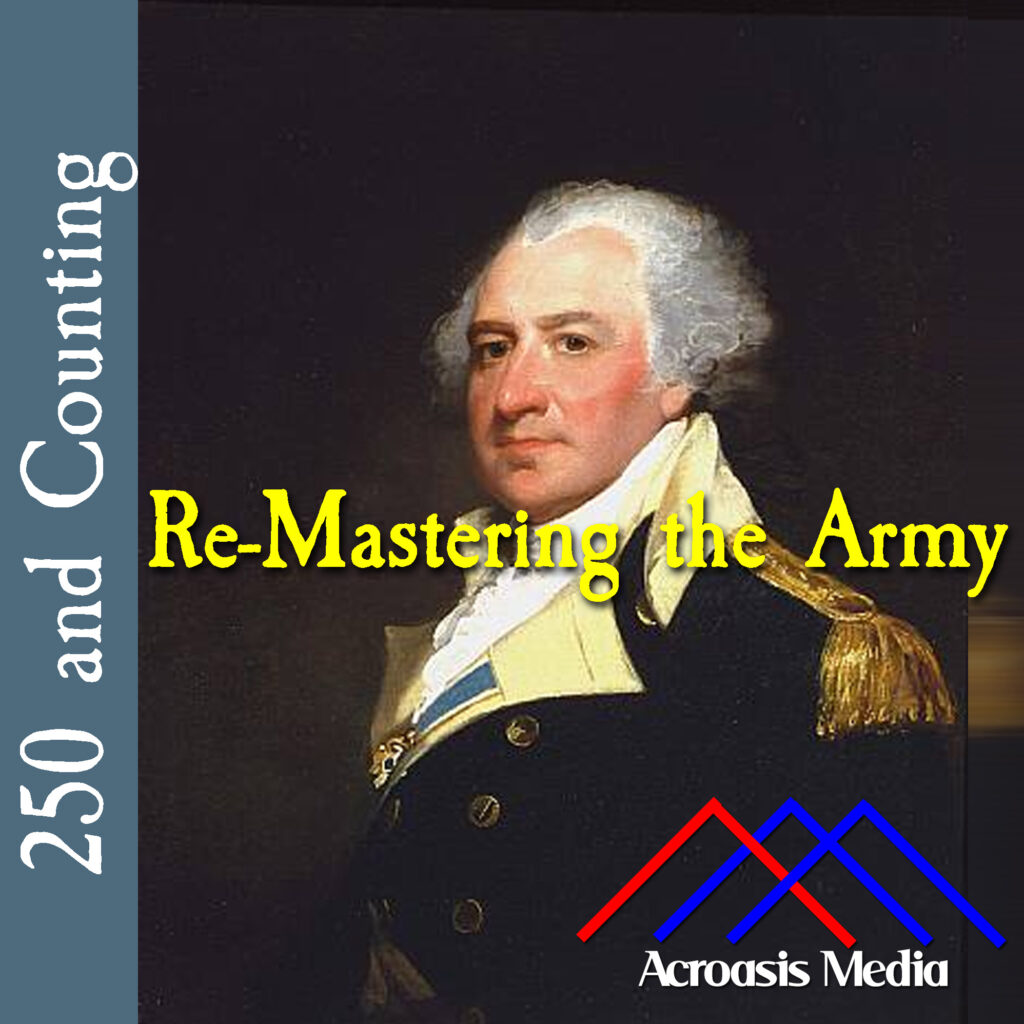
    General William Heath was around for the battle at Lexington and Concord, but you may remember him from our episode from just a few days ago.

    He was already a Brigadier General in Massachusetts before Lexington & Concord, and as the siege in Boston started, he worked at training the troops. When the Continental Army officially formed, he retained his title and was promoted to Major General in August 1776.

    Unfortunately (as Mike notes), George Washington didn’t think much of him and kept him largely sidelined. And the one time Washington did ask him to do something important, it didn’t go well at all.

  • All Under Heaven Is Chaos–September 7, 1776

    Cover art for September 7, 1776: Cutaway diagram of the Turtle, drawn by Lt.C. Francis M. Barber of the US Navy in 1875. via Library of Congress.

    …but the situation was not excellent, for the American side, anyway.

    George Washington got a wake-up call in the form of a letter from Congress. In that letter he was told that it was not a good idea to burn down New York City; what’s more, they weren’t quite so invested in his holding the City as he thought they were. This was a good news/bad news situation for him, since he knew that strategically, the British occupying New York had the potential to be a huge problem, especially if they were able to take the entire Hudson Valley.

    But even if they didn’t, having one of our biggest and busiest ports was going to create a lot of headaches, regardless of what was supposed to be moving in or out of the city.

    Meanwhile, we have Ezra Lee making his first attempt at genuinely deploying the Turtle submersible. The currents plus the darkness made maneuvering very difficult, and while he did get close enough to Admiral Howe’s ship to stick the explosive charge to it, the spear he used couldn’t penetrate the hull enough to stick. In recent years it’s thought that he tried to pierce the hull near the rudder, which had an iron plate on it; another theory involved the recent use of copper on ships’ bottoms, but this copper was quite thin and would have been easily pierced.

    Lee made one more attempt with the Turtle, on October 6, but that try also failed. The Turtle was lost less than a week later when the sloop serving as her tender was sunk by British ships. Who knows? Maybe there are still pieces of her in the Hudson River.

  • More Brooklyn Aftermath–September 5, 1776

    Cover art for September 5, 1776: The Capture of Nathaniel Woodhull, John Ward Dunsmore, 1910. via New York Historical Society.

    The American Army has evacuated Brooklyn. Reports are coming in from all over that the Loyalists are being rather sore winners over the event. Refugees are coming into Connecticut from across the Long Island Sound. George Washington, literally the last man out of Brooklyn, is trying to figure out his next move, and that of the British.

    Nathanael Greene, who missed the Battle of Long Island because he’d been seriously ill, finally returns to duty. At last, some good news for General Washington! And maybe some sage advice regarding what should be done next to preserve New York City!

    And Greene tells him to get out of town. There’s no way that you can hold a place like New York City if you can’t control the shoreline across the East River, no more than a few hundred feet away.

    Washington doesn’t think this is a good idea, partially because he thinks New York is more important to the Continental Congress than it actually is. But Greene has another idea, which we’ll get into in a couple of days.

  • Washington Is Back To Business–August 31, 1776

    Cover art for August 31, 1776: General William Heath. Artist and date unknown. via New York Public Library.

    Washington wrote two letters today: one to General William Heath, and the other to Congress.

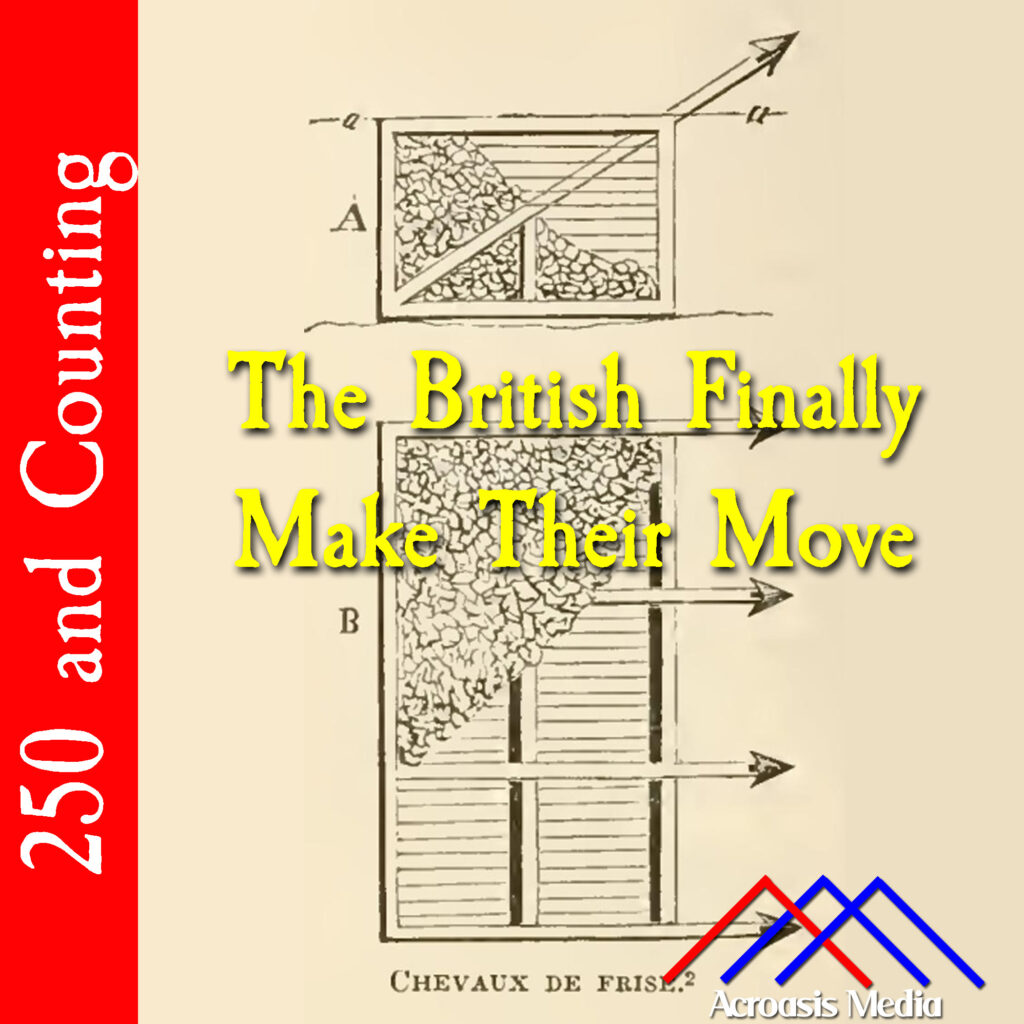
    To Heath, he basically gave a little bit of an “attaboy” in agreeing with Heath’s assessment regarding the British Army’s next move. So he recommended that chevaux de frise be sunk in the waters nearby the next likely target (Huntspoint), to thwart the British ships moving in. Other than that, some reinforcements are on their way, so until the British arrive, just hurry up and wait.

    Now, a cheval de frise (“chevaux” is plural) was tough for me to explain during the show, but picture a sawhorse with long spikes protruding from it. That’s a basic cheval de frise. (The one in the picture is from the Civil War.) But they’re not limited to this specific design; some stone walls had broken glass, or sharp rocks embedded in their tops to make it tougher to climb over them; those are also considered to be a cheval de frise. The ones that Heath were expected to sink in the East River looked more like boxes with angled spears pointed in the direction the ships were likely to be coming from.

    Washington’s other letter, to the Continental Congress, wasn’t so much to inform them of his loss on Long Island as it was to assure them that he was alive and well, and that most of his troops had gotten away despite the magnitude of the loss. It would be several months before Washington could truly notch one in the “Win” column against the British.

  • GW Explains His Exit–August 30, 1776

    Cover art for August 30, 1776: "US Army--Artillery Retreat from Long Island 1776, an 1899 portrait from the Werner Company of Akron, Ohio.

    Even though George Washington was in charge of the whole Continental Army, he still had people to answer to. Most directly that would be the Continental Congress and that will happen very soon, but in the meantime there were also some local officials he had to placate.

    Which brings us to today’s episode, in which Washington wrote to the New York Convention, which was the name at that time for the body of state’s representatives. He’d kept them up to date on everything that was going on so far, so it only made sense that he’d send them another note to let them know why the troops had bailed on Brooklyn. There were lots of good reasons, but the one he didn’t write about was the fact that his army was getting shellacked and it was either get killed outright, or run away to fight another day.

  • The Battle of Long Island–August 27, 1776

    Cover art for August 27, 1776: British flat-bottomed boats making their way to Brooklyn shortly before the battle. The soldiers in blue are Hessians. Painting by Robert Cleverly in 1777, via National Maritime Museum.

    The Battle of Long Island was one of our largest engagements with the British, and it was also the first one after the Declaration of Independence.

    And it was a rout; the Americans got their heads handed to them. The British took New York and they occupied it for the rest of the war. After so many smaller victories, we finally got the lessons that A) this was going to be a long and bloody war, and B) there really isn’t any such thing as an easy victory.

    As a result, New York City became a focal point for espionage and intelligence-gathering. If you’ve ever seen the AMC series Turn: Washington’s Spies, you’ll get an idea of some of the things that went on. (The series as a whole isn’t bad, but there are definitely instances of dramatic license that went on. For instance, you can’t row across the Long Island Sound and back overnight. In fact, I’m not sure you can row across the Sound safely at all.)

    In tomorrow’s episode, Mike will tell you why it didn’t turn out worse for the American side and then we close out the week with the last chapter of the Battle of Long Island.

  • Eve of Battle–August 26, 1776

    Cover art for August 26, 1776: A map of Brooklyn by Bernard Ratzer, ca. 1766-67. The Guan Heights are marked as ovals at center right.

    At this point, both George Washington and General William Howe know that they’re literally on the eve of battle, and they’re making their final preparations.

    The British, along with the Hessians, were making plans to move along the Jamaica Pass (it’s the road just above the Acroasis logo in today’s art), which, while they didn’t know it, was relatively lightly guarded by the Continental Army.

    Washington’s tactic was to hold on to the Heights of Guan (the ovals to the right of the episode title, representing hills) and fortify Brooklyn Heights (far left center, about where the Brooklyn Bridge is today). It wasn’t a bad idea, but it didn’t match the British plans. And that’s largely where things went wrong. We’ll be talking about that in greater detail tomorrow.