Category: King George III

  • Congress Responds to King George–December 6, 1775

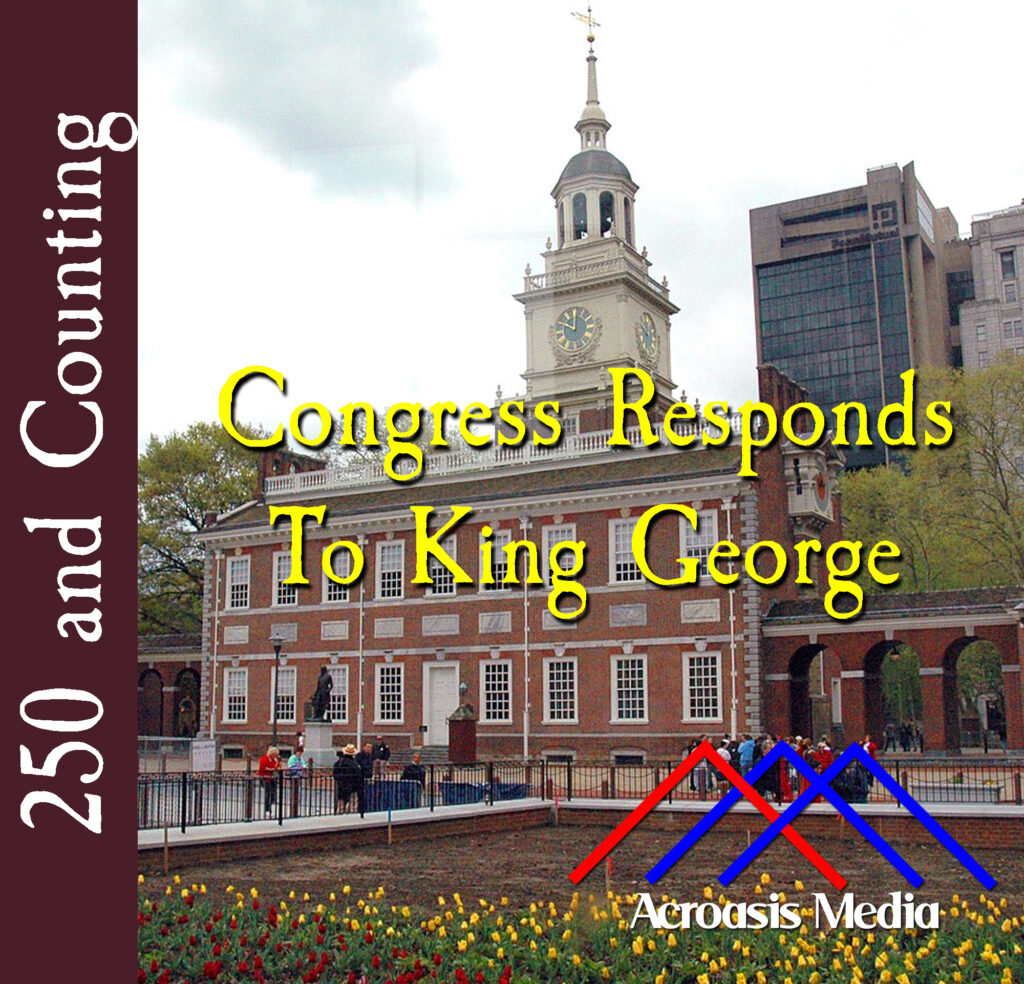
    Cover art for December 6, 1775: a 2005 photo of Independence Hall.

    There are a couple of things that it’s kind of important to remember about American history.

    First, by this point Independence was still NOT on the table for the Continental Congress. That’s not to say that there wasn’t talk about it, but little of it was in earnest. Americans were fighting the British because of all the business that was going on in Boston. If everybody just settled down then the decision to politically separate wouldn’t have been made.

    Second, once the war did start, it was by no means a foregone conclusion that the Americans would win. In fact, they didn’t have a snowball’s chance of winning. It took several years of effort and the help of at least a couple of other nations to get the job done. (And not to get too political, but current events have some of these same nations glancing at us askance, after all this time. )

    The Continental Congress’ Committee of Proclamations studied King George’s announcement that the Colonies were in rebellion, and prepared a very careful response, including the suggestion that “rebellion” has no legal definition and is therefore semantically null. And for all that, it still holds out some hope that things can get back to normal, maybe.

  • Congress Gets Bad News–November 1, 1775

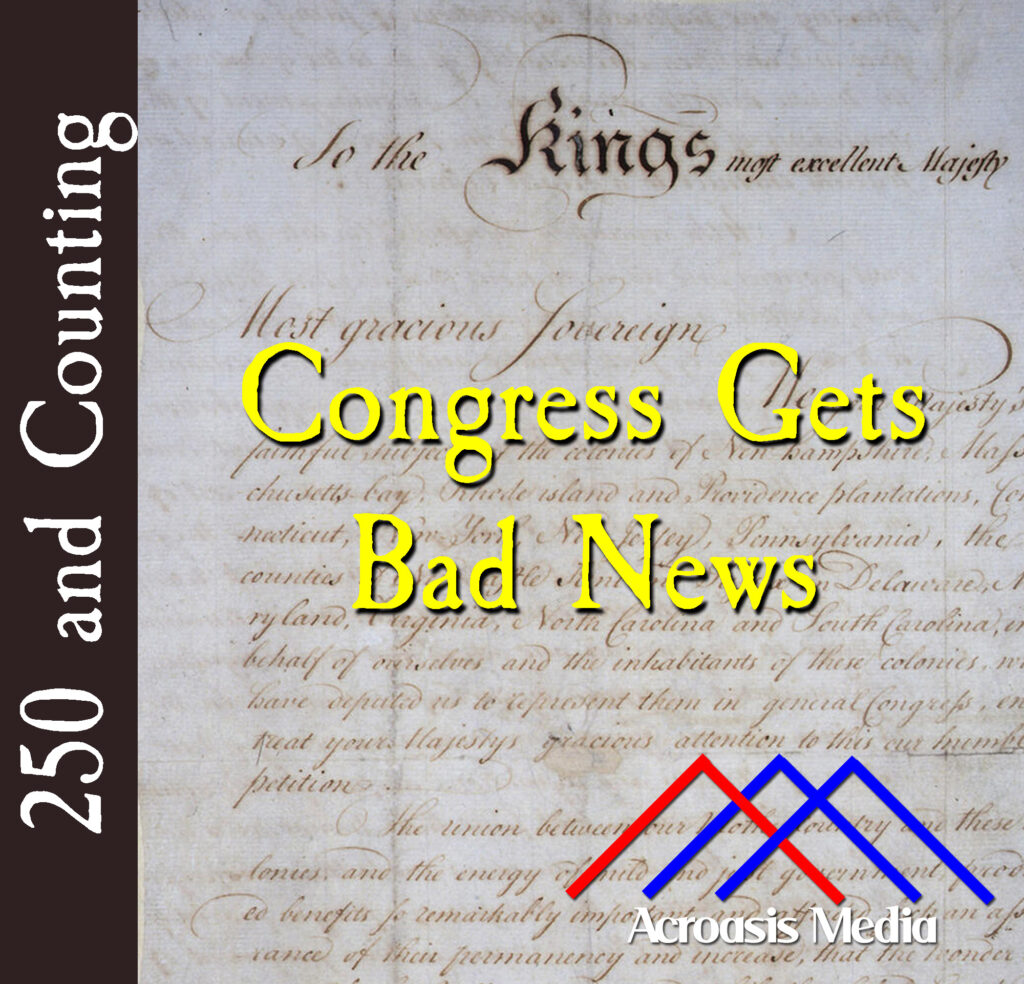
    Cover art for November 1, 1775: Page 1 of the Olive Branch Petition (detail). Via Library of Congress.

    In July 1775, there were still several delegates to the Second Continental Congress who thought that reconciliation with Britain was a possibility. There were a few others who may not have necessarily been of that opinion, but were willing to take a chance. Some of these men, led by John Dickinson, formed a committee to draft what’s come to be known as the Olive Branch Petition. The intent was to continue pledging loyalty to the King, but to simultaneously ask for some equitability in trade and tax regulations.

    The document asked for a firm settlement to the Colonies’ grievances, and identified all of the colonies as signatories except Georgia. The only reason Georgia wasn’t named is because they only had one delegate at the time, and he wasn’t comfortable with speaking for the entire colony. Consequently, he abstained from many votes.

    It was on this day that Congress learned what King George III had to say back in August regarding the Olive Branch Petition.

  • It’s Finally Official–October 27, 1775

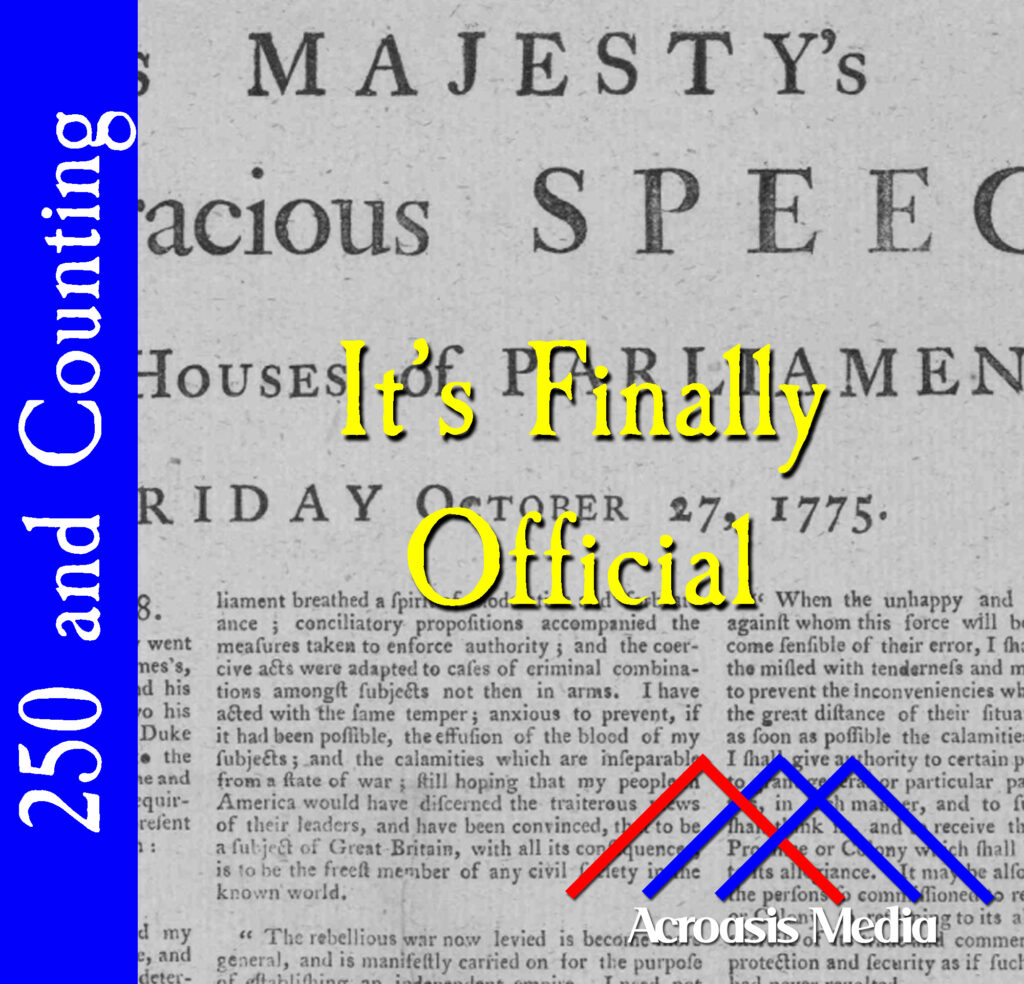
    Cover art for October 27, 1775: Detail of a broadside containing the text of King George III's speech to Parliament on this day.

    We’re 300 days into 1775 and therefore 300 days into this show, and we’ve finally gotten to the point where British troops will be shooting at Americans because the two parties are officially at war.

    Up until now, all the fighting was about control, because what better way to control people than by shooting at them?

    But King George III’s declaration of rebellion in August was informal in nature. It wasn’t until he declared the Colonies to be in rebellion before Parliament that genuine attention was paid to it. It was still theoretically possible that the Colonists could back off and let things go to the way they were, but the odds were vanishingly small.

  • August 23, 1775: George III Declares Rebellion

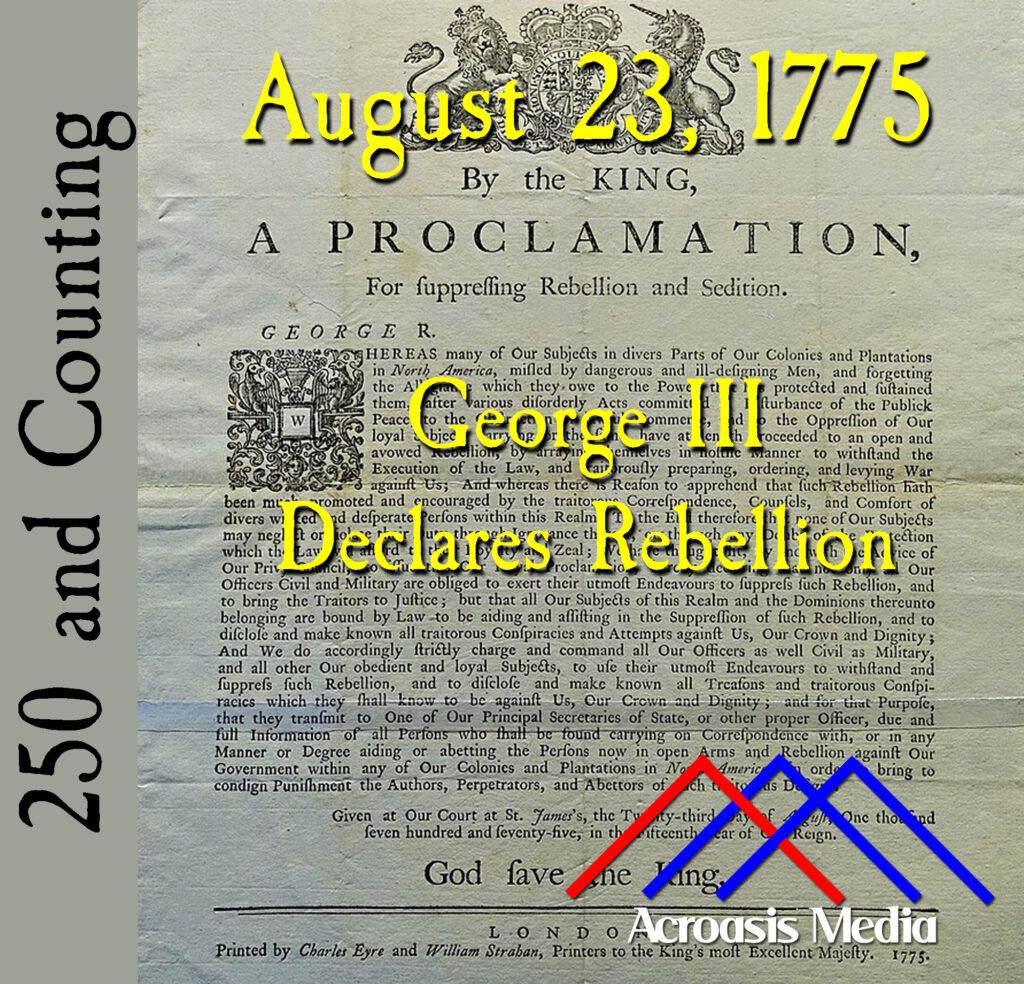
    Cover art for August 23, 1775: Proclamation of Rebellion, August 23, 1775 - Museum of the American Revolution by Joy of Museums

    When the Olive Branch Petition arrived in England, its contents hardly even mattered.

    There were elements of Parliament who were strongly disposed toward punishing the Colonies, and punishing them hard. The folks who were still pro-American were dwindling in number, because of the way it could affect their political futures.

    In short, the King had decided what he thought, and how he was going to handle it, and everyone else either bowed to it or faced losing their position. And it didn’t matter that he was a little bit crazy; he was the King and what he says, goes.

    Presumably we’ve learned the lesson behind that kind of thinking.

  • August 13, 1775: The Olive Branch Petition Arrives in England

    Cover art for August 13, 1775: the signature page of the Olive Branch Petition.

    As you may recall, several months ago some members of the Continental Congress thought it was important to make one last effort to reconcile with Britain before things got worse. So they composed the Olive Branch Petition and sent it off to England.

    Transit times being what they were then, the petition took several weeks to get to its destination. In the meantime, things got worse.

    So when the Olive Branch Petition arrived, nobody really cared. But there were two other documents that made matters worse. Plus, you know, all the shooting that went on in April. And in June.

  • March 30, 1775: King George III Restricts Trade

    Cover Art for March 30, 1775: Portrait of King George III, ca 1790,

    In the past we’ve talked about the New England Restraining Act; today was the day that King George III actually put it into action.

    To mark that day, Mike takes you through some of the details of the act and its impact on the trade in the Colonies, and the political impact in Britain.

  • February 19, 1775

    Cover art for Februay 19, 1775: "The Fall of Nelson, Battle of Trafalgar, 21 October 1805" by Denis Dighton, 1825

    When I (Claude) was younger, I read a Star Trek novel titled The Final Reflection by John M. Ford. Trek novels weren’t considered canon, and later events in the films and subsequent series kind of wiped out some of the concepts put forth in the book, but what I found fascinating was that it was told entirely from the Klingons’ point of view. (It also provided an interesting explanation regarding why Federation transporters give off a high-pitched whine.)

    Before you think I’ve digressed before I’ve even started, my point here is that today’s episode focuses on a British military figure rather than one of the Founding Fathers or other Colonial figure. We’re taking an all-too-brief look at Lord Horatio Nelson, who did have an important life event take place on this day in 1775.

    Also, when you listen to the episode, you’ll see I just have Star Trek on my mind.

  • February 15, 1775

    Cover art for February 15, 1775: Portrait of Lord Horace Walpole

    Only a few people had figured it out, and it’s not clear whether they were just guessing, but by this point in time both England and the Colonies were locked into a path that would lead inevitably to a shooting war.

    To that end, Parliament approved sending over four thousand soldiers and sailors to the Colonies to help keep them in line. But it wasn’t as simple as that; there were still some people protesting the action, not that anyone listened to them.

    Today we also peek in on someone who’s watching the action and has some thoughts.

  • February 9, 1775

    Cover art for February 9, 1775: text of the address to the Joint Session of Parliament declaring the Colonies to be in rebellion

    The first week or two of February 1775 could best be described as a series of misunderstandings and communication breakdowns. Any attempts on both sides to reach out with some form of conciliation managed to fail for various reasons.

    And during all these breakdowns, the situation on the American side of the pond only got worse as time went on, largely because each side thought that the other wasn’t being responsive.

    In the end, however, it didn’t really matter, because as we’ve discussed with the episodes dealing with Massachusettensis and Novanglus debating one another in print, the one thing they agreed upon was that these attempts to reach out were always, at their heart, rooted in some attempt to wrest control from the other party. Both reaching for it, neither attaining it nor caring what the other side’s argument meant at the core.

  • 250 and Counting: February 4, 1775

    Cover art for February 4, 1775: the front page of George III's New England Restraining Act

    After the Boston Tea Party, Parliament enacted what they called the Coercive Acts and the Colonies called the Intolerable Acts. The Colonists were neither coerced, nor were the acts tolerated (hence the name). And you know that because we’ve told you this already several times.

    In October 1774 the Continental Congress composed the “Petition to the King”, and as you’ll learn in greater detail tomorrow, it was pretty clear that the petition crossed an ocean and still managed to go nowhere. In fact…

    At about the same time, King George III decided that New England needed some more “convincing” to fall into line. This was the beginning of the New England Restraining Act. As the name suggests, it affected mostly the New England colonies, but people in the other colonies took notice and wondered “Hey, this could happen to us too, couldn’t it?” As a result, everyone continued moving down the path they fervently hoped they wouldn’t travel.