
Category: Lyman Hall

  • Georgia Gets In The Game–March 15, 1776

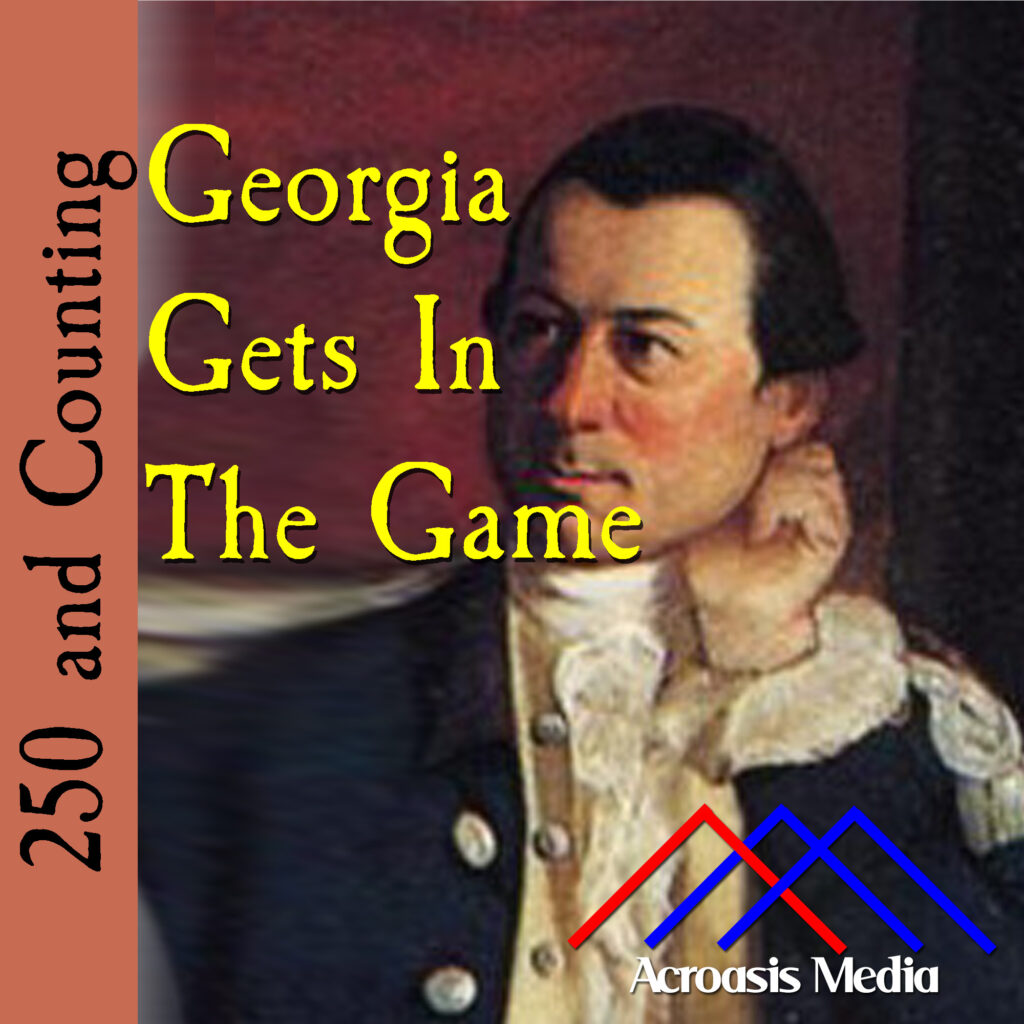
    Cover art for March 15, 1776: Archibald Bulloch circa 1775. Detail from painting by Henry Benbridge. via Wikimedia Commons.

    Georgia delegates to the Second Continental Congress numbered exactly one until around this time. That would be Dr. Lyman Hall, who didn’t believe it was ethical for him to represent the entire colony when he knew that feelings were largely divided back home.

    Then came the Battle of the Rice Boats, on March 2 and 3. After that, it seems, things moved very quickly for Georgians: the Royal Governor, who’d been in and out of custody, fled to a nearby warship, the Provincial Congress was left in charge, and they immediately began making plans to raise a more formal army than the militia that fought in the Battle of the Rice Boats, and Georgia delegates were sent to the Continental Congress with actual instructions.

    In addition, pieces were put in place to write a constitution for Georgia, a good first step toward the document that was created later in the year and adopted the following February.

  • May 13, 1775: Lyman Hall Joins the Continental Congress

    Cover art for May 13, 1775: portrait of Lyman Hall, created ca. 1871

    Dr. Lyman Hall gets a little name recognition because he was a strong supporting character in the play/film 1776, but he was more involved in the Revolution than that.

    While Georgia (eventually) sent five delegates to the Continental Congress, Hall was one of the three who regularly attended and signed the Declaration of Independence.

    For instance, he ensured that food and medicine got to Colonial soldiers, and it was he who convinced the Georgia congress to send official delegates to the Second Continental Congress, himself among them.

    He also became the state’s first Governor and spent that single year establishing the state university.

  • 250 and Counting: January 18, 1775

    Cover art for January 18, 1775: A commemorative plaque for Tondee's Tavern, which burned down during a huge fire in 1796 that destroyed most of Savannah, GA

    When the Provincial Congress of Georgia met in the city of Savannah, the natural place for them to meet was a place called Tondee’s Tavern.

    Georgians were no fans of British activities such as the Intolerable Acts, but they otherwise prospered under British rule and remained largely indifferent to the mother country. However, while the Provincial Congress didn’t want to join the other colonies in their association (which became the First Continental Congress), they were willing to support that association’s ban on trade with Britain, although they didn’t enforce it right away.

    Tondee’s Tavern was ultimately destroyed in 1796, in a fire that took out more than half of Savannah. The next building on that spot was a bank which dealt heavily in the slave trade. As a result, in recent years the building was said to be haunted and appears on most of Savannah’s Ghost Tours.

    The building reopened as a modern-day Tondee’s Tavern in 2013, but unfortunately it appears to have closed down sometime in the past year.