Category: Long Island History

  • A Fort Grows in Brooklyn–April 10, 1776

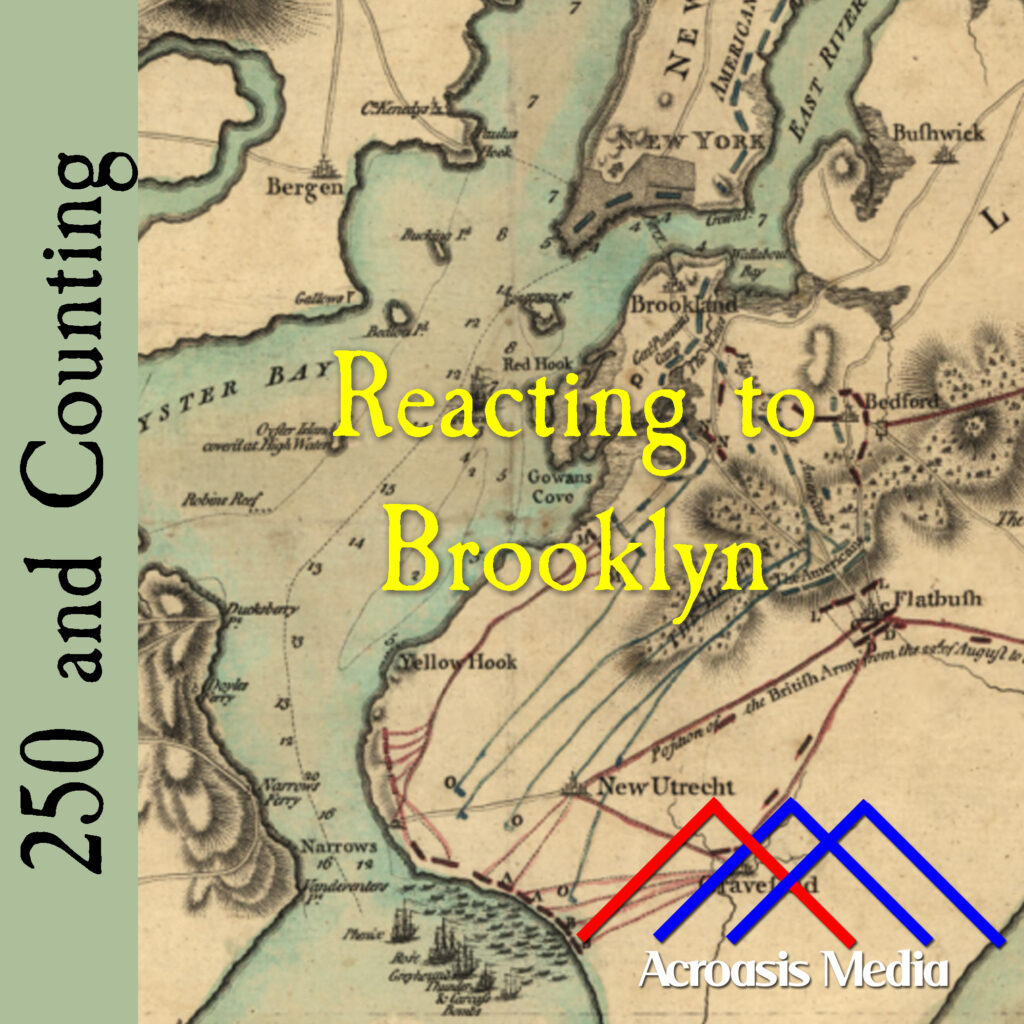
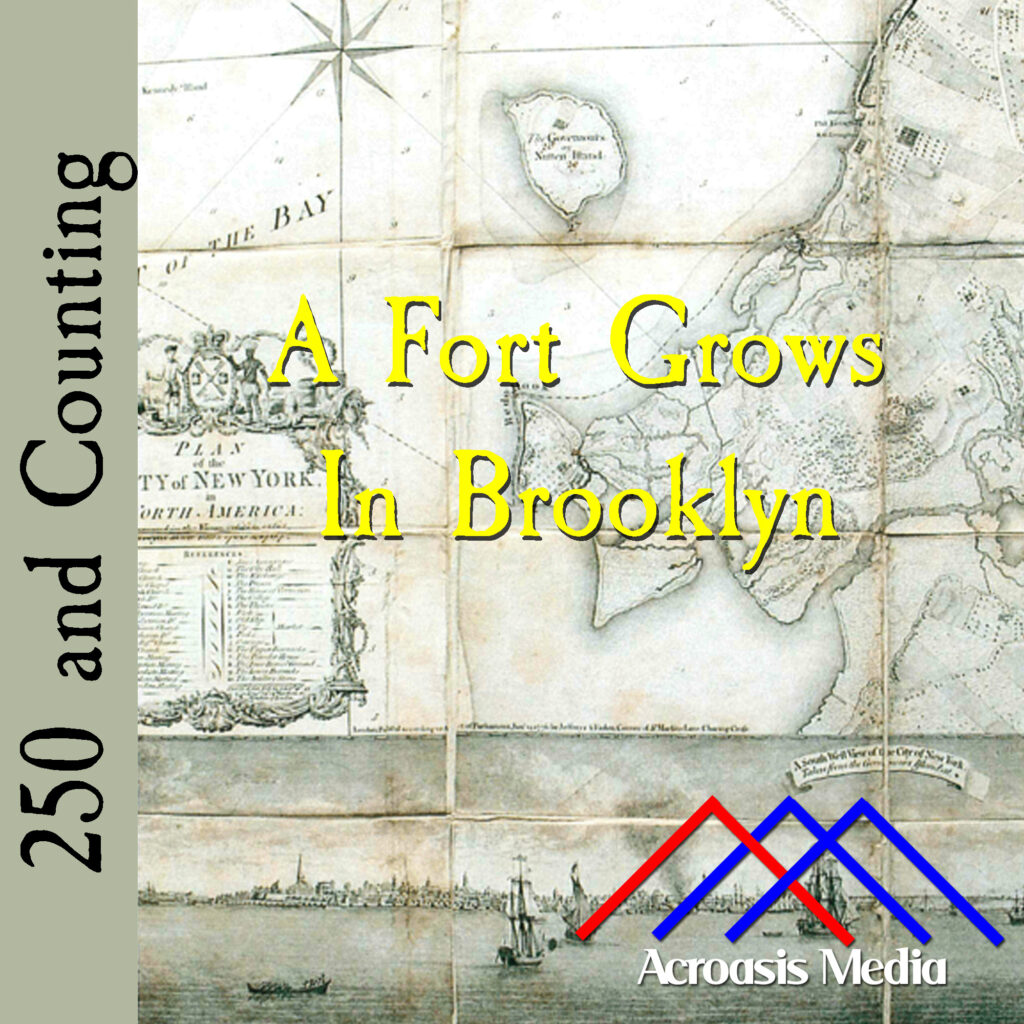
    Cover art for April 10, 1776: a contemporary map of Brooklyn. Red Hook is in the center of the picture, just below the "rt" in "Fort".

    The construction of Fort Defiance in the Red Hook section of Brooklyn made perfect sense. That part of the peninsula sticks out into New York Harbor and provides an excellent view of anything that might be sailing in or out.

    Red Hook comes from the Dutch Roode Hoek, “hoek” translating to “point”, which can still be seen in modern-day maps. The whole area, what we now call Red Hook and Gowanus, was settled by the Dutch in the 1630s.

    Red Hook was some swampy land when the Dutch moved in. But the Dutch know something about swampy land, and they got straight to work, filling in lakes and re-channeling waterways. They began farming the land, including orchards of fruit trees.

    After the war broke out and the Continental Army drove the British from Boston, George Washington sent Brigadier General William Alexander to Brooklyn to see what could be done defensively. A plan was developed to build two forts along the Brooklyn Heights, about a mile and a half apart. Fort Greene would be the furthest east, Fort Defiance would be the furthest west. Across the channel on Governor’s Island, another fort would be built, so that British ships could be fired on from both sides.

    Now, when we say “fort,” we’re not talking about something made of wood or stone. Plenty of those did exist, but not here. This was more like a breastworks built of earth and stone, which had a few cannons near the top. There were three of these breastworks connected by trenches, and they took up most of the island on which they stood. (Incidentally, Mike was correct about the island not existing anymore; the space was filled in and is now part of the larger land.) This took only a few days to put together; the fort at Governor’s Island was more like what one would expect to see.

    By the time the British arrived, the Continental Army was quite ready from a defensive standpoint. But the British were much larger in number and had a Navy besides. Stay tuned; it’s going to be an exciting summer.

  • Preparing To Defend New York–January 7, 1775

    Cover art for January 7, 1775: Portrait of Jonathan Trumbull and his wife Faith, painted by his son John Trumbull, 1778. via New York Public Library.
    Portrait of Jonathan Trumbull and his wife Faith, painted by his son John Trumbull, 1778. via New York Public Library.

    There are many letters between George Washington and Connecticut Governor Jonathan Trumbull. Presumably something as simple as proximity to another leader was attractive to both of them, especially in an age where letters took several days to go a hundred miles.

    We have to presume that the two men had very reliable people transporting these letters, given how much detail is in this one regarding Washington’s guesses about British troop movements and exactly what he was going to do about it. It’s certainly been the case before that correspondence has been intercepted by the British in the past, and the Postal Service hadn’t been up and running for very long by that point.

    At any rate, Washington was correct in that the British were taking a hard look at New York City (still mostly just the southern tip of Manhattan, mind you) and the palisades along the Hudson River, which was still called the North River then. Where he was likely incorrect was in the timing of that move, which may have resulted in a little complacency.

  • September 23, 1775: Independence Day on Long Island

    Cover art for September 23, 1775: a 1777 map of the western end of Long Island by John Montresor. via the Norman B. Leventhal Map & Education Center, Boston Public Library.

    For those of you new to this podcast (or those who haven’t been paying attention), I grew up on Long Island, and have lived or worked pretty much from one end of the map in today’s cover art to the other at one time or another.

    For instance, my childhood home is just about where the Long Island portion of the map ends at the top right.

    I did my undergrad work approximately where the “H” appears just above Hempstead. I got my graduate degree at a school along that road between Oyster Bay and Huntington.

    So when a story like this pops up, it’s a lot of fun for me to research and record, because I learn so much.

    One of the names I expected to see in my research didn’t turn up, however. That would be the Denton family, which was located in modern-day New Hyde Park. They were also quite influential in the development of the Hempstead area, but that was in the 1600s. By the 1770s they were a revered name but not especially influential.

    The Denton home, a mansion for its time, still stands today. It was empty for several years when I was a young adult, then it became a restaurant for a bit. The McDonald’s Corporation purchased the property, intending to knock it down and build a new restaurant there, but a local historical society intervened and got the building historic status. After a couple of years of negotiation, McDonald’s renovated the building so that it retains its colonial-era charm. If you’re ever in the area, check it out. It’s one of the coolest McDonald’s restaurants you’ll ever see, inside and out.

    According to the person who posted this photo to Wikipedia, he caught grief from store management for trying to take a photo from the parking lot, so this is a "drive-by" shot from his moving car on the street.