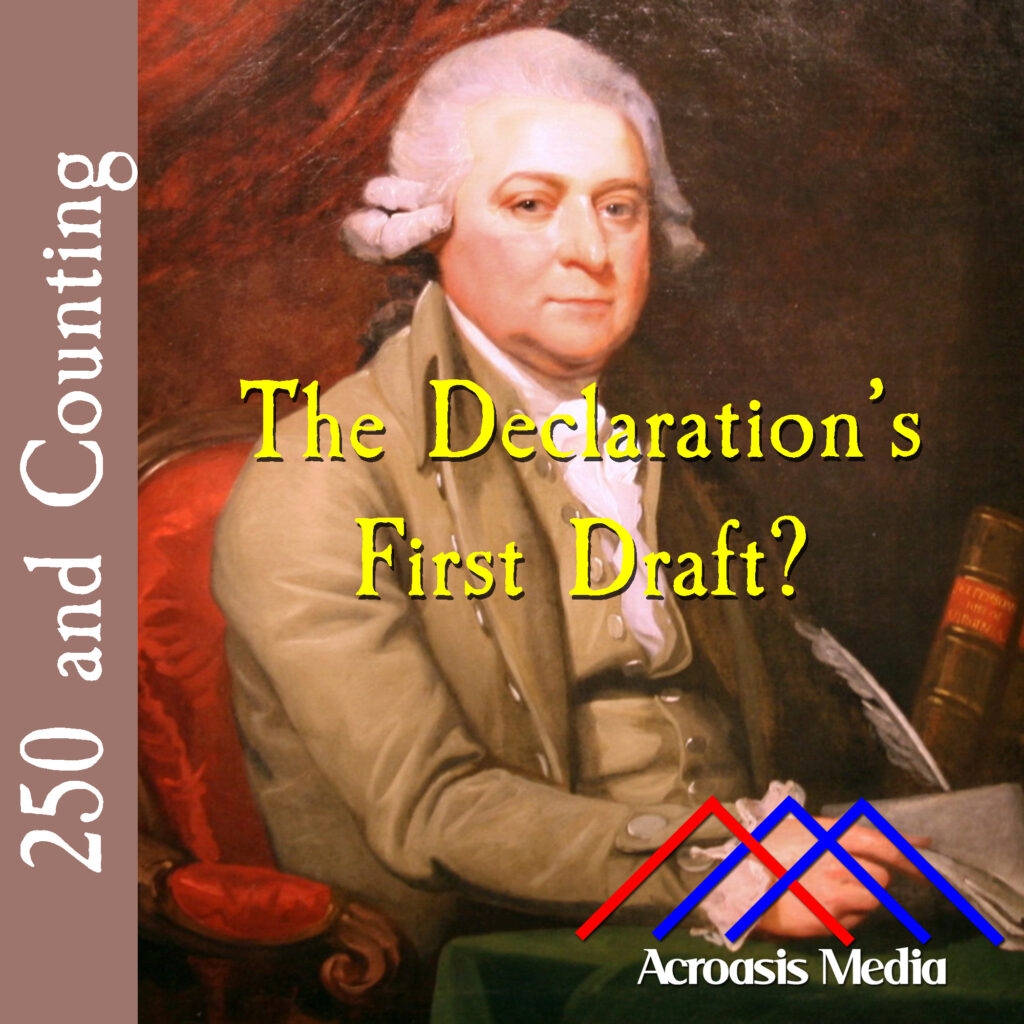
I have to admit that this small chunk of history has me a little confused, because if you’re going to vote on a resolution, shouldn’t you have the wording of that resolution in place? But the Second Continental Congress did vote on May 10, and now they’ve written a Preamble to the Resolution, largely drafted by John Adams. And from many angles, it looks like a formal break from England, but it’s really not.
Adams also thought the Preamble to the Resolution looked like a formal break, but he also recognized that a genuine declaration would be needed, and soon.
The Preamble to the Resolution read thus:
Whereas his Britannic Majesty, in conjunction with the Lords and Commons of Great Britain, has, by a late Act of Parliament, excluded the Inhabitants of these united Colonies from the Protection of his Crown; and whereas no Answer whatever to the humble Petitions of the Colonies for redress of Grievances and reconciliation with Great Britain has been or is likely to be given, but the whole force 386of that Kingdom aided by foreign Mercenaries is to be exerted for the destruction of the good People of these Colonies; and whereas it appears absolutely irreconcileable to reason, and good Conscience, for the People of these Colonies now to take the Oaths and Affirmations necessary for the support of any Government under the Crown of Great Britain, and it is necessary that the Exercise of every kind of Authority under the said Crown should be totally suppressed, and all the Powers of Government exerted under the Authority of the People of the Colonies, for the preservation of internal peace, Virtue and good order, as well as for the defence of their Lives, Liberties and Properties against the hostile Invasions and cruel depredations of their Ennemies; therefore
Resolved That it be recommended to the respective Assemblies and Conventions of the United Colonies, where no Government sufficient to the Exigencies of their affairs hath been hitherto established, to adopt such Government as shall in the Opinion of the Representatives of the People best conduce to the happiness and Safety of their Constituents in particular and America in General.
Adams was pushing the rest of the Congress hard, and he knew it. Moreover, so did they, and in his diaries he notes the dismay and even anger that he brings on when he talks about Independence. But before long a Committee of Five will be formed to write up an important document.


Podcast: Play in new window | Download