Category: Slavery in America

  • Busy Day For Mr. Rutledge–September 27, 1776

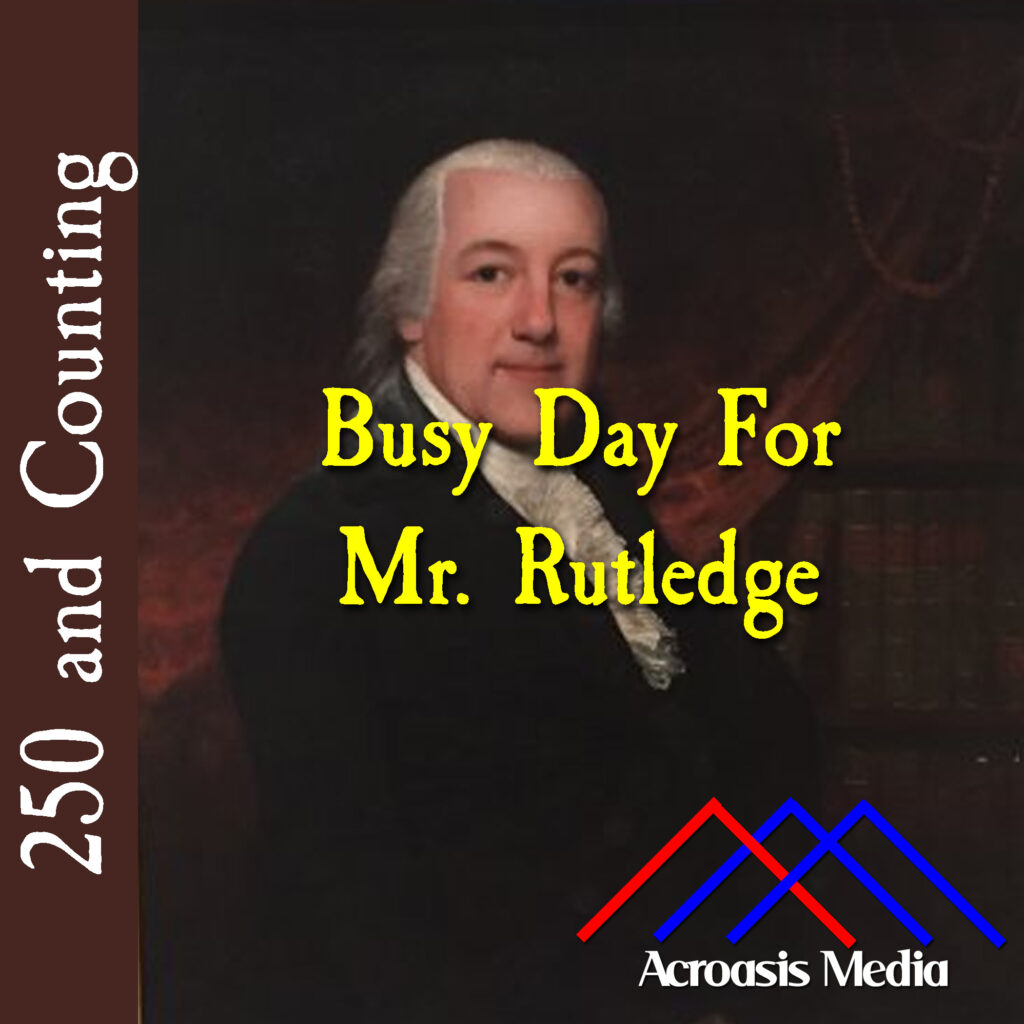
    Cover art for September 27, 1776: Portrait of Edward Rutledge by James Earl, 1791. via Gibbes Museum of Art in Charleston, SC.

    In putting this episode together, I realized that I used this same image of Edward Rutledge back in the September 9 episode. However, I neglected to put the information for the image in the alt text. And that’s something I do try not to overlook. On the other hand, I was still hopped up on cold medication, so there’s that.

    And before I forget, I mentioned the censure of Esek Hopkins during the episode, so I wanted to ensure that I linked back to that as well.

    In addition to being the youngest signer of the Declaration of Independence, at the tender age of 26, Edward Rutledge was also a governor of South Carolina. By my count he was their ninth governor, from 1798 to 1800, but that’s if you count his brother John Rutledge twice, since John served twice, non-consecutively. Also, he was the ninth governor of the state of South Carolina; if you count the colonial governors, he’d be thirty-ninth.

    After leaving the Continental Congress, Rutledge did fight in the Continental Army. He was captured during the Siege of Charleston in 1780 and released in a prisoner exchange the following year.

    I should note that while Rutledge was governor he suffered from an attack of gout and went home to Charleston to recuperate. Not long afterwards, he heard the news of George Washington’s death and was so upset by this that he had an attack of apoplexy and died. (Modern-day medical types would probably say that he had a cerebral stroke.) Rutledge had been the Governor for 401 days.

  • Dunmore Has A Tempting Offer–November 7, 1775

    Cover art for November 7, 1775: detail of Lord Dunmore's Proclamation as it appeared in the Philadelphia Journal and Weekly Advertiser, 12/6/1775. Via the Gilder Lehrman Institute of American History.

    Lord Dunmore was driven from the Governor’s Mansion back in June, but he never went far. That same day he took refuge on a British ship near Williamsburg and continued playing the role of Governor, even though the House of Burgesses was already doing quite nicely, thank you.

    Slave revolts were a constant concern in the slave states, and Dunmore was almost certainly inspired by an incident just a couple of days earlier during the Battle of Kemps Landing. An enslaved man, serving alongside the British regulars, came face to face with his former enslaver, Joseph Hutchings, a local militia commander. Hutchings fired at him point blank and missed. In retaliation, the black soldier wounded him with a sword.

    Dunmore and his British compatriots, who were clearly already aware of the power of a general revolt, saw this event as an opportunity.

  • April 14, 1775: America’s First Abolitionists

    Cover art for April 14, 1775: the official medallion of the British Anti-Slavery Society. Artist unknown, but this was produced as a Jasper-ware cameo by artisans at Wedgewood Pottery.

    (Note: it’s in the alt text for the image, but in the interest of broader accuracy and general transparency, we know that this artwork isn’t the symbol for an American abolitionist society but rather a British one. But this is one of those cases where the story works better than the truth, and we found it to be a powerful image that underlines the intent of the tale. In short, let it go this once, OK?
    –CC)

    It might come as a surprise to you that societies dedicated to the elimination of slavery in America came about as early as this, especially inasmuch as we had other things on our mind, such as the largest army in the world putting us in their sights. It might also come as a surprise that the one that came first in America, exists still, but with a different focus. Tune in and learn their story.