
Category: Tennessee History

  • Samuel Powell–July 10, 1776

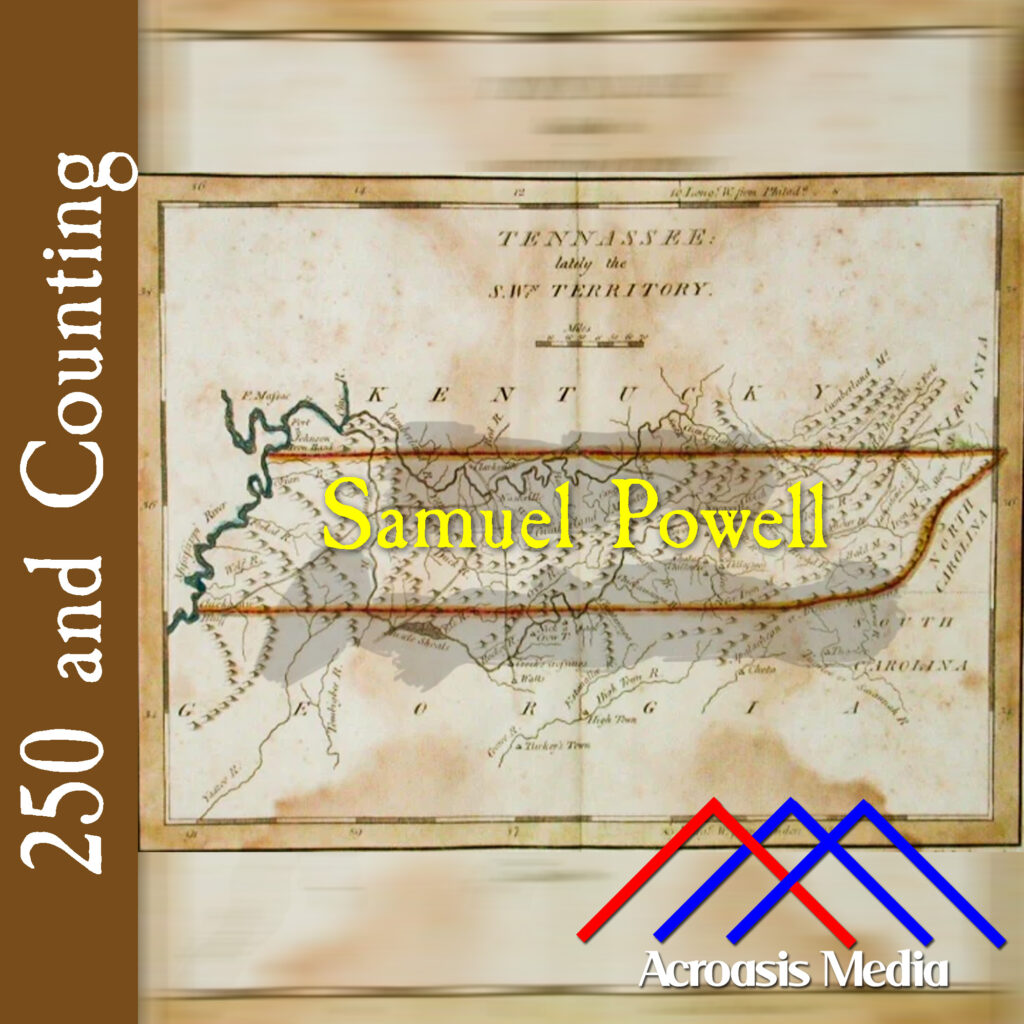
    Samuel Powell is another one of those early Representatives in our government about whom little is known from a legislative standpoint.

    We have odd details noting that he became a lawyer “prior to 1800” because we don’t really know how he got there.

    And another detail that we have about Samuel Powell is that, after his one and only term, he was not a candidate to be renominated in 1816. But there’s no reason why cited in most sources. Did he lose a primary? Maybe. Did he choose not to run? Possibly. Was that the last gasp of the Democratic-Republicans? Mmm, probably not; they were still around until 1824, at which point they split into separate factions.

    We do know that he missed 31 of 113 roll call votes, about 27.4%, which is higher than average. In his first year he missed 25% of votes and in his second year it went up to 31.7%. So even in his first year he missed more than typical. So it’s possible that he was elected for a cynical reason—to gain recognition and some name power. Once he had that, it was recommended that he walk away, so he did. This is entirely speculation on my part, though.

  • March 19, 1775: The Watauga Purchase

    Cover art for March 19, 1775: Historical marker in Elizabethtown, Tennessee, commemorating the Watauga Purchase.

    The Watauga Purchase was one of several land purchases in the area of the Watauga River made around the same time. But this one was first, and we know this because it’s literally on Page One of the deed book, which still exists in the Archives of two different states (one is a copy, of course).

    Interestingly, while this territory is sometimes considered by historians to be a self-governing area, the residents actually considered themselves to be British subjects, even after the war began, and to a certain extent even for a short period after the Declaration of Independence was signed. That likely ended when the Cherokees (who were aligned with the British) attacked several settlements, although they were badly beaten in the attempt.

  • February 11, 1775

    Cover art for February 11, 1775: portrait of Governor William Hall of Tennessee, by Washington B. Cooper.

    There are many events in the life of William Hall that could be ascribed to just plain luck on his part, and others which could conceivably tied to some shrewd timing on his part. But in the end, we think we’re going with luck.

    If he hadn’t survived two Cherokee ambushes, if he hadn’t been an officeholder previously, if he hadn’t been the Speaker of the Senate when a scandal broke out…things could have turned out very differently for our friend William.

    But William was also smart enough to walk away when the walking was good, and he lived to a ripe old age (81).