Category: Uncategorized

  • Two Men To The Carolinas–May, 1776

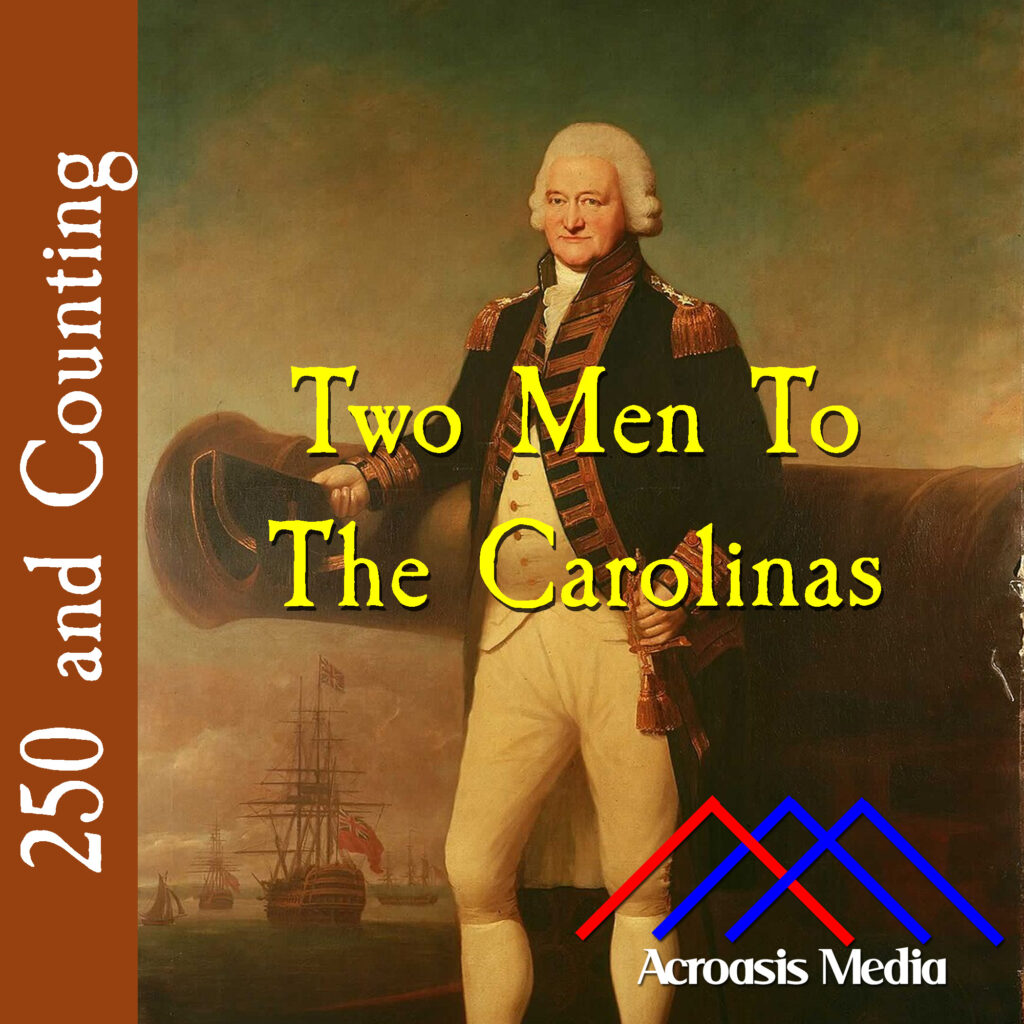
    Cover Art for May 5, 1776: Sir Peter Parker by Lenuel Francis Abbott, 1799. Note that while Parker is wearing an admiral's full-dress uniform for the period, there's an error in the cuffs.

    The advantage of having a large military force, as the British did, is that they were able to concentrate on multiple places at once with experienced soldiers. So while they had one group getting ready to move in on New York, they had others preparing to take on the southern states.

    Enter Sir Peter Parker and Lord George Cornwallis, who arrived in North Carolina on this day. Parker and Cornwallis’ mission was to take on the city of Charleston, in South Carolina. Why land in North Carolina?

    This is a guess, but at the time there really wasn’t anything between Wilmington and Charleston. None of what we now call The Grand Strand was developed to any significant extent. So staging everything in North Carolina, while simultaneously sending ships to observe Charleston, was the practical move to make.

  • A Special Proclamation–March 16, 1776

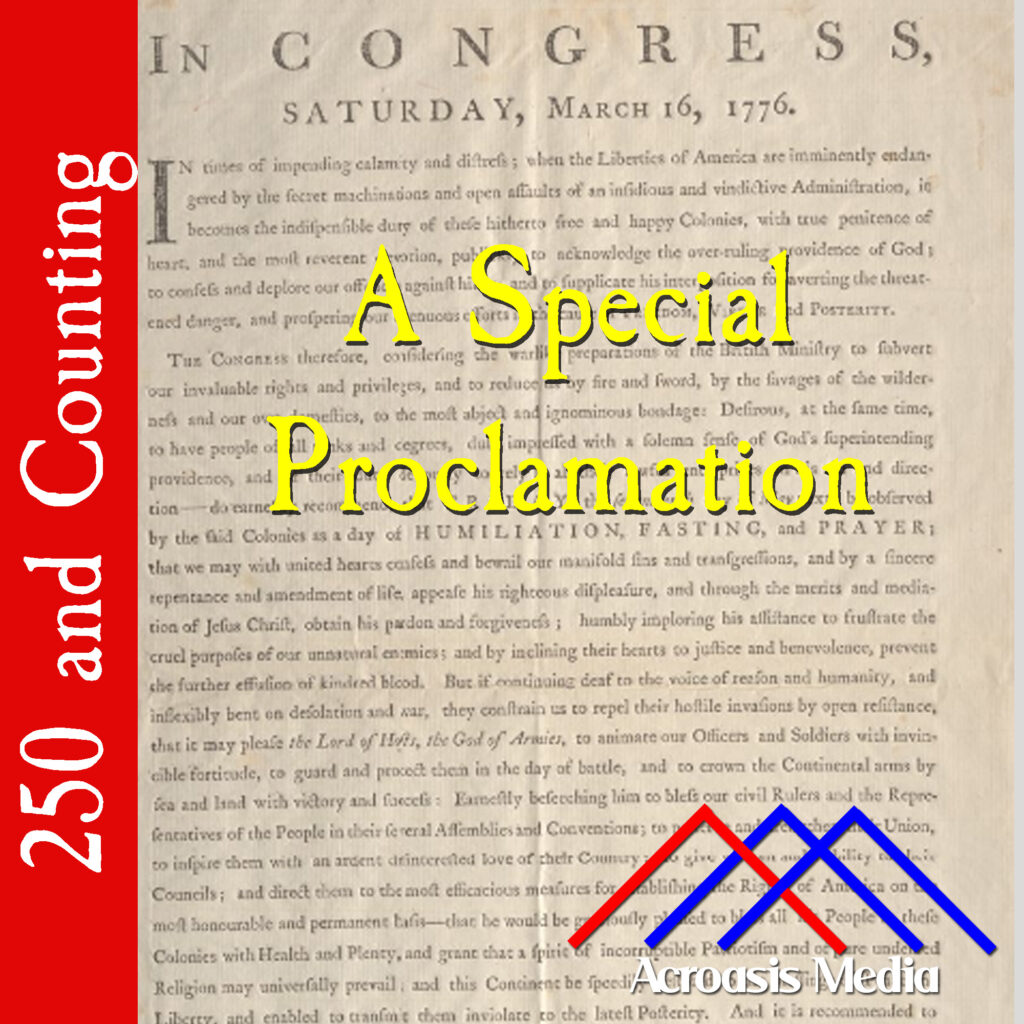
    Cover art for March 16, 1776: the broadside version of the proclamation issued this day. via The Revolutionary City collection.

    As we noted back in July, a day of prayer, humiliation and fasting wasn’t new to the Continental Congress. (Go back to that episode’s show notes to see my explanation of the word “humiliation” in this context.) And, as Mike notes in the episode, it wasn’t even close to the last for this Congress.

    That’s neither good nor bad; it probably gave everyone the opportunity to simply stop and contemplate matters. Tensions were rising high by now, and it would have been easy to make a rash, emotion-based decision. So why not take a moment to ensure that whatever deity you subscribe to is inclined to help you?

    I don’t frame it that way to be provocative; we all too often hear rhetoric suggesting that all of the Founding Fathers were good Christians. In fact they ran the gamut from orthodox Christianity, through rationalistic theism, through Deism. Thomas Jefferson once edited a Bible which removed references to miracles and the divinity of Jesus. Even among the “orthodox Christian” crowd, one could find Quakers, Lutherans, Dutch Reformed, Anglicans, and Presbyterians. One of our first episodes featured a Jewish Patriot. And even though he didn’t appear to practice publicly, Alexander Hamilton was raised Jewish as a child.

    The point here is that when you’re in hopeless times—and fighting off the British was considered a lost cause in those days—you take the comfort where you can. Whether that’s in God, Buddha, Krishna, Zeus, Mohammed or another human being, it’s not wrong to give yourself some form of contemplation.

    Okay, rant over.

  • A Council of War–January 16, 1776

    Cover art for January 16, 1776: This appears to be a colorized print taken from a monument relief. This is actually Washington's Council of War from shortly before the Battle at Monmouth.
    This appears to be a colorized print taken from a monument relief. This is actually Washington’s Council of War from shortly before the Battle at Monmouth.

    George Washington was a good leader in the sense that he knew what his troops needed, but he was also a good leader because he sought the counsel of others before making decisions. Washington would call a Council of War before he made big movements, and the Boston Council of War was no exception.

    Washington knew that the Siege of Boston wasn’t going to last forever. Before much more time would pass, the weather was going to break and it would start to get warmer, and in his eyes, that’s when there’d be a huge infusion of British soldiers to come in from the harbor side and bust the whole thing wide open.

    And this is one of the things he discussed with his Boston Council of War. (To be fair, I don’t think that’s what he actually called it; I’m just using that phrase to make a distinction between this group and other Councils he called.)

    In addition, Washington changed his mind about recruiting soldiers who’d previously been banned.

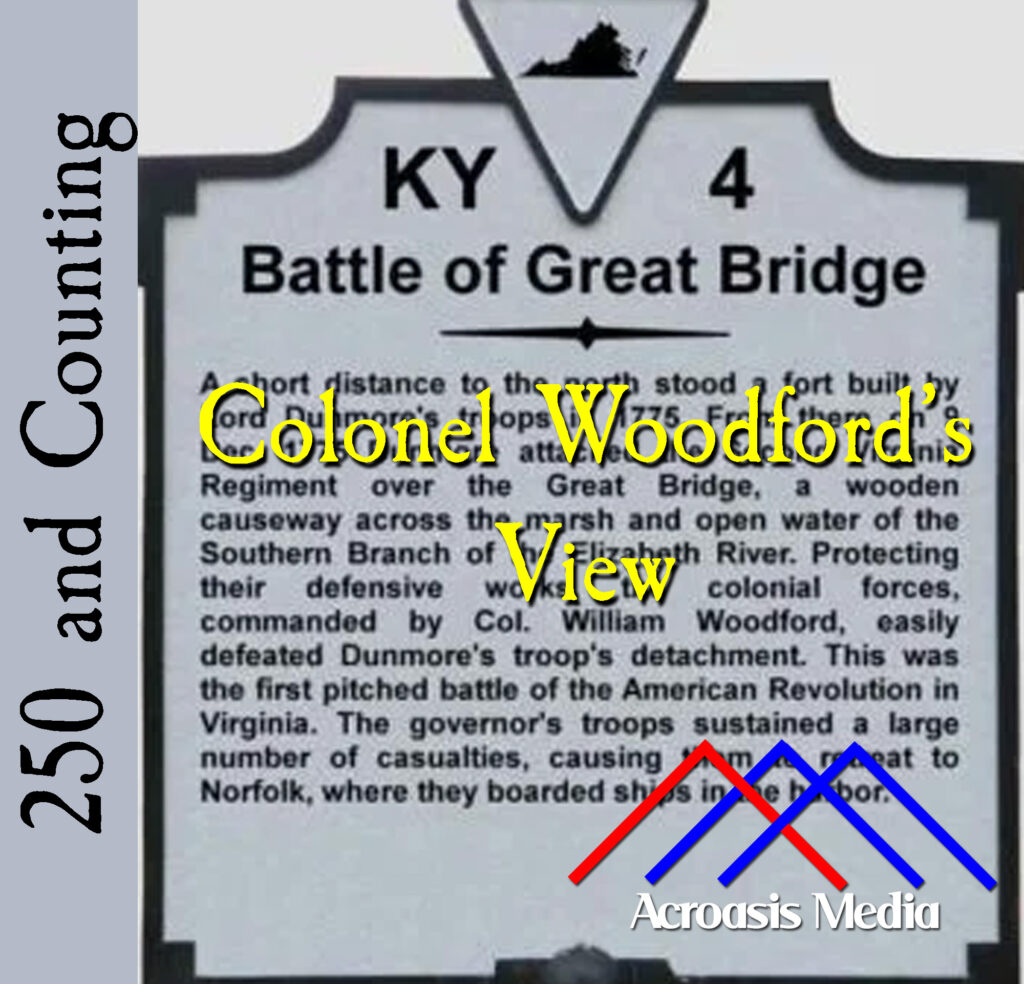
  • Colonel Woodford’s View–December 15, 1775

    Cover art for December 15, 1775: Historical marker commemorating the Battle of Great Bridge.
    Historical marker commemorating the Battle of Great Bridge.

    We’ve done several episodes about the Battle of Great Bridge, and there’s a reason for that. Bunker Hill gets all the press, but remember we LOST that battle.

    Great Bridge was the first real Patriot victory, it was the first major battle in Virginia, and therefore it poked the Virginia Convention into adopting the first public declaration expressing a spirit of independence.

    Also of note is that, according to the Great Bridge Battlefield Museum, the last Patriot to retreat before the battle began in earnest was named Billy Flora, a free black man. He came under heavy fire but he managed to remove a plank from near the end of the bridge, thus slowing the British advance.

    The shorter version of all this is that Great Bridge gave us the possibility of actually winning this thing. And oddly enough, Independence still really wasn’t on the table.

  • Credit Where Credit Is Due

    This is a peek behind the curtain, as the expression goes.

    Mike Messner and I (Claude Call) share the duties of putting this podcast together. Mike did a lot of the calendar research (in fact, he did nearly all of it). I got a bunch of the technical stuff in place before the show launched.

    For the episodes themselves, he and I usually take turns researching, writing and recording the episodes. At that point, everything goes into my hands.

    I edit the episode if necessary (rare), check it for any weird glitches, and run it through some software to even the volume out across the episode. I also write all the show notes and put together the artwork that appears alongside each episode.

    More often than not, the artwork is materials that can be found in the public domain, which is pretty easy when you’re looking for images from 250 years ago. But for our July 2nd episode, I failed to do that.

    The cover art for that episode (assuming you didn’t click the link and look) was a closeup photo of a button created by Aaron M. Peasley. The photo came from a web-based article about the creation of the emblem that appears on the US Marine Corps’ uniform buttons written by 2nd Lt. Kevin Rosentreter, and if you think it’s a niche topic…well, you’re correct in that respect.

    On the other hand, if you think it’s a boring topic, you’d be sorely mistaken. Lt. Rosentreter has woven a fascinating tale which is also comprehensively sourced. What’s more, he took several of the photos of the buttons seen in the article, including the one I used.

    When he called it to our attention through a comment at our sister webpage (Acroasismedia.org), I did reply to him that I was the person to blame, plus I corrected the original post to give him credit. I’m also apologizing to him here publicly and I’ll be sending him an email shortly after I post this, just in case he’s written us off entirely.

    As I said to Lt. Rosentreter at the Acroasis site, the rule in the military is that you can delegate authority but you can’t delegate responsiblity. The responsibility for this lies entirely with me, and I hope you’ll see better effort in the future to credit materials appropriately.

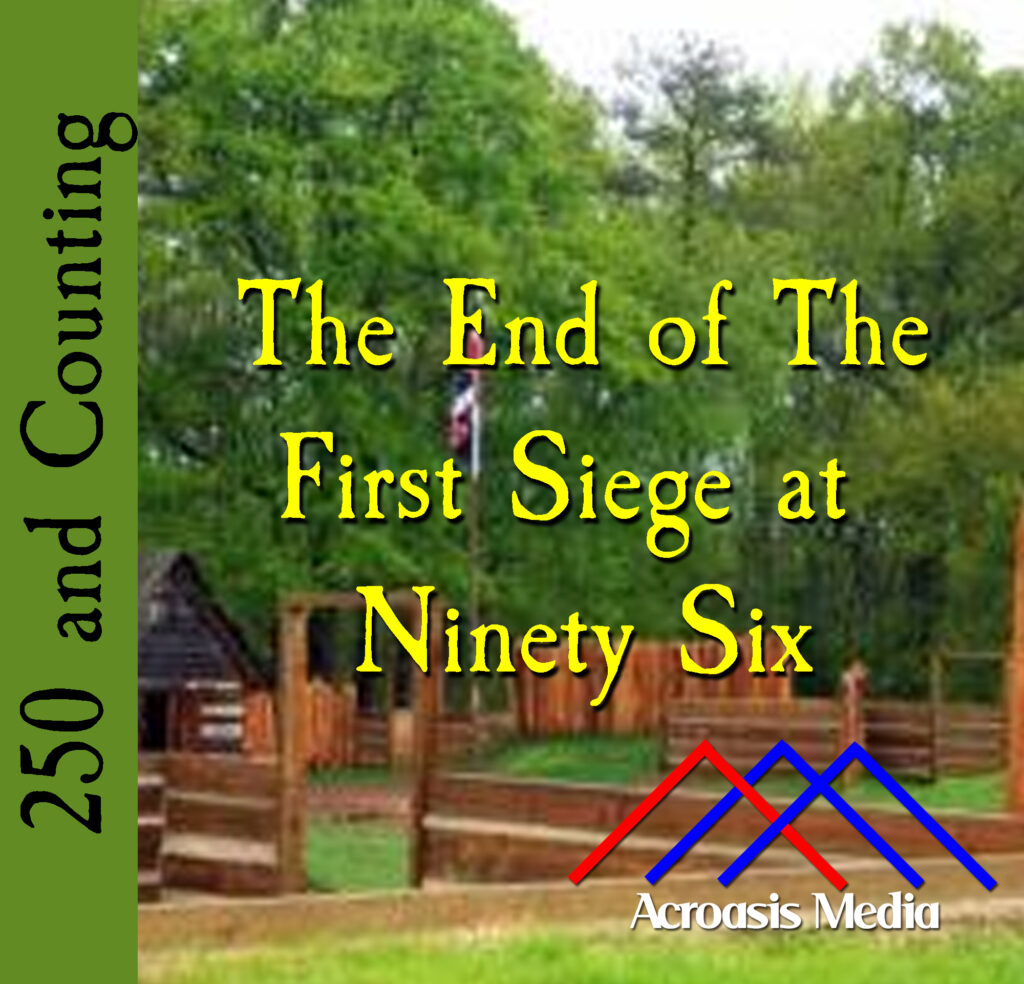
  • The End of the First Siege at Ninety Six–November 22, 1775

    Cover art for November 22, 1775: the reconstructed fort at Ninety Six. via the US Park Service.

    The siege and battle at Ninety Six managed to end abruptly, largely because the leaders on both sides were convinced that something was about to happen the would benefit the other side.

    What a gentlemanly way to go out!

    For all that shooting, hardly anyone was seriously hurt. There was one death on each side, and most of the others who were injured had the ability to get treated right away. But for the second important battle of the Revolution in South Carolina, and the first one to get someone killed in the name of Independence there.

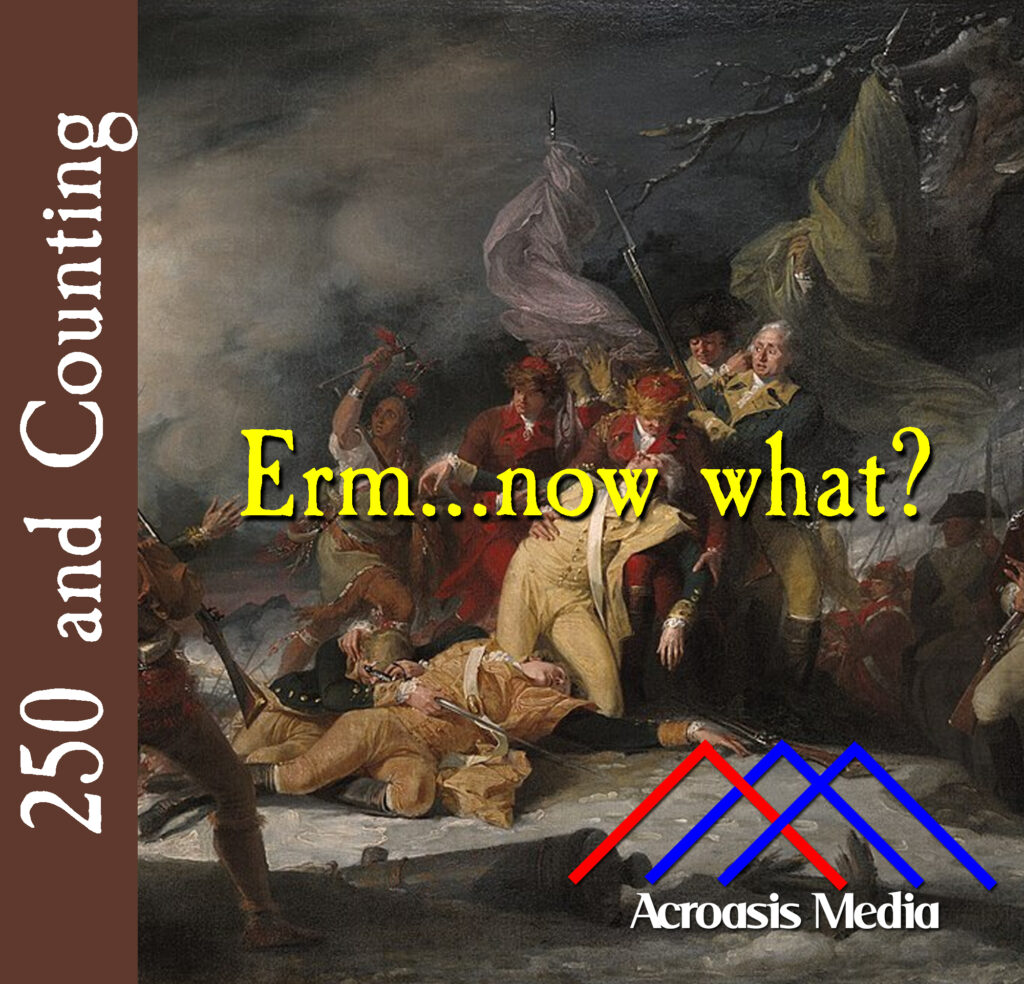
  • Erm…now what?–November 13, 1775

    Cover art for November 13, 1775: depiction of a scene from the Battle of Quebec, 1786. From Yale University Art Gallery.

    Montgomery had done his thing at Fort St. Jean. Benedict Arnold had finally made it through the Maine (heh.) Now it was time to move in on Montreal.

    What the Canadians didn’t count on was the possibility that Americans weren’t moving on Quebec, but Montreal. Americans can walk and chew gum at the same time, though, so they moved on Montreal, taking the city, and moved on Quebec at the same time, with less result. But the city was besieged just a few weeks later.

  • September 29, 1775: David McConaughy

    Cover art for September 29, 1775: Portrait of David McConaughy by unknown author - Image from Washington & Jefferson College's Learned T. Bulman '48 Historic Archives & Museum, part of the U. Grant Miller Library Digital Archives., Public Domain

    During the episode we noted that not much is known about David McConaughy’s early life. Even his adult life isn’t especially well-documented. We don’t even know who painted the portrait in today’s cover art.

    But there’s no question that, even if the man himself is a bit of a cypher, his legacy at Washington College is not.

    Meanwhile, another couple of Washingtons are in communication with each other. Lund Washington, a cousin of George, is taking care of Mount Vernon in George’s absence. Unfortunately, he’s having a rather tough week.

  • 250 and Counting: January 20, 1775

    Note: we inadvertently posted the January 20 episode yesterday. That episode has been replaced with the correct one, so if you want to hear the real January 19th episode, scroll down to the previous post and listen “again.” Apologies for the error and any confusion.

    Cover art for January 20, 1775: A diagram of an electromagnetic compass designed by Ampère..

    It’s Cake and Candles today for André-Marie Ampère. He was an advanced mathematician by the time he turned 12, and when he was 18 he estimated that he’d learned everything there was to learn about electricity and electromagnetism at that time.

    So, as one does, he continued his studies and expanded that branch of science, and beccame a full professor of physics at the Polytechnical school in Paris, even though he had very little formal education to that point. Many of his discoveries led to enormous breakthroughs in the use of electricity and electromagnetism for generations to come.