Category: Battle of Kip’s Bay

  • Battle of Kip’s Bay–September 15, 1776

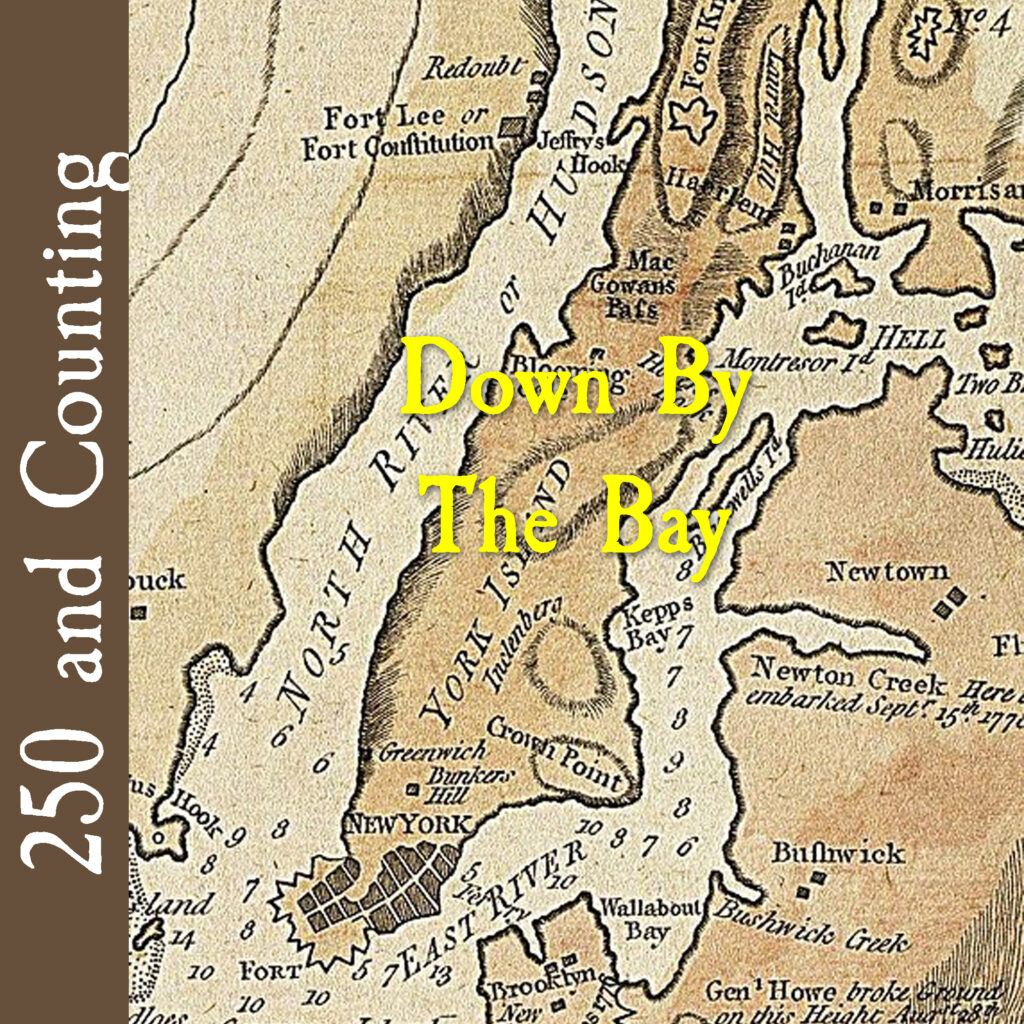
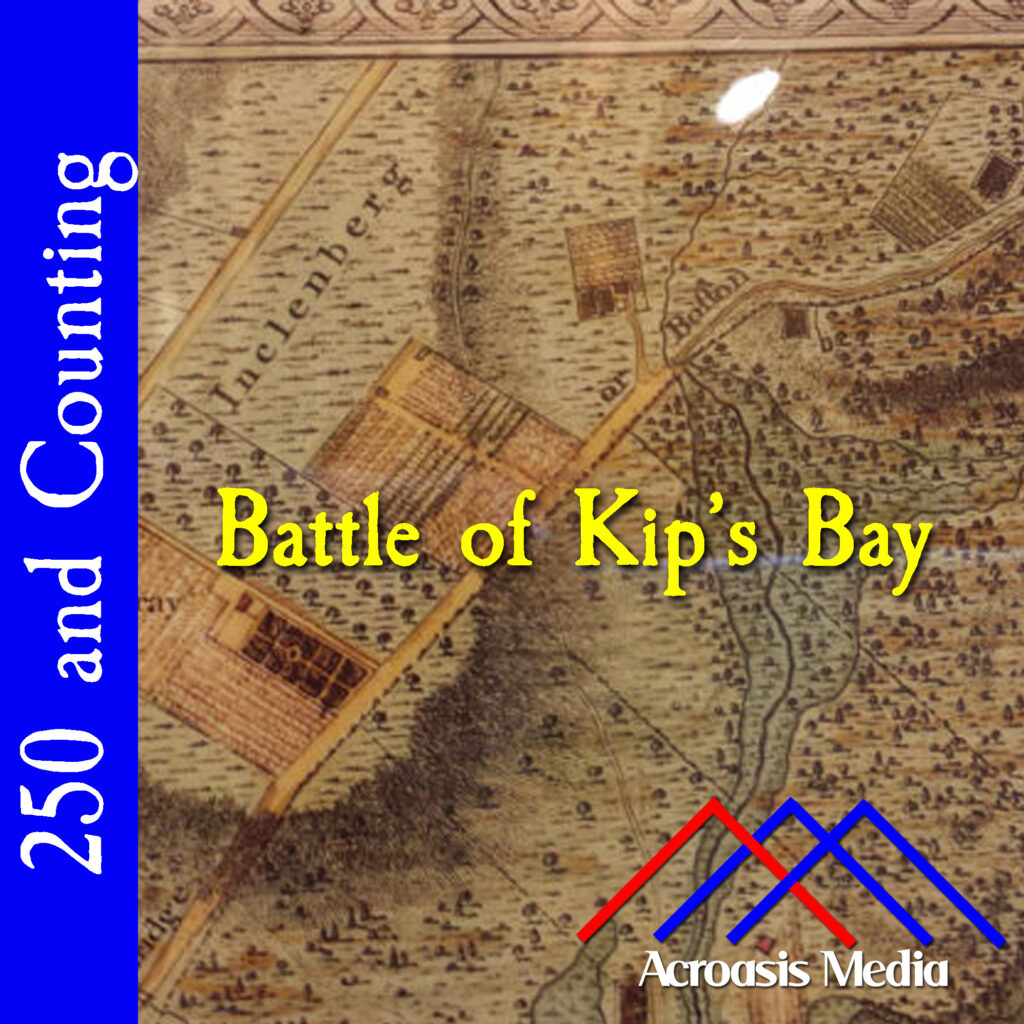
    Cover art for September 15, 1776: Map excerpt of Manhattan detailing an estate called Inclenberg. Map surveyed ca. 1766-7, published as a completed engraving in 1776. via New York Historical Society.

    Calling it “The Battle of Kip’s Bay” may actually be overstating it a little bit; there were 500 militamen from Connecticut in the area when the British landed, and their defenses were blown away almost immediately, after which they panicked and ran.

    But I tell you all about that in the episode. This is my chance to tell you a related story, and nobody knows whether it’s true.

    If you look at today’s artwork, you’ll see a piece of a map and an estate called Inclenberg, about where modern-day Murray Hill can be found. Kip’s Bay is just out of frame to the right. Inclenburg was owned by the Murray family (hence the neighborhood name), who were a family of Quaker merchants who owned a wharf and a fleet of ships at the base of Wall Street.

    Now, the story goes that the original plan was for the British to march across Manhattan, west to east, in order to cut off Washington’s army. As I note in the episode, about a third of them were still to the south in the city and would therefore be trapped and stranded. Then, once they were divided, the British would pursue the rest of them to the north, in Harlem Heights.

    What’s known as a fact is that the British did not complete their traversing of the island; they stopped somewhere around Inclenberg. The legend part of this story is that when they got to Inclenberg, Mary Murray, the socialite who ran the estate, and two of her lovely daughters came out to greet General Howe and his commanders and offered them some afternoon tea.

    Howe and his officers had a wonderful afternoon of hospitality, with tea and entertainment by the girls (singing, ya pervert), and the finest Madeira wine in New York City. In the meantime, Major Aaron Burr led the separated group of troops up through the western side of the city to Harlem Heights, and relative safety.

    It’s really more likely that Howe simply stopped while waiting for more forces to arrive, and that’s the story I tell during the episode. But it’s a fun story, and it is known for sure that General Putnam’s men did escape what would have been certain capture by the British, who had to be absolutely apopleptic to learn that so many soldiers had escaped yet again without their knowing about it.

  • Suspicious Movements–September 13, 1776

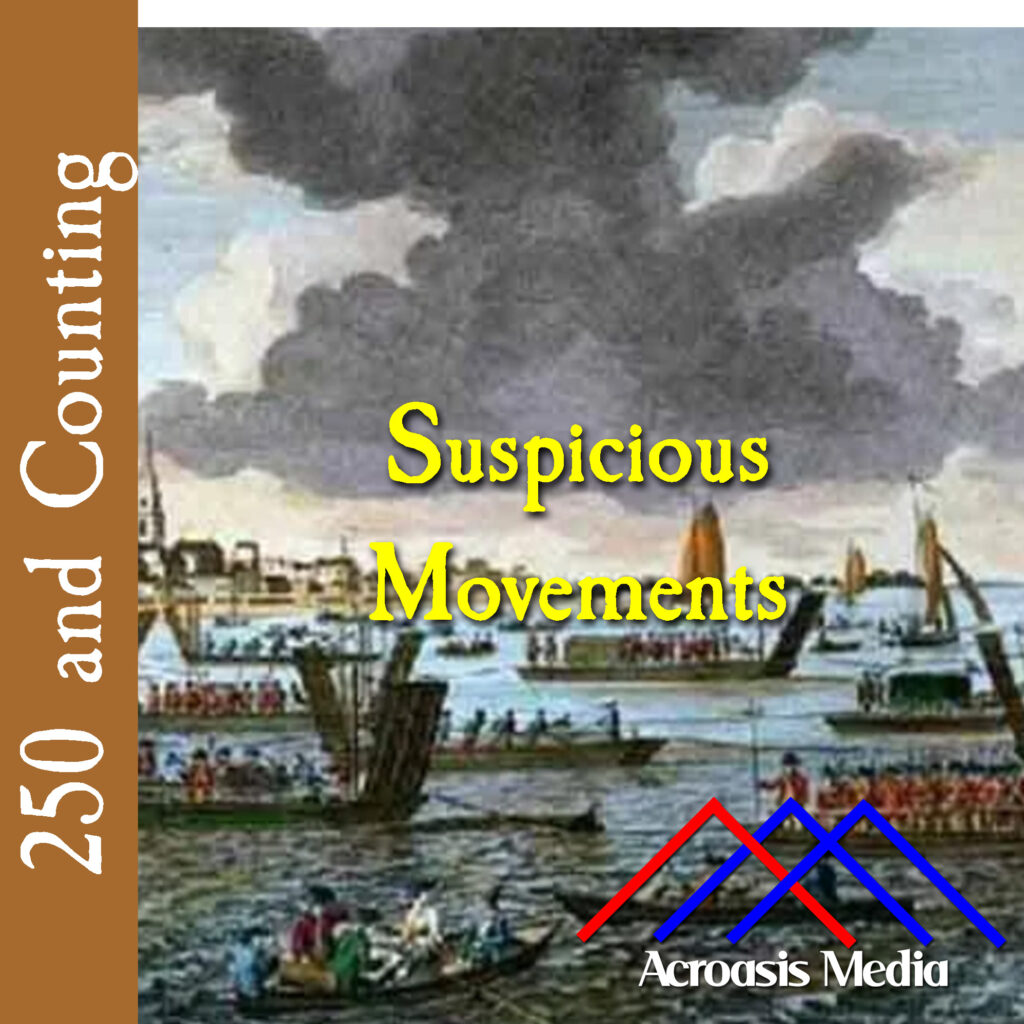
    Cover art for September 13, 1776: The British Landing at Kip's Bay, Watercolor drawing by Robert Clevely, 1777.

    When Patriot forces saw four ships moving into Bushwick Creek, it was ominous but probably not a huge surprise, given that the British already held Brooklyn. They put up largely token fire from their own strongholds and that was pretty much that.

    Washington knew that Manhattan was next, but it wasn’t clear how the attack would come, or from where specifically, but he’d already begun the work of getting people and materials out of town, so it probably wasn’t much more than a distraction for him.

    In fact, it was a distraction and a diversion, as we’ll learn in a couple of days. Whether it was strictly necessary is another question.

    A quick note on today’s artwork: Robert Clevely was a marine artist who was an eyewitness to the landing on Kip’s Bay. I figured it was worth mentioning because so many of the art pieces I wind up presenting here aren’t necessarily contemporary to their subjects. But this one is someone who was actually there.

  • More Bad News–September 10, 1776

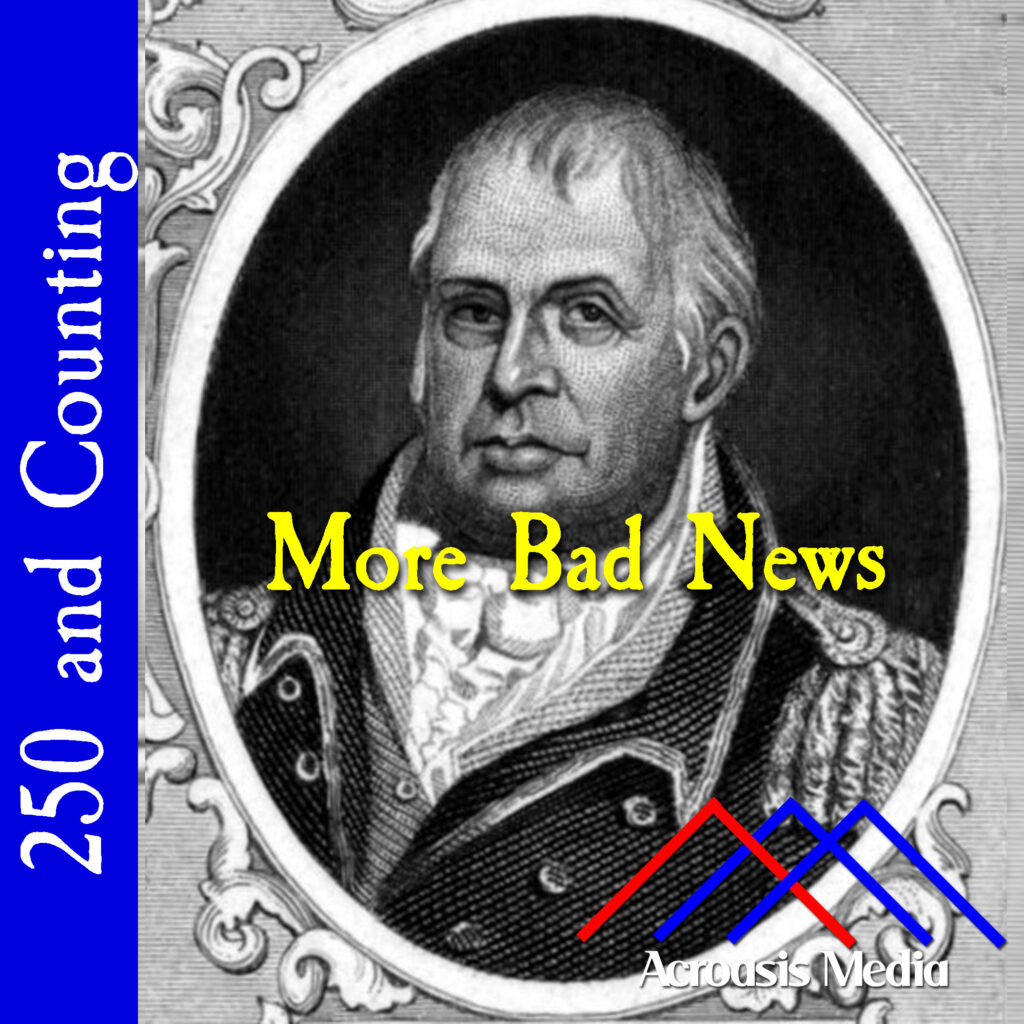
    Cover art for September 10, 1776: portrait of William Heath, artist and creation date unknown, via New York Public Library print collection.

    General William Heath was around for the battle at Lexington and Concord, but you may remember him from our episode from just a few days ago.

    He was already a Brigadier General in Massachusetts before Lexington & Concord, and as the siege in Boston started, he worked at training the troops. When the Continental Army officially formed, he retained his title and was promoted to Major General in August 1776.

    Unfortunately (as Mike notes), George Washington didn’t think much of him and kept him largely sidelined. And the one time Washington did ask him to do something important, it didn’t go well at all.

  • All Under Heaven Is Chaos–September 7, 1776

    Cover art for September 7, 1776: Cutaway diagram of the Turtle, drawn by Lt.C. Francis M. Barber of the US Navy in 1875. via Library of Congress.

    …but the situation was not excellent, for the American side, anyway.

    George Washington got a wake-up call in the form of a letter from Congress. In that letter he was told that it was not a good idea to burn down New York City; what’s more, they weren’t quite so invested in his holding the City as he thought they were. This was a good news/bad news situation for him, since he knew that strategically, the British occupying New York had the potential to be a huge problem, especially if they were able to take the entire Hudson Valley.

    But even if they didn’t, having one of our biggest and busiest ports was going to create a lot of headaches, regardless of what was supposed to be moving in or out of the city.

    Meanwhile, we have Ezra Lee making his first attempt at genuinely deploying the Turtle submersible. The currents plus the darkness made maneuvering very difficult, and while he did get close enough to Admiral Howe’s ship to stick the explosive charge to it, the spear he used couldn’t penetrate the hull enough to stick. In recent years it’s thought that he tried to pierce the hull near the rudder, which had an iron plate on it; another theory involved the recent use of copper on ships’ bottoms, but this copper was quite thin and would have been easily pierced.

    Lee made one more attempt with the Turtle, on October 6, but that try also failed. The Turtle was lost less than a week later when the sloop serving as her tender was sunk by British ships. Who knows? Maybe there are still pieces of her in the Hudson River.

  • Down By The Bay–September 3, 1776

    Cover art for September 3, 1776: A 1781 British map of Manhattan; Kip's Bay is labeled as "Kepps Bay". via Boston Public Library.

    The HMS Rose was a British ship that we first discussed a little over a year ago. Her job was largely to patrol the waters off southern New England to prevent smuggling activity on the part of the Americans.

    In July 1776 the Rose was dispatched—like many, many other British ships—to New York Harbor for the invasion of Long Island and, later, New York City. And today we look at some of her activity in the East River.

    For those of you who know the area at all, the Kip’s Bay neighborhood is where the Midtown Tunnel opens at the Manhattan end; presumably it was an especially good place to do this because unlike much of Manhattan, the land that needed digging up wasn’t solid bedrock; it was a combination of wetland and fill material from construction projects. In fact, for a while there was a cement factory nearby and a lot of their castoffs were thrown in there. Cement is tough but it’s easier to get through than bedrock, especially when it’s not one big solid chunk.

    At any rate, this move on the part of the Rose was just the beginning to what became known as the Battle of Kip’s Bay. So we’ll be coming back to this place a couple of times in the near future.

    Not long after this action, the Rose moved down to the Chesapeake Bay and then to Georgia, where she was eventually deemed unfit for service and scuttled in the Savannah River, making ship passage impossible until the war’s end.