Category: US History

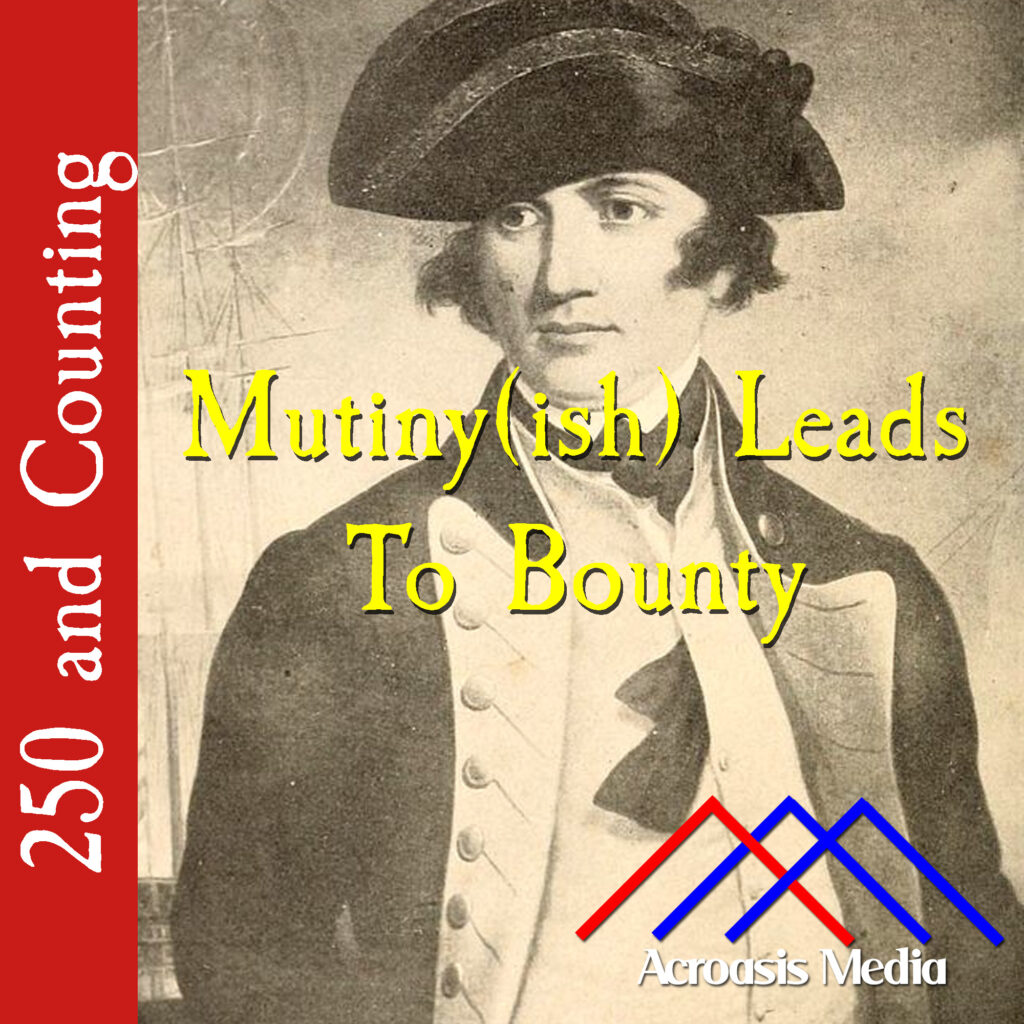
  • Mutiny(ish) Leads To Bounty–April 8, 1776

    Esek Hopkins, by Martin Johnson Heade, 1857. From a book by Edward Field, 1898, Public Domain, via Wikimedia Commons.

    Esek Hopkins wasn’t just the Commander In Chief of the Continental Navy; he was the only Commander In Chief of the Continental Navy. As we noted just a day ago, the navy was disbanded shortly after the war (sold off, you may recall) until a few years later, when the US Congress decided we needed a US Navy and we had to start all over again.

    In the 1760s he was a merchant who once took on a slave ship. Unfortunately he didn’t really know what he was doing, and more than half the slaves died enroute to the West Indies; furthermore the surviving captives were in such poor health that they sold for very little.

    For a couple of months, in 1775, Esek Hopkins was appointed as a brigadier general to shore up forces in Rhode Island, but two months later he was appointed Commander in Chief of the Continental Navy authorized by the Continental Congress to protect American commerce.

    His specific orders, which were issued on January 5, 1776, were:

    You are instructed with the utmost diligence to proceed with the said fleet to sea and if the winds and weather will possibly admit of it to proceed directly for Chesapeake Bay in Virginia and when nearly arrived there you will send forward a small swift sailing vessel to gain intelligence….If…you find that they are not greatly superior to your own you are immediately to enter the said bay, search out and attack, take or destroy all the naval force of our enemies that you may find there. If you should be so fortunate as to execute this business successfully in Virginia you are then to proceed immediately to the southward and make yourself master of such forces as the enemy may have both in North and South Carolina…Notwithstanding these particular orders, which it is hoped you will be able to execute, if bad winds, or stormy weather, or any other unforeseen accident or disaster disenable you so to do, you are then to follow such courses as your best Judgment shall suggest to you as most useful to the American cause and to distress the Enemy by all means in your power.

    Having been given eight small ships to carry this out, Hopkins instead read the last part of his orders very closely, and did exactly that part of it. Instead of hanging around Virginia and the Carolinas, he made for the Bahamas, where he executed the raid on New Providence.

    While this move proved advantageous to the colonies as a whole, the Southern Colonies were especially upset and the rifts between them and the Northern Colonies got a little wider. Ultimately (though not right away) Hopkins was politically damaged for this action. It didn’t help that Hopkins was also accused of torturing British prisoners in his care, but that led to a military policy of immediate reporting of any misconduct committed by any person acting in the service of the United States.

  • Our First Win At Sea–April 7, 1776

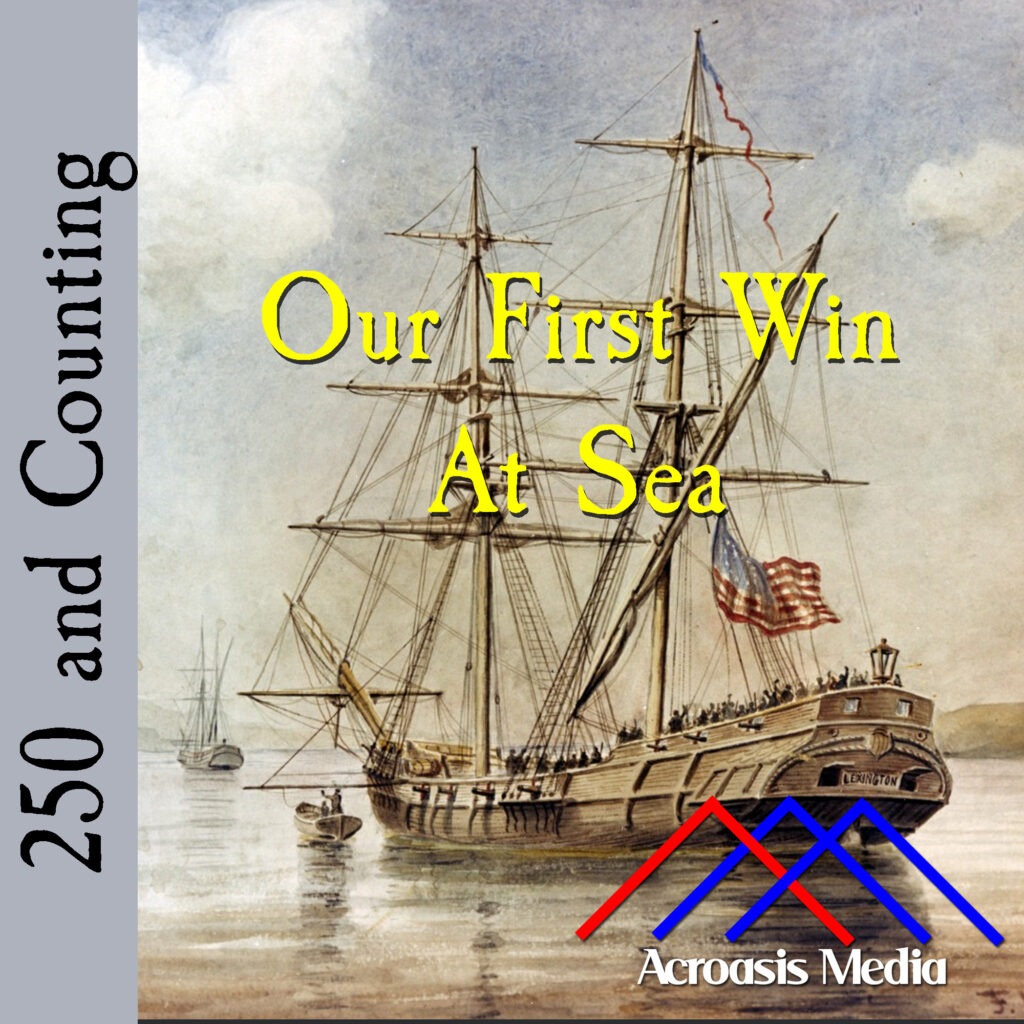
    Cover art for April 7, 1776: "Raising the 'Stars and Stripes' for the first time in home waters," painted by F. Muller, ca 1900. via the US Navy website, image catalog# KN-457.

    Captain John Barry was commanding the Lexington, looking for Lord Dunmore’s fleet when they more or less stumbled on the HMS Edward off the coast of the Virginia Capes.

    By most accounts the battle went on for two hours and included the Edward trying to lure the Lexington into the capes, though it’s not clear why. Possibly there was some help there in the form of other ships or land-based guns. And possibly because being in the capes meant that geographically, the Lexington wouldn’t have as much room to maneuver. But in the end the Lexington was victorious.

    Capturing a ship from the world’s mightiest navy, and bringing that ship back to Philadelphia, was a huge morale boost to Continental forces, especially given that the Continental Navy was so small and newly-established. Plus, John Barry became a celebrity and eventually was promoted to Commodore.

  • Brits: Keep Out!–April 6, 1776

    Cover art for April 6, 1776: A British flag covered by an interdiction symbol.

    We’ve mentioned a few times that boycotts and import restrictions didn’t have a huge impact on the British economy. After all, the British Empire was huge and America just didn’t have the financial clout to make such things hurt.

    The real issue, many Britons thought, was that America had the impudence to act at all. How dare these mere colonists think that they can behave in such a dreadful manner, what with the wasting of the tea and circumventing our governors? Stuff like that, you know?

    And it was because of that attitude that many people in Parliament weren’t so much interested in reconciliation as they were interested in punishment. But America had gotten used to being so far from Britain, and the harder that England held on, the more America just slipped out of the grasp, like trying to hold a fistful of sand.

  • Mr. Washington Goes to Providence–April 5, 1776

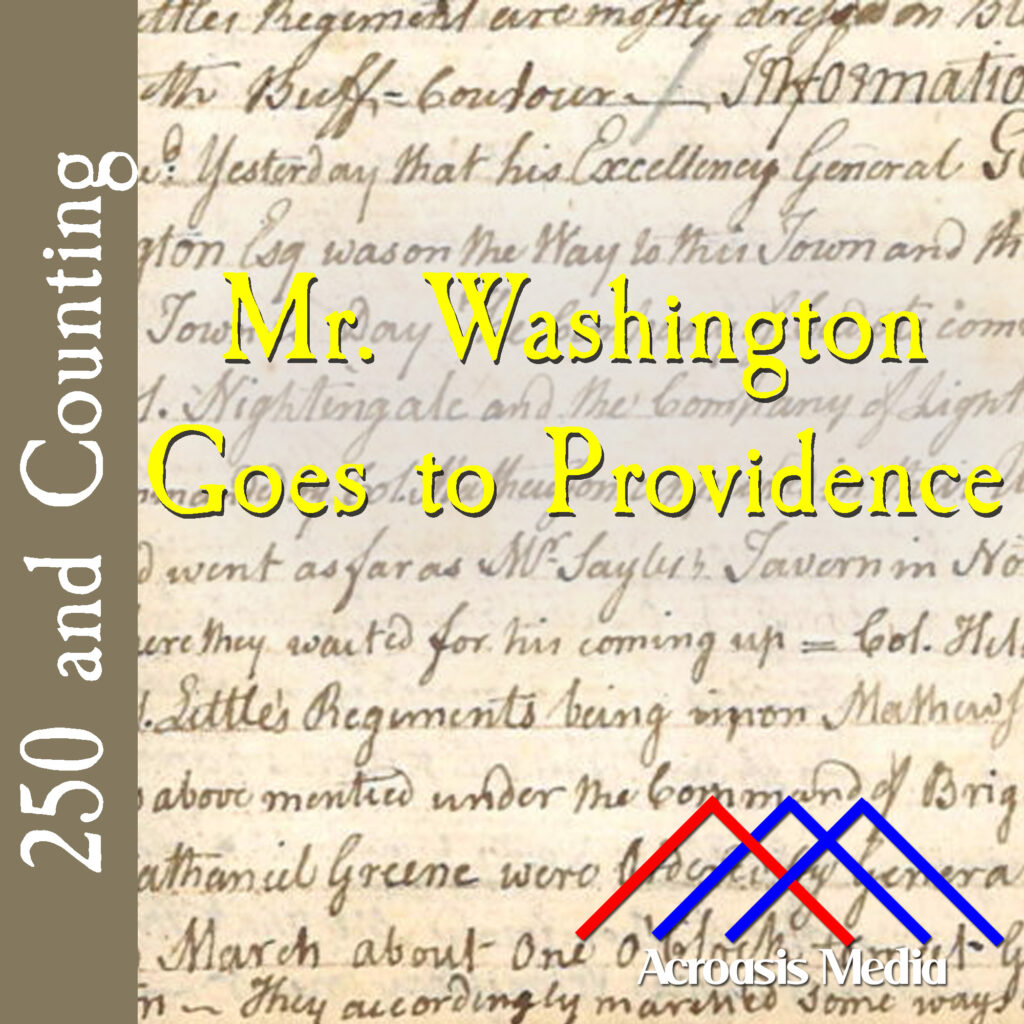
    Cover art for April 5, 1776: Detail of Theodore Foster's diary relating the arrival of George Washington. via Rhode Island Historical Society

    The war was less than a year old, but heroes were already beginning to emerge, as we learn from contemporary writings. The arrival of George Washington in Providence, RI, was considered a big event each time he came through.

    In fact, it was such a big deal that the website for Stephen Hopkins’ house in Providence notes that “George Washington was
    a guest here. Twice.”

    I suppose they could have hung up two “George Washington Slept Here” signs but nobody would get it. Then again, “George Washington Slept Here” isn’t quite the trope it used to be. Leave me alone, I’m old. And get off my lawn.

    Hopkins, for what it’s worth, was an important person in his own right, having been central to the development of the colony and then the early days of the state. If you visit the house, though, be forewarned that it’s not in the same place it was when Hopkins lived there; it’s been moved twice since he was there. Although, to be fair, it’s always been on that street.

  • Washington Departs Cambridge–April 4, 1776

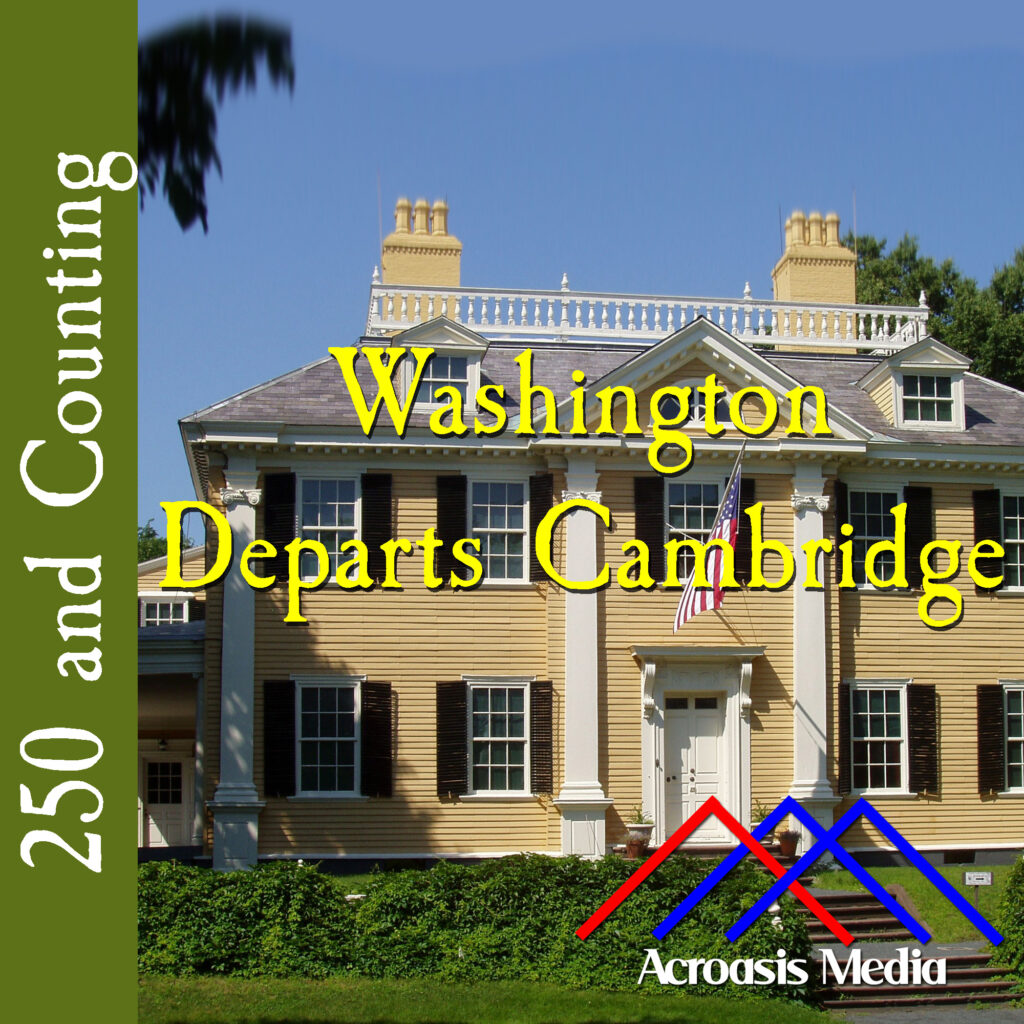
    Cover art for April 4, 1776: Longfellow National Historic Site, also known as the Vassall-Craigie-Longfellow House, in Cambridge, Massachusetts. Uploaded to Wikipedia by user Daderot.

    To say the Washington left the Longfellow House is putting the cart before the horse, because Washington was in it before Longfellow.

    The house originally belonged to John Vassall Jr, a Loyalist who had the good sense to get out of town when the shooting started. From July 16, 1775 until this day in 1776, Washington occupied it as his home and his headquarters. In 1791 Washington’s apothecary Andrew Craigie purchased the house and made a major addition to it, the only big cosmetic change to the house. After Craigie’s death, his widow rented out various rooms to supplement what little income she had, and one of her tenants was Henry Wadsworth Longfellow, who eventually became the owner in 1843 when it was purchased for him as a wedding gift.

    The Longfellow family was the last to live in the house; some time after his death the family established the Longfellow Trust to provide for the house’s preservation, and in 1972 the house and its possessions were donated to the National Park Service.

  • Elias Boudinot Caldwell–April 3, 1776

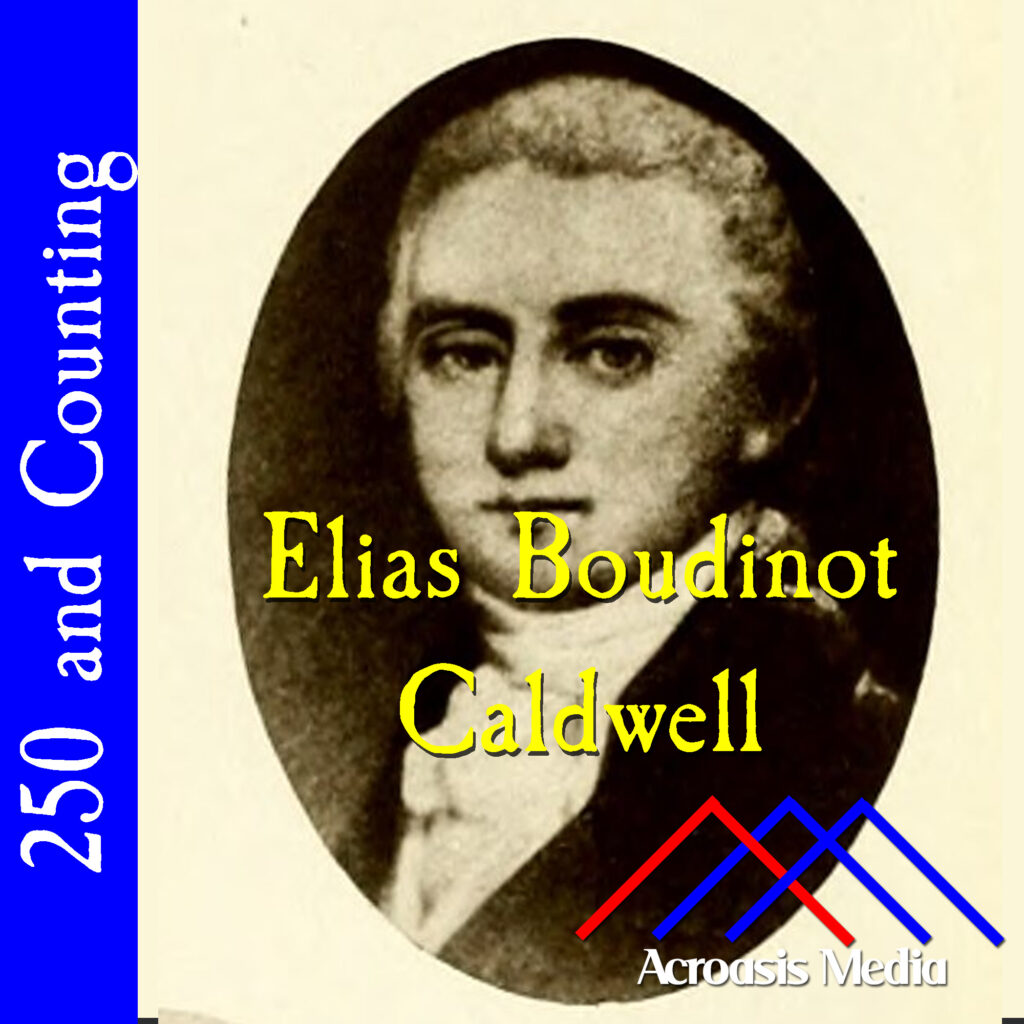
    Cover art for April 3, 1776: cropped portrait of Elias Boudinot Caldwell by William Ogden Wheeler, ca 1855. via WIkimedia.

    I mentioned briefly that Elias Boudinot Caldwell was a member of the Society for the Colonization of Free People of Color of America (to the extent that anyone can say that briefly), and I though I’d get a little deeper into that organization here.

    The group was founded in 1816 by Robert Finley, along with Caldwell and Francis Scott Key, to encourage and support the repatriation of freeborn people of color and emancipated slaves to sub-Saharan Africa. Their feeling was that free people of color could not integrate into American society. It was also thought that free Blacks running around would incite still-enslaved Blacks to escape or rebel. So…why not relocate them?

    The group, which later became known as the American Colonization Society, thought they’d be preventing a civil war from breaking out. In fact, some historians think they may have hastened its onset. What’s more, only a few thousand African Americans out of millions, eventually made the trip to (what would become) Liberia. Worse still, they were kind of bad at it. Transporting people to Liberia was very costly, and close to half the people who arrived died from tropical diseases.

    And for all that, the ACS didn’t officially dissolve until 1964.

  • Thanks, George–April 2, 1776

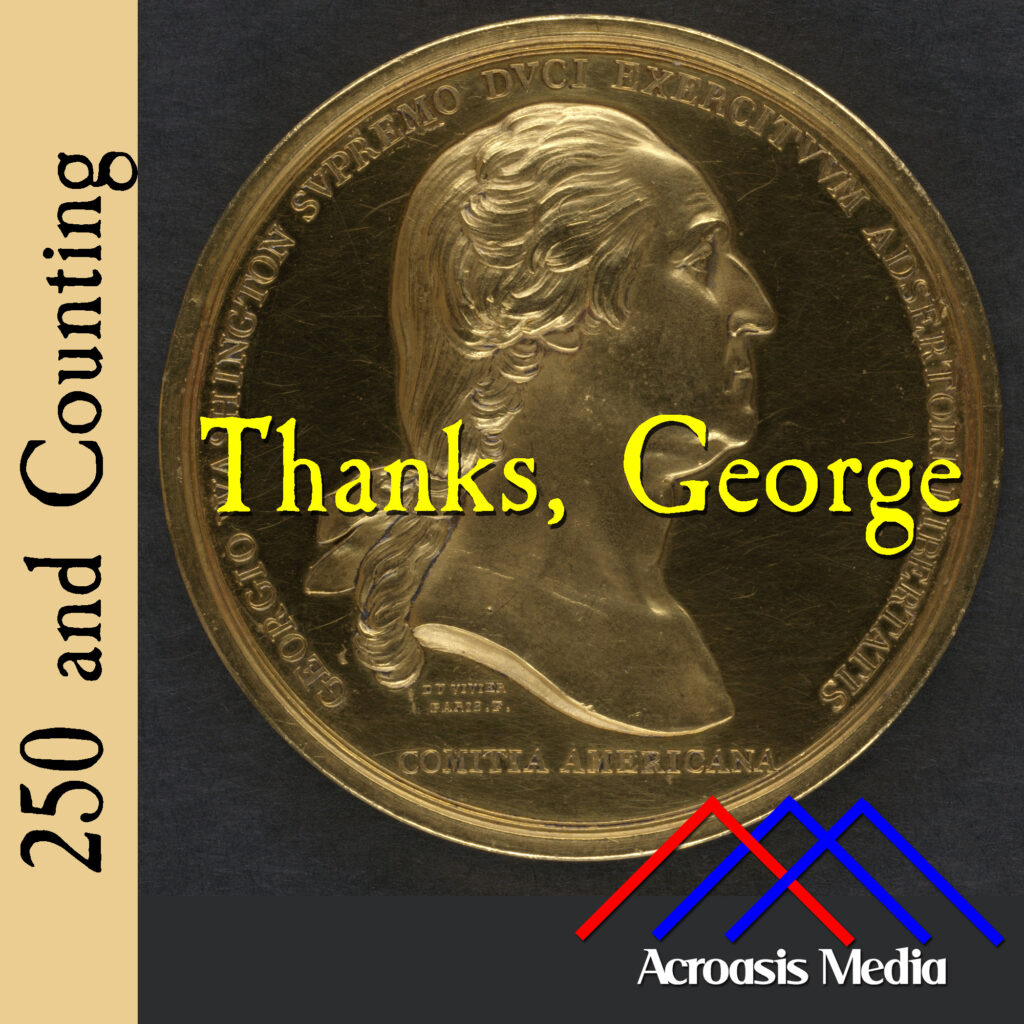
    Cover art for April 2, 1776: The original strike of Washington Before Boston Gold Medal. via Boston Public Library.

    Just a few days ago, Congress passed a resolution that George Washington should be thanked for his efforts in Boston, and that a Congressional Medal should be issued to him.

    Specifically, the resolution read:

    Resolved, That the thanks of this Congress, in their own name, and in the name of the thirteen United Colonies, whom they represent, be presented to His Excellency General Washington, and the officers and soldiers under his command, for their wise and spirited conduct in the siege and acquisition of Boston; and that a medal of gold be struck in commemoration of this great event, and presented to His Excellency; and that a committee of three be appointed to prepare a letter of thanks and a proper device for the medal.

    They did do all this, but frankly striking a congressional medal (or any other type, presumably) during the Revolutionary War was kind of a low priority (in addition to the other issues Mike cites), but it did eventually get done.

    An unknown Greek poet, possibly from the 1st century CE, once said:

    Ὀψὲ θεῶν ἀλέουσι μύλοι, ἀλέουσι δὲ λεπτά.
    The millstones of the gods grind late [slowly], but they grind fine.

    Clearly this guy knew how governments operate.

  • Gang Greene–April 1, 1776

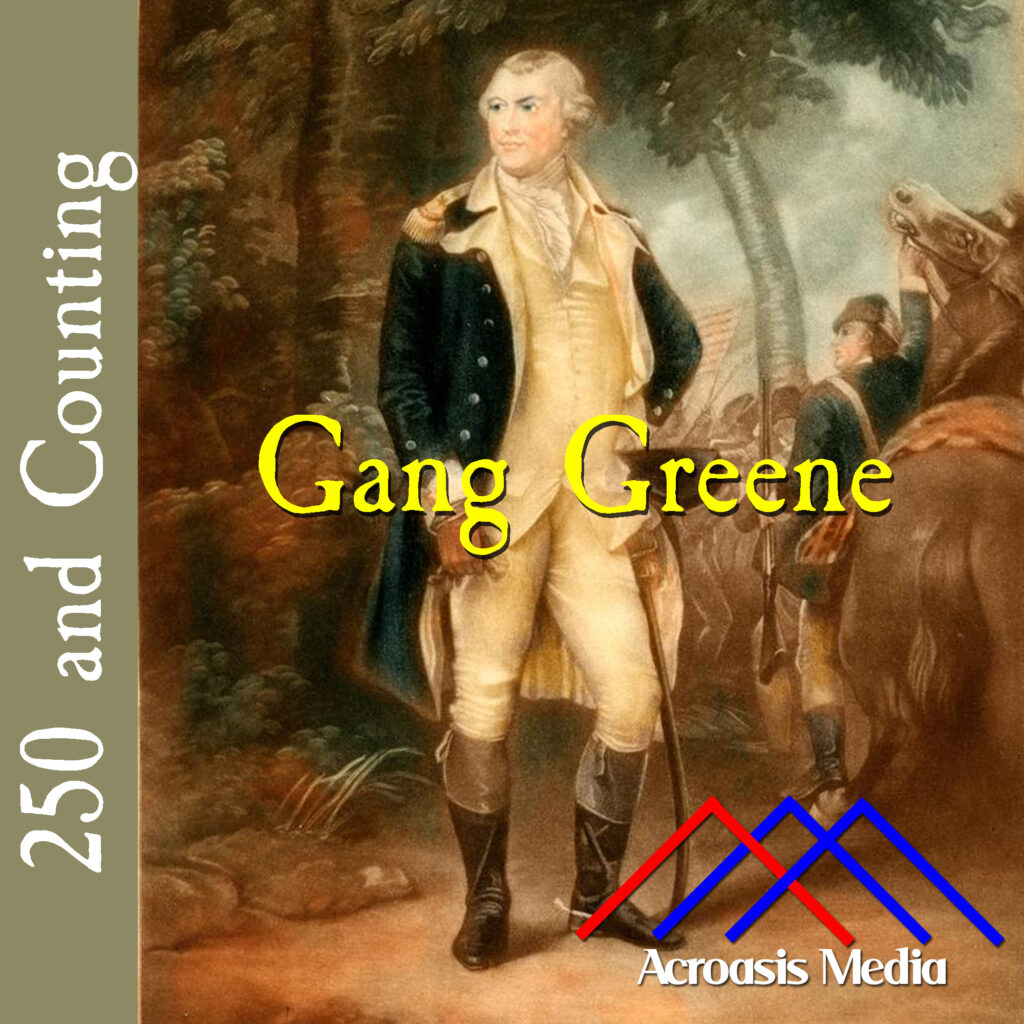
    Cover art for April 1, 1776: Portrait of Nathaniel Greene. This was a mezzotint created by Valentine Green in 1785, after an original painting by Charles Willson Peale. This is from a little later in the war, during Greene's time in the South.

    re: the title, I regret nothing.

    Nathanael Greene (you’ll also see it alteratively spelled as “Nathaniel”) was one of Washington’s trusted generals, largely because he had a keen mind for military tactics, but also because he had high expectations for his soldiers.

    In addition to drilling them regularly, he also insisted that they keep as clean as possible, including things like maintaining a clean-shaven face. Card-playing and swearing were also prohibited.

    As a result, his men stood out among the others when George Washington arrived at Cambridge, and he decided that he needed a little more of that in the Continental Army. Greene followed Washington to New York but afterward he began to take charge of military matters in the south.

    When Washington’s troops moved to the Valley Forge area in the winter of 1776, the disciplinary problems Greene had helped solve began to arise again, and Washington had to turn to another man to get his troops back in order. We’ll look at that as we get into that time of the year.

  • Farewell, Mother Jefferson–March 31, 1776

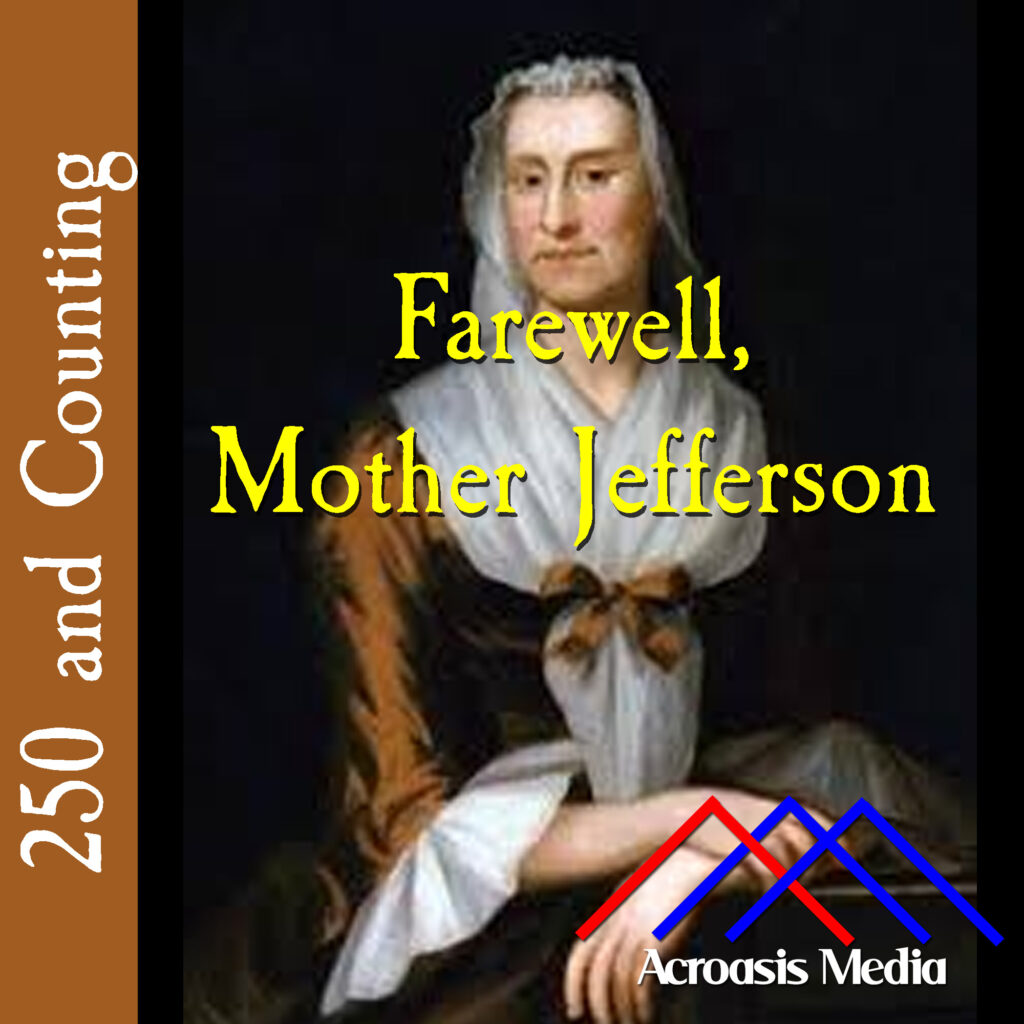
    Cover art for March 31, 1776: to be fair, this image has been identified as being one of several women, but Jane Randolph Jefferson comes up more often than others, so we're sticking with it.

    In discussing the life of Jane Randolph Jefferson, I mentioned during the episode that Thomas Jefferson rarely discussed her.

    This is not, however, to suggest that he lacked affection for her, or that he was somehow ashamed of her. There are family remembrances and contemporary biographies that show that Jane was a revered family member. It’s also worth noting that Thomas Jefferson, unlike Benjamin Franklin, was not in the habit of retaining correspondence, even with people important to him.

    Jane is credited by many historians as the person responsible for his love of music and for his writing abilities. And after all, he didn’t leave his family home until it burned down. Furthermore Thomas named his second daughter after his mother (his first was named after his wife).

  • Death Of A Belcher–March 30, 1776

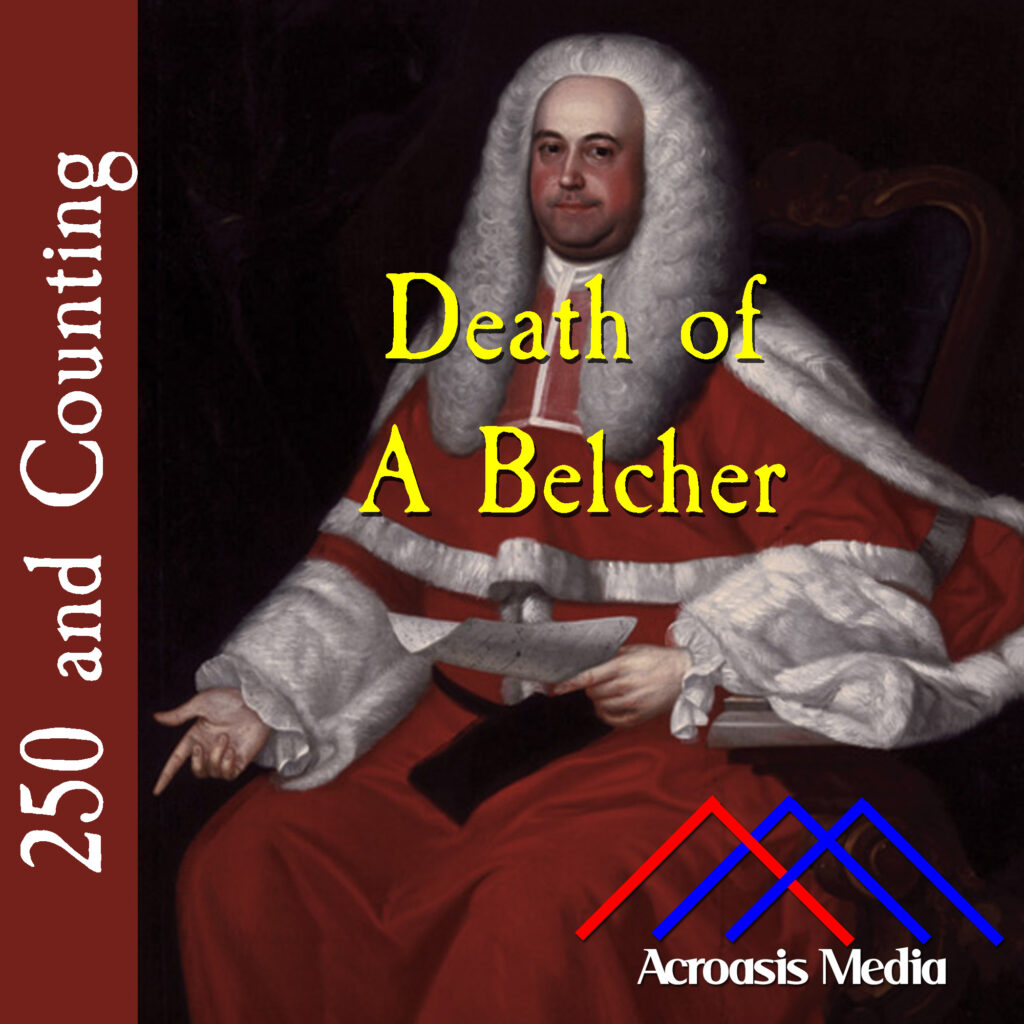
    Jurist Jonathan Belcher was born in Boston. He was the second son of Jonathan Belcher and Mary Partridge,

    Belcher entered Harvard College, where in 1728 he received a Bachelor of Arts degree in Divinity Studies. In 1730 he entered the Middle Temple, London, to read law, and in 1734 was called to the English bar.

    In the meantime he had been admitted as a fellow-commoner to Trinity College, Cambridge, where in 1733 he received another master’s degree, this time in mathematics. He later received a third master’s degree from the College of New Jersey (now Princeton University).

    In 1754, Belcher was sent to Nova Scotia to become the first Chief Justice of the Nova Scotia Supreme Court. Prior to Belcher’s arrival Nova Scotia had no formally trained law officers. This meant that he was not only interpreting the law there, he was oftentimes writing it.

    Belcher also served on the Nova Scotia Council. On July 28, 1755, he published a document which concluded that deportation of the Acadians was both authorized and required under the law. This is the decision that got him in hot water.

    From 1761 to 1763, he was also Lieutenant Governor of Nova Scotia, spending the last three years of that period as Acting Governor when Henry Ellis did not fulfill his duties. He negotiated the peace that led to the Burying the Hatchet ceremony in Nova Scotia.

    Jonathan Belcher died in office in 1776, and is buried in the Old Burying Ground in Halifax.