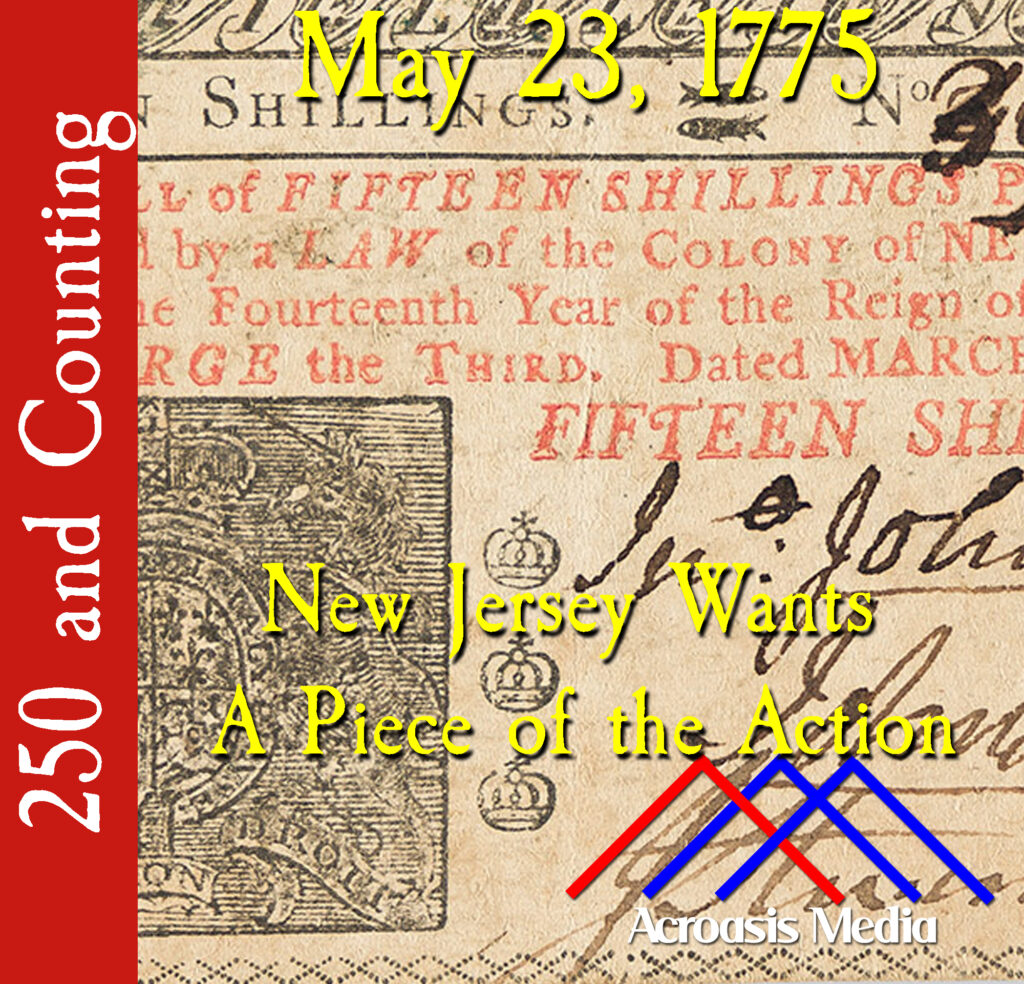
New Jersey has been pretty quiet since the Lexington and Concord fighting took place. But no more: today they came back…with a vengeance!
Podcast: Play in new window | Download | Embed
New Jersey has been pretty quiet since the Lexington and Concord fighting took place. But no more: today they came back…with a vengeance!
Podcast: Play in new window | Download | Embed
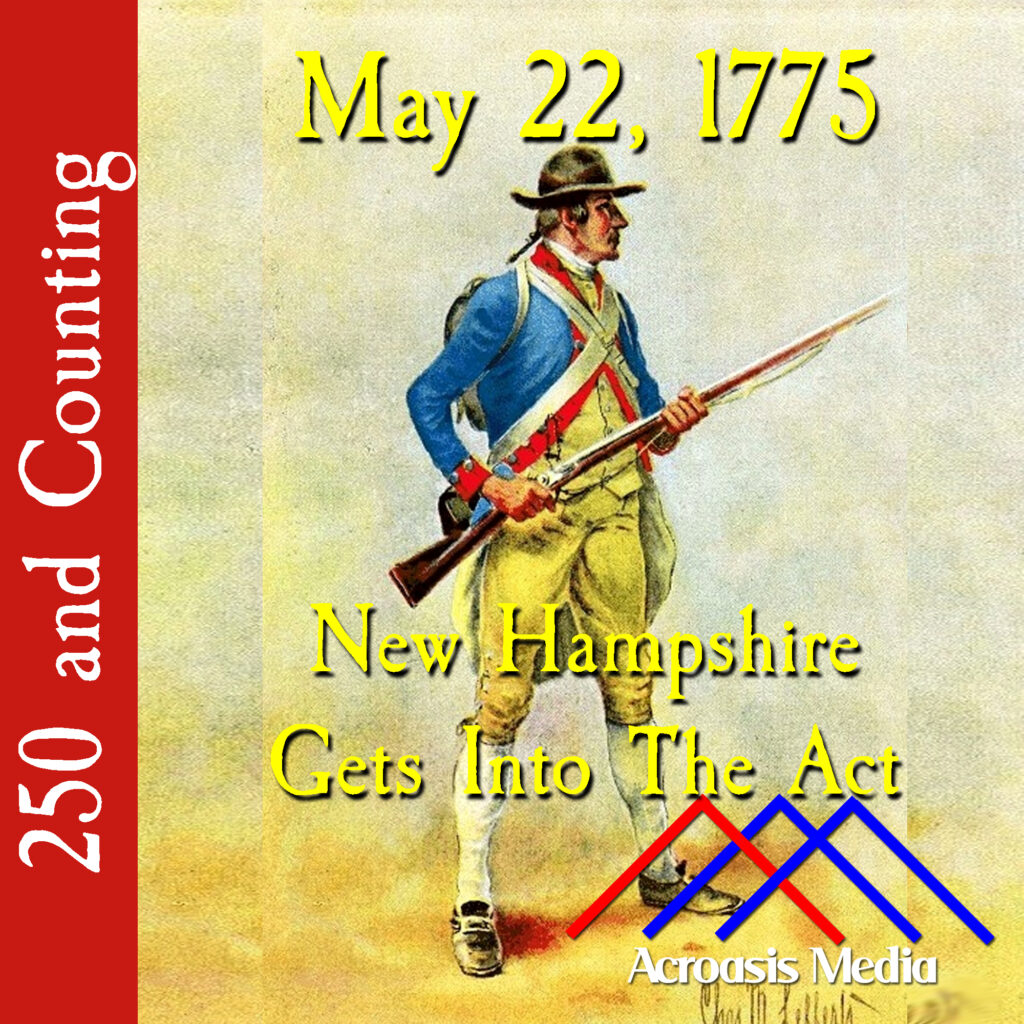
Up until now, New Hampshire has been rather quiet when it came to resisting British rule. But today was the day that “Live Free or Die” was more than a motto for their license plates, which had yet to be invented.
New Hampshire already had militias, of course, but they had a much broader range of available men from whom to choose. In addition, they organized themselves into a tight fighting force quicker than anyone imagined they would.
Podcast: Play in new window | Download | Embed
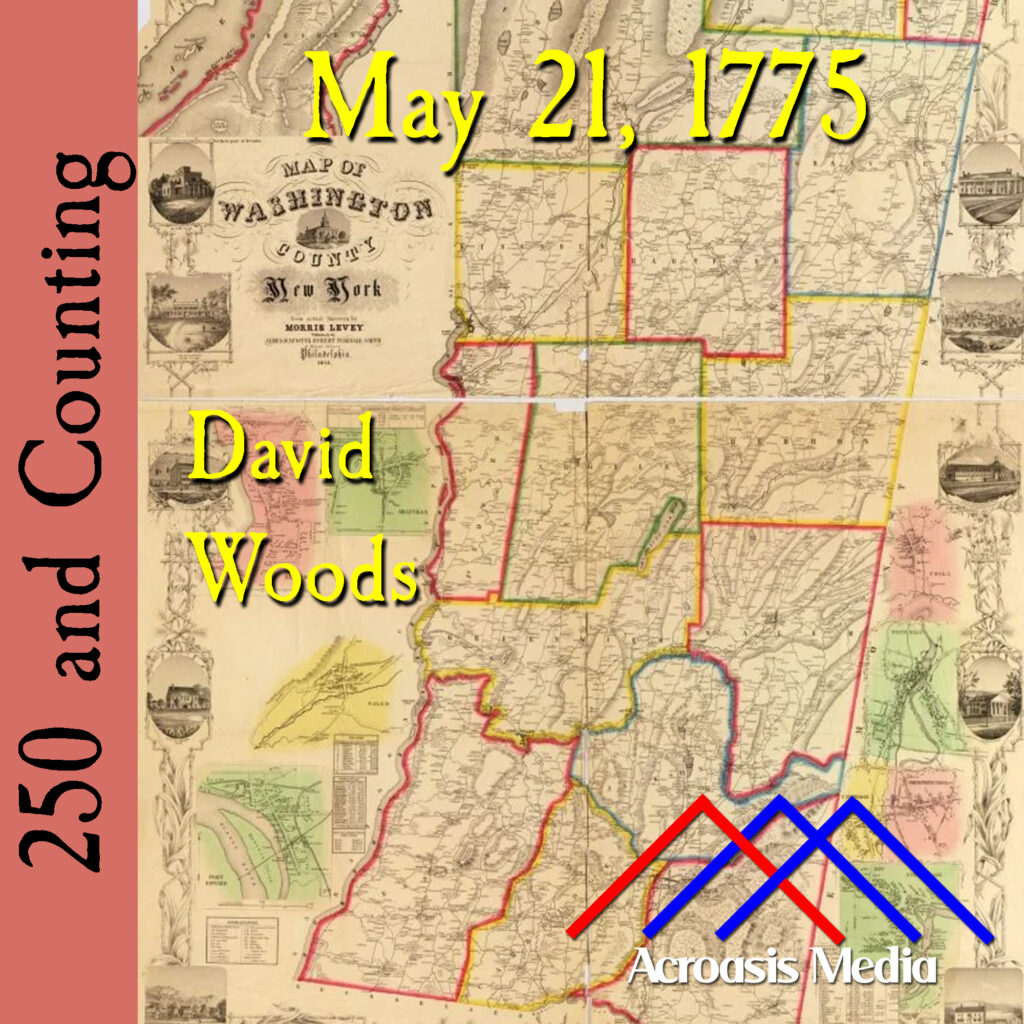
Like so many people who lived in upstate New York in the Revolutionary era, David Woods was an immigrant from Ireland when he came over with his family in 1775.
New York was unusual compared to the other colonies in that the overwhelming percentage of the population was immigrants; as a result it became a bit of an enclave for people from the UK and the Netherlands, so Woods blended in well.
As a result, we believe that although he wasn’t a politician for very long, he did a solid job, which doesn’t always stand out from the bigger picture.
Podcast: Play in new window | Download | Embed

When the folks in Mecklenburg County, North Carolina, heard about the events at Lexington and Concord a month earlier, they were quite incensed. So much so that they decided they were going to declare independence from Britain.
Maybe. Maybe not. Tune in as Mike explains the controversy.
Podcast: Play in new window | Download | Embed

Baltimore has a lot of historic pride in its street names. Nearly all of them can be traced back to an historic figure or event: Key Highway, named after Francis Scott Key. (Also the Key Bridge, but we’re all still sad about that.) Fort Avenue, leading to Fort McHenry. And while I’m at it, McHenry Street, about two miles from the fort. The town also has John Street, Eager Street and Howard Streets, all of them named after John Eager Howard. one of the earliest governors of the state.
During the revolution, a prominent family in the city of Baltimore was the Purviance Family, led by brothers Robert and Samuel Purviance. They were both well-known for their activities to support the Colonists’ side during the Revolution. Where are they memorialized?…Listen in and find out.
Podcast: Play in new window | Download | Embed
P.S. I do have theories about this but I’m hoping to explore those in a later episode.

People seem to have an inherent need to excuse their own unfortunate behaviors. One of the most common is to point to someone else breaking a rule and making it about them.
Or, in the case of most of the battles of the early American Revolution, the colonists seemed always to be the aggressor, making their actions strictly an act of self-preservation.
But what happens when you’ve captured all their horses? Tune in!
Podcast: Play in new window | Download | Embed


Is it just me or does Daniel LeRoy look a lot like actor Richard Kind?
Daniel LeRoy was born in upstate New York and started to put together a pretty good settlement, but an unfortunate choice on his part caused him to lose it all.
So he moved west and rebuilt his life and, by most accounts, it’s reasonable to say that he did rather well in the Michigan Territory, and in the State after that area became our nation’s 26th.
Podcast: Play in new window | Download | Embed

While the Declaration of Independence was still about 15 months away, a small community in the far western reaches of Pennsylvania decided not to wait around for it to happen, and they took matters into their own hands.
The Hanna’s Town Resolves was probably the most direct challenge to British rule to date, if you don’t count the stuff that involved shooting.
Unfortunately, in the end the entire town paid the price and it was destroyed. However, on the same site you can visit reproductions of several of the structures that originally stood.
Likewise, the original document of the Hanna’s Town Reserves was never recovered (and was probably destroyed in the fires that took out the town), but the text was reproduced in the Pennsylvania Gazette in August of that year, which is the only reason we know about it today.
Podcast: Play in new window | Download | Embed

The Second Continental Congress has only been convened for about five days and things are already heating up for them.
Delegates are still arriving. Lexington and Concord has upset their original plans so they’re making alternate plans. And even the alternate plans they made five days ago are being amended.
And then Virginia comes in with some crazy idea about Independence? Will the madness never end?
(Spoiler alert: it doesn’t, but we’ll tell you if it ever does.)
Podcast: Play in new window | Download | Embed

The Thirteen Colonies didn’t have a lot in the way of a navy to help them with their battles, especially not against perhaps the biggest and best navy ever up until then.
What they did have was people who were willing to act in lieu of a navy. Some of them did it out of sheer patriotism, and others were a little more mercenary about it. Specifically, privateers.
Now, “privateers” sounds a little like “pirates” and people often use the words interchangeably. You should stop being friends with those people. Privateers are a specific breed of sailor. They’re government-sanctioned to act as a kind of ad-hoc navy, authorized to take action in times of war. Typically, their job was to disrupt merchant vessels (hence the confusion with pirates).
It wasn’t long after the Revolution began that Fairhaven, Massachusetts, became a place known for privateer activity.
Podcast: Play in new window | Download | Embed
Extra credit activity: check out the West Wing, Season 4, Episode 18. You’ll learn more about privateers, and as a bonus, you’ll never think of Francis Scott Key the same way ever again.