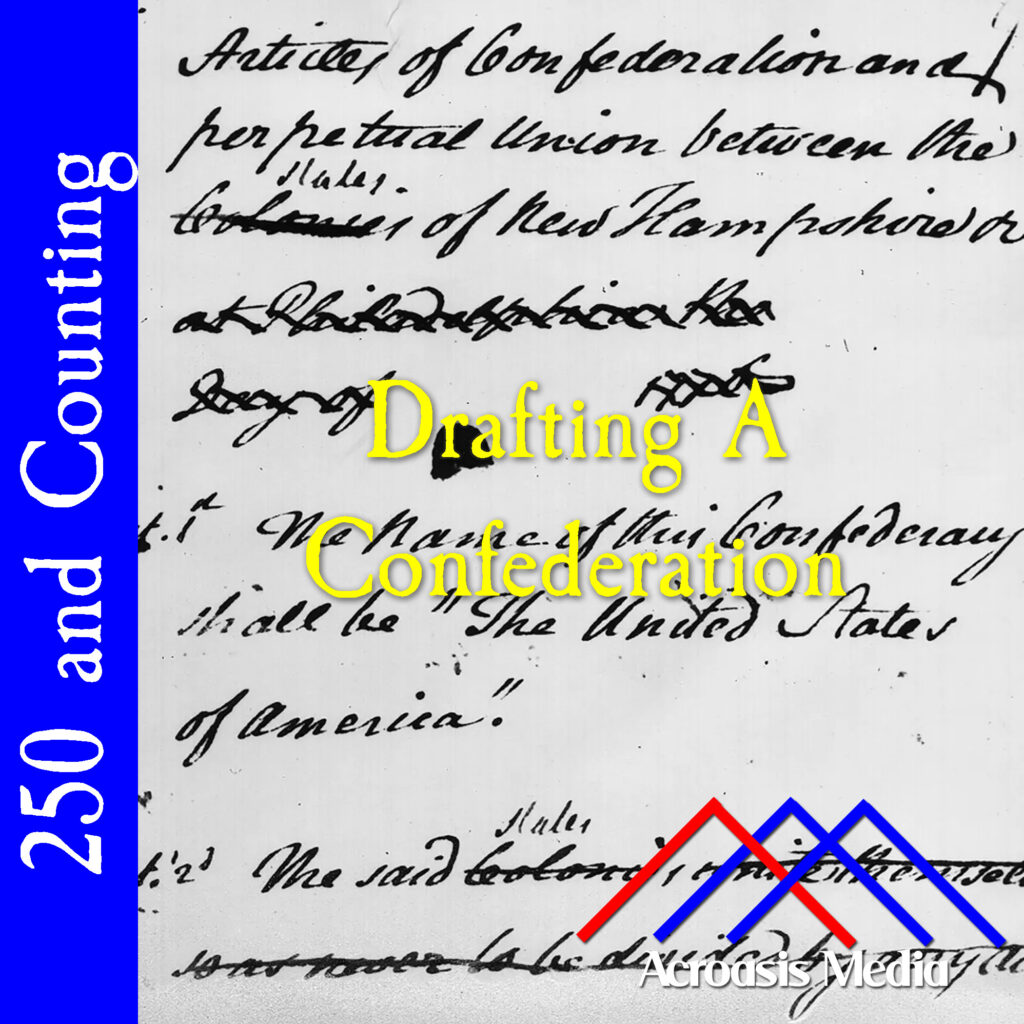
Representatives from each colony were already working on draft Articles of Confederation beginning one day after Thomas Jefferson, et.al. started work on the Declaration of Independence.
The Founding Fathers were looking for a relatively weak central government, which is why the finished document is relatively short and can actually be boiled down to a dozen brief paragraphs. It took a while to realize it, but this wasn’t the best idea, which explains why the Articles of Confederation were abandoned for a new Constitution.
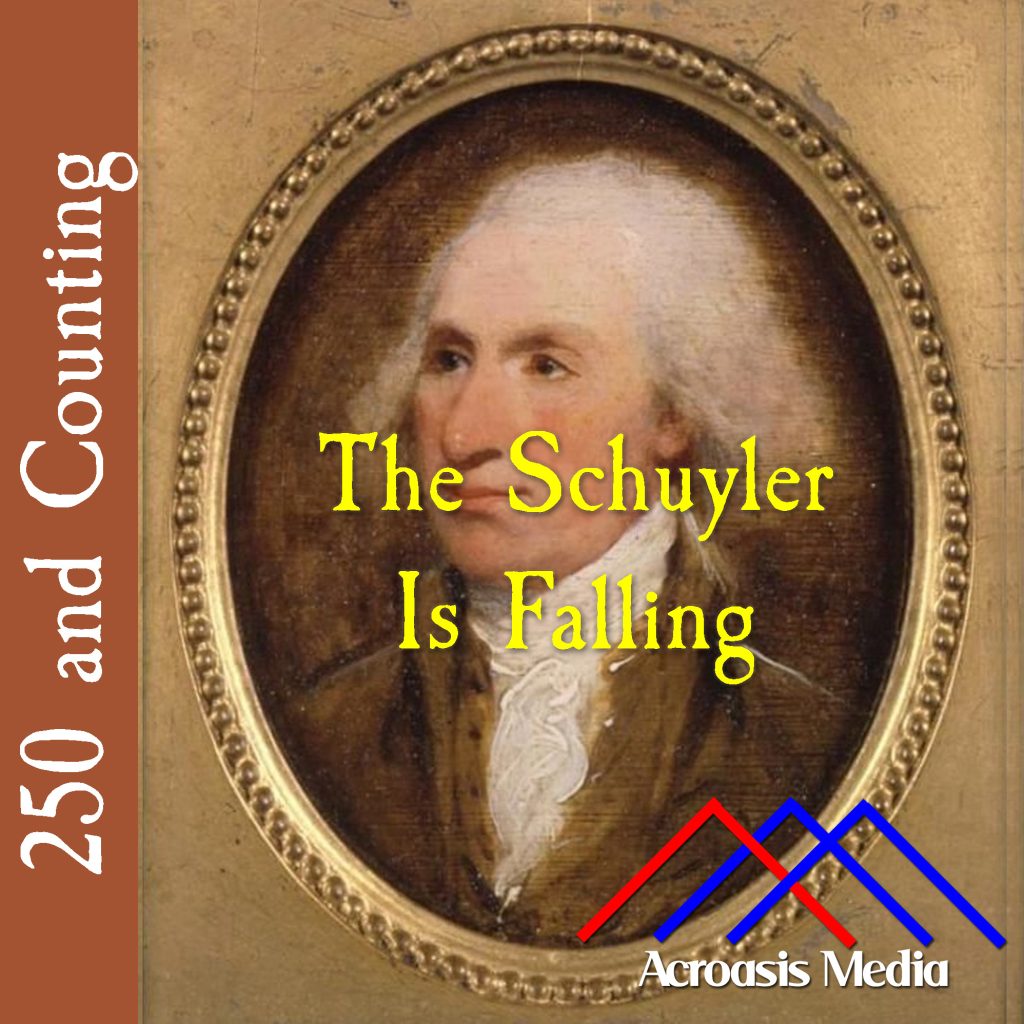
Philip Schuyler was part of a prominent New York family, enough that if you have any familiarity with that state’s history, you realize that the Schuyler name keeps popping up, especially during and shortly after the Revolution. (Similarly, the names Schermerhorn and Burr also manage to crop up a lot; Burr is probably the most famous name of the three but there are more Burrs than just Aaron.)
Schuyler was born in Albany but moved to New Rochelle when he was eight years old, shortly after his father died. He fought in the French and Indian War, and was sent to England for three years afterward to help settle some expenses related to the war.
Philip Schuyler was elected to the Second Continental Congress but left to become a general in the Continental Army, where he was involved with the failed invasion of Quebec. His health forced him to turn command over to General Montgomery, and in 1777 he returned to Congress.
Later in life, he served as a Semator in the First US Congress, but lost his bid for re-election to Aaron Burr. (See? Popping up everywhere.) He did return to the Senate a few years later, and remained there until he resigned due to his health.
Schuyler died at the Schuyler Mansion in Albany on November 18, 1804, four months after his son-in-law, Alexander Hamilton, was killed in a duel (by Aaron Burr) and two days before his 71st birthday. He is buried at Albany Rural Cemetery in Menands, New York, about 500 feet away from President Chester A. Arthur. It’s really a lovely place to visit and see the graves of several notable figures, not all of whom were “big” names historically unless you like to deep-dive into such things.
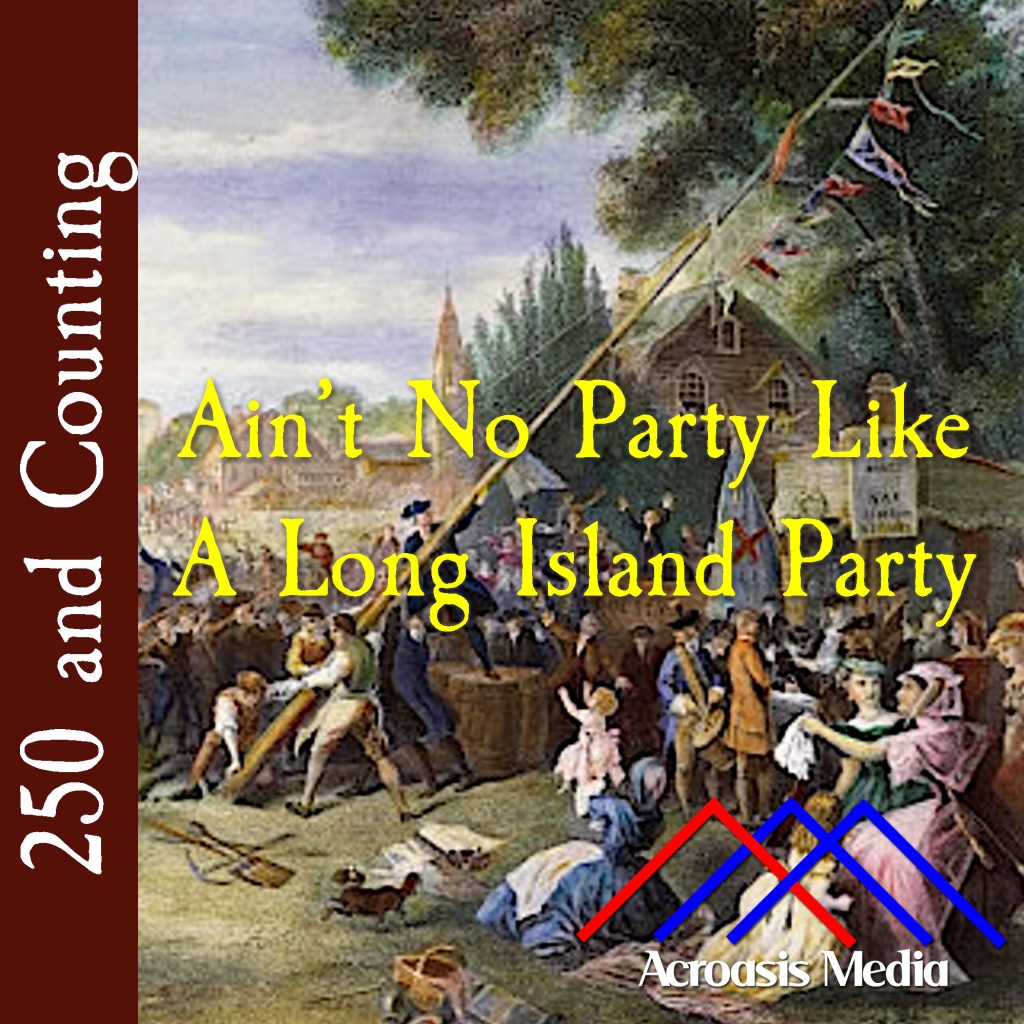
Huntington, New York, is coincidentally quite close to where I grew up. And frankly, I had no idea that they could celebrate the way they did on this day in history.
In addition to being its own little town, Huntington was determined not to let the British take any more of Long Island than they already had. They’d gotten word that the inhabitants of New York City had determined not to oppose the British. This kind of makes sense, since there were lots of Loyalists there still. But a man named John Sloss Hobart, who was one of the Sons of Liberty in the area, headed a committee that was designed to secure the disaffected, to remove or destroy any grain, and, if necessary, lay Brooklyn to waste.
This effort ultimately failed, and unfortunately their absence from the Huntington area near the end of August meant that British soldiers were making landfall about 50 miles east of Huntington with no militia to meet them. Since Huntington had the bulk of the militia in the area, the British could act as they wanted, further hastening the fall of Long Island that summer.
Many Patriots had to get out of town, so they headed across the Long Island Sound to Connecticut for the duration.
But for all that, Huntington, NY remains proud of their heritage, and they even took the time this past weekend to reenact the event, demonstrating the firing of weapons, showing off 18th Century crafts and trades, and offering tours of the Arsenal. And yes: they blew up an effigy of King George III. I guess they still know how to party in Huntington.
That Charles Lee turned out to be giving information to the British is one of those things that feels obvious in retrospect.
As Mike notes during the episode, Lee was passed over for command of the Continental Army, and even though he was still in a position of importance and command, things like that can eat away at some people.
Now, by most accounts, and through review of existing documents, Lee generally acquitted himself well in the Southern Department and in New York, although at the time of his capture there he was writing a letter to General Horatio Gates complaining that George Washington was somehow deficient.
However, his attitude toward the Continental Army continued to deteriorate after his release in 1778. He was held partly responsible for the outcome of the Battle of Monmouth, likely because he was rather capricious with his actions. Because he behaved insubordinately afterward, Lee was court-martialed (at his demand) and found guilty, but given the very light sentence of a year’s suspension from the army. Before the year was out, however, he wrote an angry letter to Congress that resulted in his termination of service.
It wasn’t until the 1850s that the New York Historical Society discovered a manuscript Lee had written while he was a prisoner of war. It was addressed to both Richard and William Howe, and outlined a plan by which the British could defeat the Continental Army. Whether Charles Lee is specifically guilty of treason is still debated among historians, though he’s commonly been presented as a villain in popular culture of the past 80 years or so.
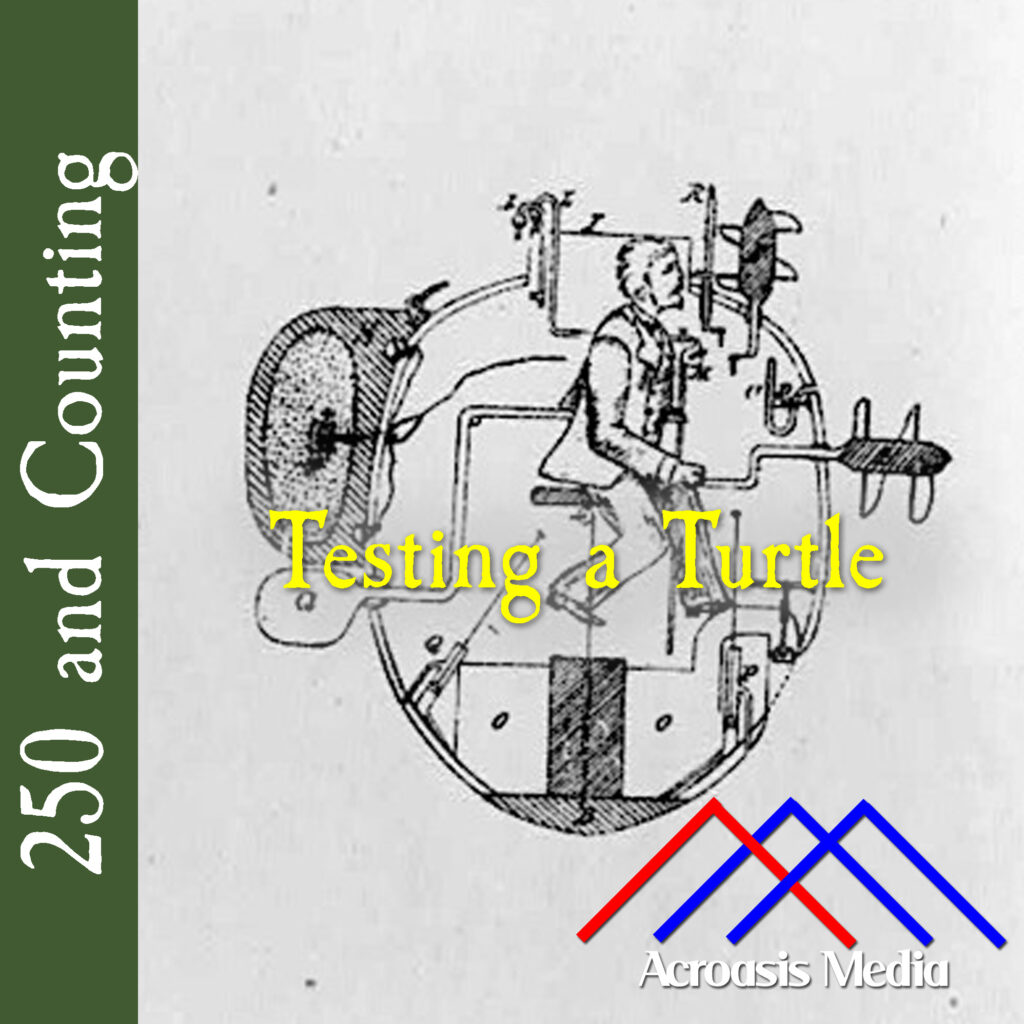
David Bushnell came up with the idea for the Turtle submersible only days after Lexington and Concord. He’d been working on several different experiments he’d conducted at Yale College, and found a way to integrate them into a single device to use against the British.
The Turtle was revolutionary (heh) in a couple of ways: first, nobody had successfully created anything like it before, and more importantly, Bushnell (along with Isaac Doolittle) came up with the screw propeller as a means of maneuvering the vehicle. No water vehicle had ever used a propeller as a means of getting from one place to another, and while the design has been refined for various purposes and to improve efficiency, Bushnell’s propeller is easily recognizable today for what it is.
It was pretty brilliant for its time, and in September we’ll see it in action, in New York Harbor.
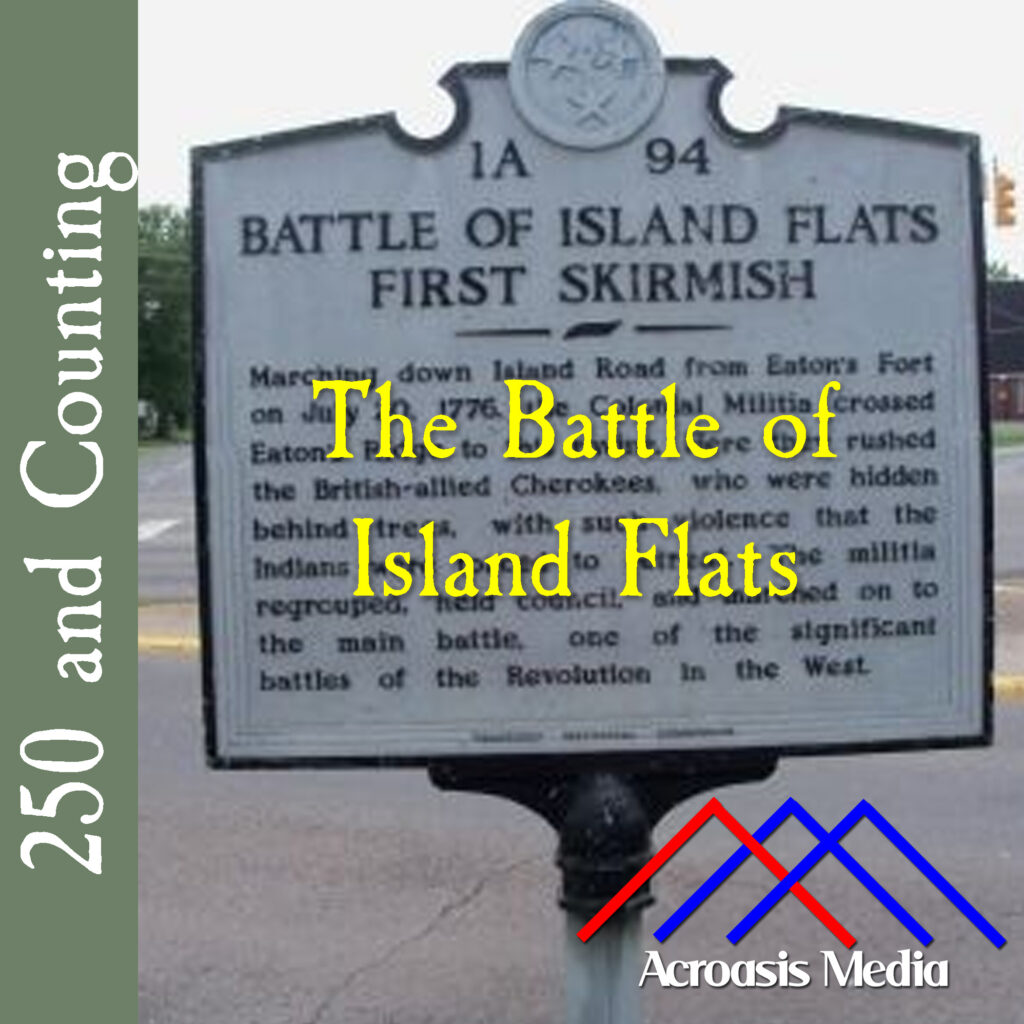
The Battle of Island Flats was yet another step in the Chickamauga War, or the Cherokee-American War (call it what you like).
We first talked about this on July 1, when the first attacks began in earnest. And then again just under a week ago at the Battle of Fort Lindley. The thing about these conflicts is that they tended to come in bunches, and then there would be long periods in which nothing happened. So it was never easy to determine whether the battles were over. Island Flats was also the farthest west battle of the war, thus far, so this was probably not viewed right away as an extension of the previous two.
Unfortunately, the battles went on (and off) for over fifteen years before the Army came in with a major offensive, and the Cherokees were forced to seek a peace treaty. It didn’t end tensions between the Native Americans and the US government, to be sure, but some peace is better than none, I guess.
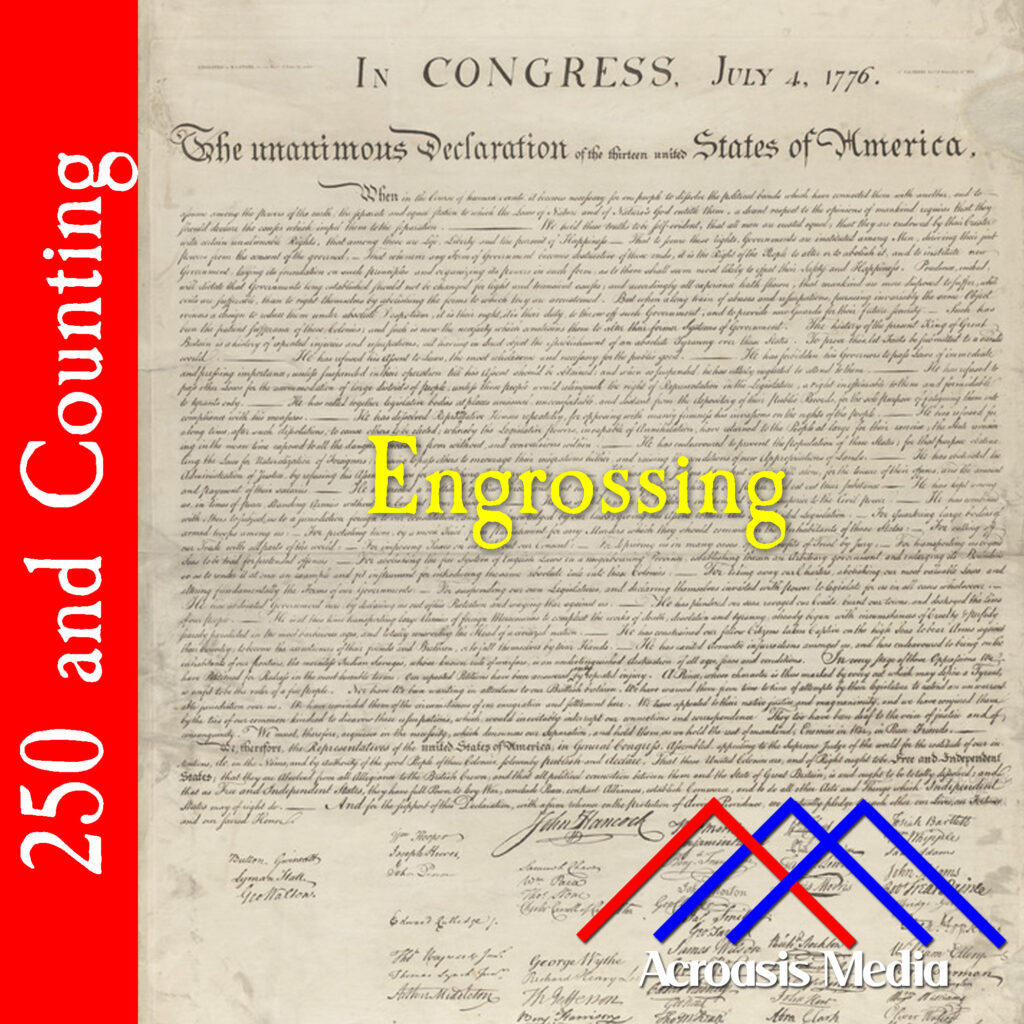
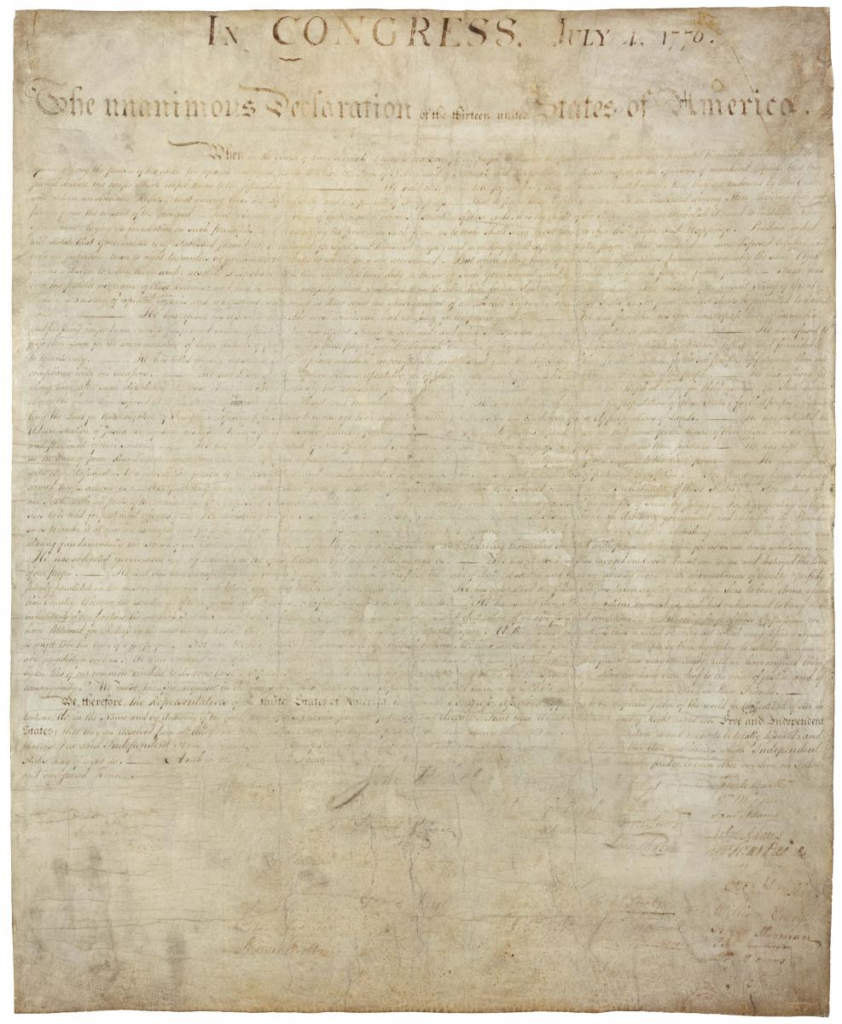
As I explained during the episode, “engrossing” was the practice of having a formal document written out in a larger hand for public presentation. This often had different purposes: some were engrossed to make them more attractive; this was typically called illuminating, and the most typical examples are the ornate Bible pages you see from time to time.
Sometimes it was the preparation of the “final” version of a document. This is the modern use of the term, and you can still hear it bandied about in the US Congress.
The engrossing of the Declaration of Independence was a little bit of both: given its purpose, it needed to look especially good, because its audience wasn’t just Great Britain but the entire world. And the document needed to be signed in order to be final, or official, so engrossment was necessary so that the members of the Continental Congress could affix their signatures.
So what’s the “official” version of the Declaration of Independence? There really isn’t any. What we consider to be “the” Declaration is the engrossed and signed version that now resides at the National Archives. That one’s in poor shape, and I’ll get to it shortly. That’s the version that wound up being engraved by William J. Stone, and when you see an especially clear copy of that document (e.g., today’s cover art), it’s almost certainly a reproduction of Stone’s work.
There are versions in Thomas Jefferson’s handwriting, which have crossouts and changes, and such. That resides at the Library of Congress. The L of C also has a fragment of one of Jefferson’s earliest drafts. Jefferson also made a few “clean” copies of the draft so they would have records of what changes were made by the Congress. Those are at the New York Public Library and the American Philosophical Society. There’s a draft in John Adams’ handwriting at the Massachusetts Historical Society.
There are other broadsides as well, not to mention the full text appearing in many newspapers up and down the coast.
And there are a few manuscript copies here and there.
So if we’re so hung up on the initial engrossing (and I get it, I do), then what happened to it?
Let’s start with Timothy Matlack, who did the engrossing. He first had to lay out the text on the parchment, figure out the margins and spacing, and how much room would be needed at the bottom for the signatures. Over the next thirteen days he wrote out the text, using the best animal skin available, in this case sheepskin.
Matlack used iron gall ink, which was made up of tannic acid, iron, a binder and a little colorant. It’s got a light color when it’s first applied, then darkens to a purple approaching black, then ages to more of a brown like the background of this page. He wrote in very straight lines, suggesting that he made rule lines that are no longer visible (though there are vertical marks in the signature area to help maintain the columns).
Over time, the Declaration was repeatedly rolled, unrolled, folded and unfolded. This means that in some spots some of the ink simply flaked away. In addition, the document was exposed to prolonged sunlight when exhibited. (In fact, if you’re in the Archives, look closely and you’ll see fold marks, especially on the bottom.)
A brief aside: in the early 1800s the Declaration was already looking kind of rough, so (former President and current Secretary of State) John Adams called upon William Stone to create a copperplate facsimile, which took three years to create.
For over 35 years, the engrossed Declaration hung in the Patent Office Building, which was considered to be “fire proof”, but that meant 35 years’ worth of exposure to light coming through the windows. It moved another few times, and each time was under uncontrolled environmental conditions. Finally, in 1876 a commission was created to look into restoring the ink and the signatures. It took a few years but the commission’s recommendation was NOT to restore the document but to store it away in the dark.
In the 1920s the Declaration was displayed again, this time alongside the Constitution, in a room with filters on the glass. Unfortunately by the 1940s insects were found in one of the Constitution cases, plus the humidity in room was uncontrolled. And, of course, Hitler was shooting at us and all, so there was that worry to deal with. Everything was moved to Fort Knox for a few years.
Finally, in 1952 they were moved to the National Archives and placed in cases with dim lighting, controlled humidity, and nonadhesive restraints holding the documents flat. And that’s where you can see them today (modern image at right). There are still a few mysteries, for instance: why hasn’t it faded evenly under the light exposures? How did a handprint get on it sometime between 1903 and 1940? And is it still somehow experiencing damage?
It’s hard to say. But I’ve visited the National Archives a few times and I still can’t help but be awed at the sight of these documents, no matter how faded they are. I can’t help but feel somehow connected to the people who put them together.
Coming up with a model treaty wasn’t John Adams’ idea, but it turned out to be a very good idea that he was responsible for implementing.
Once Adams had it in his head, he began to work on the model treaty along with the committee, and while it was intended to be used for commercial trade, it could be (and eventually was) adapted for soliciting military support in the form of weapons and other ordnance (rather than troops).
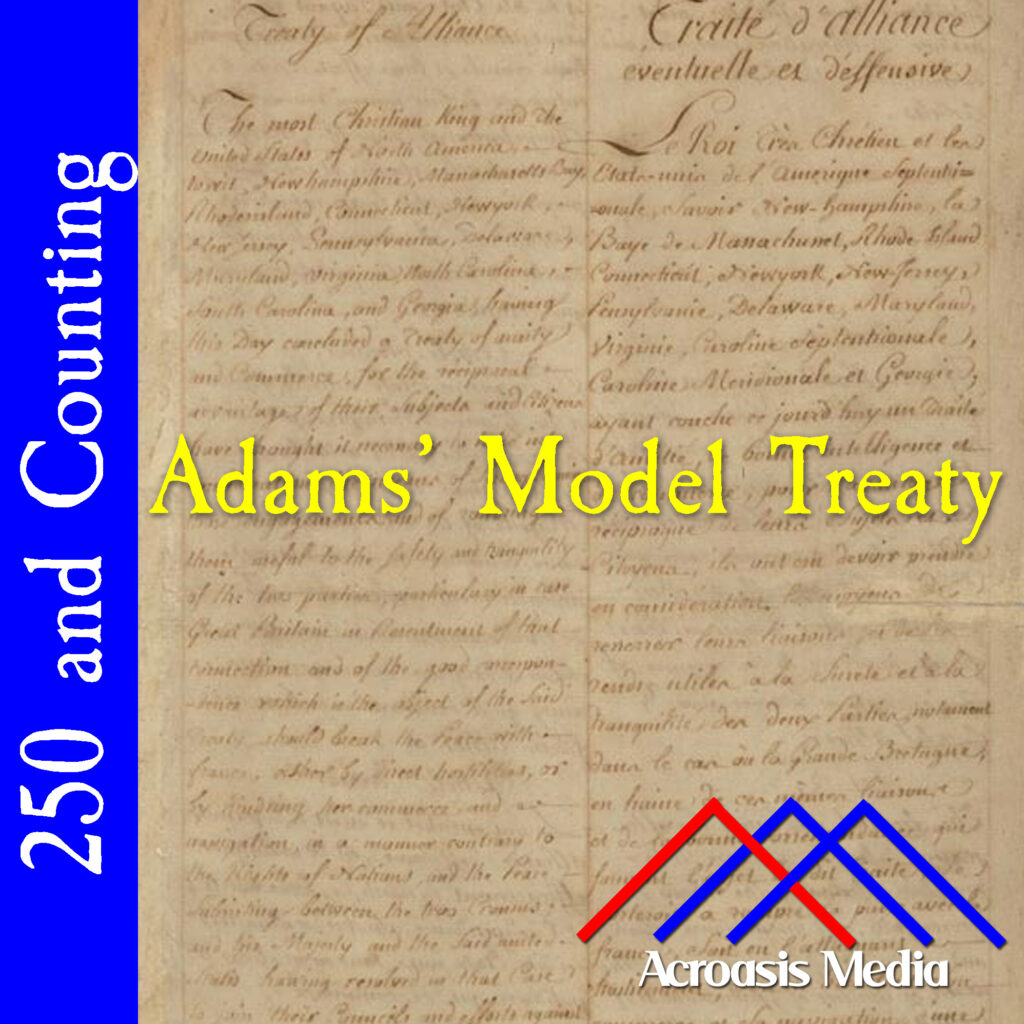
Today’s artwork, incidentally, is the Treaty of Amity and Commerce from 1778 that the US signed with France. If you look closely you’ll see that the left side is in English and the right side is the French translation. This is just most of the first page, of course, but it’s interesting to see how such things were handled.
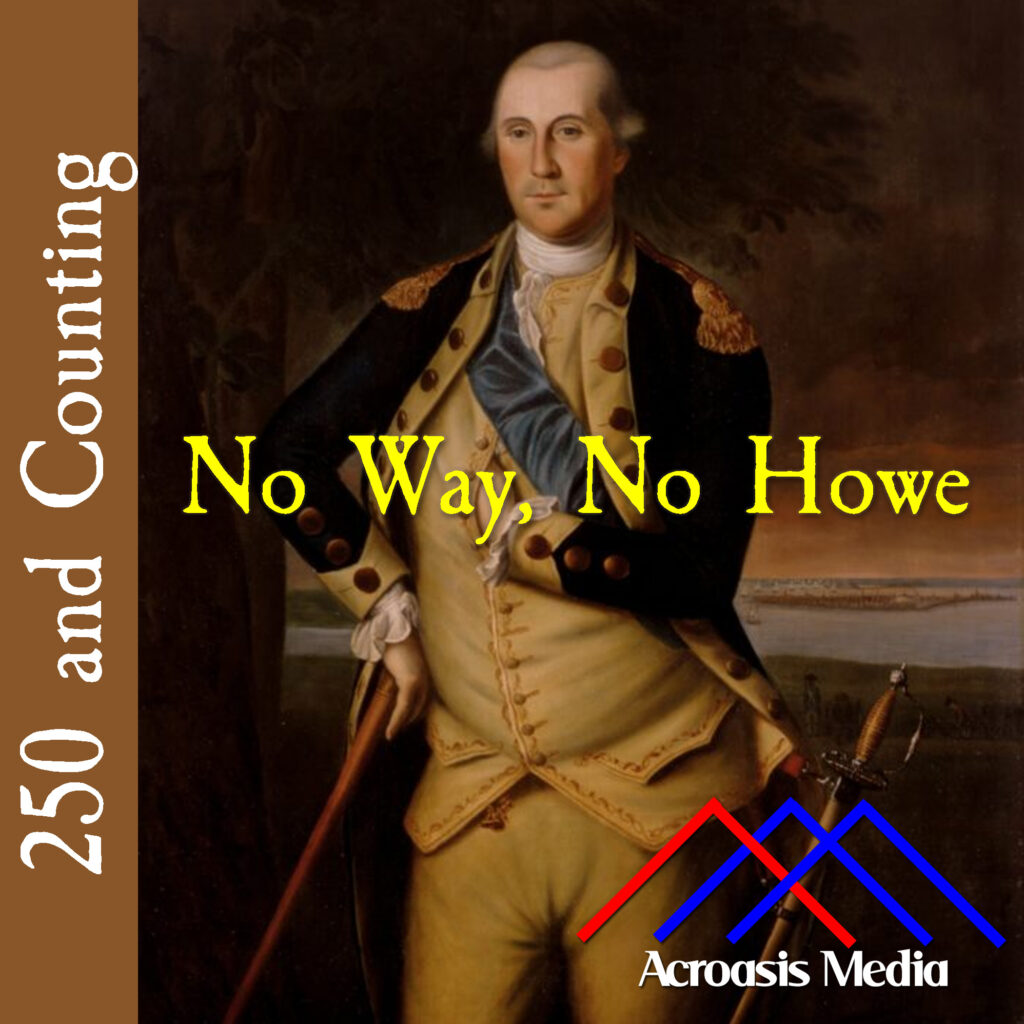
That George Washington agreed to meet with Colonel James Patterson was a bit of a surprise.
He’d turned down the opportunity to meet with his British counterparts on multiple occasions, but when asked if he’d meet with one of those men’s officers, Washington accepted the offer.
Once the meeting was set, Washington was more gracious than most people would expect. Colonel James Patterson was rowed to the Battery dock in lower Manhattan from the British barge. At this point it was expected that he would be blindfolded to prevent him from gathering intelligence on Washington’s headquarters. Instead, he was brought to a different location without being blindfolded.
Patterson met with Washington, Henry Knox, Joseph Reed and a few others, and it was clear that these officers were very deferential to the General, typically referring to him as “Your Excellency.” Again, protocols were important to Washington.
After rejecting the Howes’ letter yet again, Patterson mentioned the benevolence of His Majesty, King George III (which was probably not the right thing to say to George Washington, but still), and explained that the Howes were there “to accommodate this unhappy dispute”.
According to Knox’s letter to his wife, Patterson then explained that Lord Howe had broad powers of pardon, but Washington wasn’t interested. As far as the General was concerned, “the Americans had not offended, therefore they needed no pardon. This confused [Patterson].”
Shortly thereafter, Patterson was escorted back to his barge, disappointed but sociable.
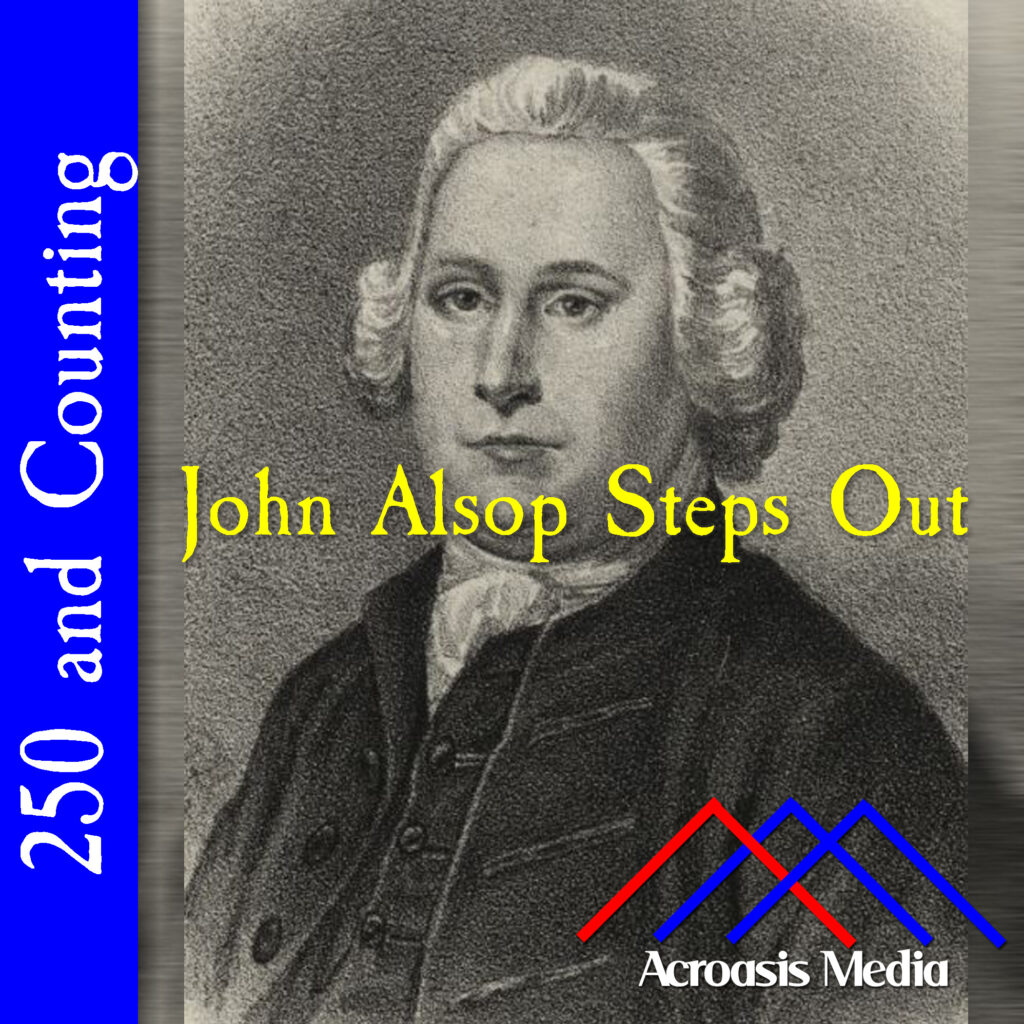
John Alsop was born in 1724 in New Windsor, Orange County, in the British Province of New York. He was the son of John Alsop, Sr. and Abigail Sackett. His father was a lawyer in New Windsor and later New York City, where he was largely interested in real estate.
As a young man he moved to New York City, where he entered the mercantile world with his brother Richard. The brothers became importers and merchants in cloth and dry goods. John became interested in civic and political activities. He was elected by New York County to serve in the Province of New York Assembly. He was one of the civic leaders that incorporated the New York Hospital Association and served as its first governor from 1770 to 1784. In 1757, his brother Richard retired from business and removed to Middletown, Connecticut.
Early in the Revolution, the Province of New York Assembly could not reach a conclusion about the Continental Congress. As a result, delegates were selected by the revolutionary committees in each county. In 1774, Alsop, along with James Duane, John Jay, Philip Livingston, and Isaac Low, was named as a delegate. When the First Continental Congress convened on September 5, Jay presented their credentials, and the Congress accepted. Alsop arrived in Philadelphia on September 14.
Alsop returned to the Second Continental Congress, and while he assisted in the war effort prior to the Declaration, he never lost his hope for reconciliation with Britain and he wound up resigning from the Congress rather than sign the Declaration. He did continue supporting the Continental Army, from his home in Newtown, NY until that town was overtaken by the British, then he continued to work from Manhattan. When they took Manhattan as well, Alsop fled to Connecticut and stayed there until 1783, when the occupation ended.
Alsop died at his home in Newtown, Queens County, New York, on November 22, 1794, and is buried in Trinity Church Cemetery in Manhattan. His considerable fortune, which he managed to rebuild, was passed to his daughter and son-in-law after his death.