Tag: 1775 deaths

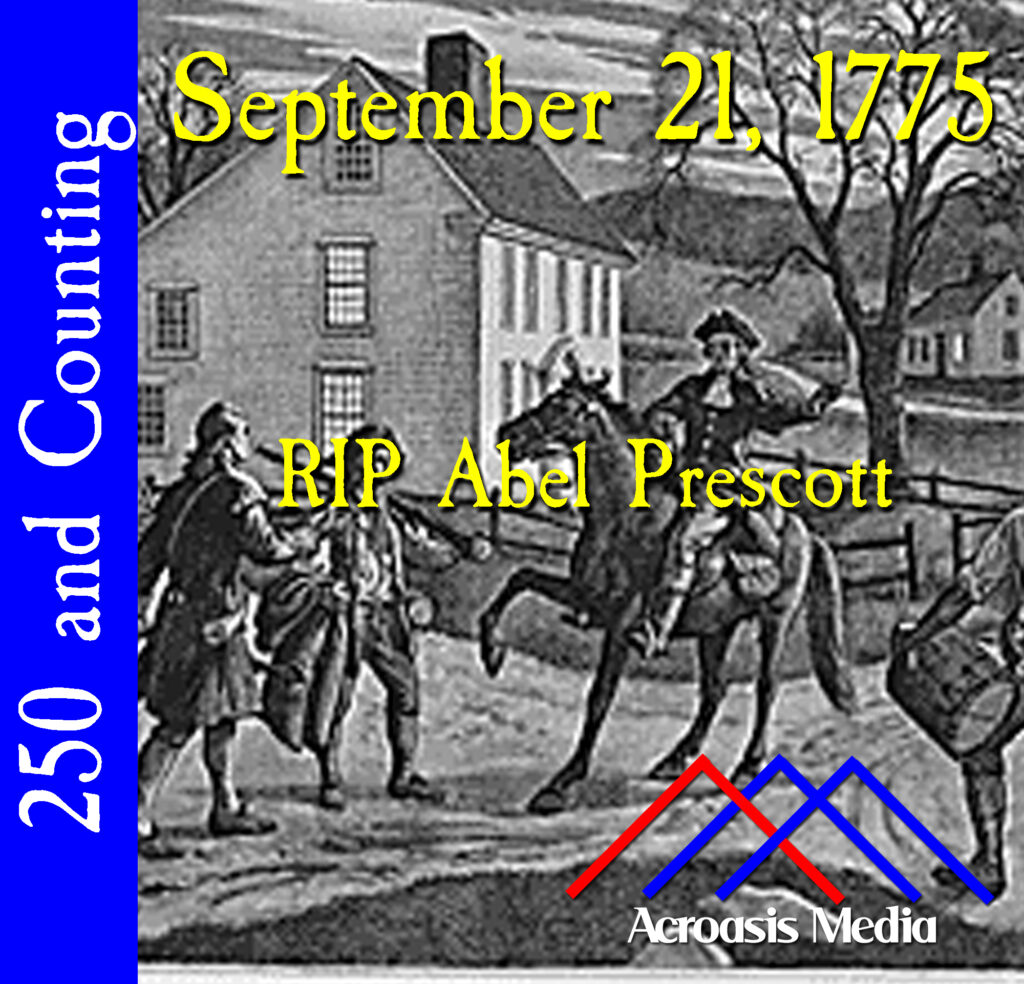
  • September 21, 1775: RIP Abel Prescott

    Cover art for September 21, 1775: this might be Paul Revere. It might be William Prescott or Samuel Dawes. It's definitely not Abel Prescott.

    In the episode itself I took the time to hammer home the point that many of our historical legends aren’t quite what they seem to be.

    But also important is the forgotten people of our history as well. Not just the faceless folks who fought and died (or didn’t but remained in obscurity), but the people who were an important part of some events, yet go unnoticed today. And Abel Prescott is one of those people.

    Not a lot is known about him, other than that he was William’s younger brother. And while William Prescott, along with William Dawes and Paul Revere, were intercepted by the British, Abel Prescott did manage to get away, albeit with a bullet in his side. Five months later, that bullet killed him.

  • April 26, 1775: Josiah Quincy II Dies at Sea

    Cover art for April 26, 1775: posthumous portrait of Josiah Quincy II by Gilbert Stuart, c. 1825

    Josiah Quincy—who we’ve talked about before; remember that portrait?—would have been one of the more prominent men we speak of when we use venerated tones about the Founding Fathers, had it not been for the fact that he died just as the war was getting started.

  • March 5, 1775

    Cover art for March 5, 1775: Portrait of Joseph Warren by John Singleton Copley, 1765

    Joseph Warren’s life as a Patriot was rather brief (in fact his life overall was relatively short), but it was quite important to the cause. Warren was part of the committee that investigated the Boston Massacre, he sent Paul Revere on his midnight ride (just go with it for now), he wrote a song called “Free America,” which was based on a British melody called “The British Grenadiers”, he fought at Lexington and Concord, and he died at Bunker Hill.

    And he was one of only two men who was asked to speak more than once on the anniversary of the Boston Massacre. And this second time was the one that really sold the crowd.