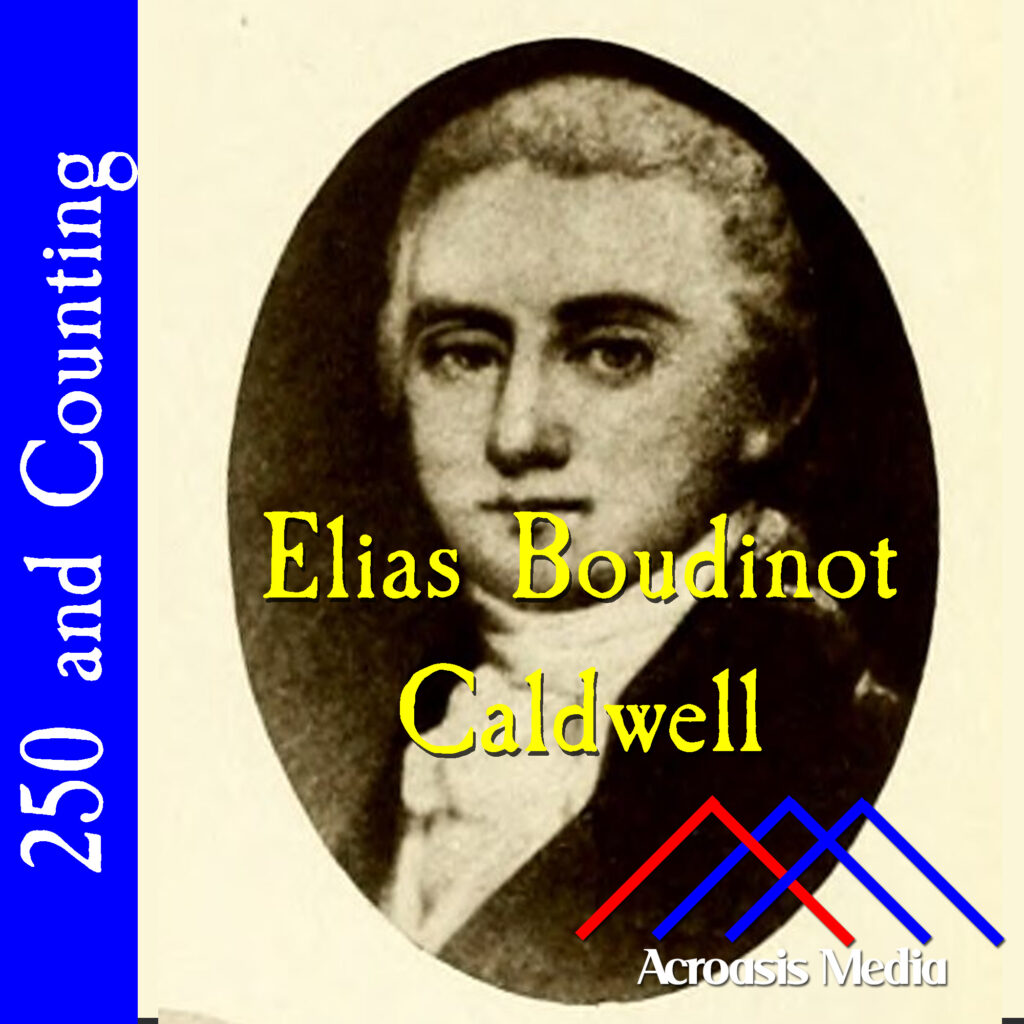
I mentioned briefly that Elias Boudinot Caldwell was a member of the Society for the Colonization of Free People of Color of America (to the extent that anyone can say that briefly), and I though I’d get a little deeper into that organization here.
The group was founded in 1816 by Robert Finley, along with Caldwell and Francis Scott Key, to encourage and support the repatriation of freeborn people of color and emancipated slaves to sub-Saharan Africa. Their feeling was that free people of color could not integrate into American society. It was also thought that free Blacks running around would incite still-enslaved Blacks to escape or rebel. So…why not relocate them?
The group, which later became known as the American Colonization Society, thought they’d be preventing a civil war from breaking out. In fact, some historians think they may have hastened its onset. What’s more, only a few thousand African Americans out of millions, eventually made the trip to (what would become) Liberia. Worse still, they were kind of bad at it. Transporting people to Liberia was very costly, and close to half the people who arrived died from tropical diseases.
And for all that, the ACS didn’t officially dissolve until 1964.
Podcast: Play in new window | Download | Embed

