Tag: 1861 deaths

  • Nicholas Emery–September 4, 1776

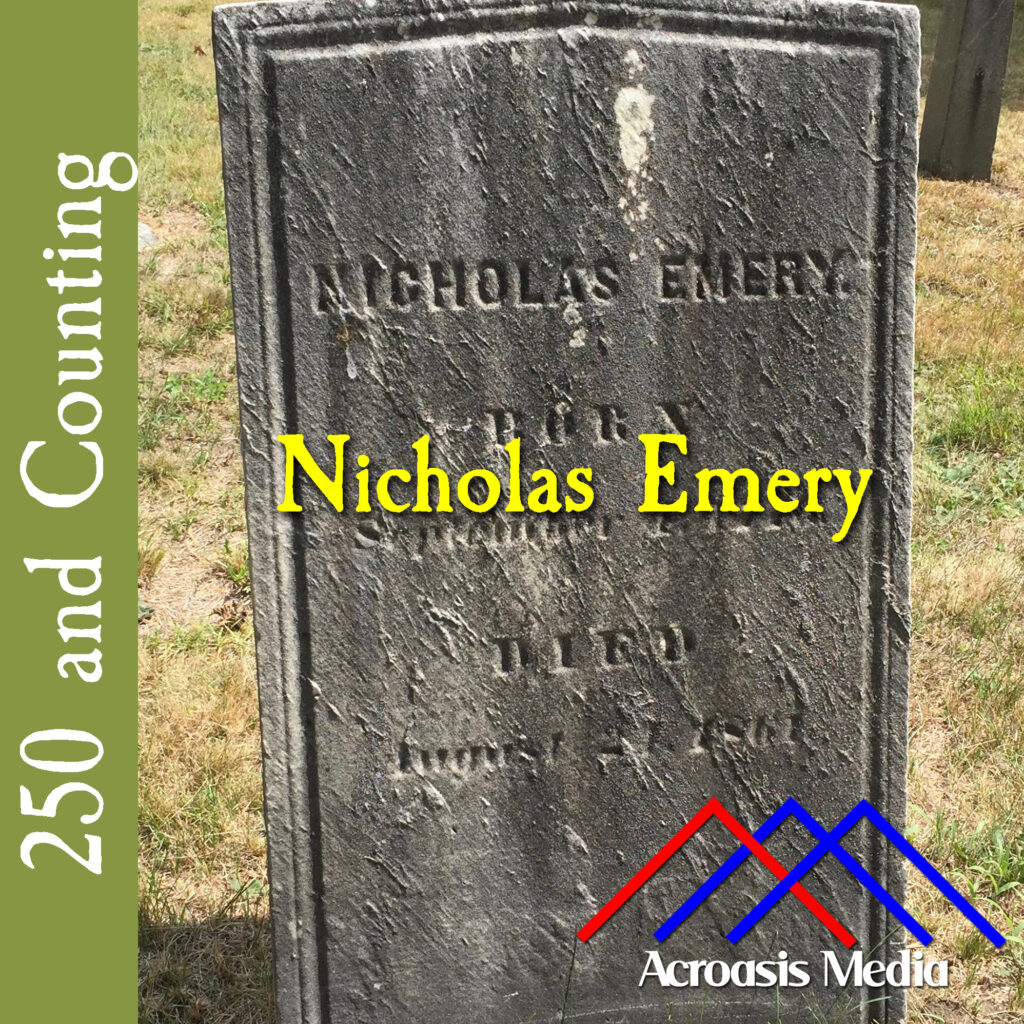
    Cover art for September 4, 1776: the headstone for Nicholas Emery, in Portland (ME)'s Western Cemetery. via findagrave.com.

    When Nicholas Emery was born, the state in which he did most of his important work didn’t yet exist.

    At the time of his birth, Maine was still considered part of Massachusetts, which is a vast oversimplification, since New Hampshire also had claim to a lot of this land (and that partially explains why New Hampshire has about 15 miles of coastline between Maine and Massachusetts).

    What’s more, Maine might not have become a state had it not been for the Missouri Compromise, part of which provided that for every slave state added to the Union, a free state also would be added, and vice-versa. Therefore, the addition of (free) Maine as a state allowed (slave) Missouri to become as state as well.

    (Side note: I have a favorite joke about the Missouri Compromise, because I’m nerdy that way. It comes from Dave Barry. He explains the Missouri Compromise as a law which says that half the people there have to pronounce it “Missou-ree” and the other half has to pronounce it “Missour-ruh”.)

    While Emery was part of the Convention to separate Maine from Massachusetts, and he was a delegate to the new state’s Consititutional Convention, he was not around to sign the document itself.

  • Joseph Healy–August 21, 1776

    Cover art for August 21, 1776: Seal of the State of New Hampshire.

    When looking at historical documents related to Joseph Healy, it appears that most of them relate to Healy in a rather ancillary manner. We know how many times he voted in Congress because someone keeps tallies of everyone in Congress. We know about his family tree because he was traced back via Ancestry.com.

    Healy is the stone that was thrown in the pond; what we know about him has to be read from the ripples.

    All of which is a rather long way of saying that I don’t have a lot to say here.

  • August 20, 1775: George Tucker

    Cover art for August 20, 1775: Photo of George Tucker, 1845. Photographer unknown, uploaded to Wikimedia Commons from the University of Virginia Library.

    Lots of prominent early Americans weren’t Americans to begin with. For instance, the first President of the United States who was actually born in the United States would be Martin Van Buren, our eight president.

    But while most of these folks were born on the North American continent, the subject of today’s episode was not. He was born in Bermuda. So while George Tucker was still a British citizen by birth, he didn’t come to America until he was twenty years old, making him an honest-to-goodness immigrant.

    But let’s not hold that against him. As you’ll learn today, Tucker had a long and varied career as a politician, an educator and an author.

  • May 29, 1775: Nathan Cutler

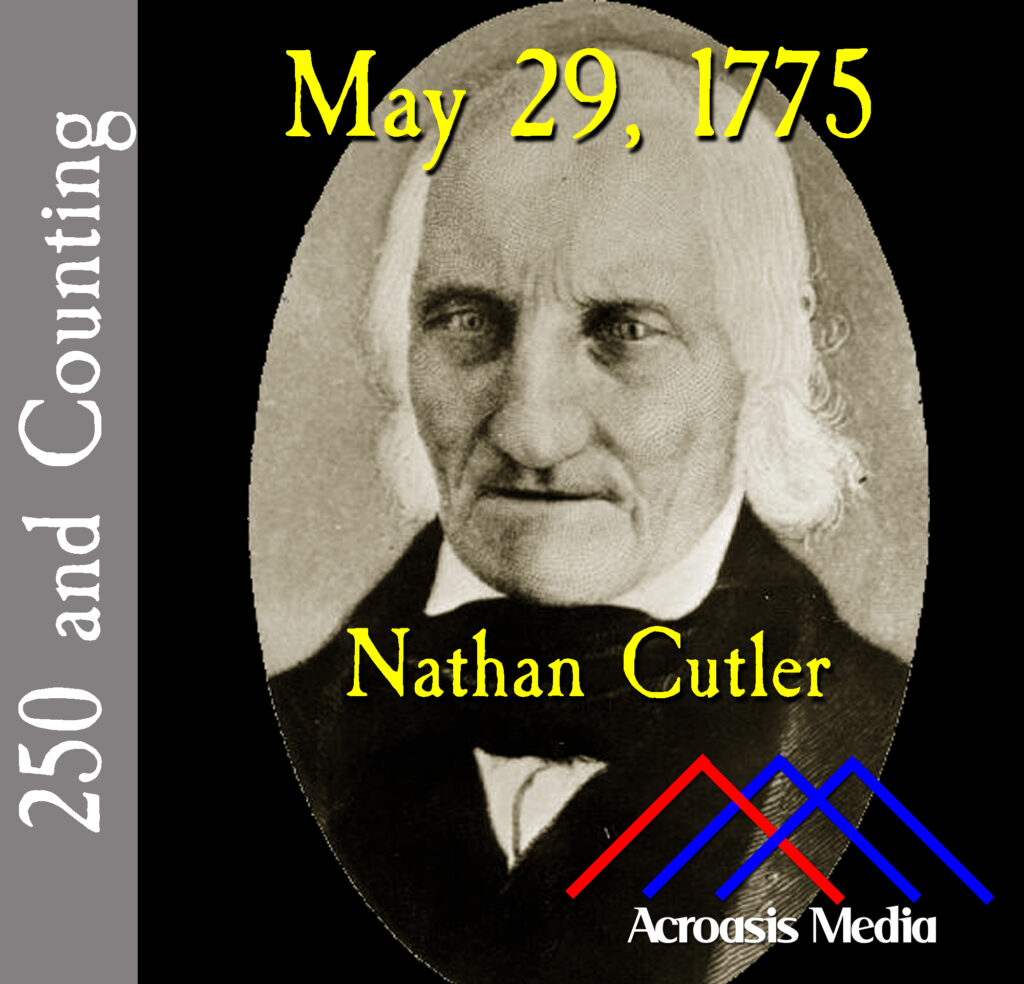
    Cover art for May 29, 1775: Photo of Nathan Cutler, ca. 1850, photographer unknown.

    By all accounts, Nathan Cutler was an effective lawyer and legislator, as his frequent returns to the Massachusetts Legislature, and later the Maine House of Representatives, will attest.

    And when a governor of the State of Maine died, he was able to step into the role until the term of office expired.

    Cutler could have probably remained Governor, but he’d turned down positions before, so it’s entirely possible that he simply chose not to run again.

    Listen in, it’s an interesting story.