
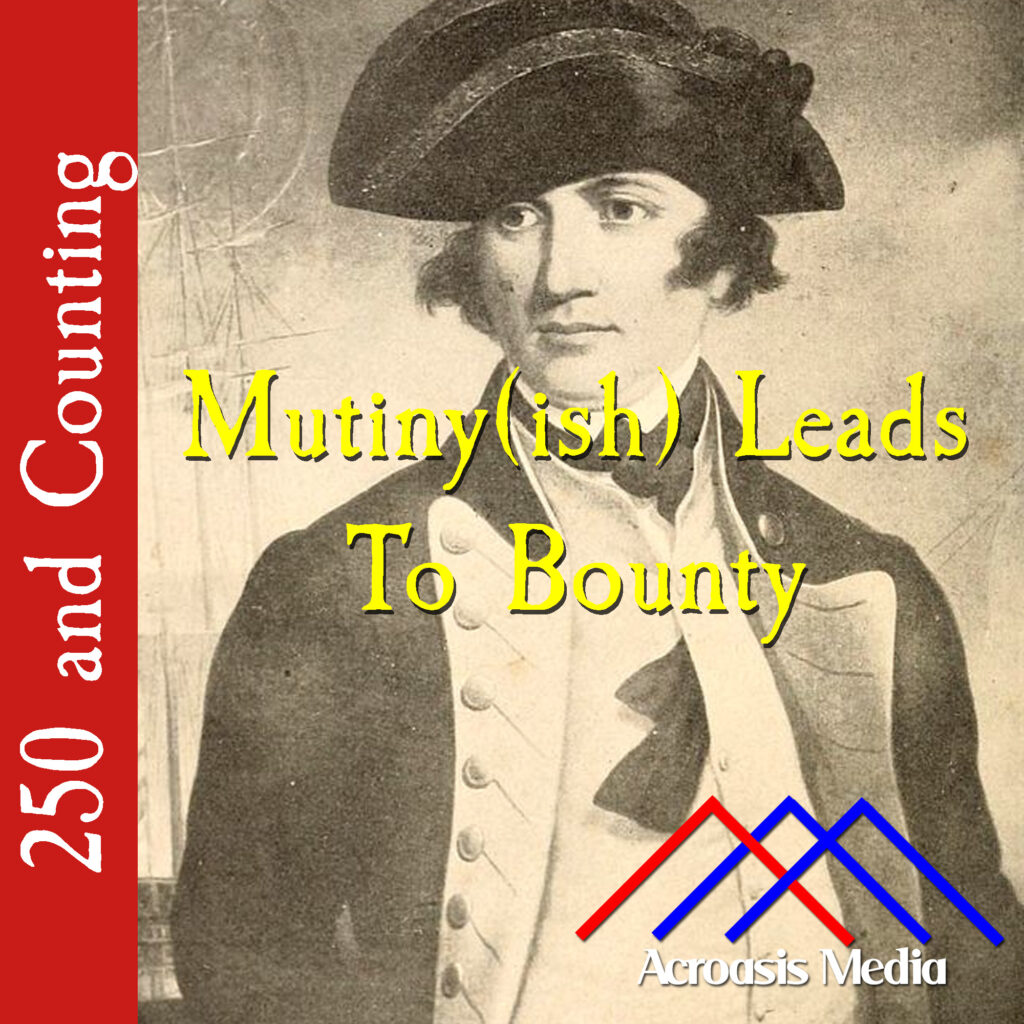
Esek Hopkins wasn’t just the Commander In Chief of the Continental Navy; he was the only Commander In Chief of the Continental Navy. As we noted just a day ago, the navy was disbanded shortly after the war (sold off, you may recall) until a few years later, when the US Congress decided we needed a US Navy and we had to start all over again.
In the 1760s he was a merchant who once took on a slave ship. Unfortunately he didn’t really know what he was doing, and more than half the slaves died enroute to the West Indies; furthermore the surviving captives were in such poor health that they sold for very little.
For a couple of months, in 1775, Esek Hopkins was appointed as a brigadier general to shore up forces in Rhode Island, but two months later he was appointed Commander in Chief of the Continental Navy authorized by the Continental Congress to protect American commerce.
His specific orders, which were issued on January 5, 1776, were:
You are instructed with the utmost diligence to proceed with the said fleet to sea and if the winds and weather will possibly admit of it to proceed directly for Chesapeake Bay in Virginia and when nearly arrived there you will send forward a small swift sailing vessel to gain intelligence….If…you find that they are not greatly superior to your own you are immediately to enter the said bay, search out and attack, take or destroy all the naval force of our enemies that you may find there. If you should be so fortunate as to execute this business successfully in Virginia you are then to proceed immediately to the southward and make yourself master of such forces as the enemy may have both in North and South Carolina…Notwithstanding these particular orders, which it is hoped you will be able to execute, if bad winds, or stormy weather, or any other unforeseen accident or disaster disenable you so to do, you are then to follow such courses as your best Judgment shall suggest to you as most useful to the American cause and to distress the Enemy by all means in your power.
Having been given eight small ships to carry this out, Hopkins instead read the last part of his orders very closely, and did exactly that part of it. Instead of hanging around Virginia and the Carolinas, he made for the Bahamas, where he executed the raid on New Providence.
While this move proved advantageous to the colonies as a whole, the Southern Colonies were especially upset and the rifts between them and the Northern Colonies got a little wider. Ultimately (though not right away) Hopkins was politically damaged for this action. It didn’t help that Hopkins was also accused of torturing British prisoners in his care, but that led to a military policy of immediate reporting of any misconduct committed by any person acting in the service of the United States.
Podcast: Play in new window | Download | Embed