Tag: Cherokee-American War

  • Do The Fight Ring–August 12, 1776

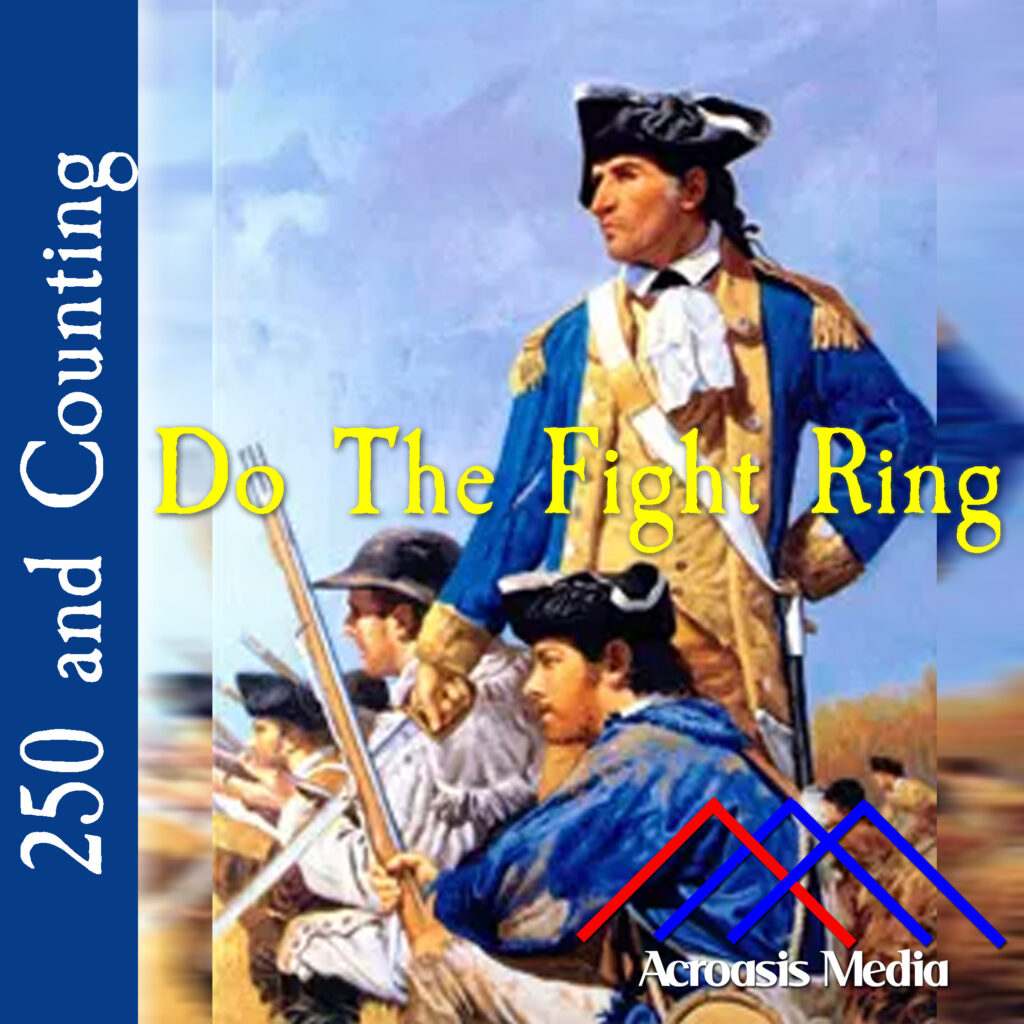
    Cover art for August 12, 1776: "Brigadier General Andrew Pickens With SC Militia", by Robert Wilson, 1977. via National Park Service at the Ninety-Six Historical Site.

    Andrew Pickens was a plantation owner whose property was near Seneca, South Carolina, which is almost as far west as you can go and still be in South Carolina.

    As the Cherokee-American wars wore down, Pickens was able to sign peace treaties with the tribe, which was known as the Treaty of Hopewell.

    Meanwhile, in the American Revolution, Pickens had to surrender the fort in the Ninety-Six District. He agreed to sit out the war as part of his parole, but when the British later destroyed most of his property, all bets were off. He led numerous campaigns in South Carolina and Georgia, making him popular enough the he was elected to the House of Representatives from 1781 through 1793.

    It’s worth noting that some of his Revolutionary War battles were the basis of some scenes in the 2000 film The Patriot.

    Andrew Pickens was one of only nine Representatives to vote against the Eleventh Amendment to the Constitution, which prevents states from sovereign immunity in lawsuits against them by citizens of another state. For example, under the amendment a private citizen from Virginia is allowed to sue the state of Tennessee, and Tennessee cannot claim that the person has no standing because they’re not a citizen of Tennessee.

    And no, I do not apologize for the title of today’s episode.
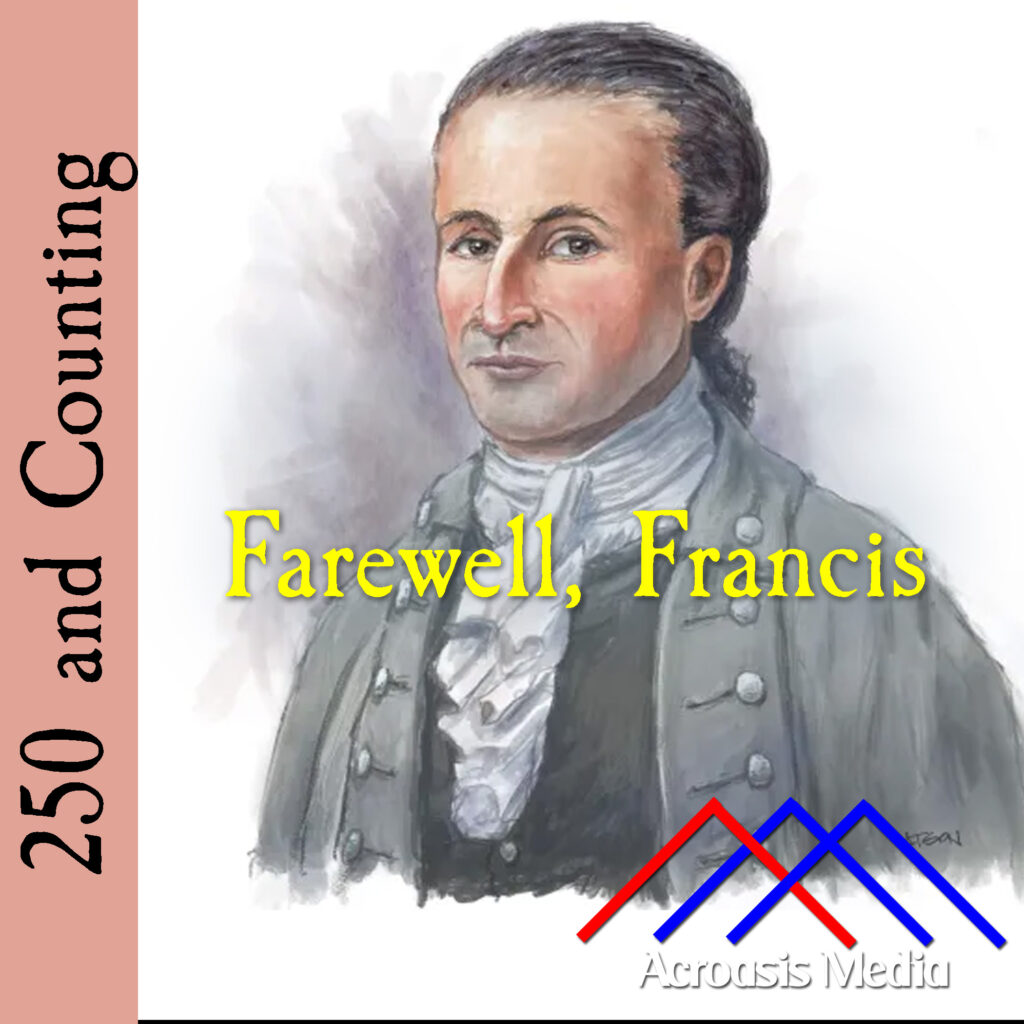
  • Farewell, Francis–July 31, 1776

    Cover art for July 31, 1776: watercolor art of Francis Salvador. Via American Battlefield Trust.

    As I mentioned very early in this podcast, Francis Salvador’s life was especially notable for two things: the day he was elected to public office, and the day he died. And in his case, the dates were notable largely for the fact that Francis Salvador was a Sephardic Jew, making him the first man of his faith to be elected to office in America, and the first of his faith to die in the Revolution.

    Francis Salvador was born in London, but his family were part of a Portuguese and Spanish Sepharidic Jewish enclave in that city. Salvador had an uncle who’d invested heavily in the British East India Company, and they still owned lots of land in Portugal, so they were pretty comfortable financially.

    Until, that is, the Great Lisbon Earthquake of 1755, and the subsequent failure of the East India Tea Company. They were in much worse shape after those two blows, but by that point Salvador had already purchsed some land in South Carolina. In 1773 he emigrated to America, intending to bring his family over when he had the money to do so, but he was killed before they could make the move.

    P.S. Thanks to Mike for stepping in and recording this episode when I had a power failure preventing me from getting it done.

  • The Battle of Island Flats–July 20, 1776

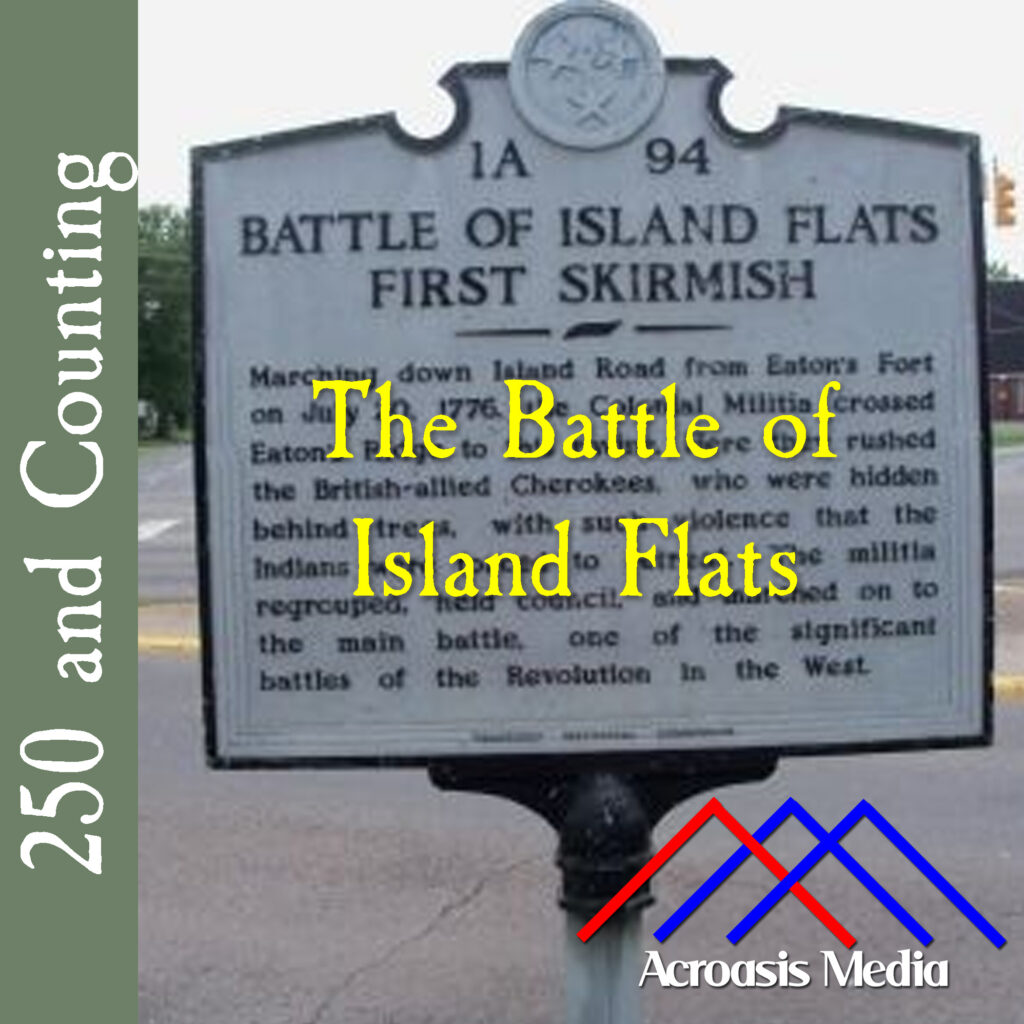
    Cover art for July 20, 1776: Historical Marker in Kingsport, Tennessee, commemorating the Battle of Island Flats. Via Historical Marker Database.

    The Battle of Island Flats was yet another step in the Chickamauga War, or the Cherokee-American War (call it what you like).

    We first talked about this on July 1, when the first attacks began in earnest. And then again just under a week ago at the Battle of Fort Lindley. The thing about these conflicts is that they tended to come in bunches, and then there would be long periods in which nothing happened. So it was never easy to determine whether the battles were over. Island Flats was also the farthest west battle of the war, thus far, so this was probably not viewed right away as an extension of the previous two.

    Unfortunately, the battles went on (and off) for over fifteen years before the Army came in with a major offensive, and the Cherokees were forced to seek a peace treaty. It didn’t end tensions between the Native Americans and the US government, to be sure, but some peace is better than none, I guess.

  • The Chickamauga Wars–July 1, 1776

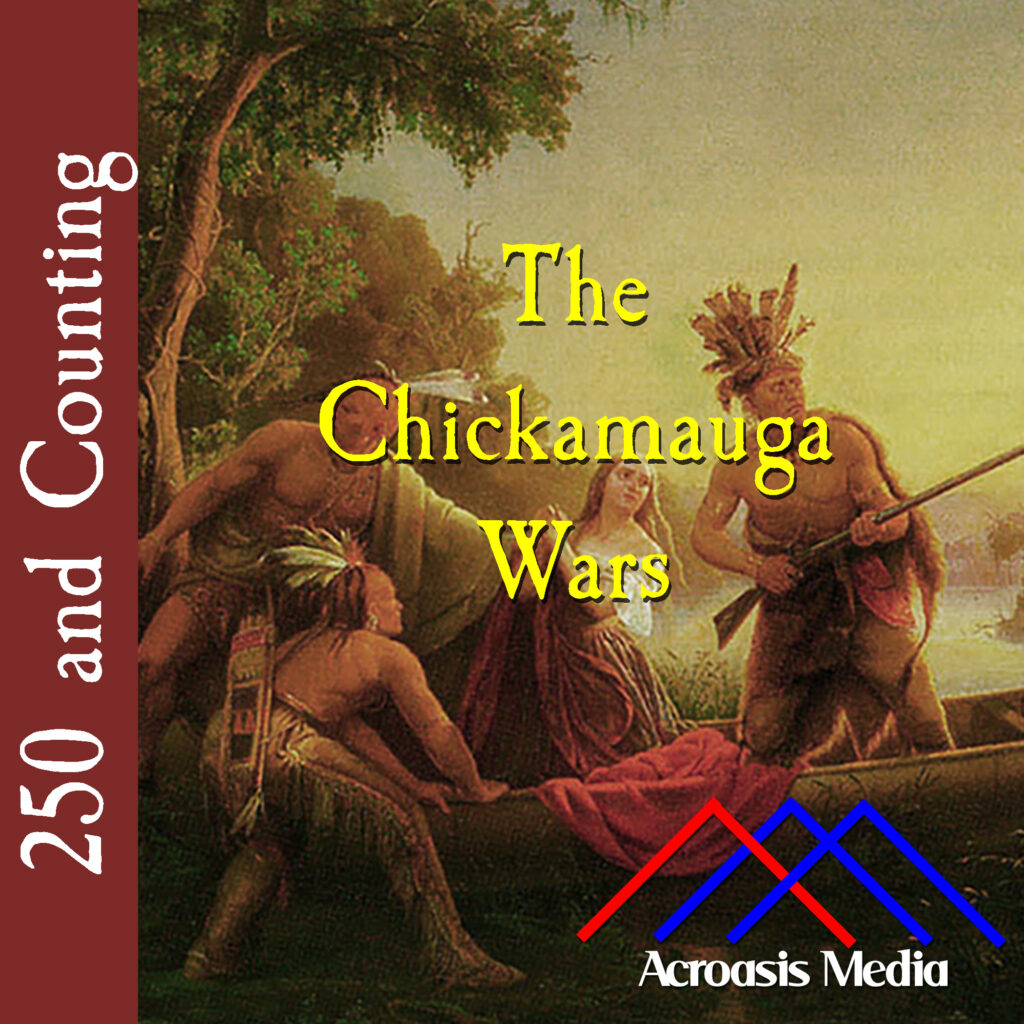
    Cover art for July 1, 1776: "The abduction of Jemima Boone by Shawnee in 1776", by Charles Ferdinand Wimar, 1853. Now hanging in the Mildred Land Kemper Art Museum at Washington University in St. Louis, MO.

    The Chickamauga Wars, also known as the Cherokee-American Wars, was really just an escalation of the hostile relationship between Americans and the Cherokee tribe.

    The problem really started during the French and Indian War, which ran from 1758-1761. During that war, British forces simply destroyed many Cherokee towns, which were never reoccupied. Some treaties were signed after the war, and then boundaries established, but the colonists resented those boundaries. They showed their resentment by largely ignoring them, forcing officials in charge of Indian Affairs to put together new treaties with new boundaries. Go figure, those didn’t work either.

    Things got ugly in 1773 when Daniel Boone led about 50 settlers through the Cumberland Gap. Natives from several tribes descended on a foraging/scouting party, capturing them and then ritually torturing them to death. Among the dead was Boone’s son James.

    Tensions continued to rise until this day in 1776, when they escalated into full-scale raids and battles which came in fits and starts, and then would settle into long periods of no activity.

    This went on into the 1790s before the Army came in with a major offensive, forcing the Cherokees to back down and seek a peace treaty, formally ending the Chickamauga Wars.

  • February 11, 1775

    Cover art for February 11, 1775: portrait of Governor William Hall of Tennessee, by Washington B. Cooper.

    There are many events in the life of William Hall that could be ascribed to just plain luck on his part, and others which could conceivably tied to some shrewd timing on his part. But in the end, we think we’re going with luck.

    If he hadn’t survived two Cherokee ambushes, if he hadn’t been an officeholder previously, if he hadn’t been the Speaker of the Senate when a scandal broke out…things could have turned out very differently for our friend William.

    But William was also smart enough to walk away when the walking was good, and he lived to a ripe old age (81).