I promised you a postscript for the Christopher French story, but let me offer up some broader context first.
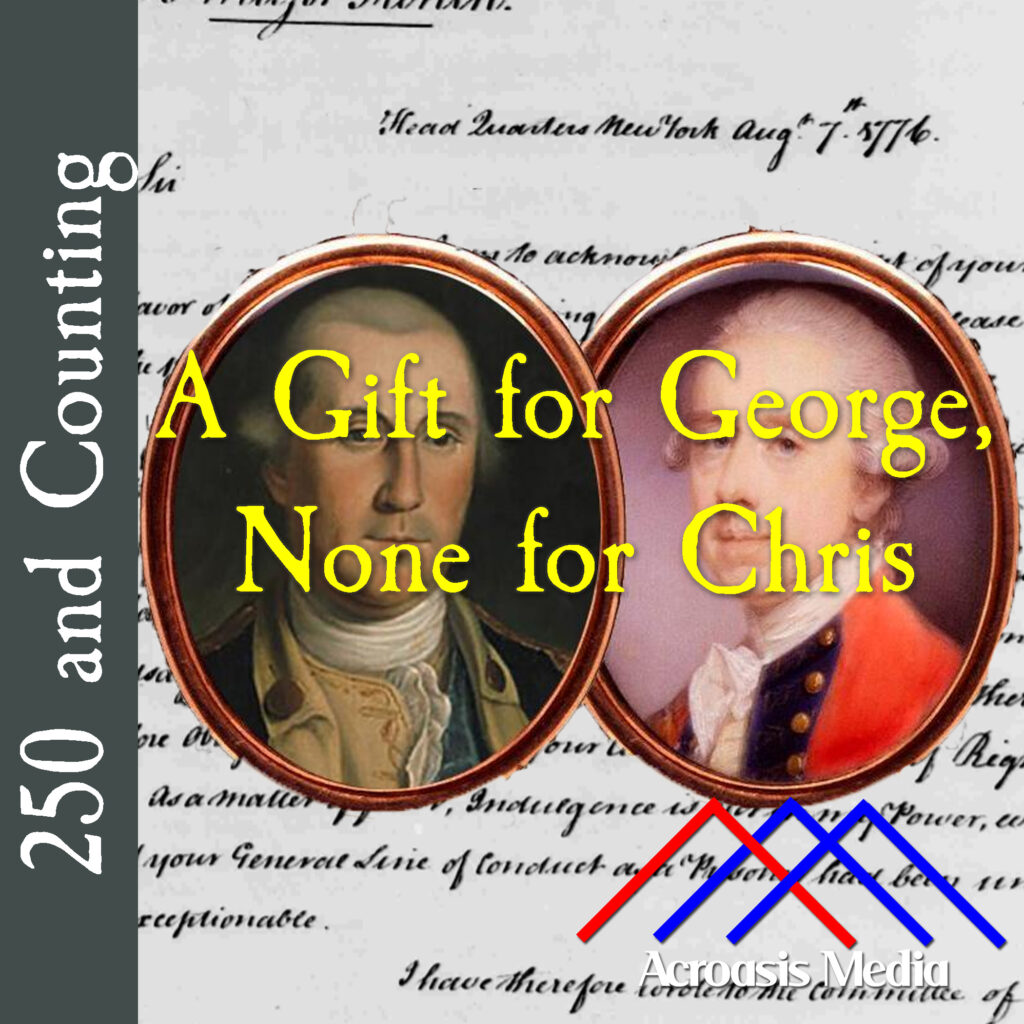
In July 1776, French wrote to George Washington from Connecticut, where he was being held as a prisoner of war. The purpose of the letter was to request parole from his confinement.
Washington’s reply reads:
Sir: I am to acknowledge the receipt of your favor of the [the date is missing here but from other documents it was probably the 22nd] July, intimating your expectations of release on the 12th. of this month.
I have considered your Parole, advised with those whose Knowledge and experience gives weight to their Opinion, and otherwise endeavoured to inform myself how far your Construction of it is founded upon Justice, Reason or Usage; I do not find it warranted by either, My Duty therefore Obliges me to over rule your Claim as a matter of Right. As a matter of favor, Indulgence is not in my Power, even if your General Line of Conduct as a Prisoner had been unexceptionable.
I have therefore wrote to the Committee of Hartford, sent them a Copy of this Letter and hope you will, without Difficulty, conform to the Regulations already made with respect to Prisoners, by the General Congress.
It is probable a general Exchange of Prisoners will soon take place, it will then be a pleasing part of my Duty, to facilitate your return to your Friends and connections, as I assure you it is now a painful one to disappoint you, in an Expectation which you seem to have formed, in a full Persuasion of being right and in which on mature Deliberation, I am so unhappy as totally to differ from you. I am Sir etc.
This much you knew. Here’s the postscript. Christopher French wrote another letter subsequent to the one Washington responded to. In that letter, which Washington received on August 8, it appears that French withdrew his request. Washington immediately sent a second letter, responding to this one:
Sir: I was unwilling to determine hastily, upon your claim of a Release founded upon your Parole, and therefore delayed the acknowledgment of your favor of the 22d July, until I should fully inform myself. I had accordingly wrote you Yesterday, that I was so unhappy as to differ from you in the construction you had put upon it, but as there was reason to believe, a General Exchange of Prisoners might soon take place, I should chearfully facilitate your return to your Friends.
Last Night I received your favour of the 5th. August waving your Claim of a Release, which makes any farther Discussion of that matter unnecessary. Your other proposal, of being exchanged for Major Meigs or Col. Allen, will meet with no Objection from me; should you write to General Howe on the Subject the Letter shall be chearfully forwarded and his Answer returned.
Should any Difficulty arise in the Exchange, I am doubtful, how far I should be authorized, without consulting the Congress, to grant you an Indulgence similar to that of Major Meigs, which I have been informed was allowed in consequence of his saving the Life of a British Officer, either nearly connected with, or much esteemed by General Carlton.
However, you may assure yourself Sir, that both Duty and Inclination lead me to relieve the unfortunate and that I agree with you, that your long and early Captivity gives you a very just Claim to special Notice, and I shall be happy in furthering your Wishes, as far as my Station will admit. I am Sir, etc.
In short, Washington was happy to be relieved of the burden of refusing the initial release, but also still more than willing to cooperate should a prisoner exchange take place.
Such a gentleman!
Podcast: Play in new window | Download | Embed