Tag: Crean Brush

  • The Siege Ends–March 17, 1776

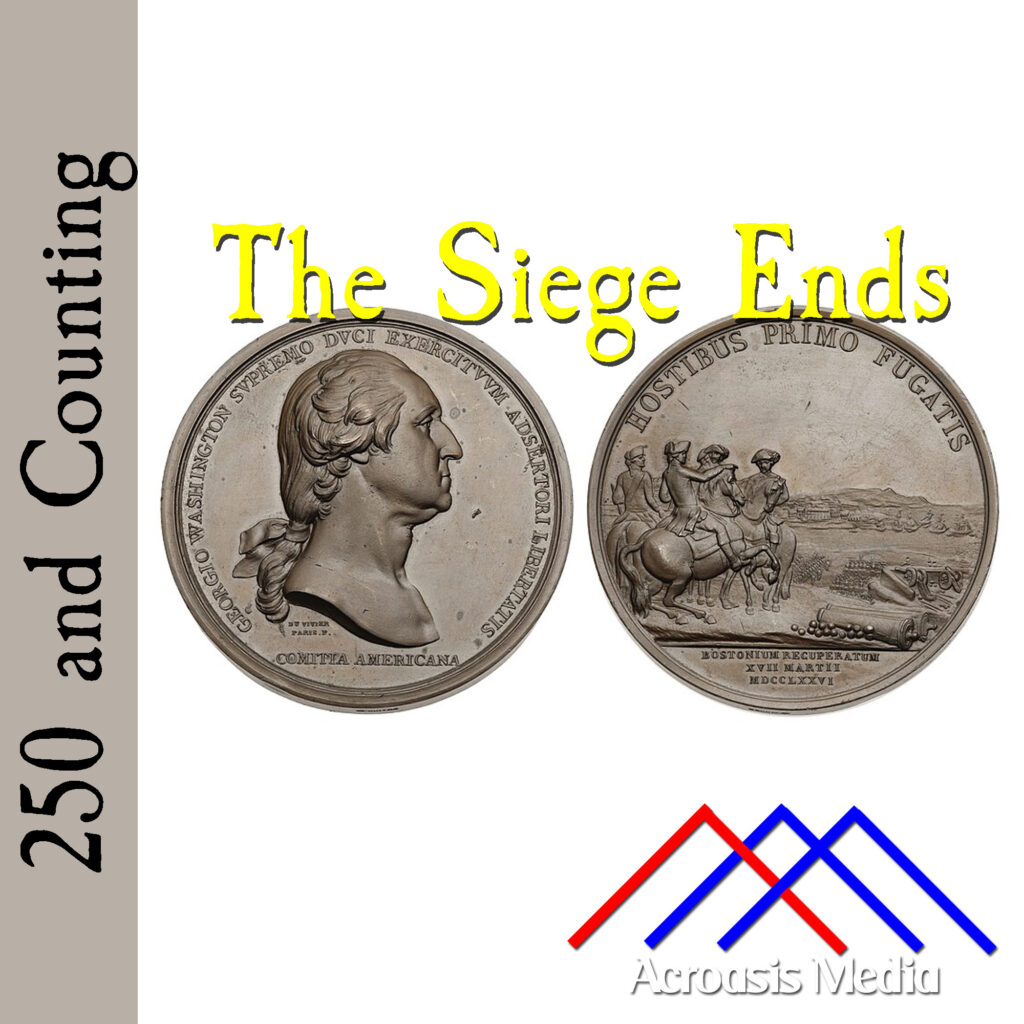
    Cover art for March 17, 1776: The first Congressional Gold Medal, given to George Washington in 1790 for his first victory of the war in Boston. 1776 Washington Before Boston Comitia Americana Second Restrike (Baker-48G) Image credit to Heritage Auctions

    It’s been 333 days since Lexington and Concord, when the British were forced to retreat to Boston and were bottled up there by Colonial forces.

    It’s been a week since the British said “enough” and decided to effect their departure from the city as soon as the weather cooperated.

    But today, the day finally came.

    It took about five hours to launch over a hundred ships, carrying thousands of soldiers, women and children from the city.

    It was Washington’s first major win and the last time the British did anything of importance in New England. The war began to move south, to New York, New Jersey, and Pennsylvania. Virginia and the Carolinas also had their share of action, as we’ll see in the coming months.

  • Laundry Day–March 10, 1776

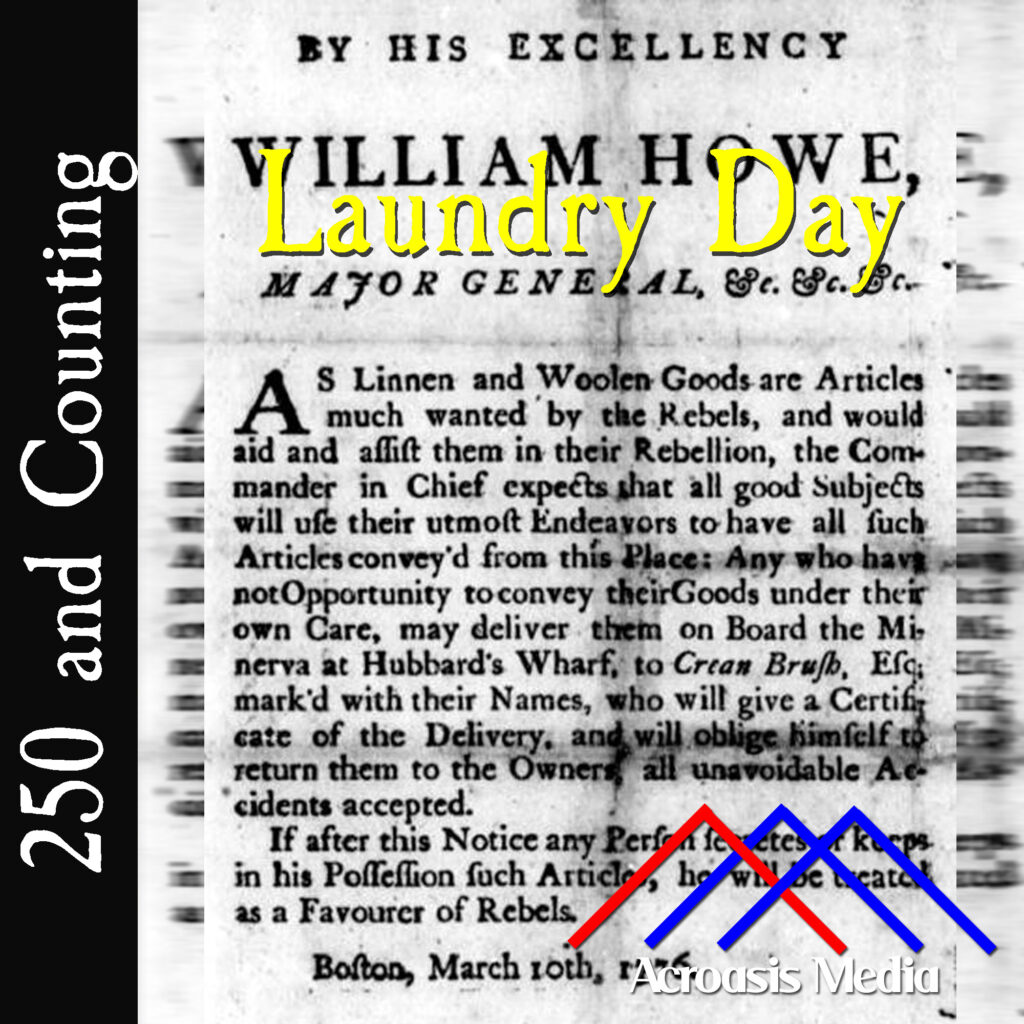
    Cover art for March 10, 1776: General Howe's proclamation regarding the collection of linen by Crean Brush. Via National Archives.

    For a guy who’s technically on the wrong side of history, Crean Brush was a pretty interesting character.

    Mike mentions in the episode that Brush was jailed for some time during the Revolution, but time didn’t allow him to tell you how Brush managed to get out of jail. I’m not going to spoil it, but the truly fascinating story can be found in this article by Eric Weiser. This article was one of those serendipitous finds that turned up when I went looking for a picture of Crean Brush. It’ll take you about twenty minutes to read, but I guarantee it’s worth your time, and I’ll give you your money back if you disagree.

    General Howe’s demand that people turn their linen and wool goods over to Brush sounds a little weird on its surface, but once you look a little closer you’ll see that it’s more petty than anything else. That said, there was a pragmatic angle to it as well: the material could be used to keep their troops warm and/or bandage any wounded British.