Tag: December 19 1775

  • Protecting the Chesapeake–December 19, 1775

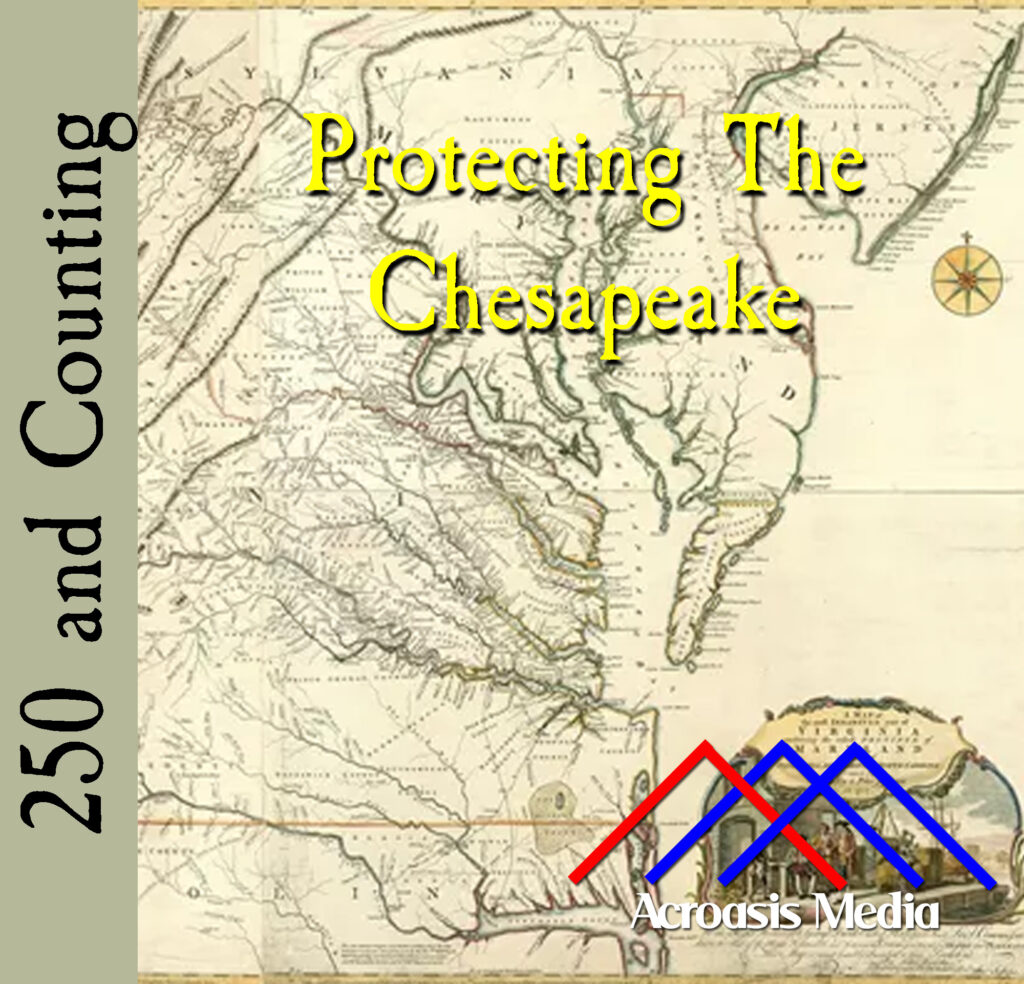
    Cover art for December 19, 1775: The Fry-Jefferson Map of the Chesapeake Bay area, commissioned in 1750 and completed in 1753.
    The Fry-Jefferson Map of the Chesapeake Bay area, commissioned in 1750 and completed in 1753. This was also one of the first maps of the area that had the “North is Up” orientation.

    The Great Chesapeake Bay, which is protected by the Delmarva Peninsula (DELaware, MARyland, VirginiA, get it?) is a watershed area that is hugely important for these three states, plus New York, Pennsylvania and New Jersey.

    Because of its importance, there are sensor buoys all over the place, measuring water temperature, salinity levels, turbidity (how clear the water is), air pressure and maybe a dozen other factors. They’re connected to NOAA (National Oceanic and Atmospheric Administration), and you can actually get the data for your own research here. I’ve actually used it in the classroom to demonstrate how bad weather can affect things like salinity, or how fertilizer-laden water runoff from farms can lead to algae blooms.

    It’s been called “Chesapeake” for so long that historians and etymologists aren’t quite sure where it derives from. It could be a corruption of the Algonquin word Chesepiooc; it could refer to the Chesepian people a tribe from the modern-day Hampton Roads area of Virginia. According to Wikipedia it’s the seventh-oldest place name in the US, but they weren’t telling what #1 through #6 are.

    It’s also—especially in the 18th Century—rather hard to defend. And while the Continental Congress dragged its feet a little bit to get the Navy raised, the more-nimble Virginia Convention commissioned a few ships of their own. Their first was a ship aptly named the Patriot.

  • Washington Has Some Intel–December 18, 1775

    Cover art for December 18, 1775: A hand-colored printed halftone of a 19th-century illustration of George Washington writing at his desk.
    A hand-colored printed halftone of a 19th-century illustration of George Washington writing at his desk.

    Military Intelligence is a peculiar thing, if only because you never know where it’s going to come from, and/or what it’s going to affect.

    And that’s where today’s episode comes in, because Congress received a letter written today which detailed some plans for British military activity in Virginia. What’s surprising is that the intelligence came from…George Washington, in Cambridge, Massachusetts.

    Washington was the lucky recipient of food that had been intercepted on its way to the British folks under siege in Boston. He also received several documents outlining plans that were afoot in Virginia, and he dutifully passed them along.

    Most of it was related to Great Bridge, which had already seen some action, but it still put Congress wise to the fact that the war wasn’t only taking place in the northeast, and that military intelligence can come from anywhere.