Tag: Esek Hopkins

  • New Command for John Paul Jones–October 27, 1776

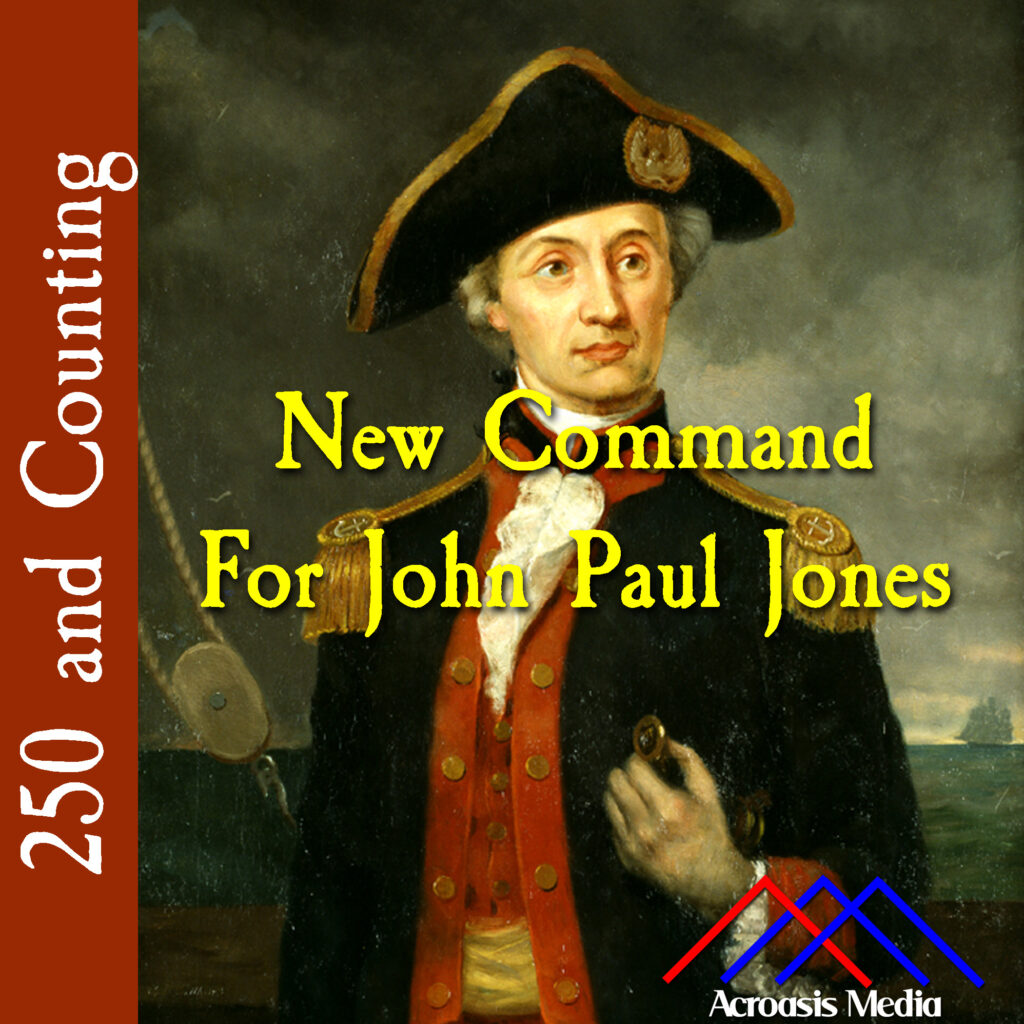
    Cover art for October 27, 1776: portrait of John Paul Jones by George Matthews, ca. 1890, based on a 1781 portrait by Charles WIllson Peale. via the US Senate Collection.

    John Paul Jones (Mike would have me note it’s not the guy from Led Zeppelin) led a relatively short life, but it was certainly eventful.

    Jones was born in Scotland and became a sailor at age 13, where he served on multiple merchantmen, including a few slave ships. Jones fled to the Virginia colony to avoid arrest after killing a mutinous subordinate and joined the Continental Navy in 1775. Less than a year later he was the captain of the USS Alfred, which is the subject of today’s episode.

    After Jones’ successes in France, he harassed British merchant ships in the Irish Sea, and he made a couple of attempts to deeply sabotage the ships in Whitehaven, but his efforts weren’t successful.

    In 1779, while still in Europe, Jones took command of the Bonhomme Richard and continued to give the British a hard time in their own waters, sometimes with mixed results. This was the ship he was commanding when he was said to have uttered the phrase “I have not yet begun to fight!”, which is pretty gung-ho, but unfortunately apocryphal.

    Jones was left without a command in 1787, so he entered in o the service of Empress Catherine of Russia. He experienced some successes, but was undercut by an ambitious underling who deliberately mis-translated his letters to the Empress. Two years later, Tadeusz KoĹ›ciuszko, a veteran of the American Revolutionary War, suggested that he leave Russia and serve another nation. Not long thereafter he was accused of raping a young girl and left the country despite the evidence being rather thin. He returned to Paris but couldn’t get a foothold in society.

    In 1792 Jones was appointed the US Consul to negotiate with Algiers for the release of American captives. Unfortunately before he could do this, he was found deat at home. The cause of his death was interstitial nephritis, an inflammation of part of the kidney which is sometimes symptomless. Nowadays it’s most often caused by reactions to certain medications but is easily treated. Jones was 45 when he died and in significant debt, largely because he hadn’t been paid for some of his endeavors. He was buried in a cemetery specifically for Protestants who weren’t native Frenchmen, but the grave was either unmarked or the marker stone was taken. It took until 1905 to locate his coffin. Today his remains are interred in a sarcophagus at the US Naval Academy in Annapolis, Maryland.

  • Mutiny(ish) Leads To Bounty–April 8, 1776

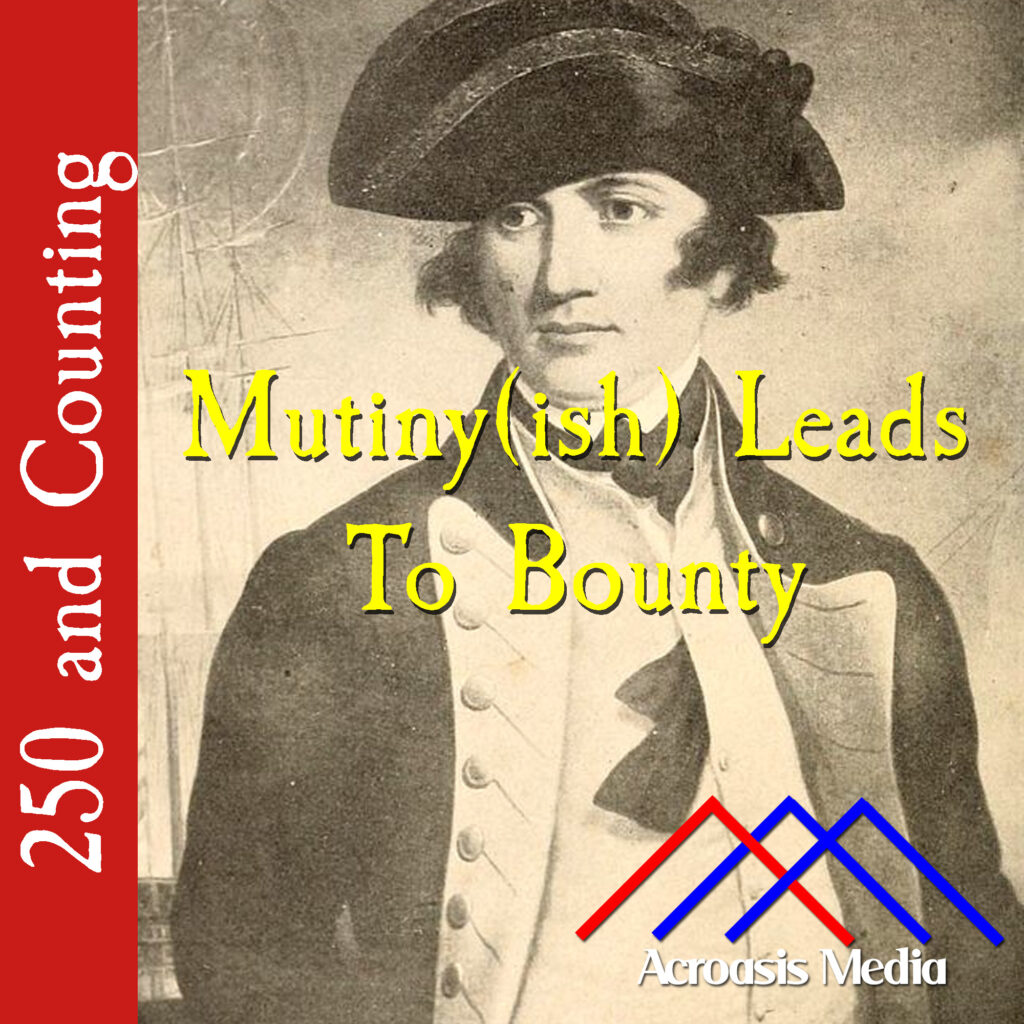
    Esek Hopkins, by Martin Johnson Heade, 1857. From a book by Edward Field, 1898, Public Domain, via Wikimedia Commons.

    Esek Hopkins wasn’t just the Commander In Chief of the Continental Navy; he was the only Commander In Chief of the Continental Navy. As we noted just a day ago, the navy was disbanded shortly after the war (sold off, you may recall) until a few years later, when the US Congress decided we needed a US Navy and we had to start all over again.

    In the 1760s he was a merchant who once took on a slave ship. Unfortunately he didn’t really know what he was doing, and more than half the slaves died enroute to the West Indies; furthermore the surviving captives were in such poor health that they sold for very little.

    For a couple of months, in 1775, Esek Hopkins was appointed as a brigadier general to shore up forces in Rhode Island, but two months later he was appointed Commander in Chief of the Continental Navy authorized by the Continental Congress to protect American commerce.

    His specific orders, which were issued on January 5, 1776, were:

    You are instructed with the utmost diligence to proceed with the said fleet to sea and if the winds and weather will possibly admit of it to proceed directly for Chesapeake Bay in Virginia and when nearly arrived there you will send forward a small swift sailing vessel to gain intelligence….If…you find that they are not greatly superior to your own you are immediately to enter the said bay, search out and attack, take or destroy all the naval force of our enemies that you may find there. If you should be so fortunate as to execute this business successfully in Virginia you are then to proceed immediately to the southward and make yourself master of such forces as the enemy may have both in North and South Carolina…Notwithstanding these particular orders, which it is hoped you will be able to execute, if bad winds, or stormy weather, or any other unforeseen accident or disaster disenable you so to do, you are then to follow such courses as your best Judgment shall suggest to you as most useful to the American cause and to distress the Enemy by all means in your power.

    Having been given eight small ships to carry this out, Hopkins instead read the last part of his orders very closely, and did exactly that part of it. Instead of hanging around Virginia and the Carolinas, he made for the Bahamas, where he executed the raid on New Providence.

    While this move proved advantageous to the colonies as a whole, the Southern Colonies were especially upset and the rifts between them and the Northern Colonies got a little wider. Ultimately (though not right away) Hopkins was politically damaged for this action. It didn’t help that Hopkins was also accused of torturing British prisoners in his care, but that led to a military policy of immediate reporting of any misconduct committed by any person acting in the service of the United States.