Tag: Fort St. Jean

  • The Siege at Ft. St. Jean Ends–November 3, 1775

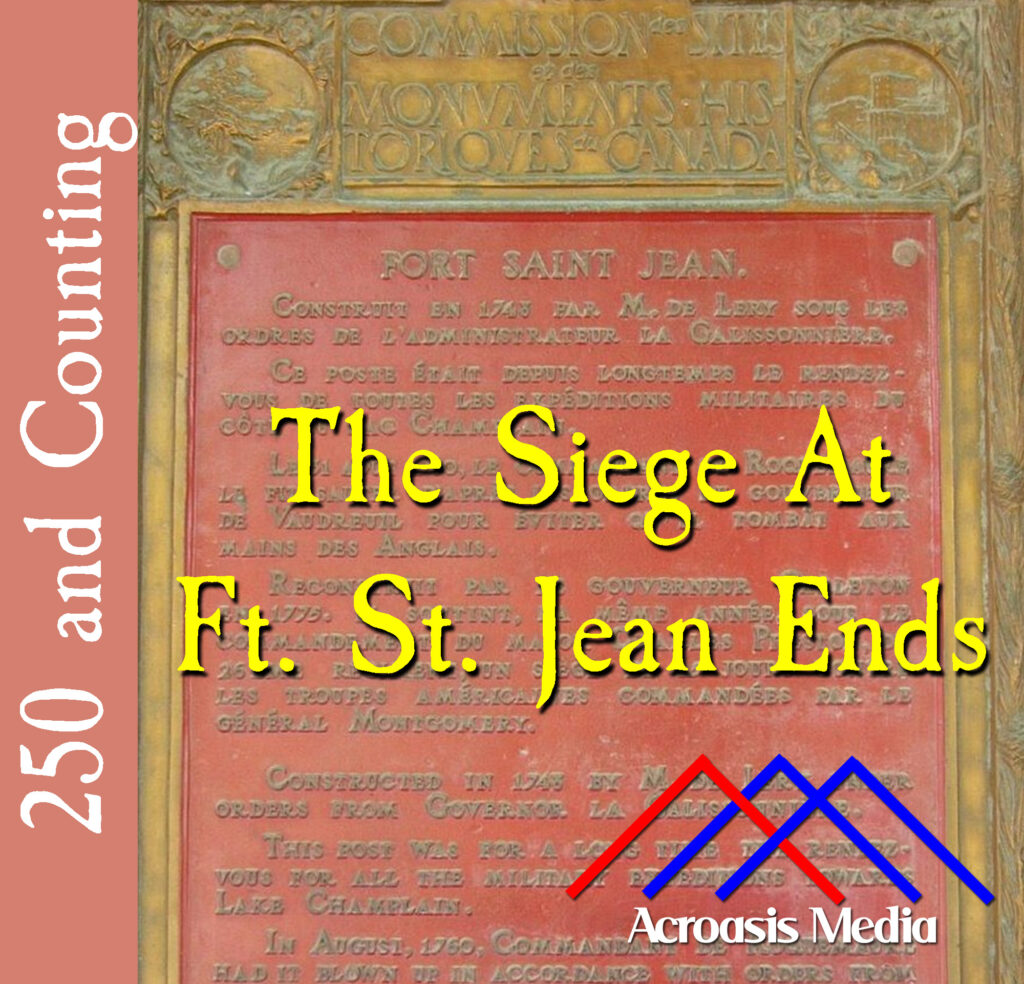
    Cover art for November 3, 1775: plaque commemorating the siege at Fort St. Jean in 1775, placed in 1926. via WIkipedia.

    If you’re scrutinizing today’s cover art and you’re having trouble reading the plaque, that’s because what you see is mostly in French. The bottom half, only part of which is visible here, is in English.

    The English part (which is a translation of the French part) reads:

    FORT SAINT JEAN

    Constructed in 1743 by M. de Léry under orders from Governor la Galissonnière. This post was for all the military expeditions towards Lake Champlain. In August, 1760, Commandant de Roquemaure had it blown up in accordance with orders from the Governor de Vaudreuil in order to prevent its falling into the hands of the English. Rebuilt by Governor Carleton, in 1773. During the same year, under the command of Major Charles Preston of the 26th Regiment, it withstood a 45 day siege by the American troops commanded by General Montgomery.

    So…yeah. The FORT withstood the siege, but eventually the soldiers within the fort gave themselves up.

  • Reinforcements Arrive in Quebec–October 15, 1775

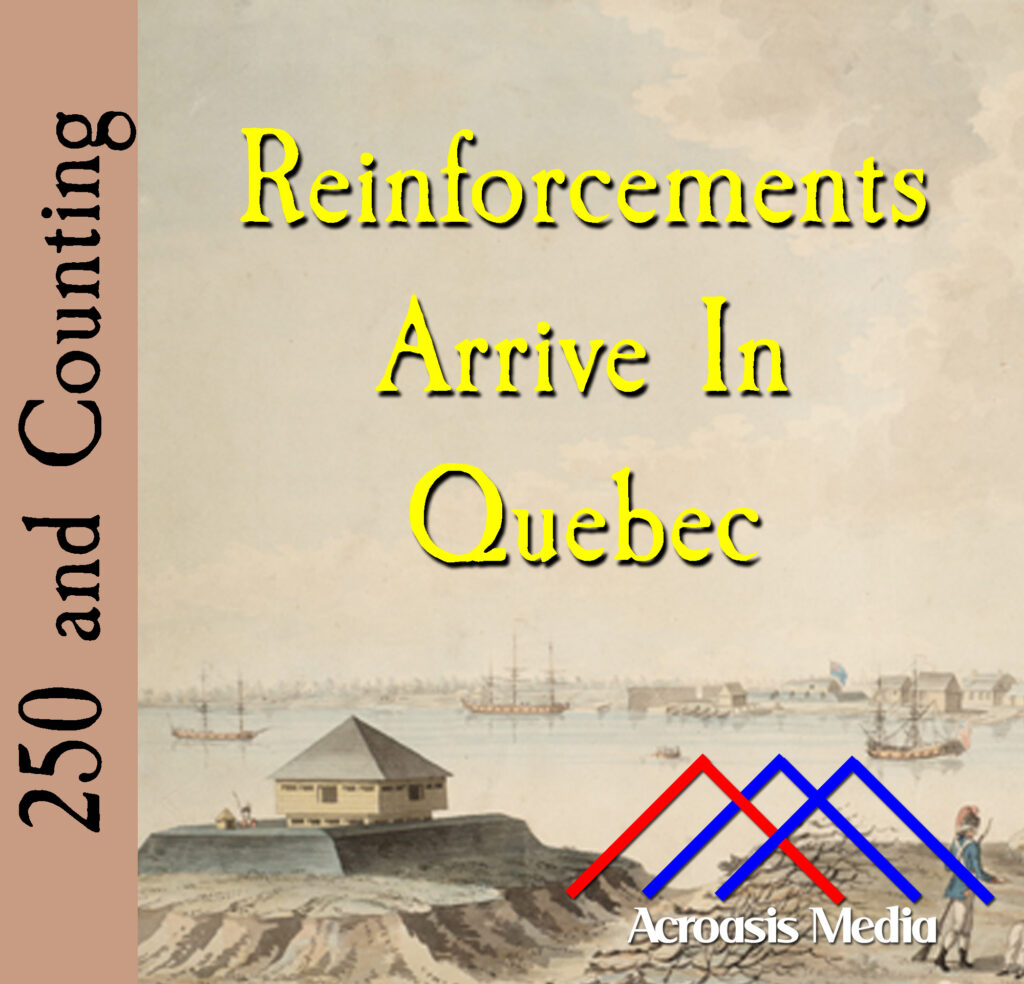
    Cover art for October 15, 1775: Fort St. Jean (near the right edge) around the time of the siege. Watercolor, pen and ink by James Peachey.

    Fort St. Jean was a relatively soft target compared to Boston. Plus, it wasn’t as well fortified because the British weren’t holed up there. Sooner or later something would come along to break up the stalemate.

    On this day, a couple of somethings arrived, from Fort Ticonderoga and Crown Point. The big guns that Montgomery had hoped for finally arrived. And not long behind that, Montgomery was able to take Fort Chambly, which wouldn’t have been a huge deal had its commander not forgotten an important detail while he was high-tailing it out of there.

  • October 5, 1775: An Arrest In Canada

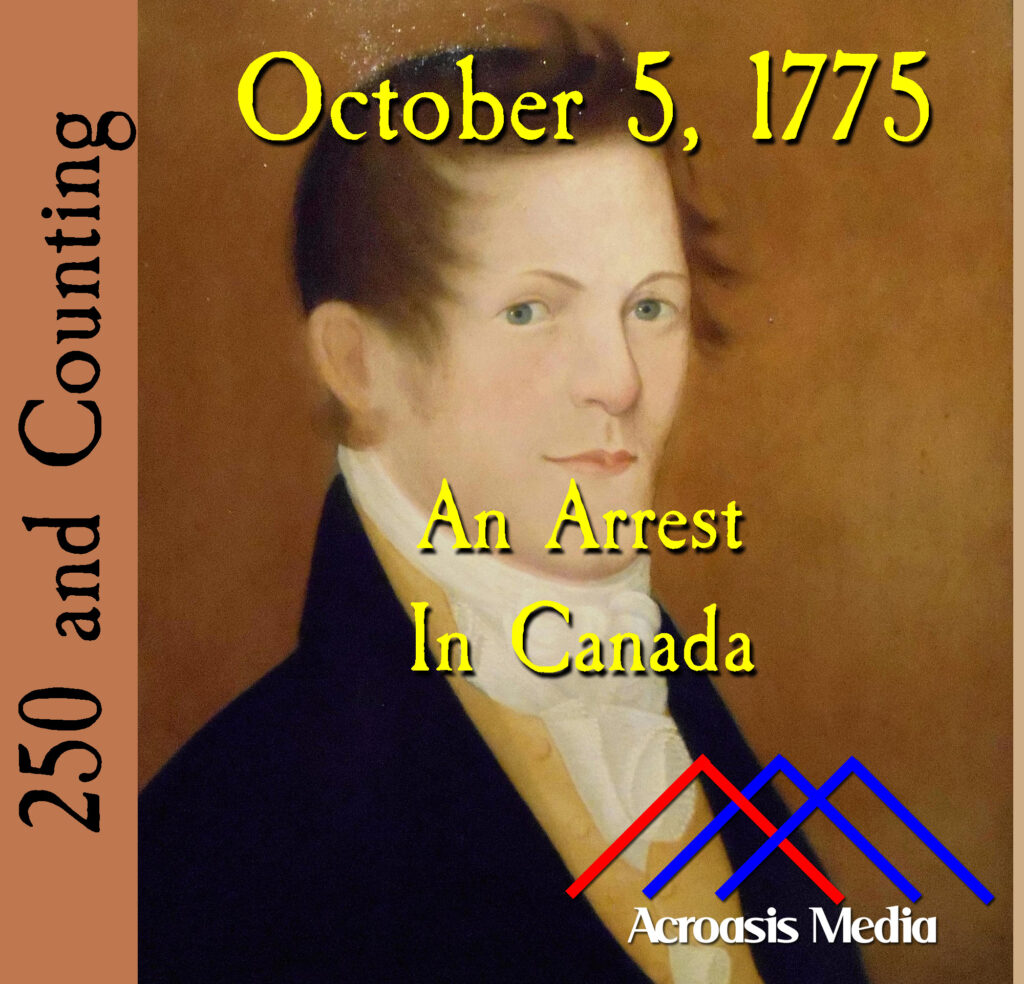
    Cover art for October 5, 1775: Oil-on-wood portrait of Thomas Walker

    Thomas Walker was born in England and emigrated to Boston in 1752. In 1763 he moved to Montreal and became a merchant.

    When the war broke out in the Colonies, both Walker and his wife’s sympathies remained with the Americans. So it was that he agreed to assist with the invasion of Montreal. The plan never got to the point where his task came in, but since he was known to be part of it, the word went out for his arrest.

    Walker didn’t give up quickly but he was caught by the British for his crime. A month later he was put on a ship bound for Quebec, but it was captured by the Americans and he was released. He returned to Montreal(!) but when an American delegation showed up in May 1776, he decided to return to America with them, and he re-established himself in Boston. Unfortunately we don’t know a lot about what happened to him after that except that in 1785 he petitioned Congress for reimbursement for lost income because of the war.