Tag: General Charles Lee

  • Continuing to Retreat–November 21, 1776

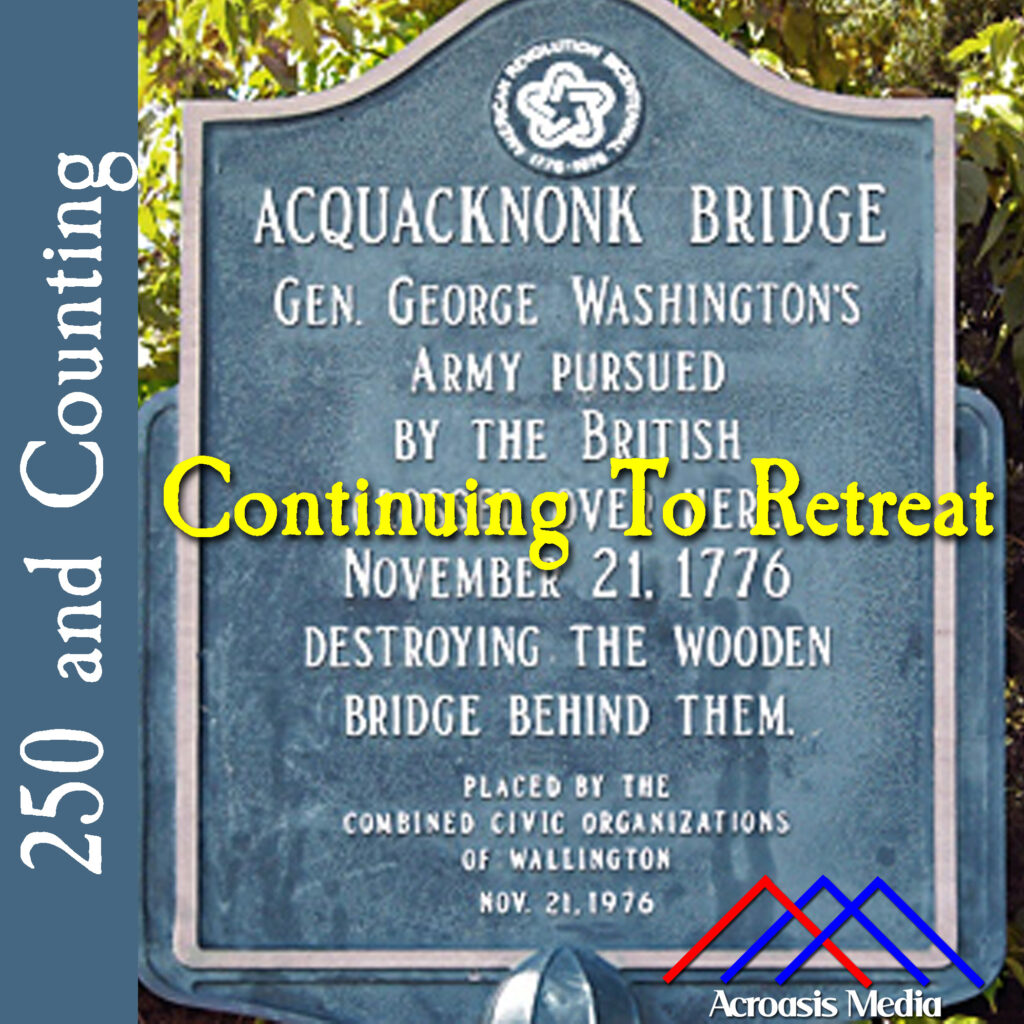
    Cover art for November 21, 1776: Historical marker--one of several--placed at the Passaic River crossing in 1976.

    When I lived in northern New Jersey, as I mentioned a couple of days ago, I was just a few blocks from the Passaic River. But the river wasn’t quite as large there as it was where Washington’s army crossed it.

    There is a modern-day bridge at that crossing spot, and the (misspelled) sign in today’s cover art marks that spot, on the east side of the river. On the west side of the river is River Drive, which (surprise!) runs along the river for a ways. There’s a second marker there.

    But wait! There’s more!

    Maybe a hundred yards away, in Armory Park on Main Street, there’s a third sign, which is an exact replica of an earlier sign at the same spot that had been placed in 1932. The interesting thing is that the two signs on the west side of the bridge are worded almost identically, though one refers to “Blanchard House” and the other refers to “The Tap House.” However, both signs are referring to the same tavern, which is no longer extant but is the home of Saints Peter and Paul Church. Having said that, there are several markers around the church, marking the Blanchard House’s location, a monument to George Washington, and a couple of significant grave markers.

    And—this I found weird-but-interesting—near the second bridge marker there’s a Burger King. And in the parking lot there’s a memorial to Lord Stirling, who was with the Continental Army during the crossing and set up the headquarters at Blanchard House. We’ll hear more from Stirling around Christmas time, shortly before this show ends.

  • When Accusation Is A Confession–July 22, 1776

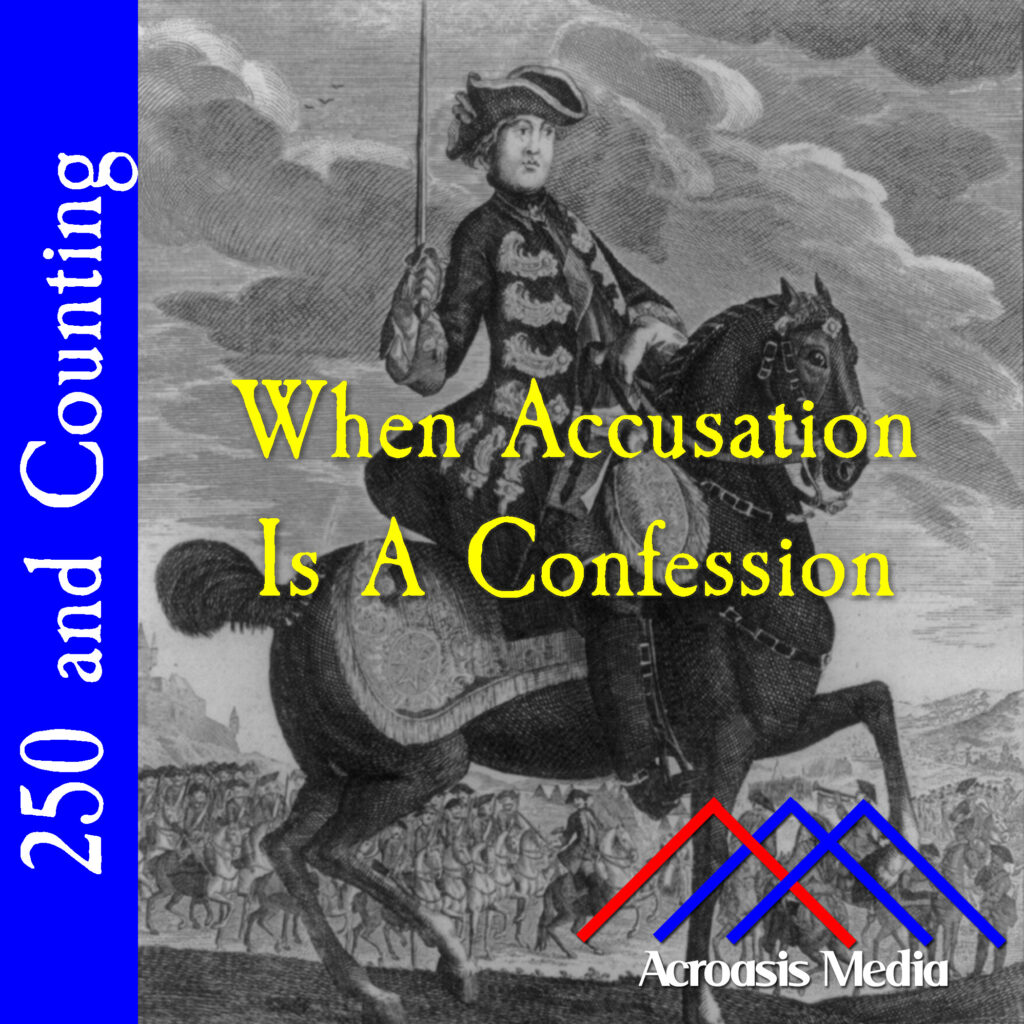
    Cover art for July 22, 1776: General Lee on Horseback, Engraved by Johann Michael Probst, 1790. via Library of Congress.

    That Charles Lee turned out to be giving information to the British is one of those things that feels obvious in retrospect.

    As Mike notes during the episode, Lee was passed over for command of the Continental Army, and even though he was still in a position of importance and command, things like that can eat away at some people.

    Now, by most accounts, and through review of existing documents, Lee generally acquitted himself well in the Southern Department and in New York, although at the time of his capture there he was writing a letter to General Horatio Gates complaining that George Washington was somehow deficient.

    However, his attitude toward the Continental Army continued to deteriorate after his release in 1778. He was held partly responsible for the outcome of the Battle of Monmouth, likely because he was rather capricious with his actions. Because he behaved insubordinately afterward, Lee was court-martialed (at his demand) and found guilty, but given the very light sentence of a year’s suspension from the army. Before the year was out, however, he wrote an angry letter to Congress that resulted in his termination of service.

    It wasn’t until the 1850s that the New York Historical Society discovered a manuscript Lee had written while he was a prisoner of war. It was addressed to both Richard and William Howe, and outlined a plan by which the British could defeat the Continental Army. Whether Charles Lee is specifically guilty of treason is still debated among historians, though he’s commonly been presented as a villain in popular culture of the past 80 years or so.