Tag: General William Howe

  • How Best To Invade New York?–October 8, 1776

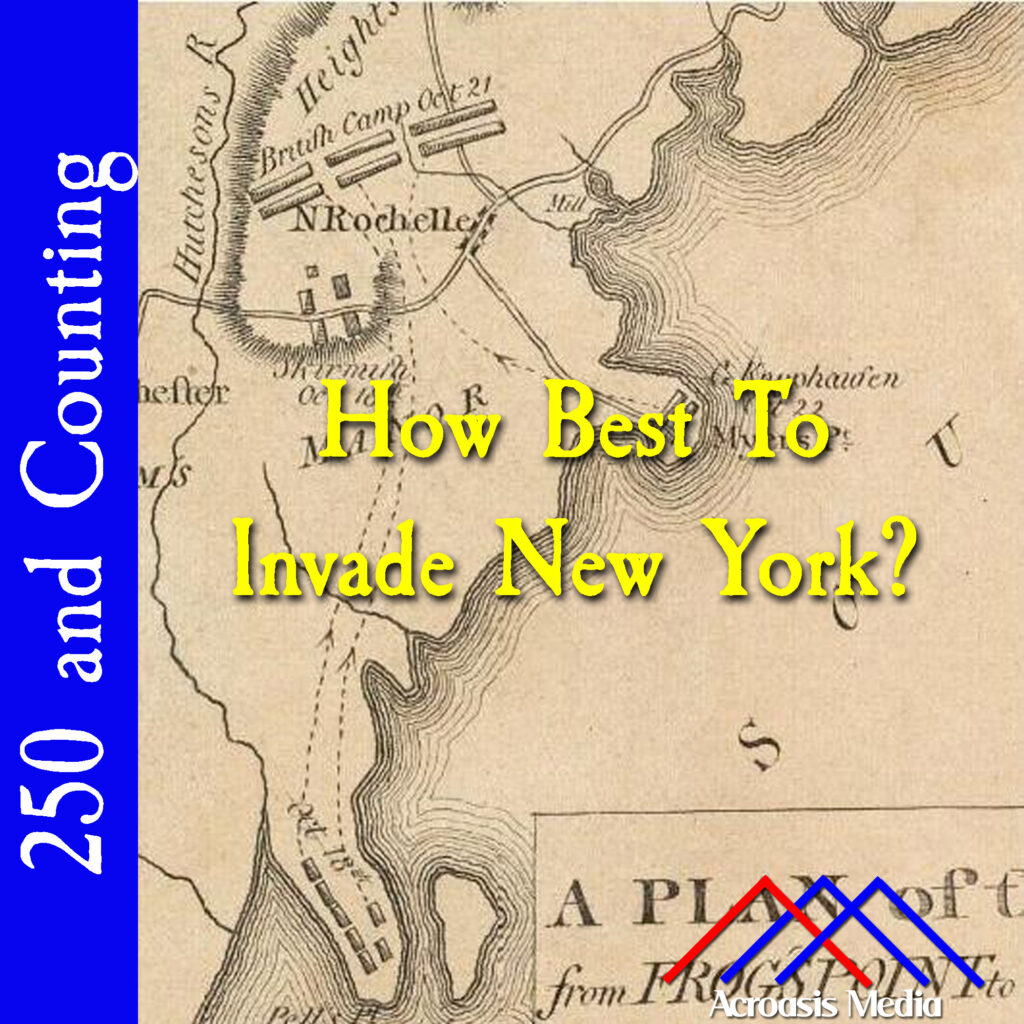
    Cover art for October 8, 1776: detail of a period map of the Manor of Pelham and the surrounding area. Throg's Point/Pells Point is at the bottom center of the map.

    There are several names for the battle about to happen here, depending on how you view the geography; Battle of Throgs Neck, Battle of Throgs Point, Battle of Pells Point and believe it or not that isn’t even half of the total names given to this one conflict.

    After George Washington’s successful defense of Harlem Heights, which was a good place to be from a defensive standpoint, the Continental and British armies were basically in a stalemate for a few weeks.

    The Americans were under the impression that the British would either attack Fort Washington, or make a flanking move through the Long Island Sound. Washington’s Council of War finally tried to guard against both possibilities (because this worked out so well when the British invaded Long Island…ugh). Ten thousand men remained to defend Harlem Heights and Fort Washington, while General William Heath took five thousand troops to the far side of the Hudson, near Fort Constitution and modern-day West Point.

    Ultimately General Howe chose a flanking maneuver but came in at a point much further south than Fort Constitution. In just a few days we’ll see how the confrontation works out.

  • Battle of Harlem Heights–September 16, 1776

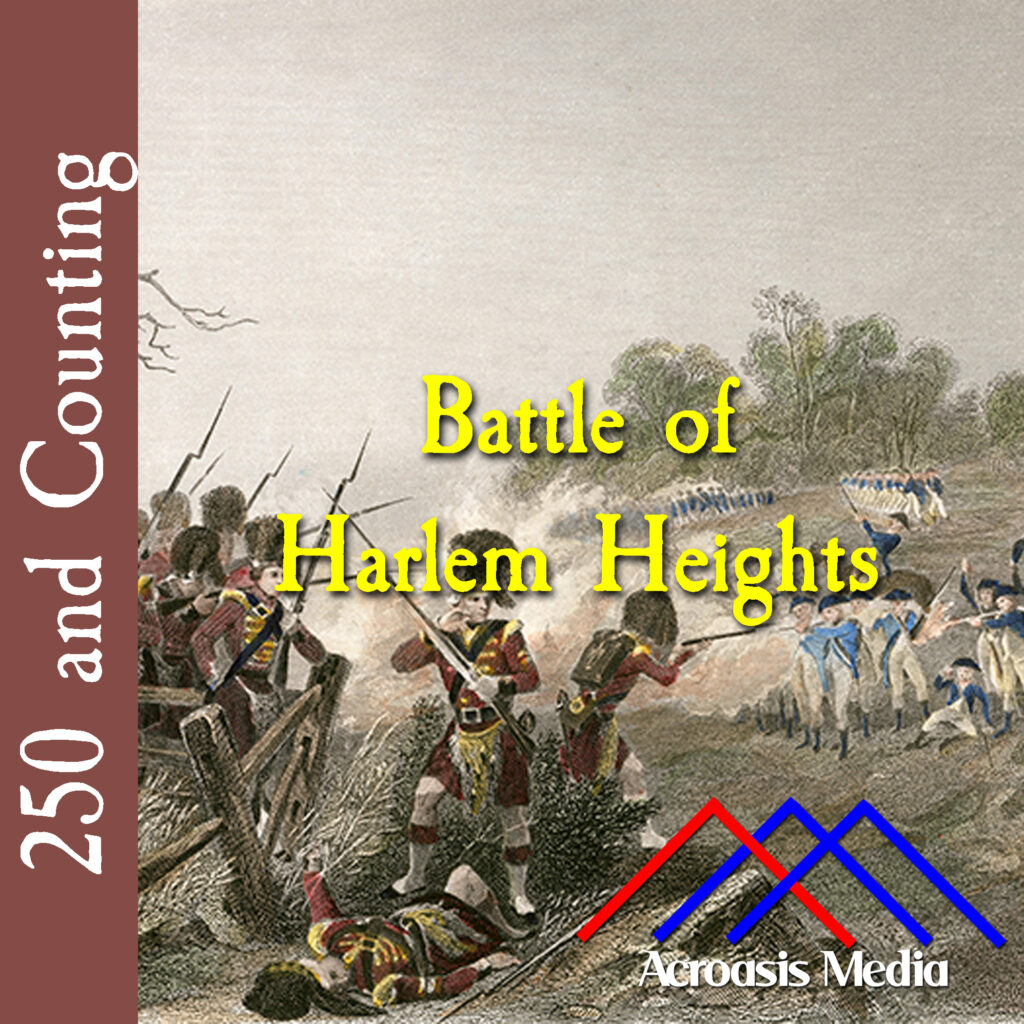
    Cover art for September 16, 1776: "Battle of Harlem," steel engraving by James Charles Armytage ca. 1859, Based on an original illustration from the same period by Alonzo Chappel. via George Washington Presidential Library.

    While it didn’t change the result in New York, the Battle of Harlem Heights was a tactical win for the Continental Army, and a boost to morale as well.

    It was the Continental Army’s first true victory since Lexington and Concord, and after the demoralizing loss at Kip’s Bay only a day earlier, demonstrating that these soldiers (who were still little more than ordinary citizens) could, in fact, stand up successfully to the mightiest fighting force in the world.

    Harlem Heights is a neighborhood to the west of Harlem, and nowadays is called Morningside Heights. A cynic would suggest that the neighborhood changed names in the 1890s so that Columbia University wouldn’t have to be associated with a predominantly black neighborhood, but to be fair the neighborhood was also known as Cathedral Heights because of the presence of St. John the Divine Cathedral.

    At any rate, the neighborhood is definitely worth a visit. There are a few historical plaques around Columbia University, and if you like visiting cathedrals, St. John is definitely worth your while. Grant’s Tomb can also be found in that area, and if you’re a fan of the TV show Seinfeld, you will be thrilled by what you find at 112th St and Broadway. That’s all I’m sayin’.

  • A British Offer–September 2, 1776

    Cover art for September 2, 1776: portrait of John Sullivan at age 34 in 1774. Painted by Richard Morell Staig circa 1876, based on a mezzotint print from 1776.

    General John Sullivan had been captured only a few days before by the British, during the Battle of Long Island.

    Now, Mike tells us in this episode that the Howes talked him into approaching the Continental Congress with their peace offering, but equally likely is that Sullivan simply agreed to deliver the message because it would get him out of captivity, at least for a while. (He was paroled specifically to deliver the message. Once he had his answer, it was “Back to jail with you, Johnny.”)

    Part of the problem Sullivan had was that Congress didn’t think the offer was sincere; another part is that some members didn’t think Sullivan was sincere. Sullivan returned to the British, delivered the reply from Congress, and was re-imprisoned for another few months, until he was returned in a prisoner exchange.

    So we haven’t heard the last of John Sullivan!

  • The Battle of Long Island–August 27, 1776

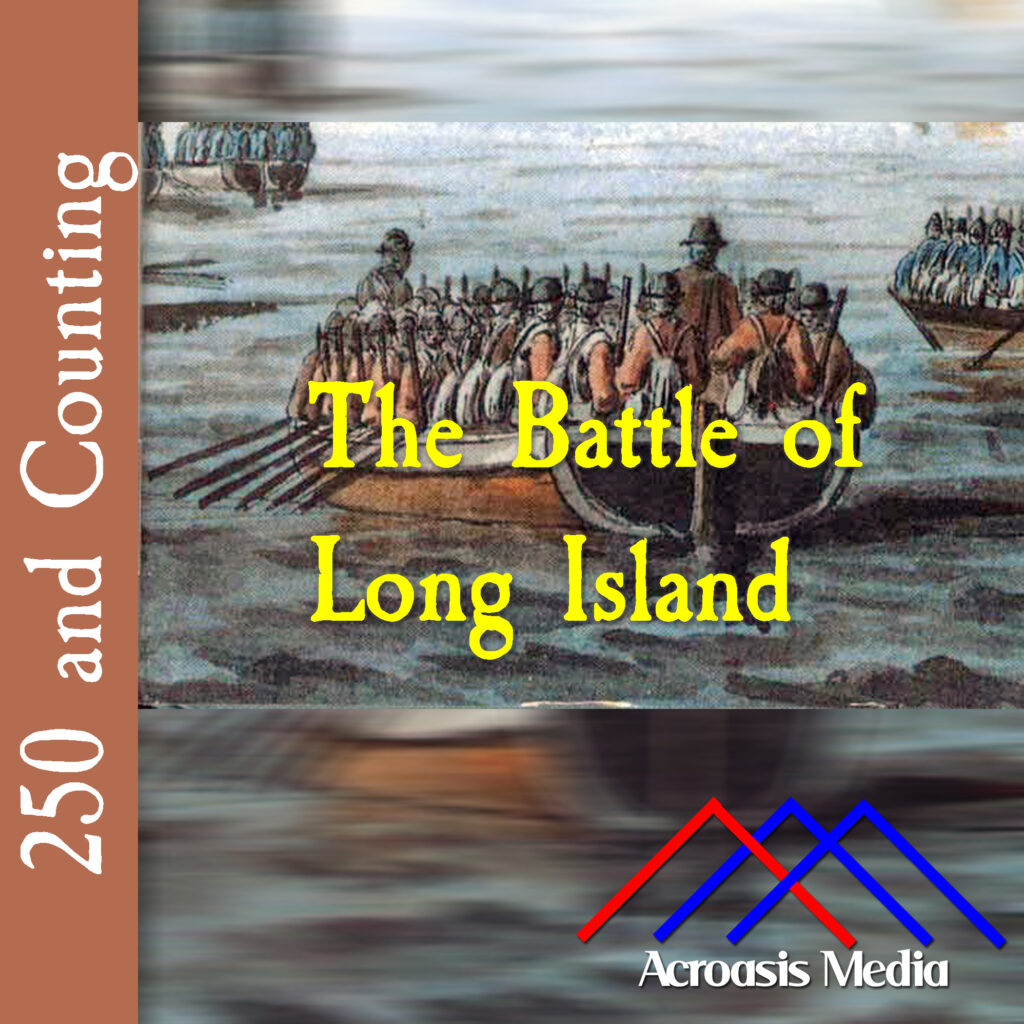
    Cover art for August 27, 1776: British flat-bottomed boats making their way to Brooklyn shortly before the battle. The soldiers in blue are Hessians. Painting by Robert Cleverly in 1777, via National Maritime Museum.

    The Battle of Long Island was one of our largest engagements with the British, and it was also the first one after the Declaration of Independence.

    And it was a rout; the Americans got their heads handed to them. The British took New York and they occupied it for the rest of the war. After so many smaller victories, we finally got the lessons that A) this was going to be a long and bloody war, and B) there really isn’t any such thing as an easy victory.

    As a result, New York City became a focal point for espionage and intelligence-gathering. If you’ve ever seen the AMC series Turn: Washington’s Spies, you’ll get an idea of some of the things that went on. (The series as a whole isn’t bad, but there are definitely instances of dramatic license that went on. For instance, you can’t row across the Long Island Sound and back overnight. In fact, I’m not sure you can row across the Sound safely at all.)

    In tomorrow’s episode, Mike will tell you why it didn’t turn out worse for the American side and then we close out the week with the last chapter of the Battle of Long Island.

  • Eve of Battle–August 26, 1776

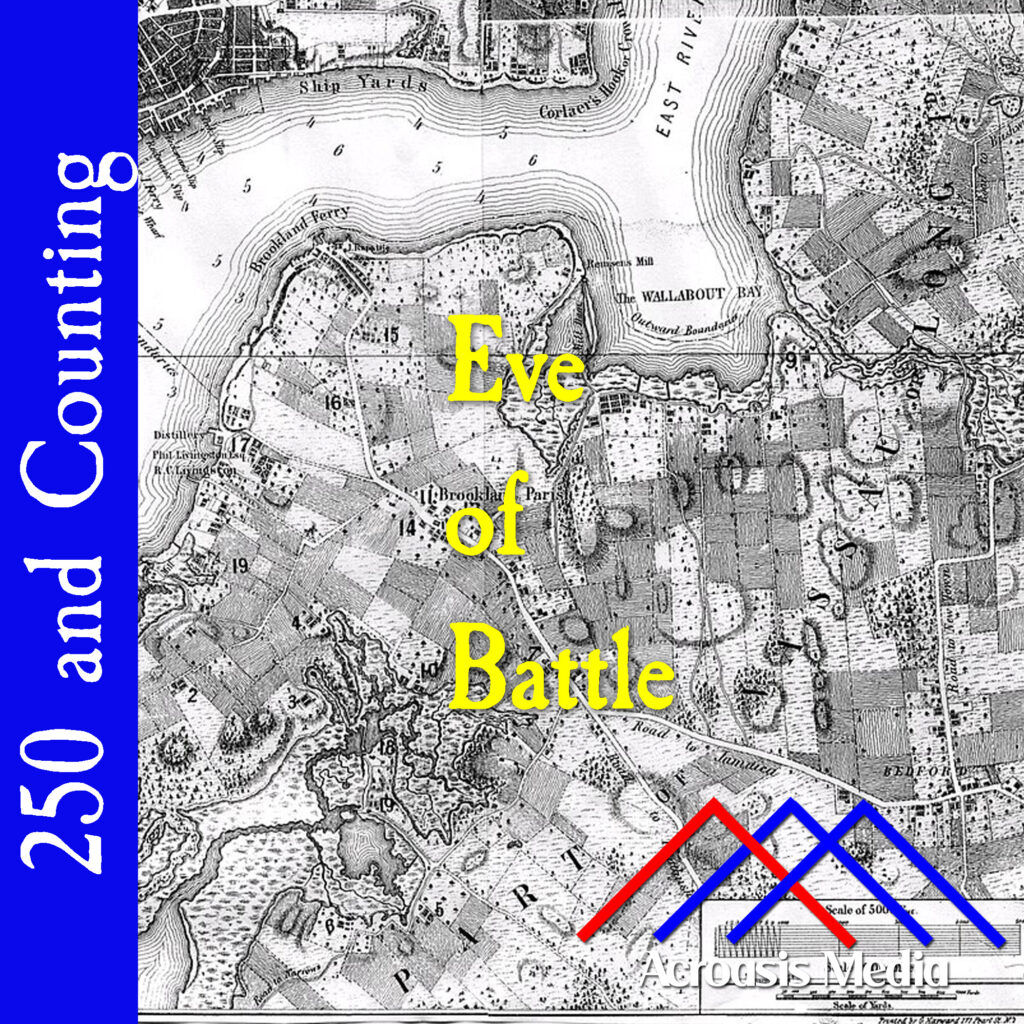
    Cover art for August 26, 1776: A map of Brooklyn by Bernard Ratzer, ca. 1766-67. The Guan Heights are marked as ovals at center right.

    At this point, both George Washington and General William Howe know that they’re literally on the eve of battle, and they’re making their final preparations.

    The British, along with the Hessians, were making plans to move along the Jamaica Pass (it’s the road just above the Acroasis logo in today’s art), which, while they didn’t know it, was relatively lightly guarded by the Continental Army.

    Washington’s tactic was to hold on to the Heights of Guan (the ovals to the right of the episode title, representing hills) and fortify Brooklyn Heights (far left center, about where the Brooklyn Bridge is today). It wasn’t a bad idea, but it didn’t match the British plans. And that’s largely where things went wrong. We’ll be talking about that in greater detail tomorrow.

  • The Big News–August 10, 1776

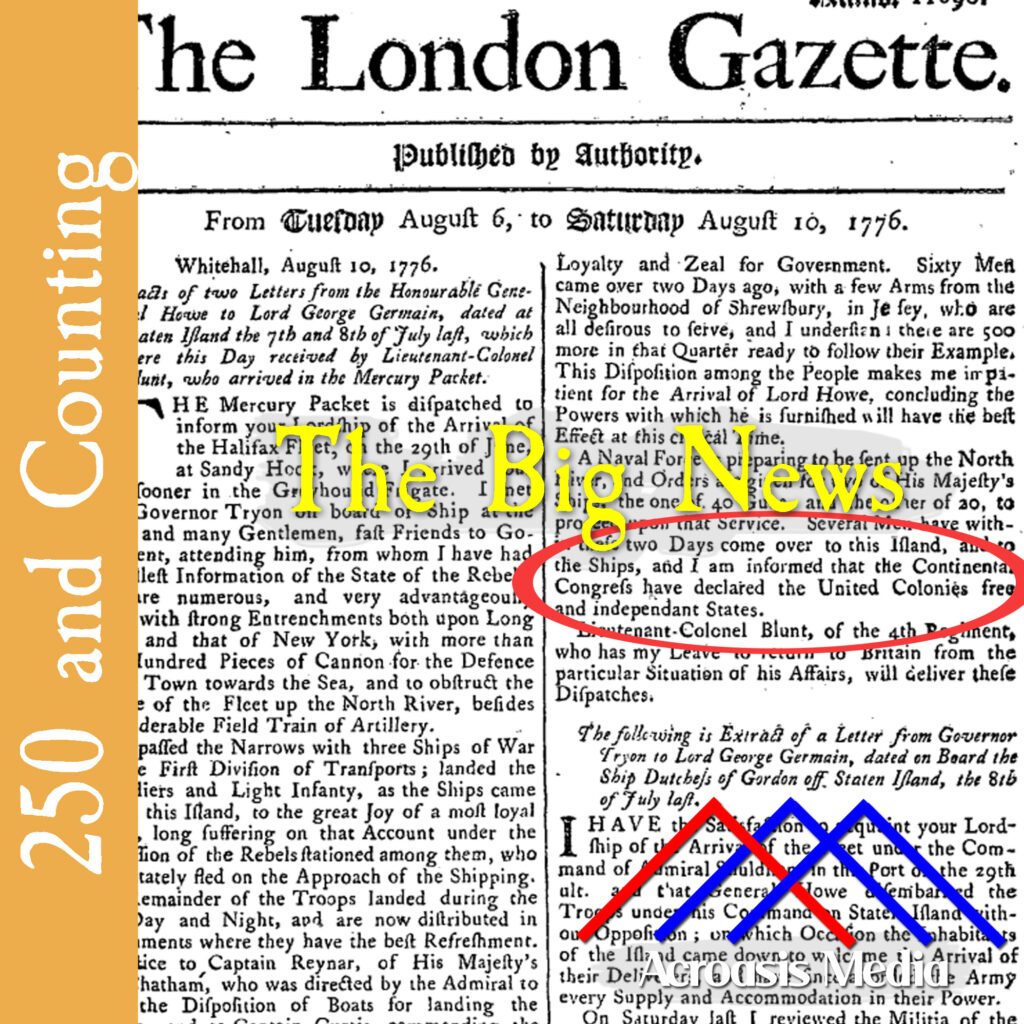
    Cover art for August 10, 1776: reproduction of the first page of the London Gazette for this date. via the LA Times website

    Once again, we have a situation where the technology of the eighteenth century has to be seen to be believed.

    Only a few days ago, we mentioned an event that took place in France without knowledge that the United States had declared independence, and now we have today’s entry, suggesting that it’s only in the last day or two that England is getting the news. You know, England? The ones we declared our independence from?

  • You Don’t Mess Around With George–July 14, 1776

    Cover art for July 14, 1776: altered portrait of George Washington, via tenor.com.

    One of the most common things written about George Washington is that he always behaved like a gentleman, and expected others to behave the same way; following protocol was very, very important to him.

    When he was sixteen years old, he copied out by hand 110 rules of Civility & Decent Behavior in
    Company and Conversation
    , likely as a penmanship exercise. These rules are based on a set of rules composed by French Jesuits in 1595. The first English translations of the French rules appeared in 1640, and are ascribed to Francis Hawkins, the twelve-year-old son of a doctor. (So, probably as a translation exercise from Hawkins’ French tutor.)

    Without even knowing it, the people who worked with this set of rules was absorbing a code of behavior that worked for people of all social strata, rather than for a specific class of people. Thus, it makes sense that the protocol for Washington as a leader of soldiers, and then a nation, depended on the “all men are created equal” credo.

    As Parson Mason Locke Weems said of Washington, “‘no wonder every body honored him, who honored every body.” And while Weems is also thought to be the guy who made up the Cherry Tree story, he was certainly correct in this respect.

  • Howe Checks In–July 7, 1776

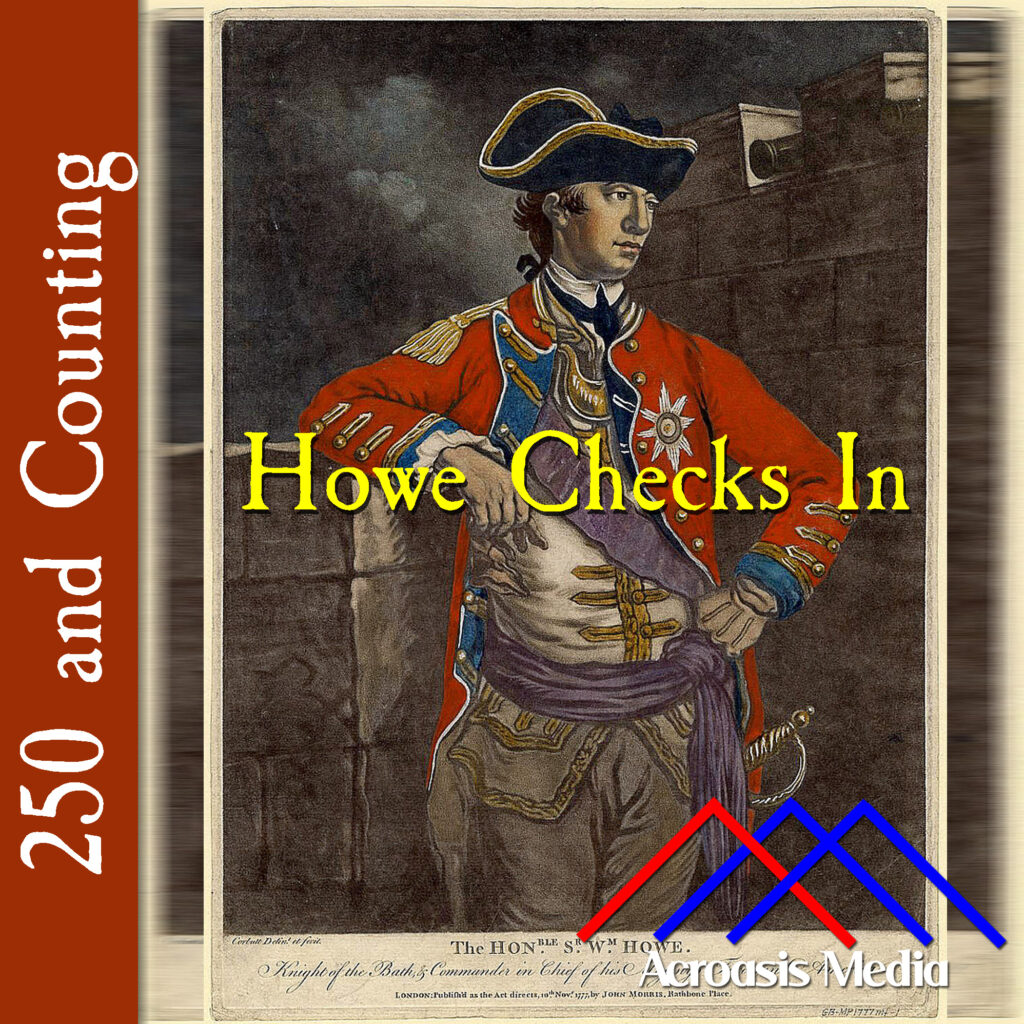
    Cover art for July 7, 1776: color mezzotint print portrait of WIlliam Howe by John Morris, published in 1777.

    William Howe had already been in New York for a little over a week when he wrote to George Germain from his Staten Island headquarters.

    Not everyone had yet arrived from Halifax, of course; it was a long trip and the ships moved at different speeds. Howe took the time to detail what troops and ships had already arrived in New York, and what was still enroute, and that he was awaiting some more reinforcements before acting in full.

    I presume that he was as detailed as he was because he was dispatching the letter to George Germain immediately via a packet ship, and the American Navy wasn’t really in a position at that point to intercept anything; otherwise they would have had a lot of actionable information about troop movements and their plans.

    On the other hand, George Washington (and a few others) had already figured out what the British were up to, but at this point they were at a little bit of a loss regarding how they were going to counter it.

    Part of the problem was that the troops were still fighting more or less defensively. They didn’t have a specific cause to fight for. But in another couple of days, they would have that. It wouldn’t really help in the short run here, but it worked wonders in the end.

  • Laundry Day–March 10, 1776

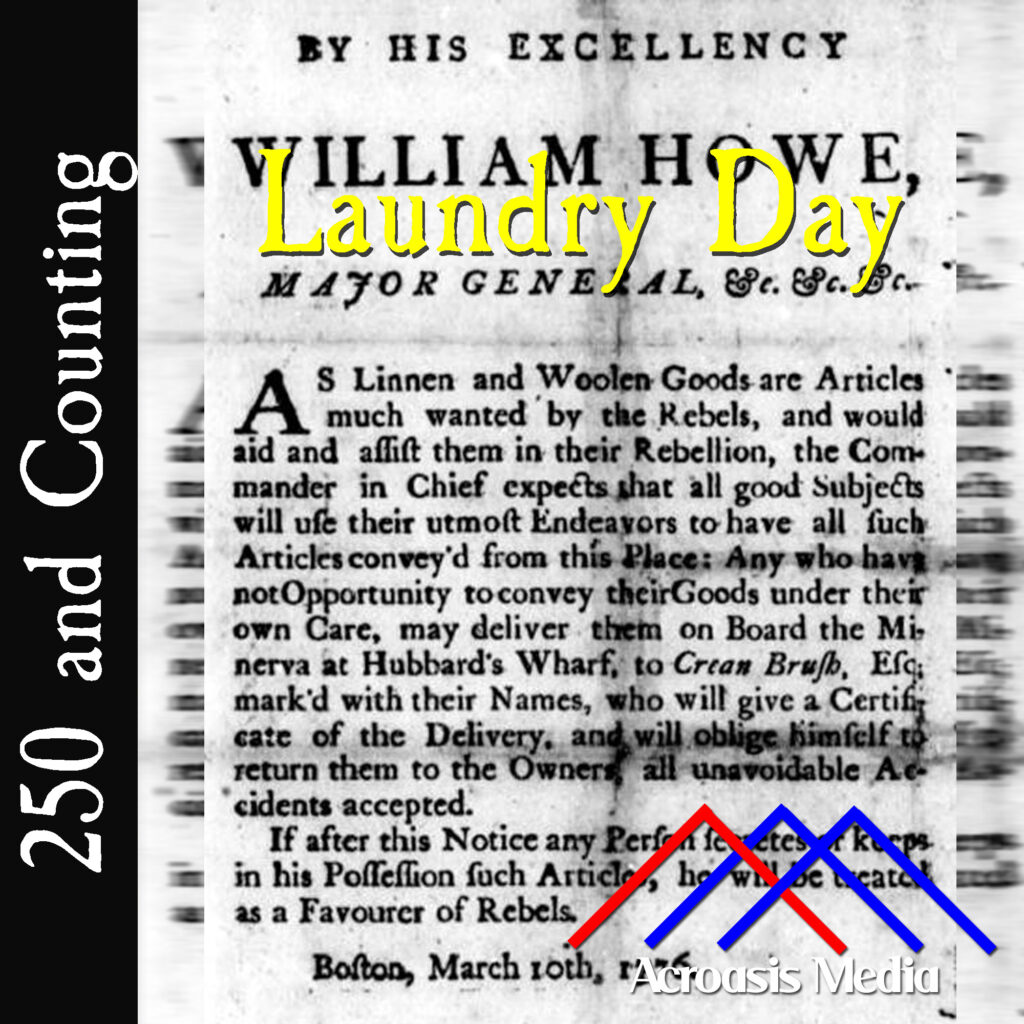
    Cover art for March 10, 1776: General Howe's proclamation regarding the collection of linen by Crean Brush. Via National Archives.

    For a guy who’s technically on the wrong side of history, Crean Brush was a pretty interesting character.

    Mike mentions in the episode that Brush was jailed for some time during the Revolution, but time didn’t allow him to tell you how Brush managed to get out of jail. I’m not going to spoil it, but the truly fascinating story can be found in this article by Eric Weiser. This article was one of those serendipitous finds that turned up when I went looking for a picture of Crean Brush. It’ll take you about twenty minutes to read, but I guarantee it’s worth your time, and I’ll give you your money back if you disagree.

    General Howe’s demand that people turn their linen and wool goods over to Brush sounds a little weird on its surface, but once you look a little closer you’ll see that it’s more petty than anything else. That said, there was a pragmatic angle to it as well: the material could be used to keep their troops warm and/or bandage any wounded British.

  • The Big Guns In Boston–March 9, 1776

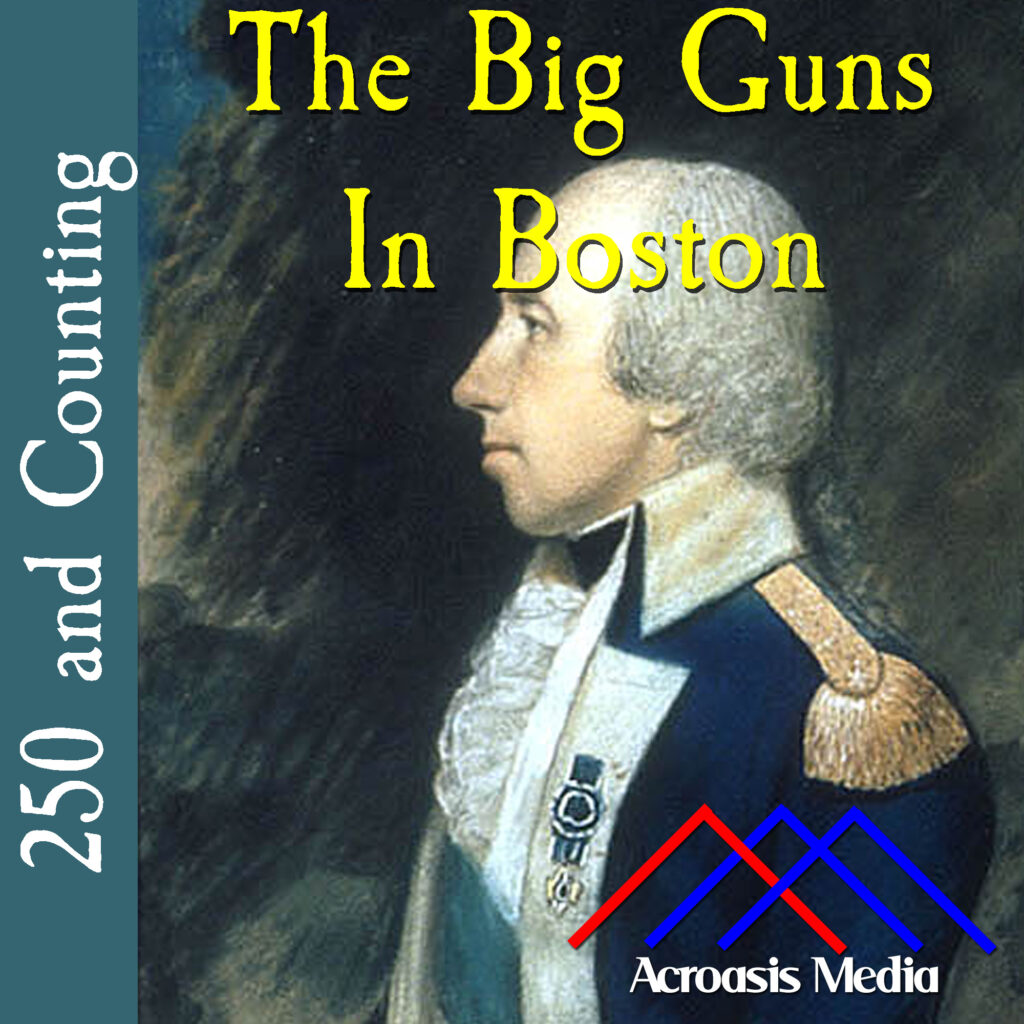
    Cover art for March 9, 1776: portrait of Rufus Putnam by James Sharples, 1796. via the National Park Service.

    The occupation of Dorchester Heights, just across the river from Boston, was perhaps the final step that George Washington needed to end the siege that had gone on for nearly a year.

    Of course, it wasn’t just occupying Dorchester Heights; Washington could have pretty much done that at any time. It was occupying them with a terrifying speed, thanks to Rufus Putnam (the guy in today’s cover art, by the way) and his clever plan for assembling the defenses there. And thanks also have to go to the big cannons that had been brought down from Ticonderoga. These guns had the range that Washington needed to not only shoot at Boston if he needed to, but to fire upon British ships in Boston Harbor.

    Howe had a couple of moves left, but it was nearly over.