Tag: Invasion of Quebec

  • Finally Bailing Out Of Canada–June 8, 1776

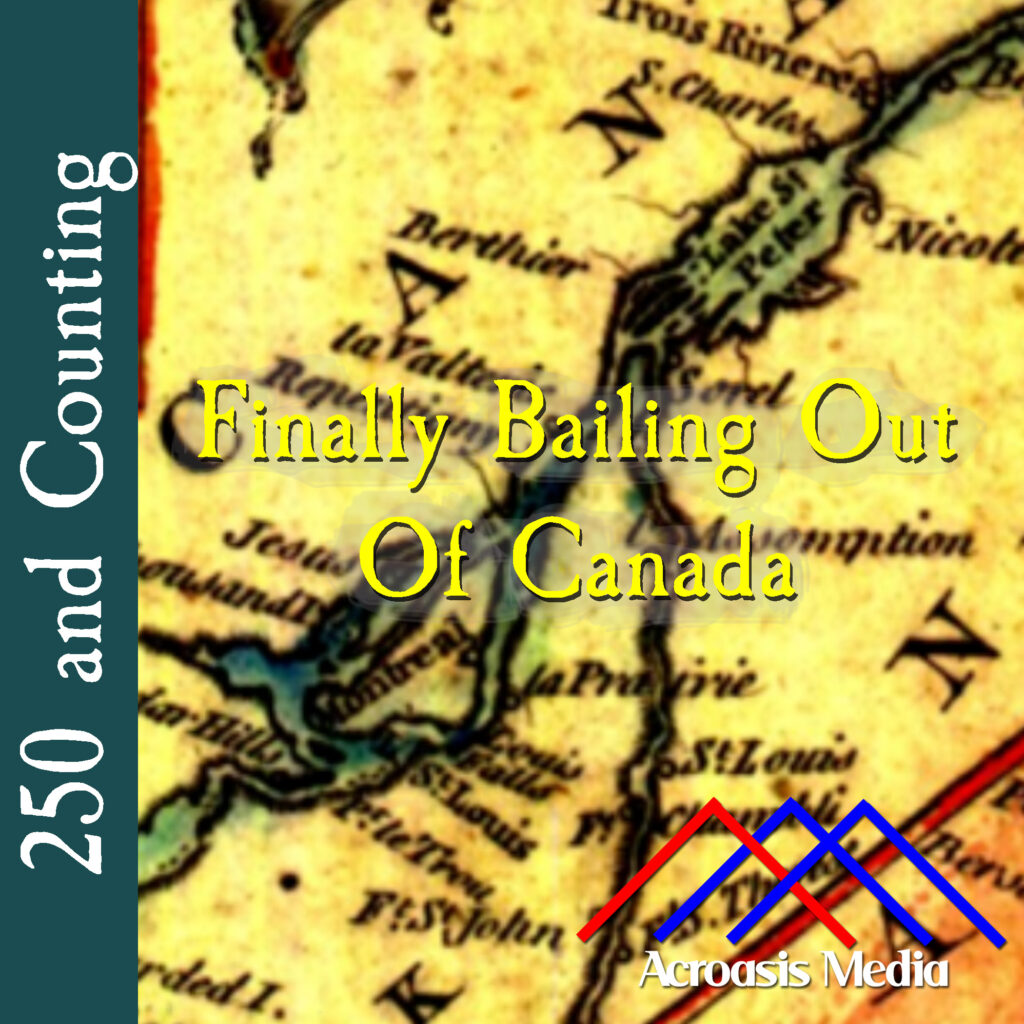
    Cover art for June 8, 1776: 1759 map of Montreal, St. Lawrence River, Richelieu River at Sorel, and Three Rivers east of Lake St. Peters. This is the Trois-Rivières area referenced in today's episode.

    As a nation, we should be able to face our failures as squarely as we crow our triumphs, and make no mistake: the invasion of, and withdrawal from Canada was a botched effort from one end to the other.

    Perhaps the only thing that kept it from being a bigger deal was the distraction a few weeks later of the Colonies delcaring themselves to be states independent from Great Britain.

    We barely had an army that had any idea of how to provision its forces, yet we sent a bunch of them to the north anyway, far from home and no easy way to get there or back. We started this invasion in a blizzard! And, perhaps even worse, our withdrawal from Canada suddenly left us open to a potential invasion from the north by British troops.

    I realize that I have the benefit of 250 years of hindsight on this, but this really does feel like one of those things where people said “We have to see this through to the end, which will be glorious,” and then nearly six months later, when it all falls apart, the same people say, “Wow, it was so obvious.”

    (forgive me, I’m having a cynical day.)

  • RIP John Thomas–June 2, 1776

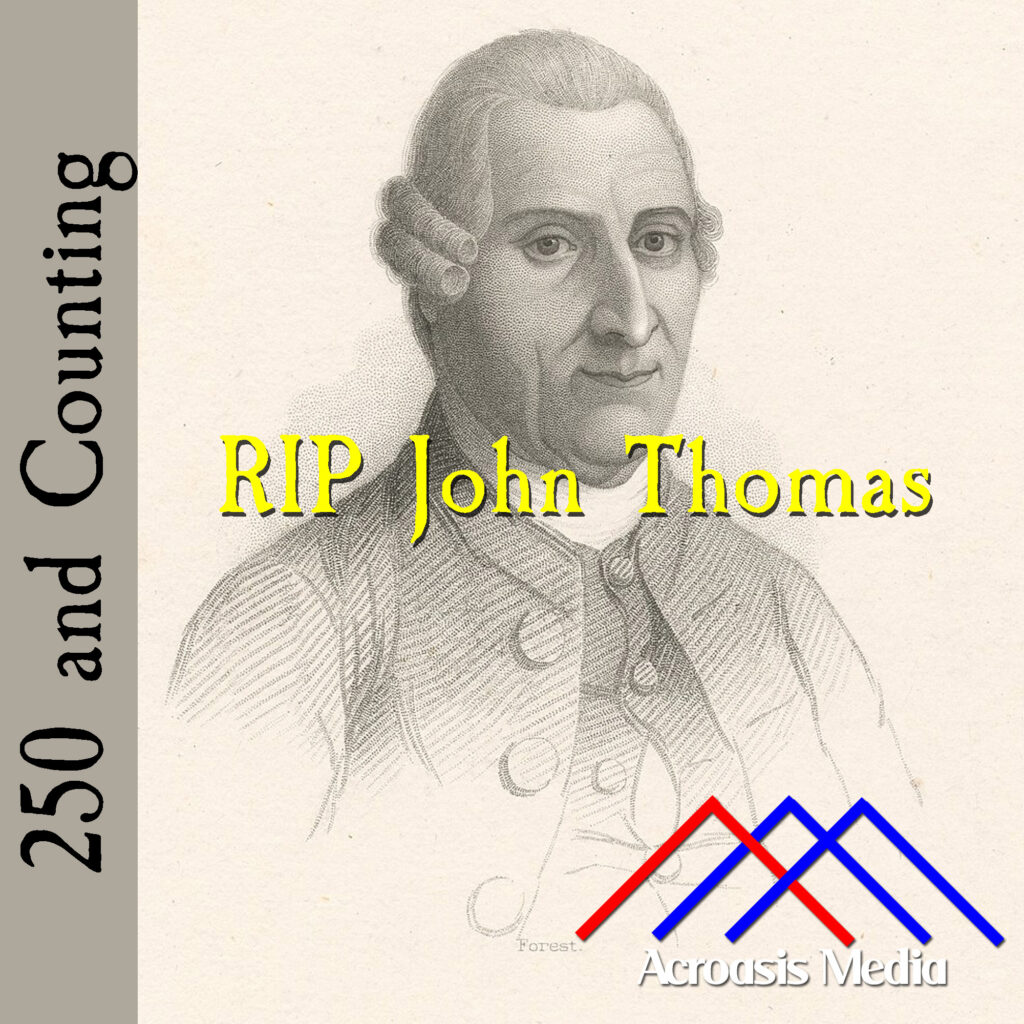
    Cover art for June 2, 1776: Portrait of John Thomas. Stipple engraving based on a 1775 pastel portrait by Benjamin Blyth. By Scan by NYPL - https://digitalcollections.nypl.org/items/510d47db-92db-a3d9-e040-e00a18064a99, Public Domain, https://commons.wikimedia.org/w/index.php?curid=52899662

    John Thomas was a doctor and a soldier from Massachusetts who was in Quebec during the attempted invasion and was in charge of the withdrawal until he got smallpox and died on this day in 1776.

    Thomas discovered he liked military service about as much as he liked being a surgeon, so in 1747 he became a lieutenant in the British army. A few years later he served as a surgeon for a different regiment.

    In the early days of the Revolution, Thomas nearly quit the Continental Army because he wasn’t named as a major general. At the time, Congress was trying to avoid having all its generals come from the same place, and Artemis Ward got the nod instead. It was only because both George Washington and Charles Lee both talked him into staying that he remained in the army and returned to service. Shortly thereafter he was assured that he would get top priority for advancement.

    It was that which led directly to his being assigned to command in Canada when Richard Montgomery was killed. Unfortunately for him, what he found when he arrived in Quebec was a mess: the army was far outnumbered (plus the city had walls), about a third of the Continental soldiers were due—or overdue—for discharge, and smallpox was making its way through the camp.

    Also unfortunately, as the smallpox moved through the camp, it made a stop at Roberts’ tent, and he died just a few weeks after arriving in Canada.

  • Arnold’s March to Canada Ends–November 9, 1775

    Cover art for November 9, 1775: "Quebec from the Pointe Lévis Side" by James Pattison Cockburn, Watercolor and pencils, 1827

    We gotta give Benedict Arnold this: he set a goal and he stuck to it.

    Given the opportunity to take men and help invade Quebec through a kind of pincer move with General Montgomery, Benedict Arnold took 1100 men through the wilds of Maine to the St. Lawrence River, a trip that he thought would take 20 days over 180 miles.

    But they ran into problems almost immediately involving weather, leaky boats, bad maps, bad terrain, illness and almost half the men turning back.

    But make it he did, still with 600 men in tow, and with the help of the locals he got the sick ones healthy, the hungry ones fed, and established a base of operations for the next step, which we’ll talk about in just a few days.

  • Reinforcements Arrive in Quebec–October 15, 1775

    Cover art for October 15, 1775: Fort St. Jean (near the right edge) around the time of the siege. Watercolor, pen and ink by James Peachey.

    Fort St. Jean was a relatively soft target compared to Boston. Plus, it wasn’t as well fortified because the British weren’t holed up there. Sooner or later something would come along to break up the stalemate.

    On this day, a couple of somethings arrived, from Fort Ticonderoga and Crown Point. The big guns that Montgomery had hoped for finally arrived. And not long behind that, Montgomery was able to take Fort Chambly, which wouldn’t have been a huge deal had its commander not forgotten an important detail while he was high-tailing it out of there.

  • The Great Carrying Place–October 11, 1775

    Cover art for October 11, 1775: "Carrying the bateaux at Skowhegan Falls", drawn by Sydney Adamson; halftone plate engraved by CW Chadwick, 1903.

    Benedict Arnold and Company are still on the move toward Quebec. Over a three-week period they’ve moved fewer than 90 miles, with only…300 to go. Today they’ve reached The Great Carrying Place, a 13-mile walk alternating between woods and knee-deep mud, all while carrying everything they’ll need to get to Canada.

    Back in the Colonies proper, General Gage is being replaced by General Howe. Gage was largely responsible for the Siege of Boston, especially since they weren’t able to break that siege. And then Bunker Hill came along. Sure, the British won but at great cost—a Pyrrhic victory. Once word got back to Britain about that, Lord Dartmouth appointed Howe within a couple of days. Of course, it took several weeks for the news to get back to America, and on September 26 he learned he was being replaced. By this days’ end, Gage was on his way back to Britain.

  • September 19, 1775: Up the River

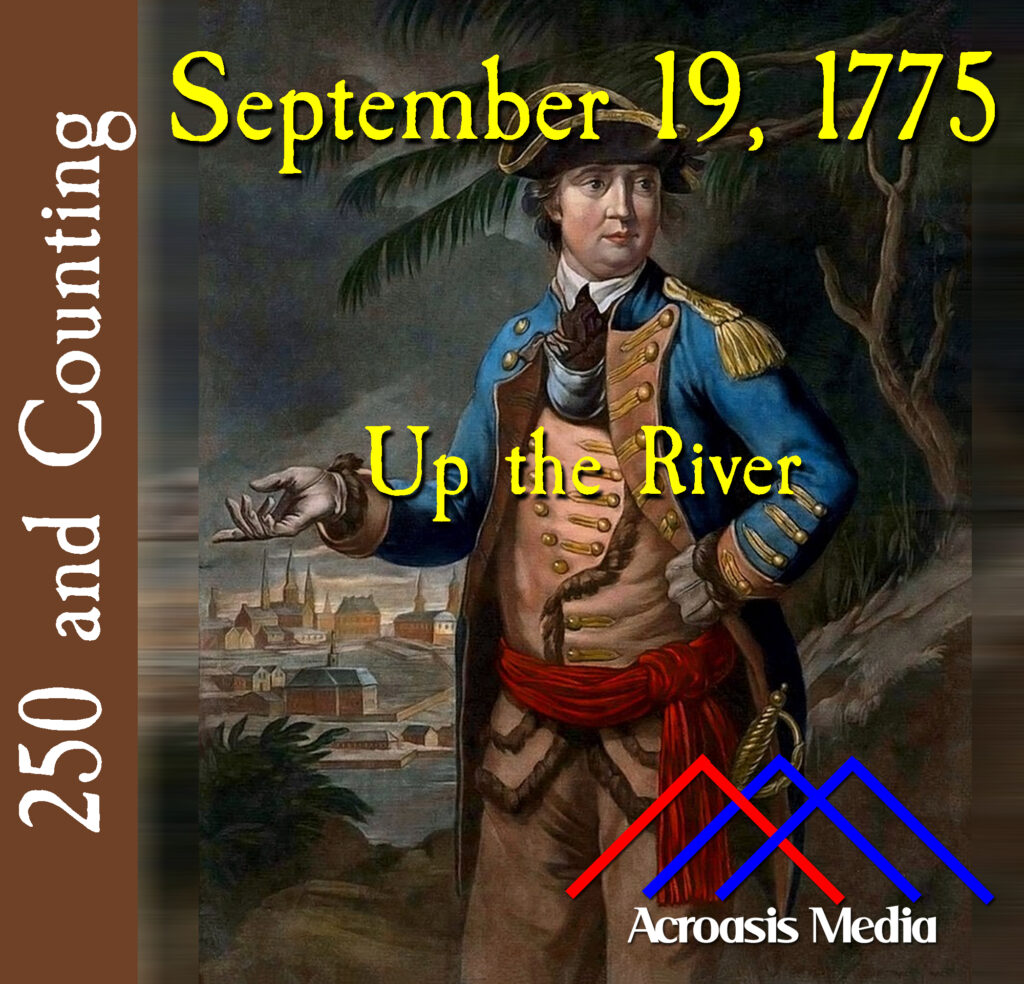
    Cover art for September 19, 1775: Color Mezzotint of Benedict Arnold, 1776 by Thomas Hart. From the Anne S. K. Brown Collection at Brown University. URL at time of upload: http://dl.lib.brown.edu/repository2/repoman.php?verb=render&id=1194635475812500&view=showmods # Call Number: UMP1776mf-1 (ASK Brown Call No.)

    We think of “Benedict Arnold” and the word “Traitor” comes immediately to mind. The two are essentially synonymous. Say one, and you’ve said the other.

    But Benedict Arnold was quite loyal to the Independence cause in the early days of the war. In fact, he was often eager to show what he could do. And why he switched sides is quite complicated and can’t really be answered quickly.

    There were times when he felt that injustices were suffered upon him by other generals and by the Continental Congress. Some of them were real but others, imagined.

    He had two painful battlefield wounds in a leg that was already plagued with gout. Was it a psychological issue?

    Was it a midlife crisis, during which his politics shifted? Given that he married a very young, very pretty and very Loyalist woman named Peggy Shippen, maybe he just did it for the nookie.

    Peggy Shippen is actually the most common explanation.

    At any rate, in 1775 Arnold was still on our side and embarked on an expedition to Canada that turned out to be far more complicated than anyone suspected it would be.

  • September 5, 1775: Setback in Canada

    Cover art for September 5, 1775: Painting of the Schooner Hannah by John F. Leavitt, date unknown

    American forces began to move on Fort St. Jean in Canada. Unfortunately they ran into a couple of unexpected obstacles on the way, so they had to adjust their approach. This led to a six-week siege of the fort.