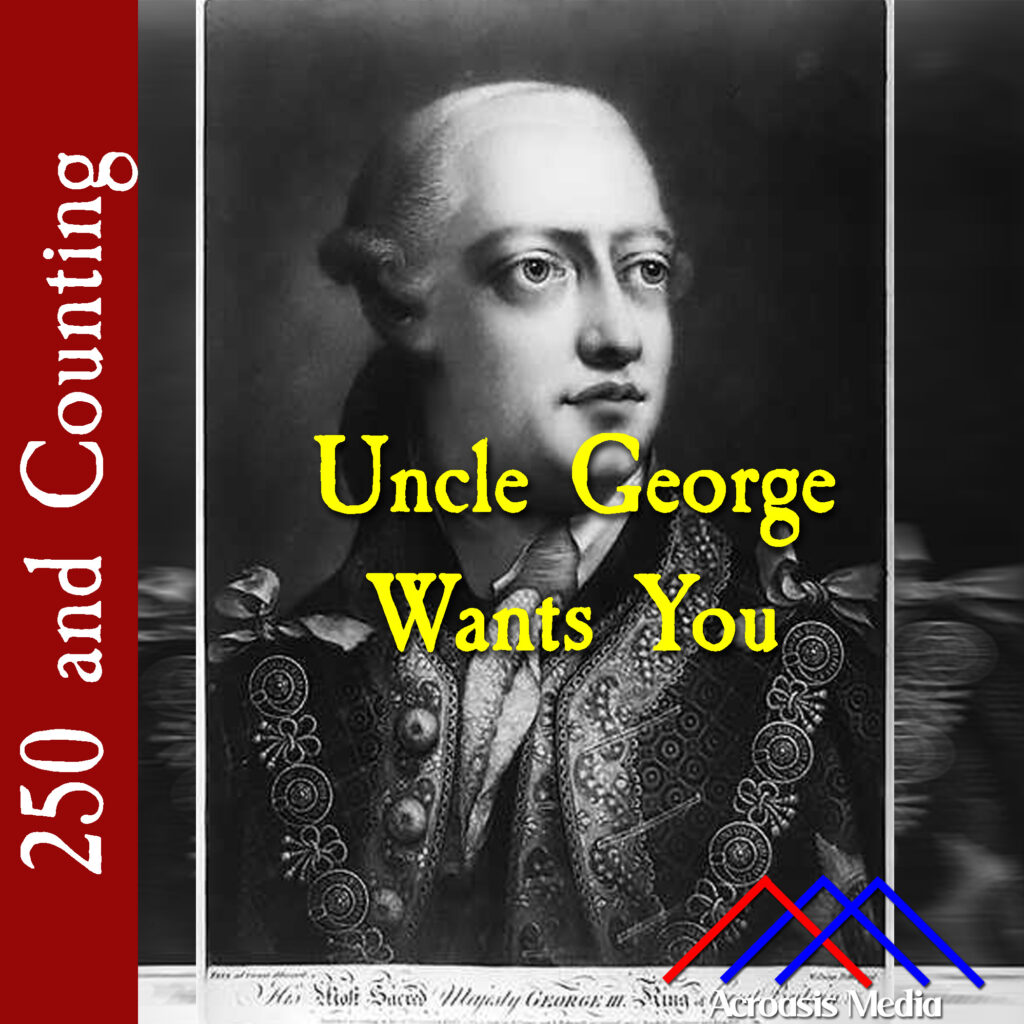
King George III offered up some naval incentives throughout 1776. Seamen who enlisted would get bonuses depending on their level of experience, but the Royal Navy wasn’t above impressing sailors into service, either.
However, it’s also worth noting that King George also put some disincentives out there as well. For instance, in November of 1776 he forbade British mariners and seafaring men from working on foreign vessels, or working for a foreign government or prince without a special license. He also demanded that all natural-born British subjects who were working abroad return home so they can servc the Crown. Violations of these rules would be met with the “utmost severities of the Law”, though those punishments weren’t always clear. And don’t get George started on privateers.
These warnings came after news got out about a thousand men being impressed into service about a week earlier.
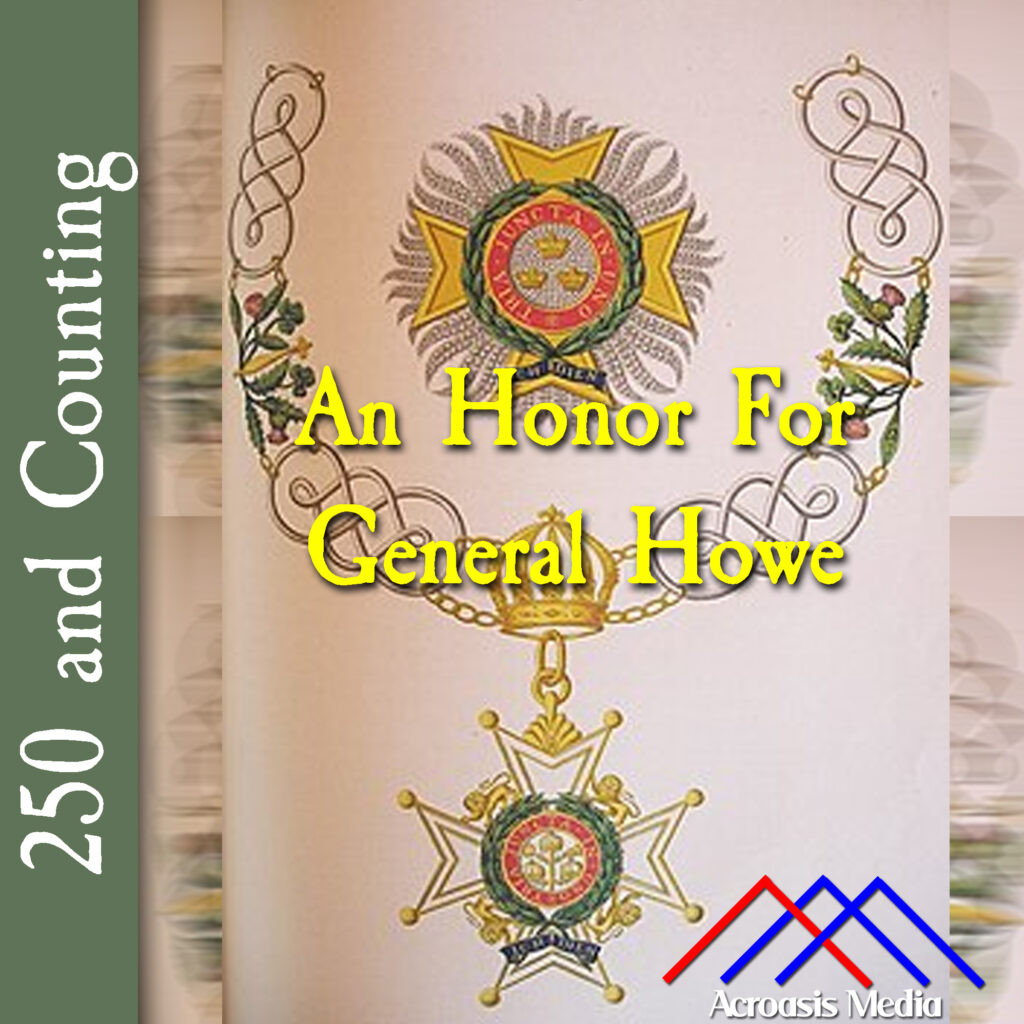
The Most Honourable Order of the Bath is a British order of chivalry that was first created by King George I in 1725. It’s typically bestowed by a monarch based on the advice of His/Her Majesty’s government.
When General William Howe received his order, there was a single class called the Knight Companion. However, in 1815 this class was discontinued in favor of three separate classes for civilians and another three (with the same class names) for the Military Division.
Now, I said that George I instituted the Order of the Bath in 1725, and I was accurate about that, but it’s important to recognize that a literal bath was part of the ritual for a new knight in the Middle Ages, and therefore knights of any kind were known as “Knights of the Bath”. However, the last occasion on which knights were created in this fashion was in 1661. So George I was instituting a new Order, but not reinstating one, in the sense that he was not creating a standing group in which there was a fixed number of honorees.
The Order of the Bath, however, did take on some of the accoutrements of the Knights, including their motto (juncta in uno, “three joined in one”) and the badge design (three crowns in a plain gold oval). Interestingly, both the significance of the motto and the meaning of the design are lost to time, and anything ascribed to them nowadays is conjecture.
Most appointments to the Order were political in nature until about the 1770s, when they became more common for non-aristocratic naval, military or diplomatic achievements, likely because Britain was simply involved in more military activity at that point.
Women were first admitted to the Order in 1971. At this writing, according to Wikipedia, there are 46 people in the Order, plus a large number of Honorary members. Interestingly, the youngest member of the Order is 59 years old, not counting Prince William, who is 44; the oldest is 97 and is one of six members in their 90s.
So I’m thinking they’re sticking William at the card table in the corner so he can eat with the other kids.
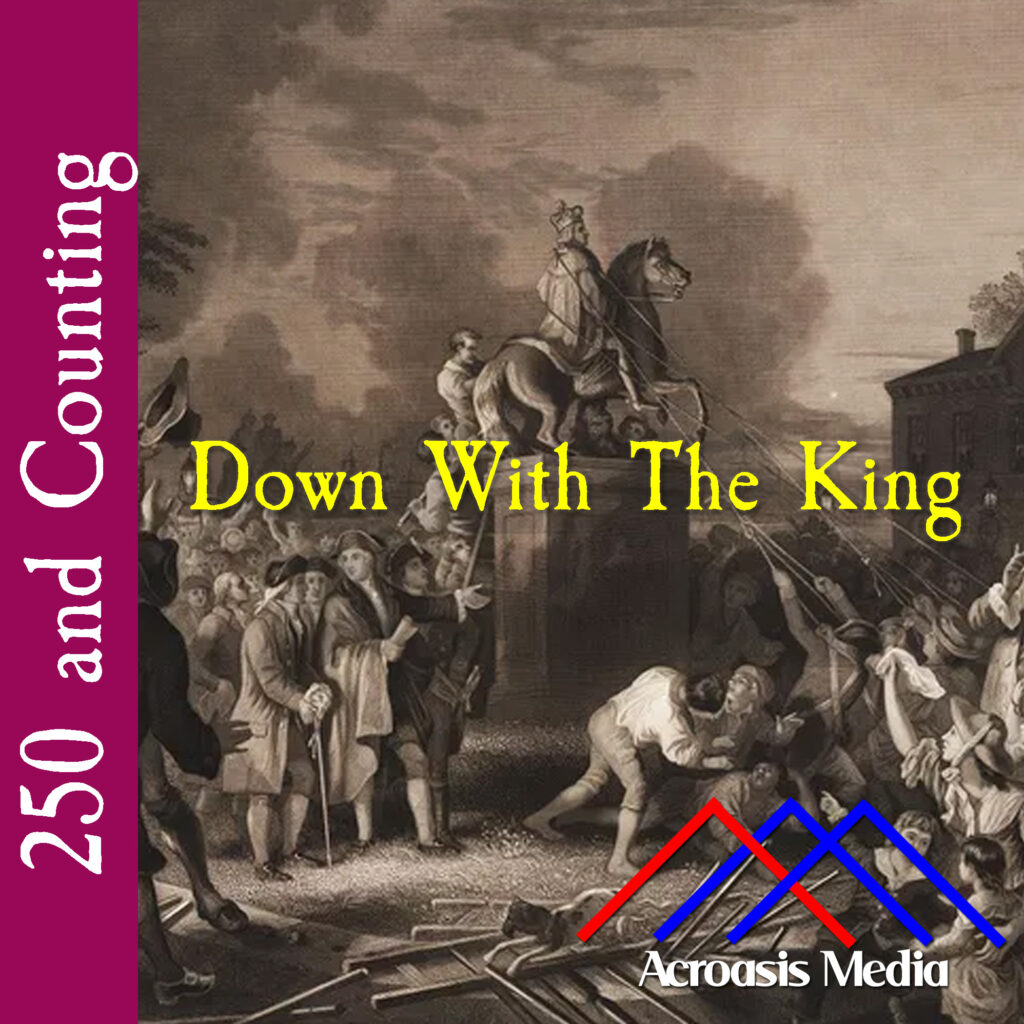
When a statue of King George III was pulled down in New York, it was a good sign for the city, since there were times that it felt that the spirit of Independence was rather squashed by the sight of the British fleet, which was still arriving.
A brief digression: several years ago (ugh, longer ago than I care to remember) I took the opportunity to visit the City of the Museum of New York. It’s quite a cool museum that has hundreds of thousands of objects in its collection, with several thousands on display at any given time. They currently have a special exhibit called The Occupied City, which deals with New York City during the early years of the American Revolution.
According to an article I recently read in Smithsonian Magazine, which provided some of my research material for today’s episode, the Museum of the City of New York has, as part of this exhibit, an opportunity to virtually pull down the statue of King George III. Who can pass up something like that?
No kidding, if you’re in Manhattan, budget yourself a few hours to see this museum. You’re guaranteed to learn a lot of fascinating things. Then head on over to the New York Historical Society. They already pulled down their statue of King George III (today, in fact), but there’s still plenty to see and do. They’re on opposite sides of Central Park and about 30 blocks apart, but if you do it in that order, you’ll end your day close to Zabar’s and that’s a whole other experience for you.
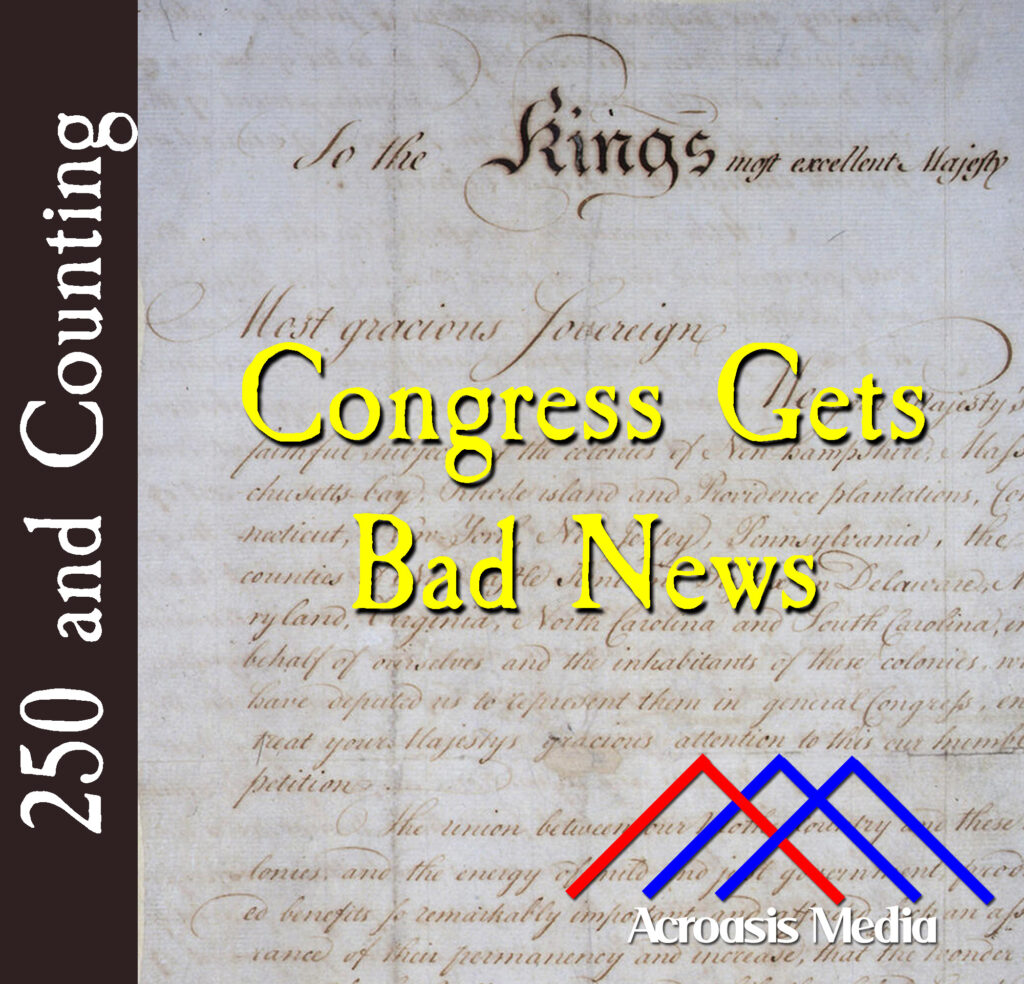
In July 1775, there were still several delegates to the Second Continental Congress who thought that reconciliation with Britain was a possibility. There were a few others who may not have necessarily been of that opinion, but were willing to take a chance. Some of these men, led by John Dickinson, formed a committee to draft what’s come to be known as the Olive Branch Petition. The intent was to continue pledging loyalty to the King, but to simultaneously ask for some equitability in trade and tax regulations.
The document asked for a firm settlement to the Colonies’ grievances, and identified all of the colonies as signatories except Georgia. The only reason Georgia wasn’t named is because they only had one delegate at the time, and he wasn’t comfortable with speaking for the entire colony. Consequently, he abstained from many votes.
It was on this day that Congress learned what King George III had to say back in August regarding the Olive Branch Petition.
We’re 300 days into 1775 and therefore 300 days into this show, and we’ve finally gotten to the point where British troops will be shooting at Americans because the two parties are officially at war.
Up until now, all the fighting was about control, because what better way to control people than by shooting at them?
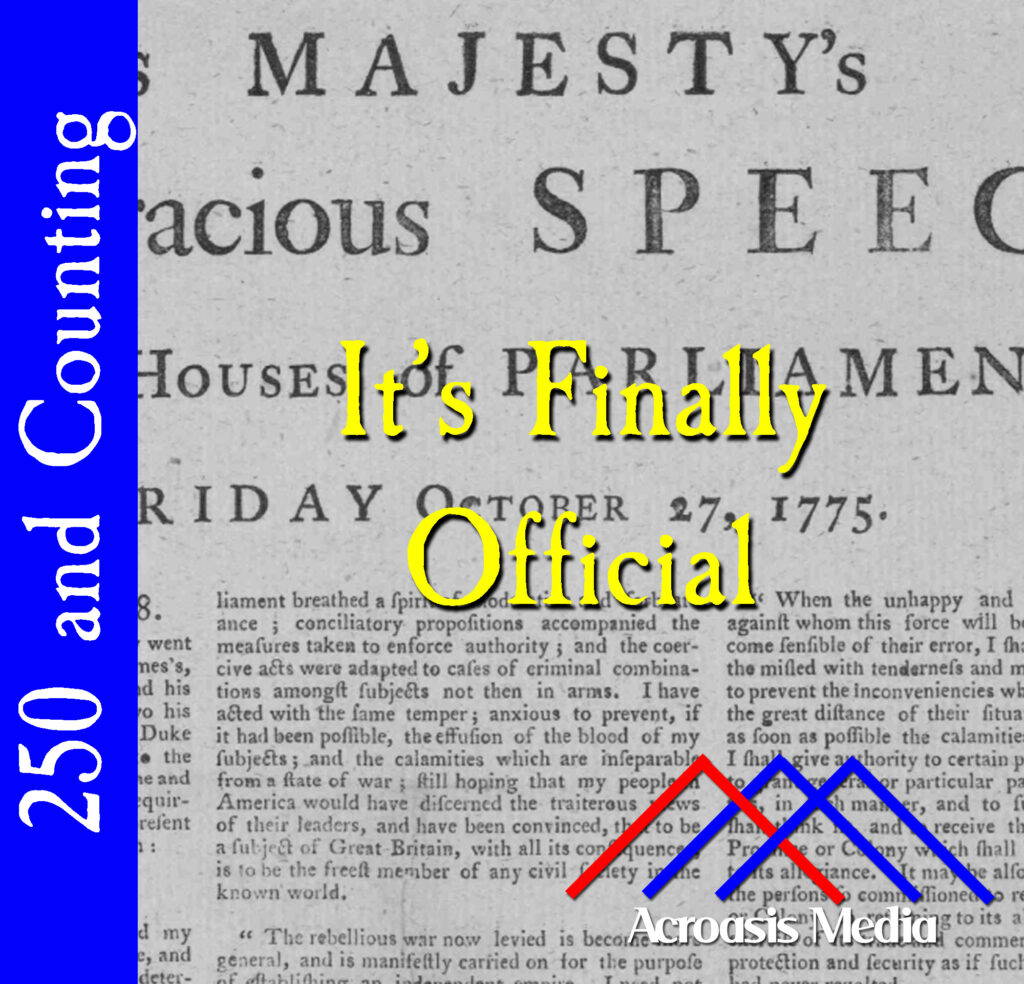
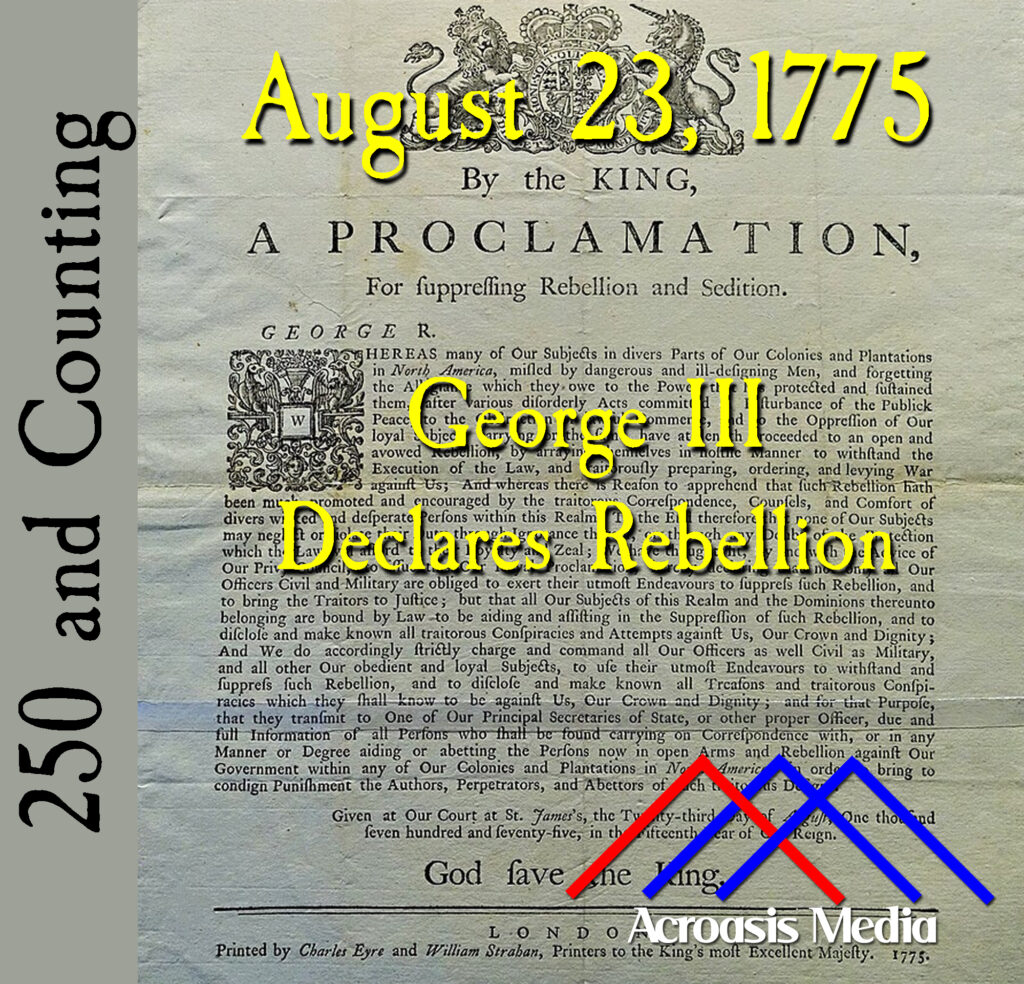
But King George III’s declaration of rebellion in August was informal in nature. It wasn’t until he declared the Colonies to be in rebellion before Parliament that genuine attention was paid to it. It was still theoretically possible that the Colonists could back off and let things go to the way they were, but the odds were vanishingly small.
When the Olive Branch Petition arrived in England, its contents hardly even mattered.
There were elements of Parliament who were strongly disposed toward punishing the Colonies, and punishing them hard. The folks who were still pro-American were dwindling in number, because of the way it could affect their political futures.
In short, the King had decided what he thought, and how he was going to handle it, and everyone else either bowed to it or faced losing their position. And it didn’t matter that he was a little bit crazy; he was the King and what he says, goes.
Presumably we’ve learned the lesson behind that kind of thinking.
As you may recall, several months ago some members of the Continental Congress thought it was important to make one last effort to reconcile with Britain before things got worse. So they composed the Olive Branch Petition and sent it off to England.
Transit times being what they were then, the petition took several weeks to get to its destination. In the meantime, things got worse.
So when the Olive Branch Petition arrived, nobody really cared. But there were two other documents that made matters worse. Plus, you know, all the shooting that went on in April. And in June.
In the past we’ve talked about the New England Restraining Act; today was the day that King George III actually put it into action.
To mark that day, Mike takes you through some of the details of the act and its impact on the trade in the Colonies, and the political impact in Britain.