Tag: Rhode Island History

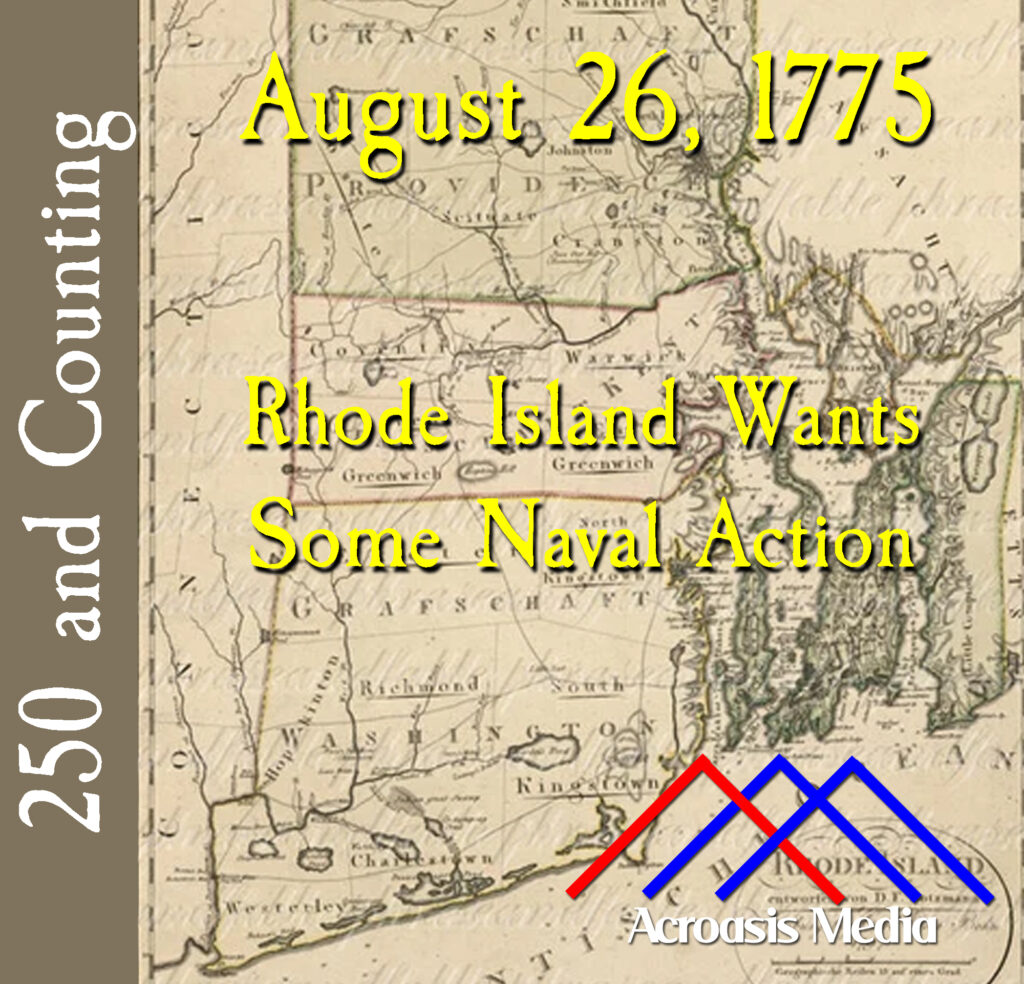
  • August 26, 1775: Rhode Island Wants Some Naval Action

    Cover art for August 26, 1775: Map of Rhode Island in 1775

    Rhode Island has been proactive about the war effort ever since the events at Lexington and Concord. And one thing you’re going to learn today is just how much coastline there is to Rhode Island, and why having a navy was important to them.

    But it’s important to get an outsider’s view of things, and this wasn’t necessarily the Continental Congress’ viewpoint. It took a long while before any real action was taken.

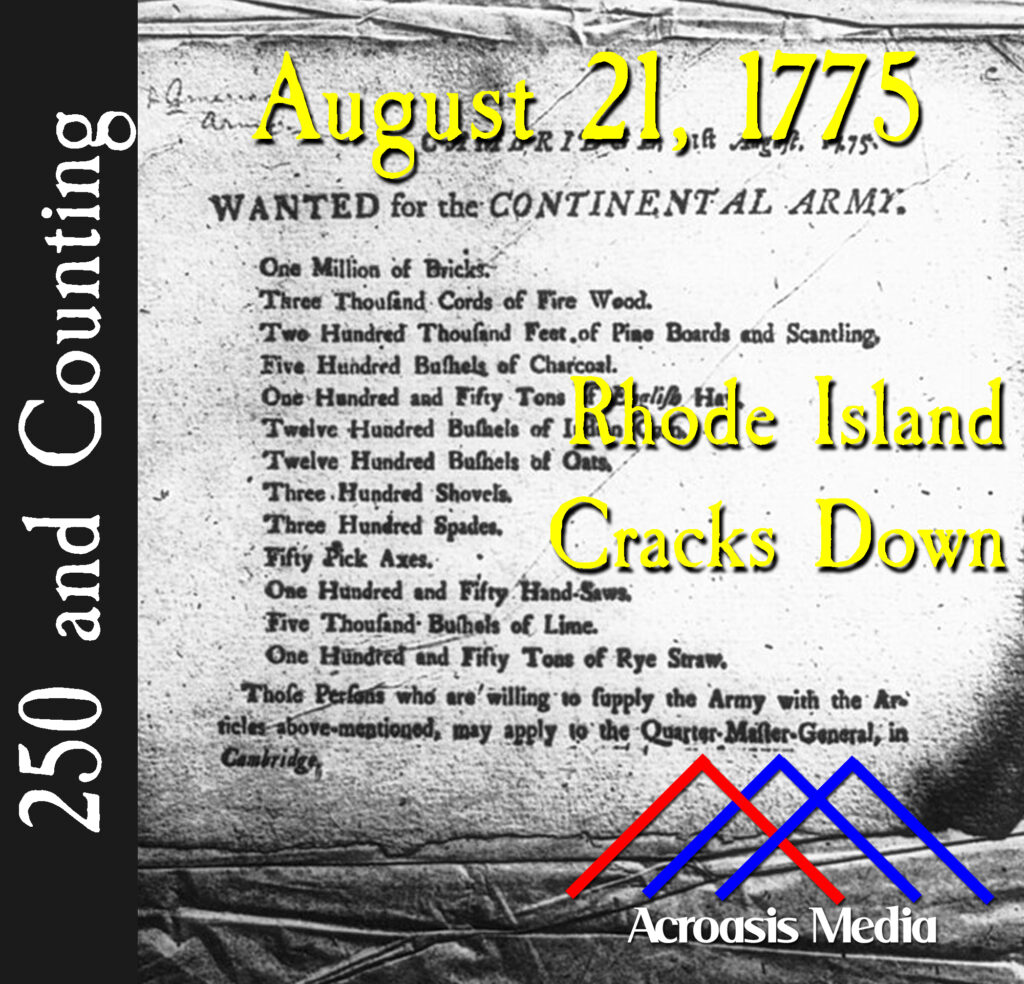
  • August 21, 1775: Rhode Island Cracks Down

    Cover art for August 21, 1775: Public requisition of supplies for the Continental Army. Source unknown, via Wikimedia Commons.

    We have two events taking place on this day. First, Rhode Island allows the death penalty for certain activities at sea.

    Next, word goes out that the Continental Army is in need of supplies…lots of supplies. It’s looking like General Washington isn’t seeing an end to the Siege of Boston anytime soon.

  • May 7, 1775: Joseph Wanton is Prevented from Becoming Governor

    Cover art for May 7, 1775: detail of the document officially preventing Governor Joseph Wanton from taking the oath of office.

    Joseph Wanton was elected governor of Rhode Island in 1769, and every year he was re-elected to the position. By all accounts he did a good job and looked out for his constituents.

    Then came the events at Lexington and Concord.

    Wanton wasn’t a Loyalist, but he did think that a war with England wouldn’t be especially productive, and when the General Assembly thought that it was time to raise an army, Wanton refused to do so. Unfortunately for him, he was in the space between his re-election and his taking the oath of office, and the Assembly used the opportunity to run him out of the office.

  • April 10, 1775: Skirmishes in Assonet, MA

    Cover art for April 10, 1775: Profile Rock in Assonet, MA. Scanned from a 1902 postcard. The formation collapsed in 2019.

    This isn’t the first time you’ll see a statement like this, but the bottom line is: the history books aren’t 100% correct. Sure, the Shot Heard Round The World was at Lexington and Concord. But that’s not where the fighting started.

    Nearly two weeks before Concord, there were small battles going on in Assonet, Massachusetts, near the Rhode Island border.

  • March 2, 1775

    Cover art for March 2, 1775: a historical marker commemmorating the destruction of tea in Providence, RI

    As we noted yesterday, there were all kinds of abuses of tea going on in the Colonies. It (mostly) started with the Boston Tea Party, but also spread to other areas as well. The Boston Tea Party was notable for being a literal destruction of unsold tea, removing it from the market.

    Other tea parties and actions largely involved tea that had already been purchased in the Colonies, either in the form of boycotts (as in the Edenton Tea Party), or in the form of destroying tea from one’s own pantry as a form of protest, as was the case in today’s episode. As noted during yesterday’s show, the Thirteen Colonies didn’t have enough economic clout to make a meaningful impact; they were meant to be symbolic in nature. But the British took these things seriously enough that their actions demonstrated they were looking for a fight rather than trying to avoid it.