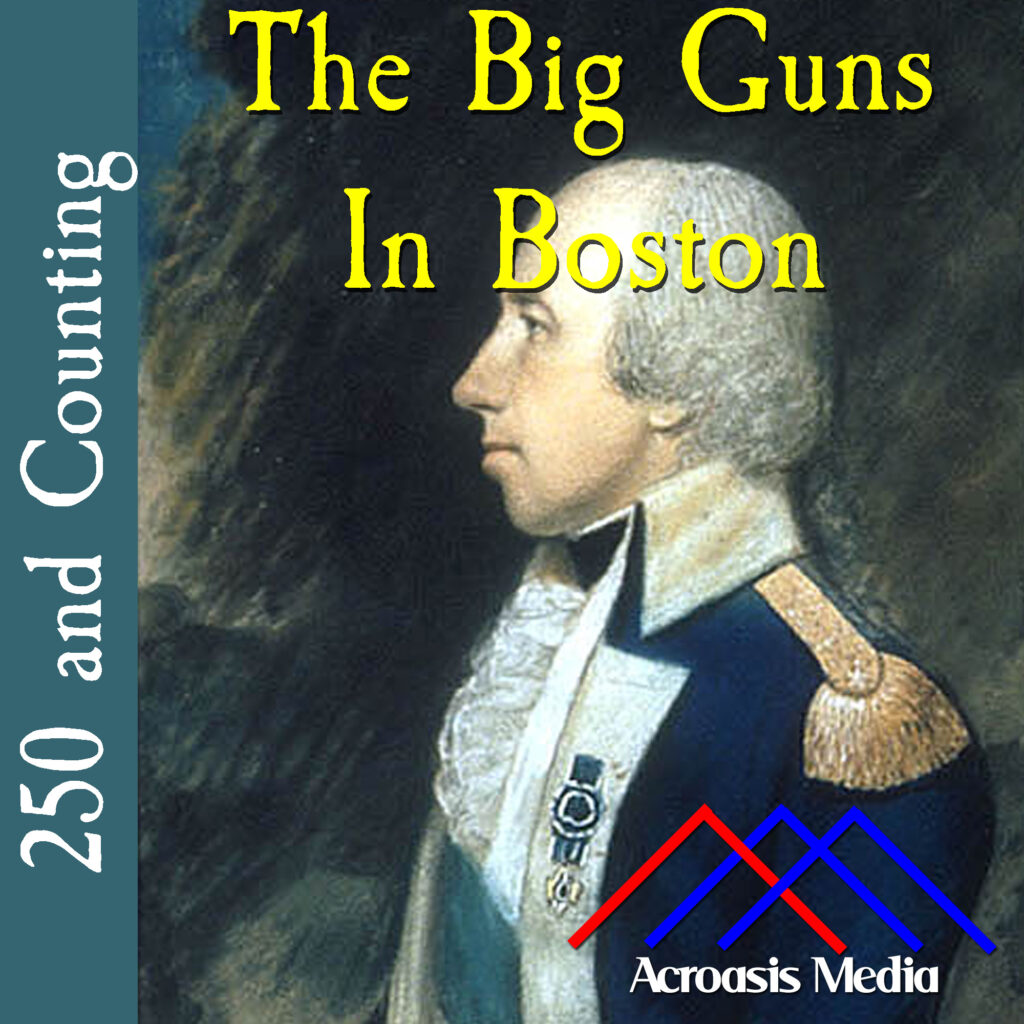
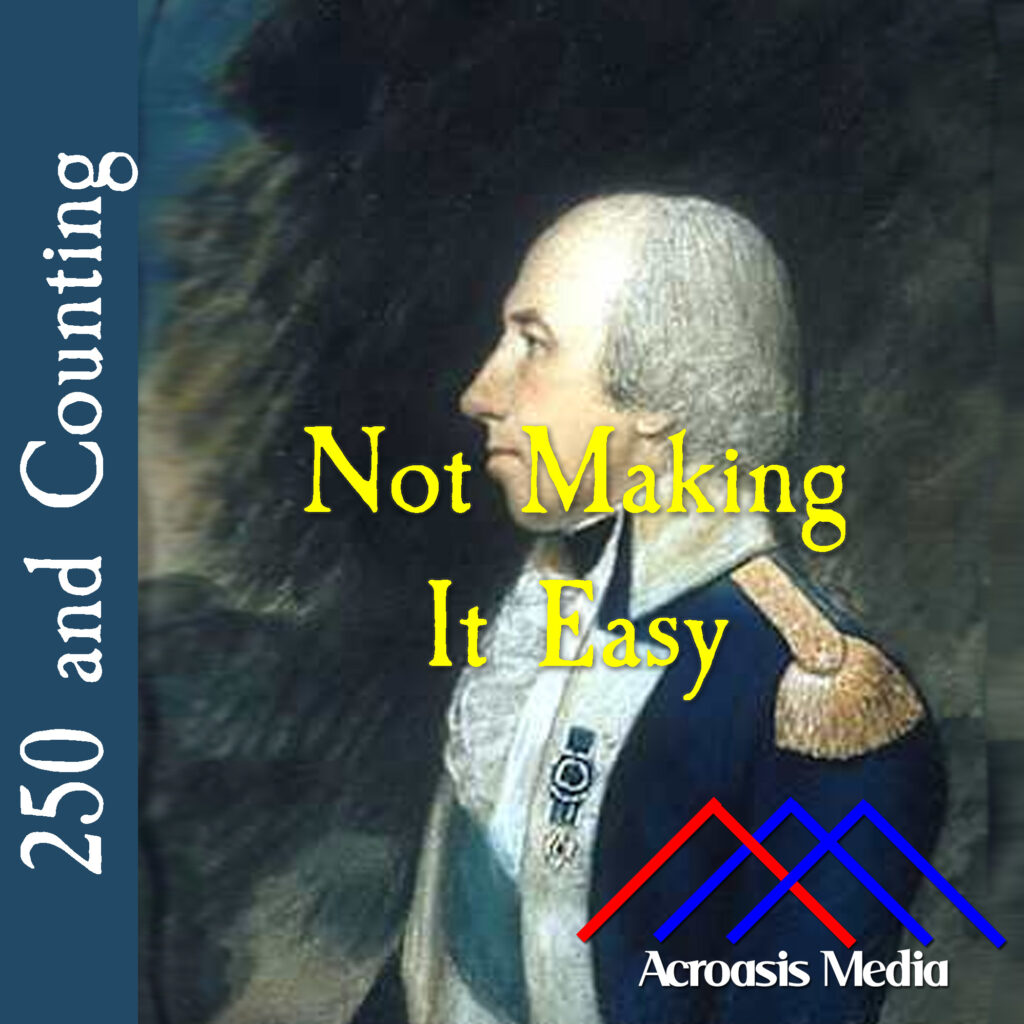
The reason that this portrait—and most of the others—of Rufus Putnam is in profile is that, when he was a child, one of his eyes was disfigured in an accident, giving it a, “outward, oblique cast.”
Putnam joined the Revolutionary War effort the very first day, after the battle at Lexington and Concord. During the Siege of Boston, Putnam directed efforts to fortify Dorchester Heights. Part of what had the British so flummoxed about that wasn’t that he did a good job (though he did), it was that he managed to get it all up and in place so fast.
Rufus Putnam worked his way up through the ranks quickly, so that by the time he was in New York, he was a colonel and designated an engineer.
But in December 1776, when the Continental Congress rejected his proposition to establish a national corps of engineers, Putnam resigned his commission. His resignation was short-lived and he eventually joined the Continental Army and served under Major General Horatio Gates. Putnam commanded two regiments in the battle of Saratoga.
He continued to work on critical fortifications, including Fort Putnam at West Point in 1778. In 1779 Putnam served under Major General Anthony Wayne in the Corps of Light Infantry following the capture of Stony Point, commanding the 4th Regiment. Putnam’s remaining military career was less eventful. In January 1783 he was commissioned as brigadier general.
After the war, Putnam returned to Massachusetts and returned to his original work as a surveyor. But a few years later, in 1788, Putnam led a group of veterans to settle land in the west, where they established what we now call Marietta, Ohio, the first European-American permanent United States settlement in the Northwest Territory. Putnam was appointed to serve as one of three judges of the Northwest Territory after Samuel Holden Parsons died. Marietta was settled on land that the local natives considered theirs, and it took a couple of years for the Ohio Brigade (with Putnam in the lead) to beat them back.
As Ohio residents organized to write a constitution and be admitted as a state, in 1802 Putnam was elected a Washington county delegate to the Ohio Constitutional Convention.
Putnam died on May 4, 1824, and was buried at Mound Cemetery in Marietta, Ohio.
Podcast: Play in new window | Download | Embed