While the Second Continental Congress always had a lot going on, not creating “an animated address” to make the Independence movement appearent to everyone seems like an odd failure.
But sure enough, when it was recommended that such an address be created, this specific committee came up with nothing. Other committees appear to have presented addresses without problems, and many delegates worked on multiple committees, so was this an oversight? Was it overwork? Or perhaps the need to actually write a Declaration of Independence obviated the need for creating “an animated address”?
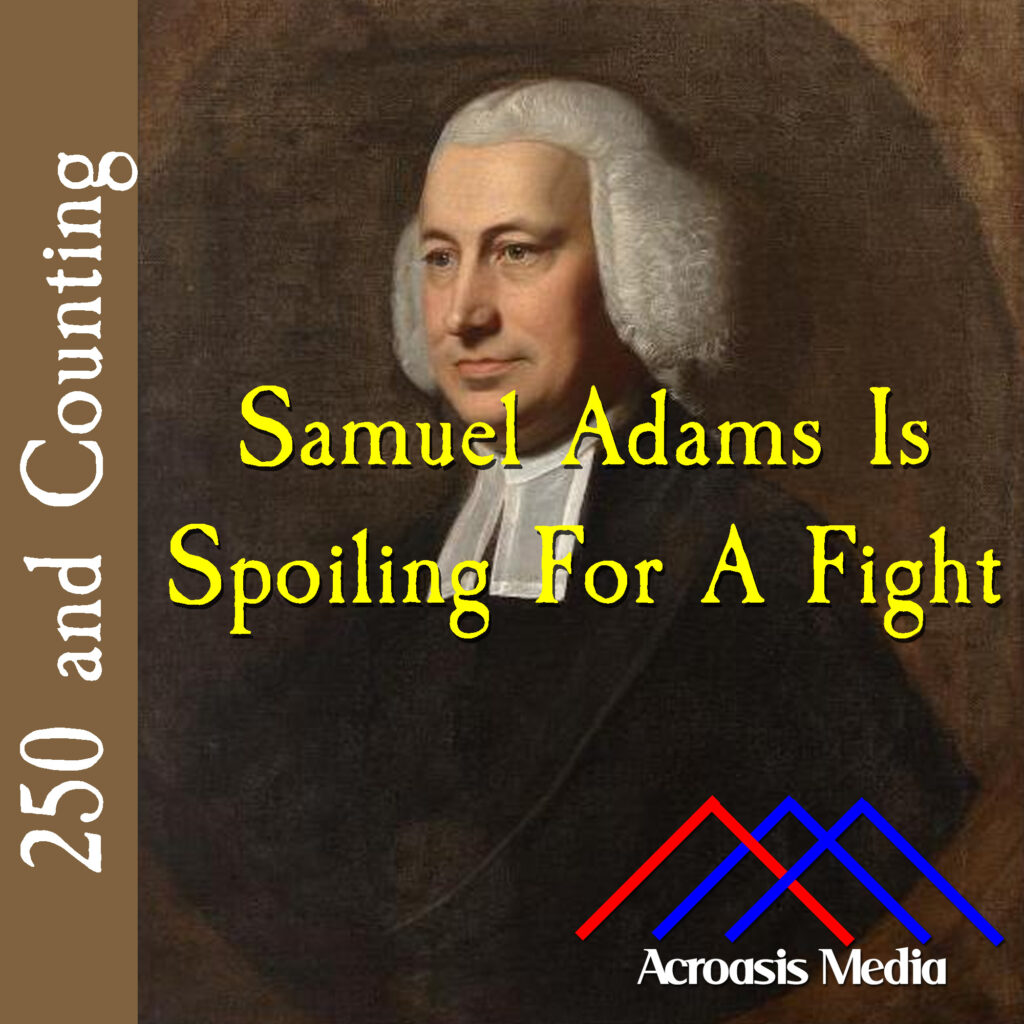
Reverend Samuel Cooper has an interesting item in his family history. His grandfather was Samuel Sewall, a judge in the Province of Massachusetts Bay who was involved with the Salem witch trials in 1692-3. Now, to be fair, Sewall did apologize for his part in that bit of foolishness, and he’s also known for writing an essay in 1700 criticizing slavery.
As far as Cooper himself, he was an active Patriot of the Revolutionary Era, who was good friends with many of the Founding Fathers. According to our friends at the Massachusetts Historical Society, when letters written by Governor Thomas Hutchinson and Lt. Governor Andrew Oliver were stolen in 1773, they wound up in Benjamin Franklin’s hands.
Franklin in turn sent them to Samuel Cooper, who gave them to Thomas Cushing, the speaker of the Massachusetts assembly. Samuel Adams was the clerk of the Assembly and got to see them. They all knew that the letters were a bit of a bombshell (essentially, Hutchinson and Oliver were misleading Britain regarding conditions in the colonies), but because they were under strict orders not to copy or publish them, their hands were tied.
Samuel Adams, however, came up with the idea of leaking the contents by way of a propaganda campaign in the Assembly that didn’t actually disclose the letters themselves. That was enough to create a political firestorm in Massachusetts, which led to General Gage implementing the Coercive Acts.
Who stole the letters in the first place? It’s still not clear.
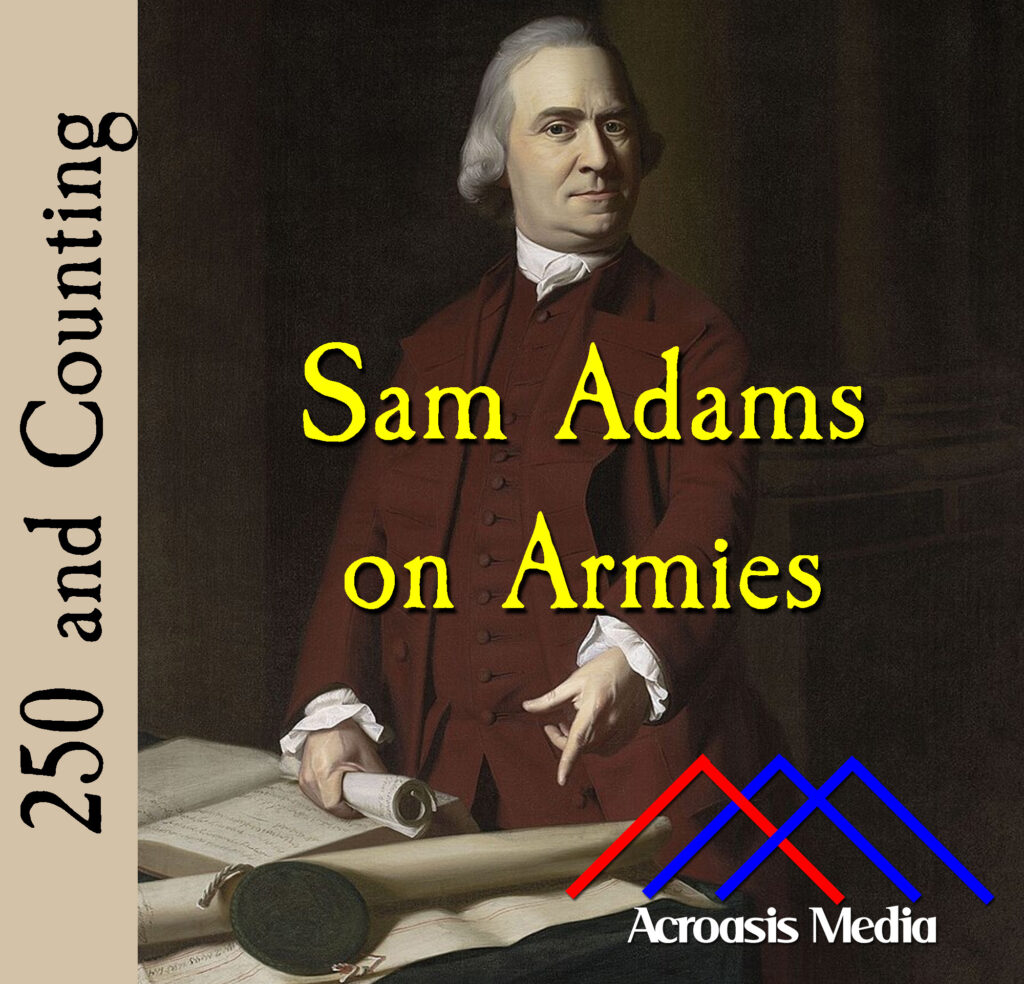
Samuel Adams in 1772, painted by John Singleton Copley. via Wikimedia Commons and the Museum of Fine Arts in Boston.
Samuel Adams made a point of telling his second cousin John Adams that he didn’t have a lot of time to write. Then he cranked out 570 words of worries about the language in the New Hampshire constitution, which had been ratified ten days earlier.
Then the next day he tacked on another 250 words. If he’d typed all 820 words out, it would be about three pages (double-spaced). The script for this episode is 219 words; even when Adams was in a hurry he was verbose.
But Samuel Adams kinda-sorta had a point, in that the New Hampshire constitution hedged its bets a little bit. Clearly he had this in mind when he worked on the original Articles of Confederation (the document that preceded the US Constitution), and when he joined the Constitutional Convention for Massachusetts a couple of years later.
Portrait of Samuel Adams, 1772. by John Singleton Copley – Museum of Fine Arts, Boston, and Wikimedia Commons
Most of us have a pop culture view of the American Revolution period, and some of us go so far as to have some idea of what happened via the 1970 film 1776. Oddly enough, that movie has both a ton of accuracy with its facts (but not necessarily in the right order), and a ton of dramatic license.
One thing the film gets right is that John Adams was a bit of a nudge, constantly pushing the other delegates toward the Indepency movement. He wasn’t considered exactly obnoxious, but maybe a bit zealous. At the same time, his cousin Samuel Adams wasn’t represented at all in the movie. And that’s a shame, because while he was the quieter one overall, he was instrumental in shaping the debate.
As far as historians can tell (and it’s tough, because Congress worked under a secrecy rule–their notes tell you what happened but not necessarily who did what), Samuel Adams acted as a kind of parliamentary whip, schmoozing with delegates and getting them to see his side of things. He was on most of the military committees, and in fact was the man who first proposed that George Washington become the Continental Army’s Commander-in-Chief.
Sam Adams was a patriot in his own right, oftentimes supporting his second cousin John. The two of them were often able to work together closely. What’s more, they were an efficient team, with Sam Adams being the fiery agitator and organizer, and John Adams acting in the more measured and sophisticated role, playing the political diplomat.
But Sam also had his own ideas about how things should be organized. When he heard that the Massachusetts Assembly was considering putting together military groups, he applauded the idea, but he was also worried that having each colony create an army, then putting them all under the control of a single entity, might be dangerous in the long run. He expressed these fears in a letter to Eldridge Gerry, written on October 29 and delivered to Gerry today.
It feels like we’re selling the day a little short, but not every day has to be Bunker Hill. Also, we’re discovering (and we hope you are, too) that sometimes it’s the smaller moments between the bigger ones that give us better insight into the hearts and minds of the people who lived during that time.
Today’s artwork is a portrait of Jonathan Trumbull (brother of John Trumbull, the guy who painted so many of the Founding Fathers), but this painting—which was created in 1880, long after he died—appears to show him as he was around the time of the Revolution. Compare that to the image we used for him back in April (right), which showed him in his later years as Governor of Connecticut.
Baltimore has a lot of historic pride in its street names. Nearly all of them can be traced back to an historic figure or event: Key Highway, named after Francis Scott Key. (Also the Key Bridge, but we’re all still sad about that.) Fort Avenue, leading to Fort McHenry. And while I’m at it, McHenry Street, about two miles from the fort. The town also has John Street, Eager Street and Howard Streets, all of them named after John Eager Howard. one of the earliest governors of the state.
During the revolution, a prominent family in the city of Baltimore was the Purviance Family, led by brothers Robert and Samuel Purviance. They were both well-known for their activities to support the Colonists’ side during the Revolution. Where are they memorialized?…Listen in and find out.