Tag: Thomas Hickey

  • Notes From Around The Colonies–June 27, 1776

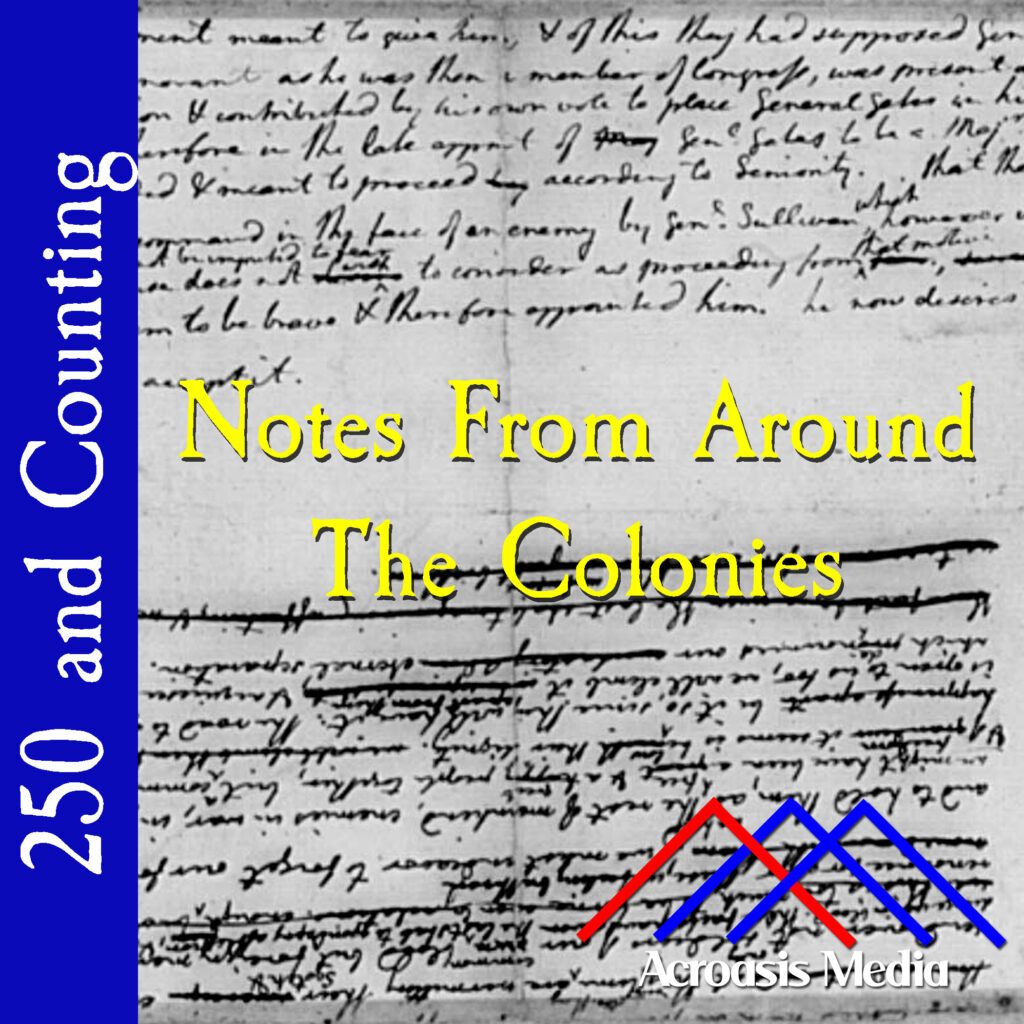
    Cover Art for June 27, 1776: A fragment of the earliest known draft of the Declaration of Independence. This is all that remains of his work during that time. via PBS

    Today’s episode covers a couple of events that took place today, and a couple that will take place tomorrow, largely because there isn’t a ton to say about any of them but they are noteworthy. Also, I wanted to clear the deck a little bit so that Mike can concentrate on events in South Carolina.

    We start with a letter that Joseph Hawley wrote to George Washington about potential troop movements, though to our heads it’s a little bit of odd advice.

    We visit the Committee of Five, which has a homework assignment due tomorrow, and they’re working frantically to finish it. Like so many group projects, only a few of them are really working here, while all five are going to get the grade for it. Yeah, we’re on to you, Sherman and Livingston.

    We finish the saga of Thomas Hickey, which started here only yesterday. There’s some confusion about the specific date, so be gentle with us for splitting the difference.

    And we finish in Maryland, where Samuel Chase manages to get the job done. Now it’s back to Philadelphia to cast a vote.

  • Hickey Leaves A Bad Mark–June 26, 1776

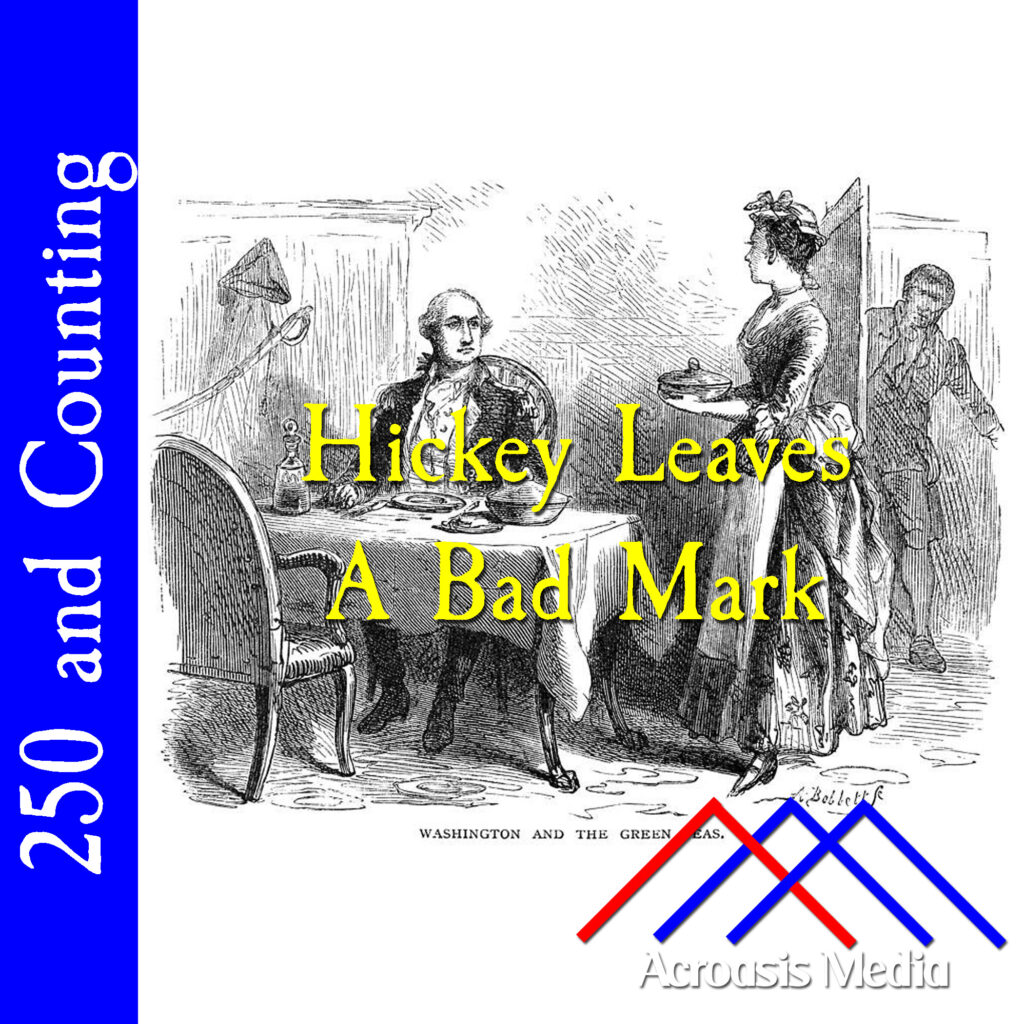
    Cover art for June 26, 1776: "Washington and the Green Peas". Engraving by Albert Bobbett, ca. 1876-77.

    That New York had a strong contingent of Loyalists was never a secret in 1776, but chances are that George Washington never thought one of his bodyguards, Thomas Hickey, was one of them.

    Hickey was a private in the Continental Army, which meant that he was part of a group that not only protected George Washington, but the Army’s local cache of money. At one point he was arrested for passing counterfeit money and it was while he was in jail that word got back to Washington that Hickey was planning to switch sides as soon as the British got there. So Hickey betrayed both the General and the currency he’d been assigned to protect.

    About the cover art: many years later, a story came out that was written by Washington’s grandson (more accurately, Martha Washington’s grandson) George Washington Parke Custis, that Washington was in danger of being killed by an insider via poisoning. After Custis died, his memoirs were published by his daughter Mary Anna Custis Lee, with extensive notes added by an antiquarian. According to this account:

    When Washington and his army occupied the city, in the summer of 1776, the chief resided at Richmond Hill, a little out of town, afterward the seat of Aaron Burr. [Samuel] Fraunces’s daughter was Washington’s housekeeper, and she saved his life on one occasion, by exposing the intentions of Hickey, one of the Life-Guard (already mentioned), who was about to murder the general, by putting poison in a dish of peas prepared for his table.

    Who alerted Washington to the poisoned peas varies from one account to another, and given a bunch of the details (which I’ve largely omitted here), it’s very likely that the story is apocryphal.