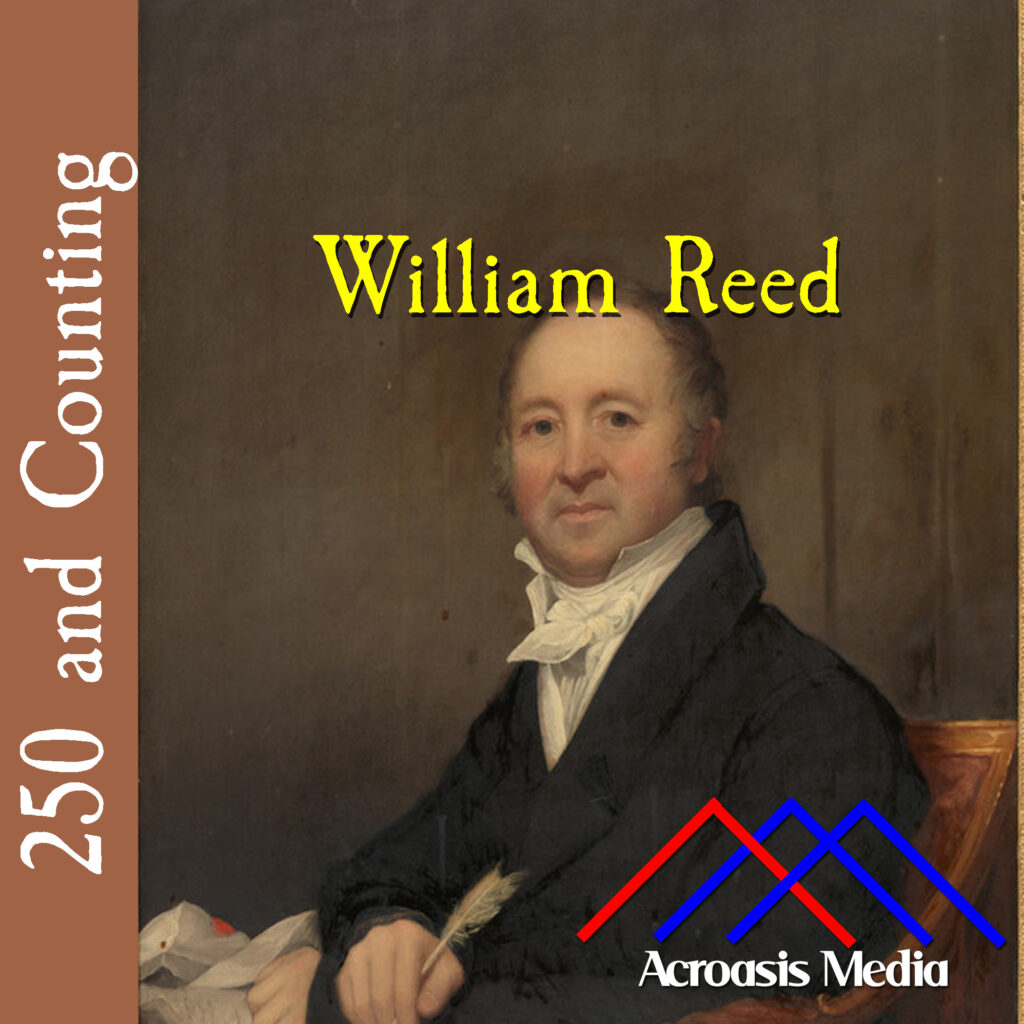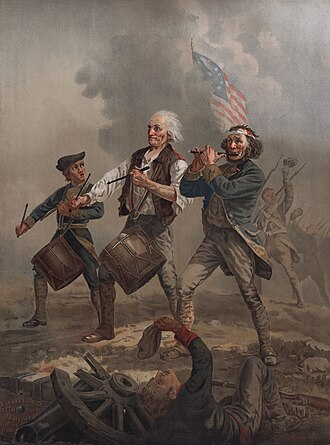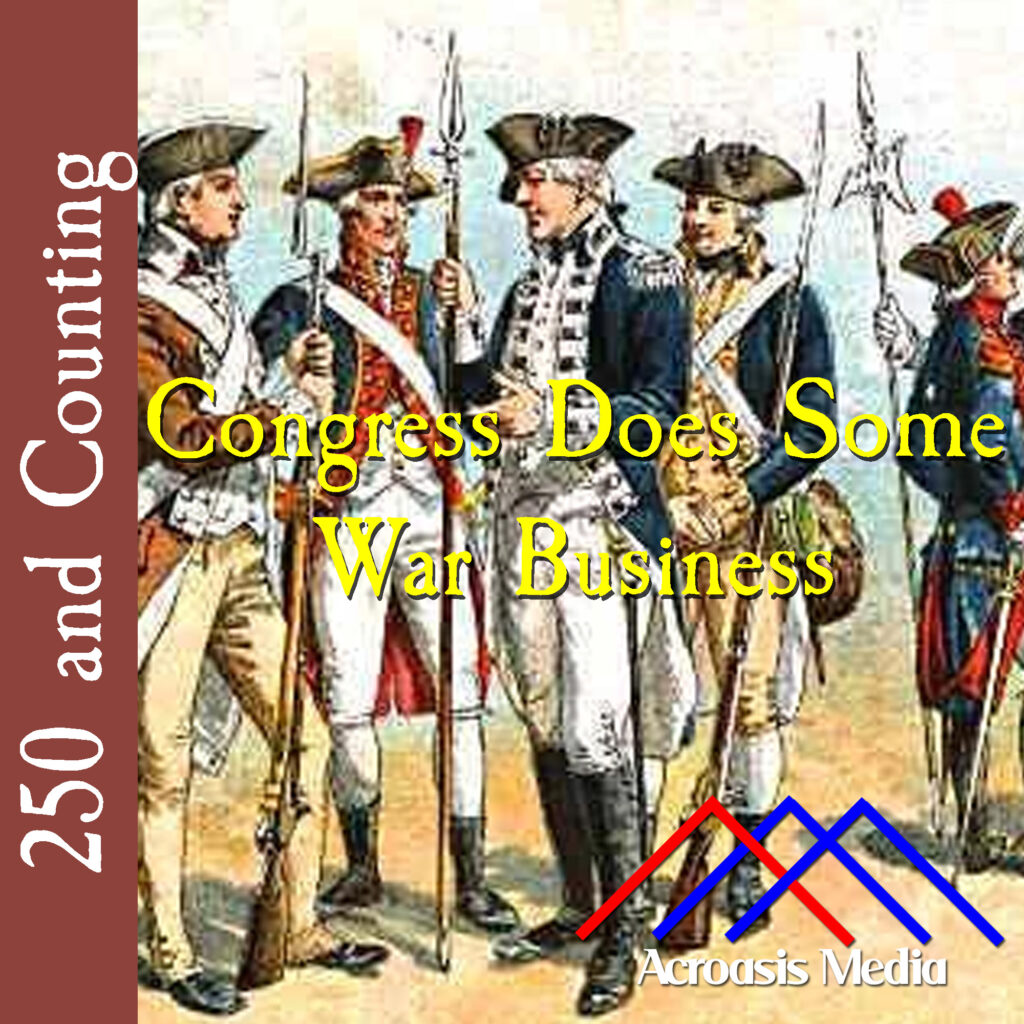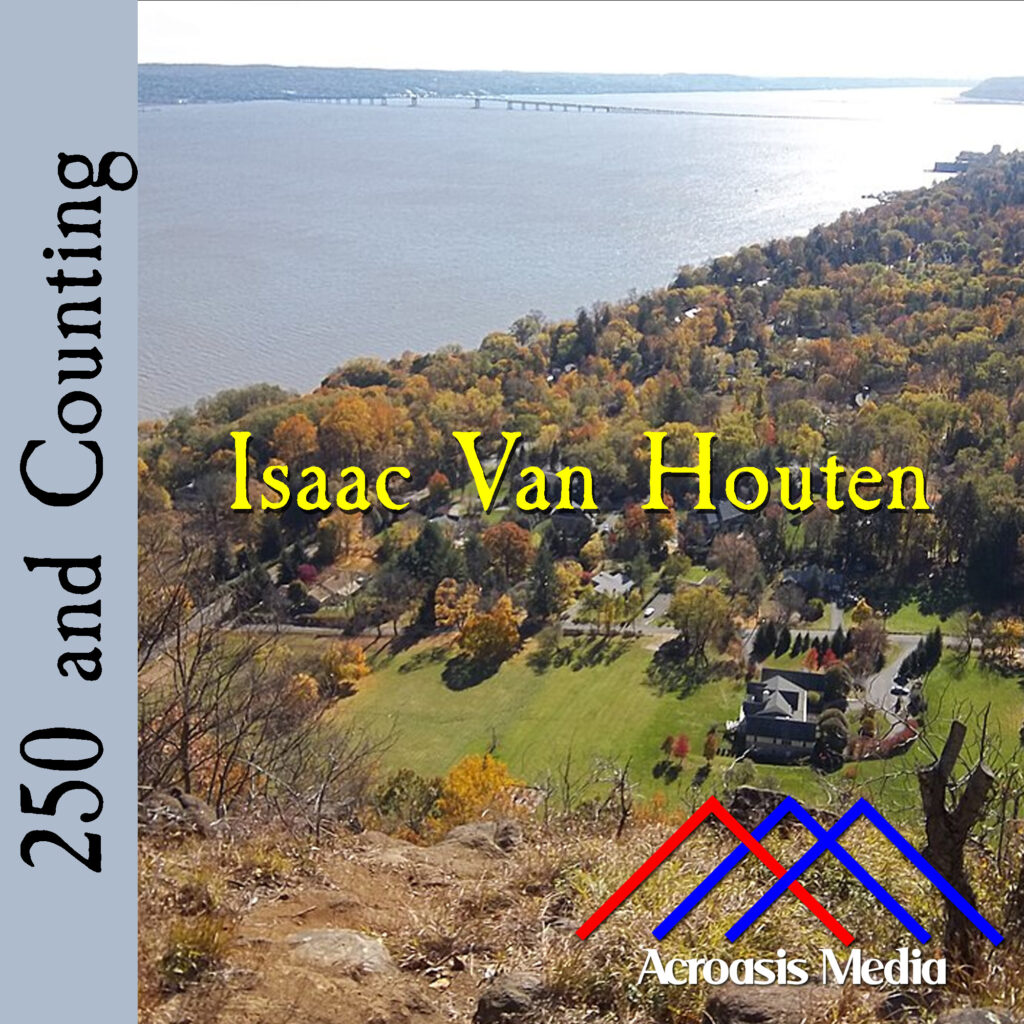
We bumped into a little dilemma when putting together this episode. Specifically, what do we do when 1776 doesn’t match up with 2026?
As it turns out, 1776 was a leap year, so that year had a February 29, whereas 2026 does not. So we decided to do what most Leap Babies seem to do: mark the day on March 1.
To that end, today marks two events: first, we take a look at an arrangement that France and Spain made to trade with America on a kind of gray market. That arrangement was first presented to King Louis XVI on February 29, 1776.
From there we jump to March 1, the date that the Royal Navy began enforcing the Prohibitory Act in earnest. It was supposed to go into effect on January 1, but presumably the Navy didn’t know about it until after that date, so March 1 became the agreed-upon start date. Under the terms of the Prohibitory Act, the Colonies were banned from trading with other nations, in addition, any Colonial ships were considered enemy vessels and were subject to being captured and retained. Likewise, any sailors aboard those ships were enemies of the Crown and to be treated as such.
This was almost certainly the last straw for many in the Colonies.
Phyllis Wheatley was an 18th century poet who was born in West Africa and sold into slavery as a small child, living with the Wheatley Family in Boston.
Phyllis wrote a book of poems which was published in 1773, after which she was emancipated. This makes her the first African-American author of a published book of poetry.
Phillis Wheatley married a grocer named John Peters around this same time. They had three children, but unfortunately all of them died quite young. Phyllis herself died in of pneumonia in 1784, not long after giving birth to a daughter, who also died that day.
Celestial choir! enthron’d in realms of light, Columbia’s scenes of glorious toils I write. While freedom’s cause her anxious breast alarms, She flashes dreadful in refulgent arms. See mother earth her offspring’s fate bemoan, And nations gaze at scenes before unknown! See the bright beams of heaven’s revolving light Involved in sorrows and veil of night!
The goddess comes, she moves divinely fair, Olive and laurel bind her golden hair: Wherever shines this native of the skies, Unnumber’d charms and recent graces rise.
Muse! bow propitious while my pen relates How pour her armies through a thousand gates, As when Eolus heaven’s fair face deforms, Enwrapp’d in tempest and a night of storms; Astonish’d ocean feels the wild uproar, The refluent surges beat the sounding shore; Or thick as leaves in Autumn’s golden reign, Such, and so many, moves the warrior’s train. In bright array they seek the work of war, Where high unfurl’d the ensign waves in air. Shall I to Washington their praise recite? Enough thou know’st them in the fields of fight. Thee, first in peace and honours,—we demand The grace and glory of thy martial band. Fam’d for thy valour, for thy virtues more, Hear every tongue thy guardian aid implore!
One century scarce perform’d its destined round, When Gallic powers Columbia’s fury found; And so may you, whoever dares disgrace The land of freedom’s heaven-defended race! Fix’d are the eyes of nations on the scales, For in their hopes Columbia’s arm prevails. Anon Britannia droops the pensive head, While round increase the rising hills of dead. Ah! cruel blindness to Columbia’s state! Lament thy thirst of boundless power too late.
Proceed, great chief, with virtue on thy side, Thy ev’ry action let the goddess guide. A crown, a mansion, and a throne that shine, With gold unfading, WASHINGTON! be thine.
As Revolutionary battles go, the Battle of Moore’s Creek Bridge was relatively minor. It didn’t last very long, there weren’t a ton of losses on either side (though definitely more on the Loyalist side), and it led to the capture of hundreds of Loyalists.
However, it changed the way the British viewed the Carolinas through the rest of the war. Overall, the perception was that the Carolinas were poor, and weak, and a stronghold of Loyalist sympathizers. And this was an easy assumption to make, especially when you think back to the Siege of Ninety-Six and the way that finally ended. British confidence was pretty high at that point, especially given the fact that it ended pretty much in a draw.
But the lasting effect of The Battle of Moore’s Creek Bridge was more in the way it affected recruitment of Loyalist troops, in that the numbers plummeted. And, only about two months later, North Carolina delegates were among the first to vote for Independence.
Innis Green served as a Jacksonian Democrat in the U.S. House of Representatives during the 20th (1827–1829) and 21st (1829–1831) Congresses, essentially holding the party’s populist line.
But he did deviate from party alignment on May 26, 1830, when Green voted nay on H.R. 287, the Indian Removal Act. Despite this, the bill passed narrowly, 102-97. This stance positioned him among Pennsylvania Jacksonians influenced by local Quaker and moral opposition to forced tribal relocations, contrasting with southern and western Democrats who prioritized land acquisition for white settlement.
Green’s vote highlighted intraparty tensions over executive-driven policies, though it did not derail his Jacksonian credentials amid broader support for Jackson’s anti-bank rhetoric and vetoes of federal internal improvements like the Maysville Road in 1830.
The short version of all that is, while Green was a fairly reliable guy when it came to upholding Jacksonian politics, he often acted with his actual constituents in mind: if it wasn’t going to poorly affect the people in his district, he could get behind it. Otherwise, he would be willing to vote against it.
Perhaps he didn’t make a huge splash politically, but there are some behavior lessons in there.
I mention in today’s episode that William Augustine Washington lived on a Virginia plantation he’d inherited, and that his first house burned down.
The second house he moved to, on the same property but a mile away (yow!), was called Blenheim. Washington used some of the bricks from the original house to add on to the Blenheim house, but he also used a bunch of them to start on a house and barn on a separate property.
What a thrifty fellow!
For what it’s worth, Blenheim is still standing and is on the National Register of Historic Places. You may be able to see it from the street but it is privately occupied and not open to the public.
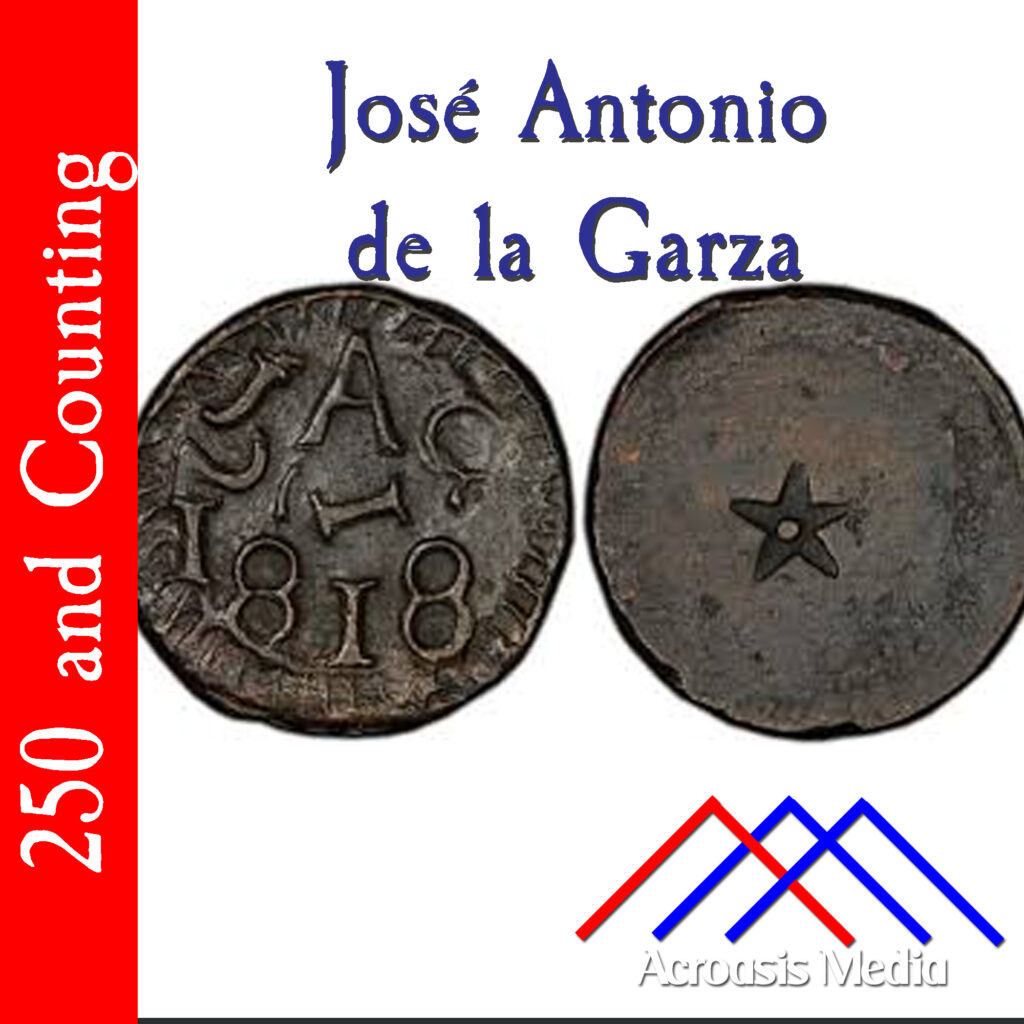
A Coruña is a coastal city in northeastern Spain that’s often stylized as La Coruña, as Mike says in this episode. Its location makes it an ideal port for trade with other nations, and the American Colonies was no exception.
Now, France gets a lot of attention for the assistance they gave us during the Revolution, but Spain was at least as helpful as France was. They were just quieter about it. So it was probably just a matter of time before some British officials noticed ships in the Spanish harbors that appeared to be engaging in more than your typical trade. What’s more, the presence of Dutch materiel suggested that Spain may have been acting as a third party between Holland and America, to enact some nearly-clandestine trade with the Colonies for gunpowder and other stuff.
As the year wore on, Spain would become a little more openly involved in the war effort.
Carter Braxton was born into money, as his grandfather was probably the wealthiest man in Virginia. This gave him the “in” he needed to become a gentleman farmer and a public official.
In 1761 he was elected to Virginia’s House of Burgesses, and in 1769 he was a signatory to the Virginia Resolves, which protested parliamentary interference with colony affairs. While he was a Patriot at heart, as 1776 rolled around and he replaced Peyton Randolph as one of Virginia’s delegates to the Continental Congress, he thought that independence from England was a little premature, but he did sign the Declaration of Independence when the time came. Not long after that he returned to Virginia and resumed his term in the state legislature.
Carter Braxton had some notable progeny. His second great-grandson was William Tyler Page, composer of the Amercan’s Creed, which reads:
I believe in the United States of America as a government of the people, by the people, for the people; whose just powers are derived from the consent of the governed, a democracy in a republic, a sovereign Nation of many sovereign States; a perfect union, one and inseparable; established upon those principles of freedom, equality, justice, and humanity for which American patriots sacrificed their lives and fortunes.
I therefore believe it is my duty to my country to love it, to support its Constitution, to obey its laws, to respect its flag, and to defend it against all enemies.
This was accepted by the US House of Representatives on April 3, 1918.
The South Carolina 5th Regiment ultimately wasn’t a huge success, with a single exception, which we’ll talk about in greater detail in a few months. But in those losses there were some long odds going on, so we’ll not judge too harshly.
I learned a couple of things as a result of today’s episode. I own a piece of property in South Carolina, in the Myrtle Beach area, which is located in Horry County. I always wondered how it got that name, and now I’ve learned that Horry County was named after Peter Horry, who was a commander of the SC 5th. The other thing I learned was that when I looked for a picture of Peter Horry, I stumbled on his biography and learned that he was a great-grandchild of French Huguenot refugees who arrived in Charleston in the 1680s.
And that is how I learned why Horry County is pronounced with a silent “H”.
There’s a line in the play 1776 about how everyone in the New York Legislature is very loud and talks very fast and as a result nothing ever gets done. This was likely a side effect of the fact that New York was so politically mixed at the time. Everyone hollering at rather than talking to each other means that nobody is truly connecting with anyone else. Thank goodness we’ve moved past THAT! <eyeroll>
But New York and the Hudson Valley in particular held great strategic value for the various parties involved in the conflict we call the American Revolution. Britain taking that area would separate New England from the other Colonies. What’s more, George Washington knew it. So he devoted a lot of energy into ensuring that that territory remained defended, even while the British were nowhere in sight, because he knew it was a matter of time.
And he was right: the British did show up ready for battle. It didn’t happen when he expected it to happen, and we’ll talk about that when things start heating up.
Oliver Wolcott was one of our Founding Fathers in that he was one of the men who signed the Declaration of Independence, but while he never achieved prominence on the level of Franklin or Adams, he nevertheless served an important role as a member of the Second Continental Congress.
As the Revolution began, Wolcott was made a commissioner of Indian affairs, largely to work on ensuring that the northern tribes remained neutral. He was considered qualified for that position because he worked in that part of the continent during the French and Indian War.
He was elected to the Continental Congress in 1775, and although he was quite ill for a chunk of 1776, he did sign the Declaration of Independence, although it was some time later than everyone else. He was also a signatory to the Articles of Confederation, but he did not sign the US Constitution because by then he was the Lieutenant Governor of Connecticut, becoming governor in 1796. A year later he died at the age of 71.