Category: Connecticut History

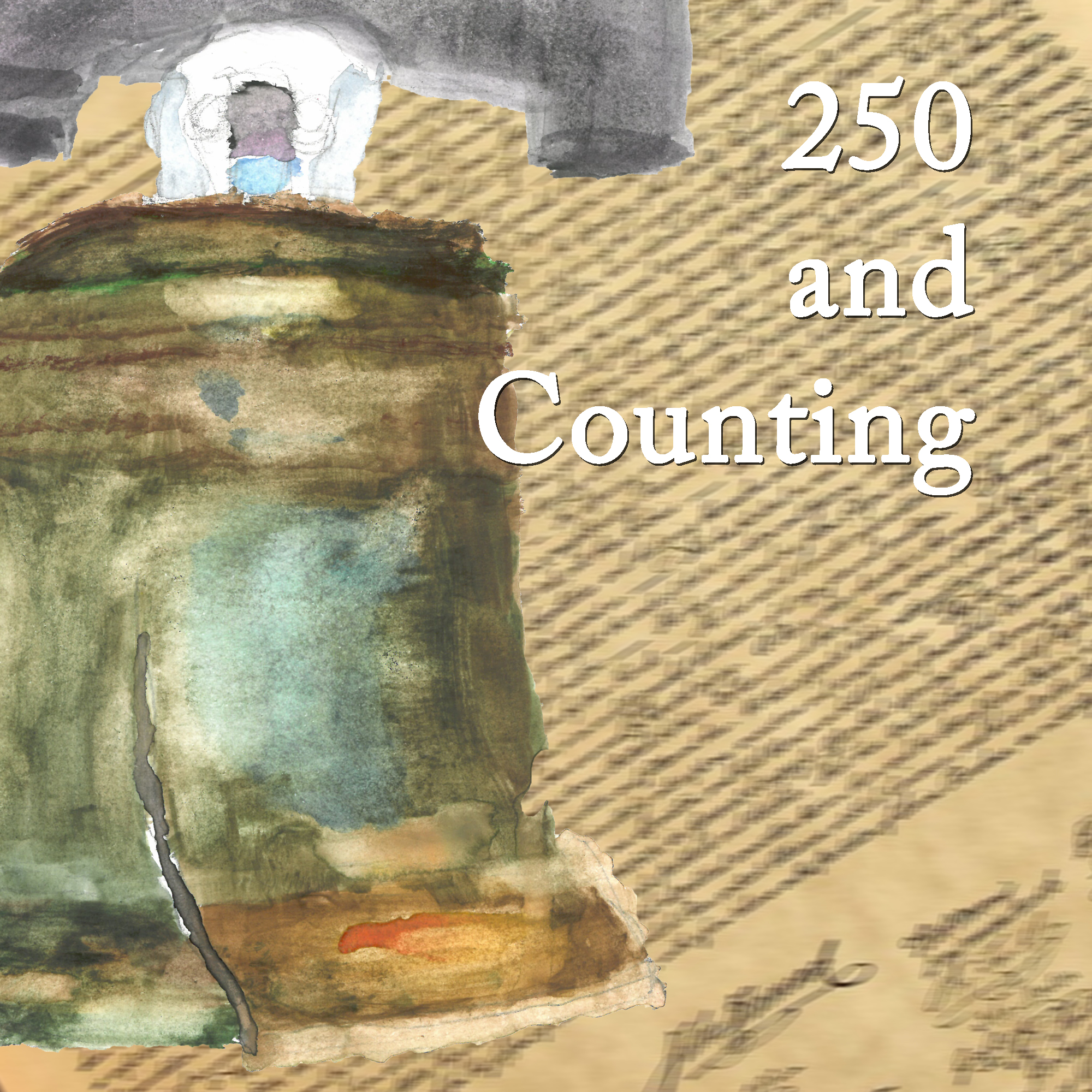
  • A Furnace for Arms–January 2, 1776

    Cover art for January 2, 1776: the Mount Riga Ironworks Furnace in Salisbury, CT. via Wikimedia Commons
    The Mount Riga Ironworks Furnace in Salisbury, CT. There was more than one furnace at this location; this is the surviving one. It’s on the National Register of Historic Locations and a lovely place to visit if you’re in the northwest corner of the state.

    The Mount Riga Iron Furnace isn’t an especially unique artifact on the east coast of the US. In fact, as someone who lives in Baltimore, I get to see one of them regularly when I visit my mother-in-law, who lives about a half-hour’s drive away in a more rural part of the state. Unfortunately, that one (the Northampton Furnace is in bad shape because of its location close to a modern-day reservoir, so it’s in the water a lot of the time.

    But it got me curious enough to wonder what they did, and how they worked. In the oversimplified version, you layer the iron ore and limestone, along with the fuel, usually charcoal or coke, into a tall stack.

    Once the fire is lit, air is pushed into the bottom and forced upward, creating superheated air which gets it to about 4000 degrees. The ore melts down and the limestone collects the impurities in the ore.

    The limestone and impurities float to the top as slag, and the molten iron can be removed as pig iron. This is the raw material for making iron and (later on) steel.

    (Steel did exist in the 18th century, but it would be nearly 100 years before Henry Bessemer came up with the mass production process that made the Industrial Revolution possible.)

    Iron furnaces aren’t unique, but they’re not especially common either, so it was important in the Revolutionary Era to locate them and ensure that they were adequate for creating the raw materials for producing weapons.

  • August 30, 1775: Your Cows or Your Life

    Cover art for August 30, 1775: Replica HMS Rose under sail off Massachusetts in 1971 on her way from Newport to Boston, photo taken by the late General William Lanagan (USMC), not copyrighted. Via Wikimedia.

    The HMS Rose was a 20-gun ship of the Royal Navy, built in 1757. When hostilities broke out between the Colonies and the Crown, the Rose was tasked with preventing smuggling off the coast of Connecticut and (especially) Rhode Island.

    She spent the first few years of the Revolution in Narragansett Bay, in the Long Island Sound, in the Hudson River and down to the Chesapeake Bay in Maryland.

    The Rose’s last action as a British naval ship was in Savannah, Georgia. She was no longer fit for battle not was she seaworthy, so she was scuttled in a channel of the Savannah River, essentially blocking it off and preventing other naval forces from reaching the city. This meant that Savannah remained in British hands until the war ended.

    In 1971 a replica was built (see the cover art), originally as a “dockside attraction.” Eventually she was purchased by Fox Studios and redressed for the film Master and Commander. Afterward she was renamed the Surprise and regained her status as a dockside attraction in San Diego, if you’re inclined to visit.

  • April 28, 1775: Jonathan Trumbull Chooses a Side

    Cover art for April 28, 1775: portrait of Governor Jonathan Trumbull, artist unknown but could be his son John Trumbull.

    Jonathan Trumbull was one of only two men to serve as governor of a Colony and of a State. (Nicholas Cooke of Rhode Island was the other.) This, to us, gives him a kind of air that perhaps he could be trusted by all parties to act appropriately.

    And when push came to shove, Trumbull found himself in the position of having to support the Colony rather than the crown, as you’ll see in today’s episode. And as things further deteriorated, he became more focal about supporting the Colony, since the British no longer appeared to view the Colonists as subjects of the Crown but as a genuine enemy to be crushed. (Which is exactly how many in Parliament felt, so.)

  • April 25, 1775: Benedict Arnold Wasn’t All Bad

    Cover art for April 25, 1775: Benedict Arnold engraving by Henry Bryan Hall after John Trumbull, published 1879.

    Benedict Arnold was a pretty smart guy who chose the wrong friends…and, as we’ll discover later on, the wrong enemies as well.

    But for the time being, here’s a peek into some of Arnold’s activities when he was still on our side in both body and spirit.

  • February 21, 1775

    Cover art for February 21, 1775: "The Residence of the late revered Rev Claudius Herrick", artist unknown, via Yale University Library

    Of all the indignities we laid upon Claudius Herrick in this episode (okay, there weren’t that many), the worst is that we misspelled his name in the cover art.

  • 250 and Counting: February 4, 1775

    Cover art for February 4, 1775: the front page of George III's New England Restraining Act

    After the Boston Tea Party, Parliament enacted what they called the Coercive Acts and the Colonies called the Intolerable Acts. The Colonists were neither coerced, nor were the acts tolerated (hence the name). And you know that because we’ve told you this already several times.

    In October 1774 the Continental Congress composed the “Petition to the King”, and as you’ll learn in greater detail tomorrow, it was pretty clear that the petition crossed an ocean and still managed to go nowhere. In fact…

    At about the same time, King George III decided that New England needed some more “convincing” to fall into line. This was the beginning of the New England Restraining Act. As the name suggests, it affected mostly the New England colonies, but people in the other colonies took notice and wondered “Hey, this could happen to us too, couldn’t it?” As a result, everyone continued moving down the path they fervently hoped they wouldn’t travel.