
Category: Connecticut History

  • Notes From All Over–April 11, 1776

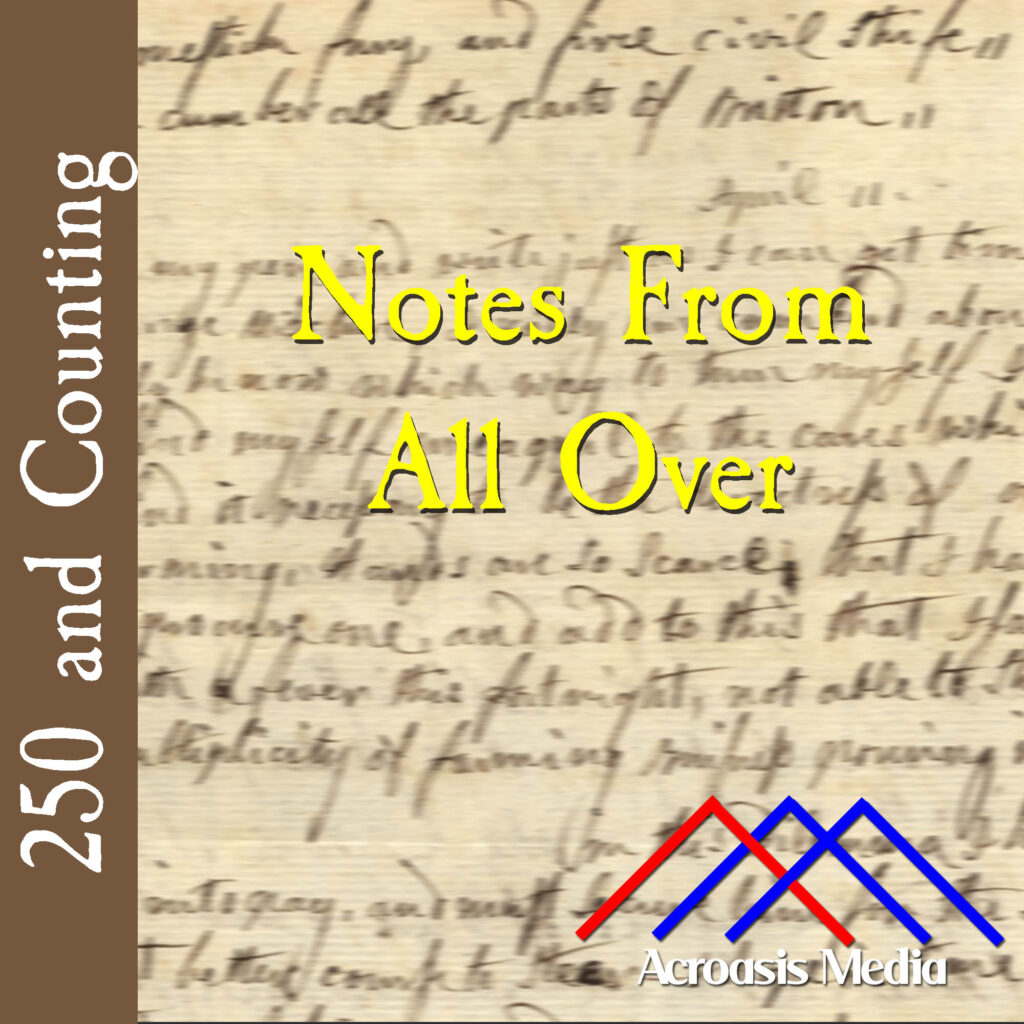
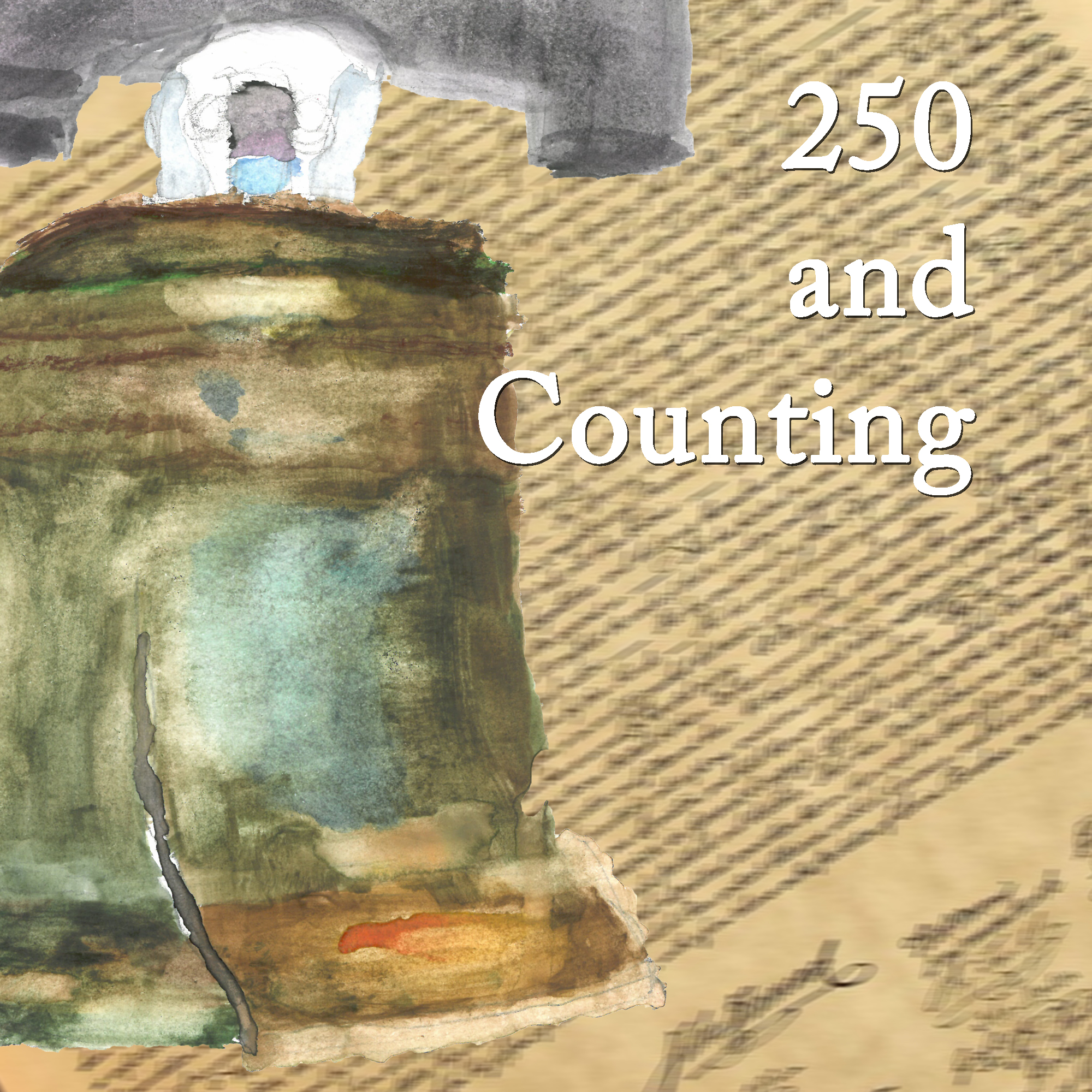
    Cover art for April 11, 1776: Detail of the April 11 letter from Abigail Adams to John Adams. via Massachusetts Historical Society.

    While there were a lot of smaller things going on on this day in 1776, there are typically multiple things going on for any given day. We often have to make choices regarding what we’re going to concentrate on, and don’t think we don’t feel a twinge of regret when we spot something else that happened on thus-and-such a date and had a moment of “Man, I wish we’d done that one.”

    So today we were fortunate in that there were several smaller items going on, but we didn’t have to use up a lot of audio real estate to cover all of them. It’s nice to have the luxury of telling all the stories you’ve got for a day.

    Incidentally: Mike and I are in Boston this week, absorbing history, interviewing people and shooting video for you to enjoy in a few weeks when we’ve finished editing it. It’s an extra dimension to the show that we hope you’ll enjoy.

  • Samuel Tweedy–March 8, 1776

    Cover art for March 8, 1776: Samuel Tweedy's grave, in Danbury, CT. via Findagrave.com.

    When Samuel Tweedy moved from Dutchess County, NY to Danbury, CT, it was a fortuitous time to do something like that. Danbury was undergoing an economic expansion as part of a post-war boom, which gave him extra opportunities to gain access to trade and manufacturing that he never would have seen back in New York, which was a largely agrarian economy at the time.

    Tweedy’s marriage to Ann Burr had both social and economic benefits, since Danbury was rather tight-knit as a community, and his having Ann for a spouse gave him an “in” where some of that was concerned.

    One of Danbury’s biggest products was hats, and Samuel Tweedy established his own business with the assistand of his father-in-law. He immersed himself in the craft of making hats, and ultimately established himself as a man capable of building smaller-scale workshops dedicated solely to producing unfinished hat blanks, which could then be sold to hatmakers. Since an efficient shop could only turn out a few dozen hat blanks in a week, having several shops meant that Tweedy could turn out more blanks than anyone else. Tweedy’s shops also specialized in making hat blanks with fur linings. And Tweedy benefitted from protective tariffs, which reduced the number of British imports when it came to hats.

  • From Connecticut To Georgia–February 20, 1776

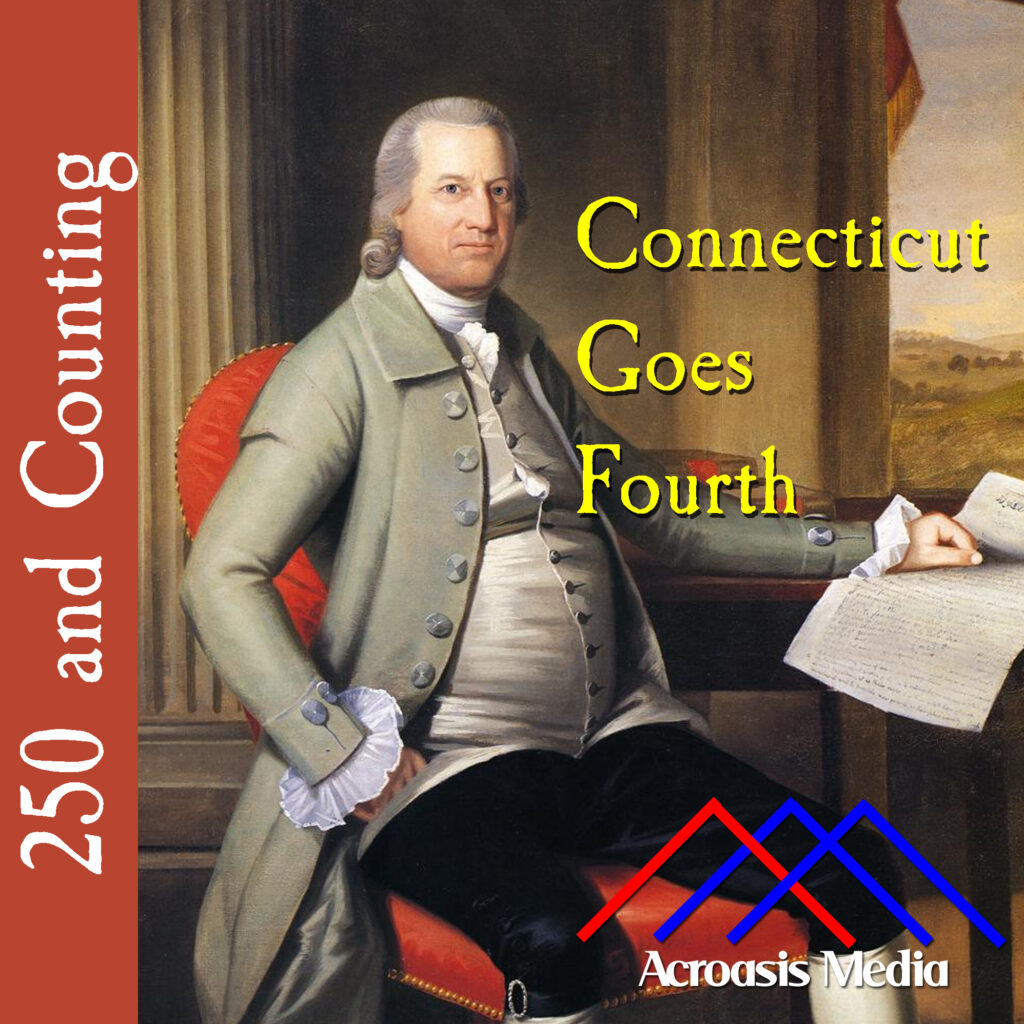
    Cover art for February 20, 1776: Portrait of Connecticut Founding Father Oliver Wolcott by the American painter Ralph Earl, oil on canvas. Courtesy of the Museum of Connecticut History.

    Oliver Wolcott was one of our Founding Fathers in that he was one of the men who signed the Declaration of Independence, but while he never achieved prominence on the level of Franklin or Adams, he nevertheless served an important role as a member of the Second Continental Congress.

    As the Revolution began, Wolcott was made a commissioner of Indian affairs, largely to work on ensuring that the northern tribes remained neutral. He was considered qualified for that position because he worked in that part of the continent during the French and Indian War.

    He was elected to the Continental Congress in 1775, and although he was quite ill for a chunk of 1776, he did sign the Declaration of Independence, although it was some time later than everyone else. He was also a signatory to the Articles of Confederation, but he did not sign the US Constitution because by then he was the Lieutenant Governor of Connecticut, becoming governor in 1796. A year later he died at the age of 71.

  • Salisbury Iron Furnace–February 2, 1776

    Cover art for February 2, 1776: A typical iron factory setup, This image is generally used to represent the Salisbury Furnace. via National Park Service.
    A typical iron factory setup, This image is generally used to represent the Salisbury Furnace. via National Park Service.

    In early 1775 when hostilities first broke out, the Salisbury Iron Furnace was owned by an Englishman named Richard Smith. By the end of the year he’d cleared out and gone back home to England, and remained there for the rest of the war.

    After an inspection in early January, the Committee of Safety formally recommended that the Salisbury Iron Furnace be confiscated and made ready for the production of cannon. The first cannon rolled out on May 27, and by the time the war ended, about 850 cannon—about 75% of all the cannons made in the colonies—had come from Salisbury, not to mention ammunition and other armaments.

  • Elisha Haley–January 21, 1776

    Cover art for January 21, 1776: Portrait of Elisha Haley, artist unknown, created approximately 1860.
    Portrait of Elisha Haley, artist unknown, created approximately 1860.

    Elisha Haley wasn’t necessarily a lawmaker at either the State or the Federal level who made such a huge mark that he’s become a kind of household name, but he appears to have been solid enough that he could get elected multiple times at both levels.

    I did discover, after recording the episode, that Haley is not, in fact, buried in Crary Cemetery but rather in the Wightman Cemetery, which is also in Groton. His wife and four of his children are also buried there.

  • Preparing To Defend New York–January 7, 1775

    Cover art for January 7, 1775: Portrait of Jonathan Trumbull and his wife Faith, painted by his son John Trumbull, 1778. via New York Public Library.
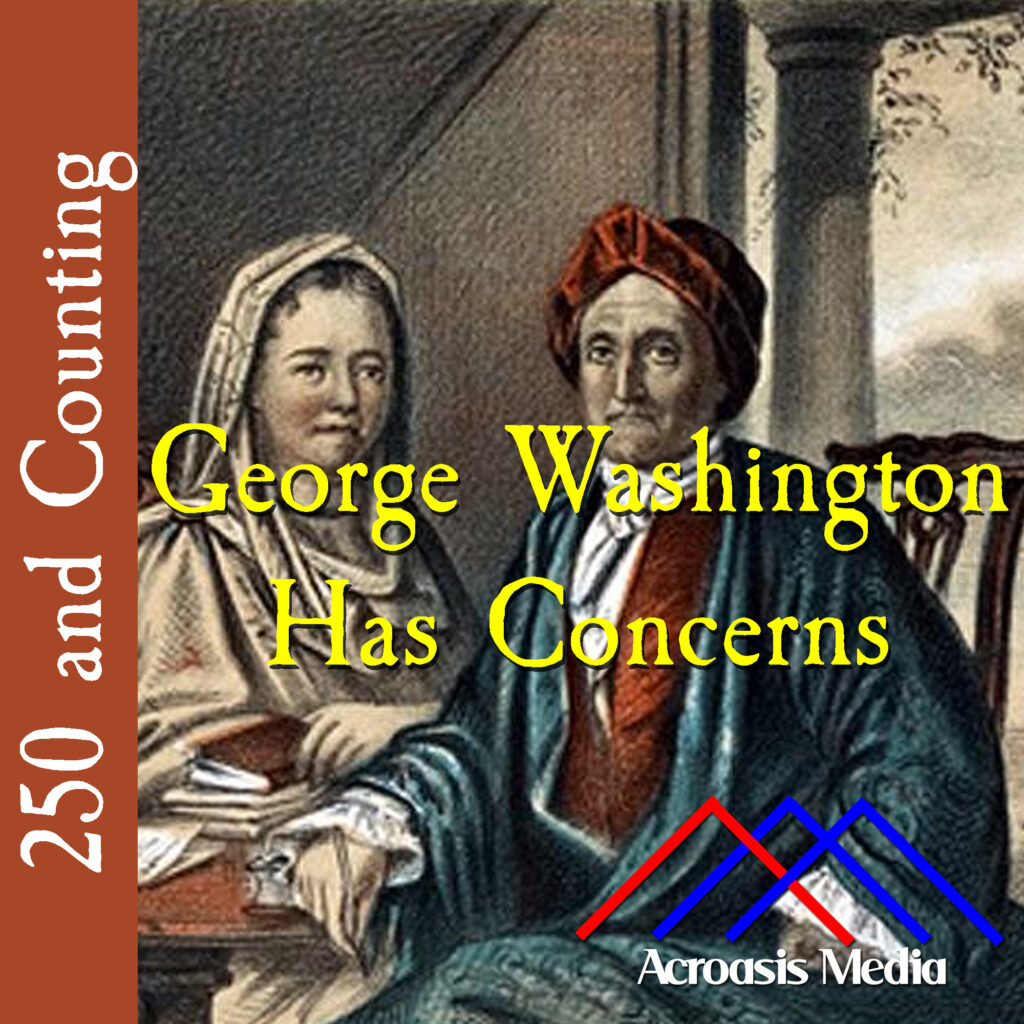
    Portrait of Jonathan Trumbull and his wife Faith, painted by his son John Trumbull, 1778. via New York Public Library.

    There are many letters between George Washington and Connecticut Governor Jonathan Trumbull. Presumably something as simple as proximity to another leader was attractive to both of them, especially in an age where letters took several days to go a hundred miles.

    We have to presume that the two men had very reliable people transporting these letters, given how much detail is in this one regarding Washington’s guesses about British troop movements and exactly what he was going to do about it. It’s certainly been the case before that correspondence has been intercepted by the British in the past, and the Postal Service hadn’t been up and running for very long by that point.

    At any rate, Washington was correct in that the British were taking a hard look at New York City (still mostly just the southern tip of Manhattan, mind you) and the palisades along the Hudson River, which was still called the North River then. Where he was likely incorrect was in the timing of that move, which may have resulted in a little complacency.

  • A Furnace for Arms–January 2, 1776

    Cover art for January 2, 1776: the Mount Riga Ironworks Furnace in Salisbury, CT. via Wikimedia Commons
    The Mount Riga Ironworks Furnace in Salisbury, CT. There was more than one furnace at this location; this is the surviving one. It’s on the National Register of Historic Locations and a lovely place to visit if you’re in the northwest corner of the state.

    The Mount Riga Iron Furnace isn’t an especially unique artifact on the east coast of the US. In fact, as someone who lives in Baltimore, I get to see one of them regularly when I visit my mother-in-law, who lives about a half-hour’s drive away in a more rural part of the state. Unfortunately, that one (the Northampton Furnace is in bad shape because of its location close to a modern-day reservoir, so it’s in the water a lot of the time.

    But it got me curious enough to wonder what they did, and how they worked. In the oversimplified version, you layer the iron ore and limestone, along with the fuel, usually charcoal or coke, into a tall stack.

    Once the fire is lit, air is pushed into the bottom and forced upward, creating superheated air which gets it to about 4000 degrees. The ore melts down and the limestone collects the impurities in the ore.

    The limestone and impurities float to the top as slag, and the molten iron can be removed as pig iron. This is the raw material for making iron and (later on) steel.

    (Steel did exist in the 18th century, but it would be nearly 100 years before Henry Bessemer came up with the mass production process that made the Industrial Revolution possible.)

    Iron furnaces aren’t unique, but they’re not especially common either, so it was important in the Revolutionary Era to locate them and ensure that they were adequate for creating the raw materials for producing weapons.

  • August 30, 1775: Your Cows or Your Life

    Cover art for August 30, 1775: Replica HMS Rose under sail off Massachusetts in 1971 on her way from Newport to Boston, photo taken by the late General William Lanagan (USMC), not copyrighted. Via Wikimedia.

    The HMS Rose was a 20-gun ship of the Royal Navy, built in 1757. When hostilities broke out between the Colonies and the Crown, the Rose was tasked with preventing smuggling off the coast of Connecticut and (especially) Rhode Island.

    She spent the first few years of the Revolution in Narragansett Bay, in the Long Island Sound, in the Hudson River and down to the Chesapeake Bay in Maryland.

    The Rose’s last action as a British naval ship was in Savannah, Georgia. She was no longer fit for battle not was she seaworthy, so she was scuttled in a channel of the Savannah River, essentially blocking it off and preventing other naval forces from reaching the city. This meant that Savannah remained in British hands until the war ended.

    In 1971 a replica was built (see the cover art), originally as a “dockside attraction.” Eventually she was purchased by Fox Studios and redressed for the film Master and Commander. Afterward she was renamed the Surprise and regained her status as a dockside attraction in San Diego, if you’re inclined to visit.

  • April 28, 1775: Jonathan Trumbull Chooses a Side

    Cover art for April 28, 1775: portrait of Governor Jonathan Trumbull, artist unknown but could be his son John Trumbull.

    Jonathan Trumbull was one of only two men to serve as governor of a Colony and of a State. (Nicholas Cooke of Rhode Island was the other.) This, to us, gives him a kind of air that perhaps he could be trusted by all parties to act appropriately.

    And when push came to shove, Trumbull found himself in the position of having to support the Colony rather than the crown, as you’ll see in today’s episode. And as things further deteriorated, he became more focal about supporting the Colony, since the British no longer appeared to view the Colonists as subjects of the Crown but as a genuine enemy to be crushed. (Which is exactly how many in Parliament felt, so.)

  • April 25, 1775: Benedict Arnold Wasn’t All Bad

    Cover art for April 25, 1775: Benedict Arnold engraving by Henry Bryan Hall after John Trumbull, published 1879.

    Benedict Arnold was a pretty smart guy who chose the wrong friends…and, as we’ll discover later on, the wrong enemies as well.

    But for the time being, here’s a peek into some of Arnold’s activities when he was still on our side in both body and spirit.