Category: First Continental Congress

  • RIP Peyton Randolph–October 23, 1775

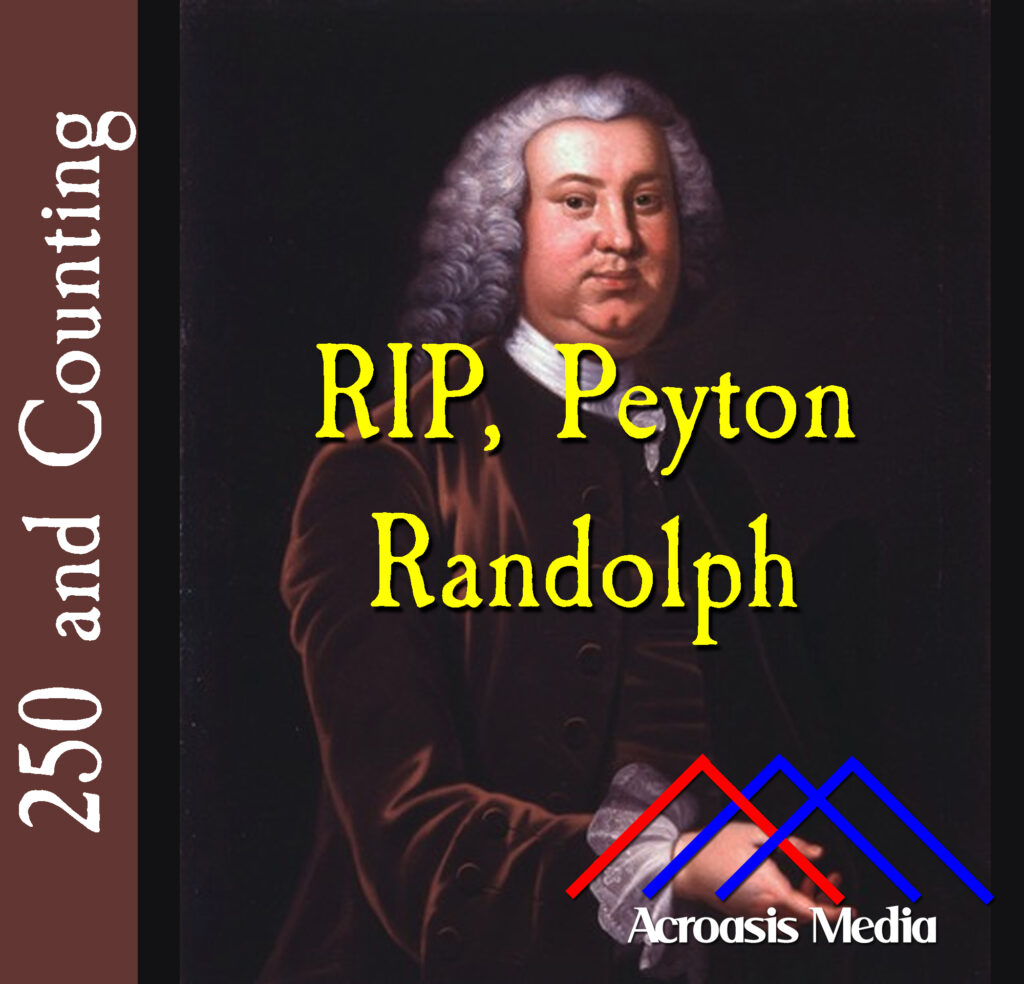
    Cover art for October 23, 1775: Peyton Randolph, by John Wollaston the Younger, 1775.

    Peyton Randolph is another one of those Founding Fathers who goes largely unknown to most people, probably because he died relatively young (age 54) and early in the whole Independence movement.

    But Randolph was a true Patriot and while he wasn’t around to sign the Declaration of Independence, it’s said that his spirit was at the heart of the document.

    It’s worth noting that, as the Royal Governors were kicked out one by one, the Continental Congress began to assume governmental duties for the Colonies. This is why some would argue that, as the first President of the Continental Congress, Peyton Randolph should also be considered our first US President, and never mind the fact that he died before the nation was established. It’s not a terrible idea, we guess…

    Fort Randolph in present-day West Virginia was named after him, as are the Randolph Counties in North Carolina and Indiana, not to mention the town of Randolph, Massachusetts.

  • February 9, 1775

    Cover art for February 9, 1775: text of the address to the Joint Session of Parliament declaring the Colonies to be in rebellion

    The first week or two of February 1775 could best be described as a series of misunderstandings and communication breakdowns. Any attempts on both sides to reach out with some form of conciliation managed to fail for various reasons.

    And during all these breakdowns, the situation on the American side of the pond only got worse as time went on, largely because each side thought that the other wasn’t being responsive.

    In the end, however, it didn’t really matter, because as we’ve discussed with the episodes dealing with Massachusettensis and Novanglus debating one another in print, the one thing they agreed upon was that these attempts to reach out were always, at their heart, rooted in some attempt to wrest control from the other party. Both reaching for it, neither attaining it nor caring what the other side’s argument meant at the core.

  • 250 and Counting: February 1, 1775

    Cover art for February 1, 1775: Portrait of John Hancock.

    Before the shooting started, Boston appeared to be the place which gave King George III the most hassles. But to be fair, Boston is the place that the British seemed to provoke more than the other Colonies, so it kind of evened out in the end.

    When the Intolerable Acts dissolved the existing government in Massachusetts, the locals said, “Whatever” and convened anyway that same summer. But there’s no denying the results: they did all the things that a government is supposed to do, and the locals pretty much ignored whatever apparatus was set up by the British.

    There were three Provincial Congresses in Massachusetts, but by the time the Third one convened, much of what they did was rendered unnecessary because the war had turned “hot” and other structures were in place to do the job.

  • 250 and Counting: January 19, 1775

    Cover art for January 19, 1775: An image of the Petition to the King.

    Most people (we think) have this popular notion of American history involving the British imposing taxes and massacreing people in Boston and the Colonists responding with an indignant “Oh, we need to dump some tea and write a Declaration of Independence and take up arms and shoot those red-coated monsters right now!”

    But if you’ve been listening to this show for the past couple of weeks, you already know that wasn’t the case. There were many, many attempts to seek out a peaceful solution to the troubles going on. Some of them were rather covert: backchannel people talking to one another, negotiating quietly, Others, of course, were overt. And today we’ll be talking about one of those. It was an attempt by the First Continental Congress to bring up their issues, ask for relief and simultaneously affirm their allegiance to the King.

    (Spoiler Alert: it didn’t work.)