Category: John Paul Jones

  • Captain Jones–August 8, 1776

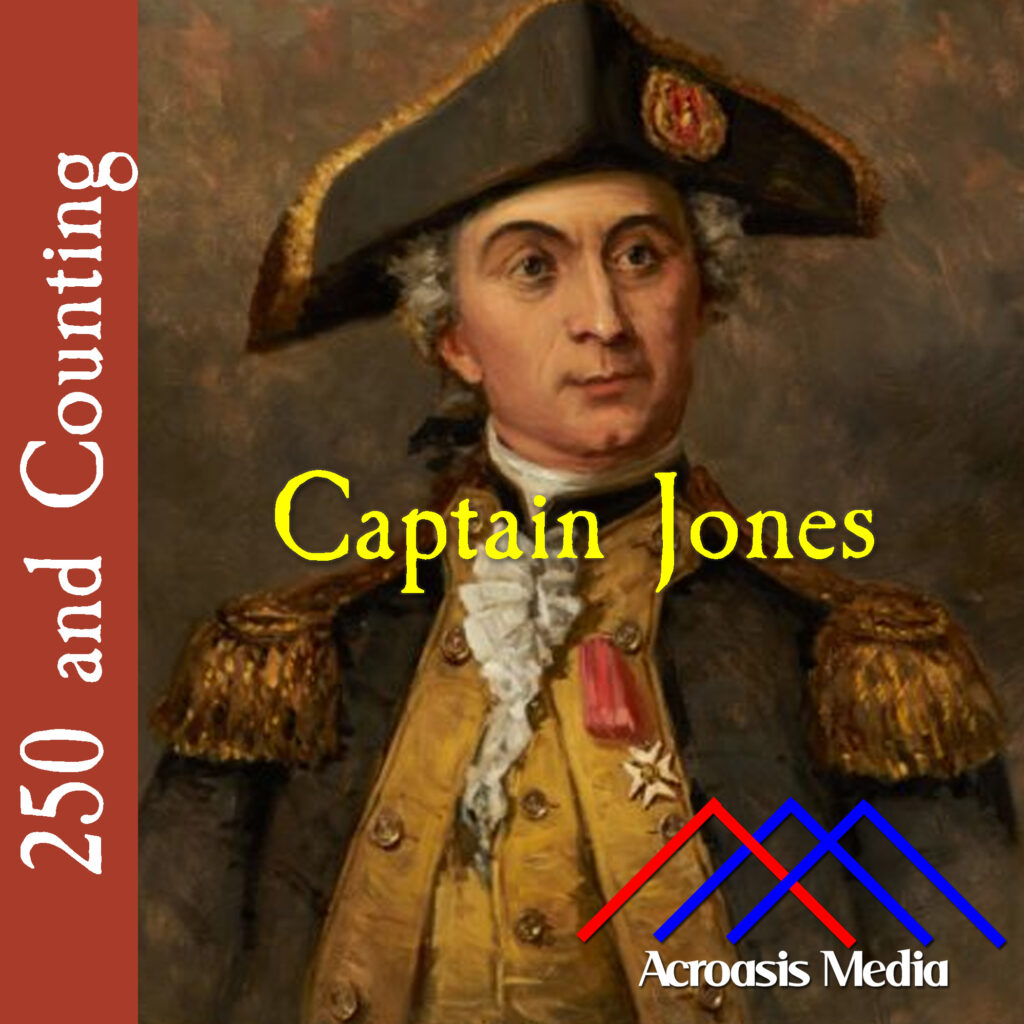
    Cover art for August 8, 1776: Portrait of Captain John Paul Jones by Wehl, after Charles Willson Peale, ca. 1872. This portrait hangs in the US Embassy in Thailand.

    The career of John Paul Jones, or Captain Jones, as he became on this day, is marked by both brilliance and controversy.

    Jones was born in Scotland and sailed on merchant ships before coming to America and joining the nascent navy here. Through the Revolutionary War, he was involved with several key battles, many times off the English coast rather than on this sise of the pond. This led to his having an international reputation.

    But in 1787 he was left without a command, so he took on a position with the Imperial Russian Navy, rising to the rank of rear admiral. Unfortunately, he was forced to leave after being accused of raping a 10-year-old Russian girl. (He admitted to having sex with her, but not raping her, and he also claimed that he was not the one to have taken her virginity. Neither of these claims really helped his case.) The whole thing turned into a mess and Empress Catherine eventually exiled him for a minimum of two years.

    Captain Jones moved to Paris and was eventually appointed as the US Consul to Algiers, but he died before he could begin that position. After his burial, the records were lost and so his specific location was unknown for many years. What was known was that his body had been preserved in alcohol and that he had a lead coffin. In 1905 he was located and an autopsy completed, which confirmed the original suspicion that he’d died of interstitial nephritis.

    Captain Jones’ body was returned to the United States and he was re-interred in a bronze and marble sarcophagus at the US Naval Academy in Annapolis, Maryland.

  • The First American Flag Is Raised–December 3, 1775

    Cover art for December 3, 1775: Oil painting by W. Nowland Van Powell, depicting Lt. John Paul Jones raising the "Grand Union Flag" on December 3, 1775. via the US Navy Art Collection.

    John Paul Jones was born in Scotland as John Paul and began his maritime career at 13 when he was hired as an apprentice.

    In 1770 he was involved in an incident wherein a crew member was flogged after a failed mutiny. The crew member later died, and it was clear that his reputation had taken a big hit. So John Paul left Scotland and took command of a British vessel. Again, however, he put down a mutinous sailor, this time killing him with a sword in Tobago. Before he could be tried, however, he fled the area and essentially disappeared for 18 months.

    In the meantime his brother, who lived in the Fredericksburg, Virginia, area, died. John Paul went to America to settle his brother’s affairs. It was at this time that he appended the last name “Jones” to his name. Shortly thereafter he joined the American Navy. During his time as an American naval officer, it doesn’t appear that he killed anyone, but in his later years, he sailed for the Russian Navy, where he was derailed by the accusation of rape of a ten-year-old Russian girl. It was only because of the murkiness of some of the details that gave the Empress Catherine some leeway to have him exiled rather than beheaded.

    But as an American sailor, he did shine. And he shone for the first time on this day in 1775.