Category: Lord Dunmore

  • The Burning of Norfolk–January 1, 1776

    Cover art for January 1, 1776: "Incident in the Burning of Norfolk," engraving, artist unknown. Originally appeared as an illustration in Cassell's History of the United States in the late 1870s.
    “Incident in the Burning of Norfolk,” engraving, artist unknown. Originally appeared as an illustration in Cassell’s History of the United States in the late 1870s.

    Happy New Year to you!

    The burning of Norfolk was the follow-up to the Battle of Great Bridge and the Patriot occupation of that town. Colonel Howe probably overplayed his hand with this one, and the consequences were catastrophic for the town.

    The Declaration of Independence is just a few months away, now, and (spoiler alert) the part you may be most anticipating doesn’t happen on July 4. But in the meantime, there’s lots and lots of extremely historic things for us to talk about in the run-up to the Declaration, and the immediate aftermath.

    Running through 1775, one day at a time, has been a huge privilege for us, and we hope you’ll stay with us through 1776. This was a project that I’d been thinking about for a long time, longer than I’ve known my partner, Mike Messner. And when I suggested to him that we team up, he jumped on the idea immediately. He’s been instrumental in helping with the research, with brainstorming the ideas, and with keeping me committed to the idea of actually doing a podcast that runs every single day.

    We put a couple of hours into researching, writing, recording, (sometimes re-writing and re-recording) and editing these episodes, and I hope the effort shows. Thank you so much for taking this ride with us, and here’s to the next year.

    Have a wonderful 2026!

  • Martha Comes to Cambridge–December 11, 1775

    Cover art for December 11, 1775: Portrait of Martha Dandridge Custis, 1757 by John Wollaston. This was the year her first husband died.

    Most of the portraits we see of Martha Washington were made when she was older, so we have (I think) this image of her as a bit of a crabby old frump.

    And maybe she was, by the time her husband got to be President. She didn’t really love the life of the public spouse and charming party hostess. But it turned out she was good at it, and if it made her crabby, nobody who mattered knew about it on a firsthand basis.

    In fact, Martha Washington was known to be fashionable, calm, outgoing and easy to get along with. And because Boston was rather straitlaced compared to Virginia, she gave off a bit of an exotic air during her time in Cambridge.

    Frump, indeed.

  • The Battle of Great Bridge–December 9, 1775

    Cover art for December 9, 1775: Sketch of the Battle of Great Bridge by Lord Rawdon. Title: A view of the Great Bridge near Norfolk in Virginia where the action happened between a detachment of the 14th Regt: & a body of the rebels. Key: A. A stockade fort thrown up by the regulars before the action. B. Entrenchments of the rebels. C. A narrow causeway by which the regulars were forced to advance to the attack. D. The church occupied by the rebels. Once again, the map has North toward the bottom.
    Note once again that the map is drawn with North on the bottom. Hover to get the guide to the markers.

    The Battle of Great Bridge is a little bit overlooked these days, and more’s the pity. It was the first battle in Virginia, it was a big victory for Patriot troops, the Royal Governor and his crowd got pushed out altogether, and nobody died on the Patriot side.

    On the British side, about 100 soldiers were dead. The last time the British lost a substantial number of troops, it was at Bunker Hill, which they won. (The vocabulary word you seek is “Pyrrhic Victory.”)

    Best of all, it fueled Virginia’s moves toward independence.

  • Tensions Rise At Great Bridge–December 7, 1775

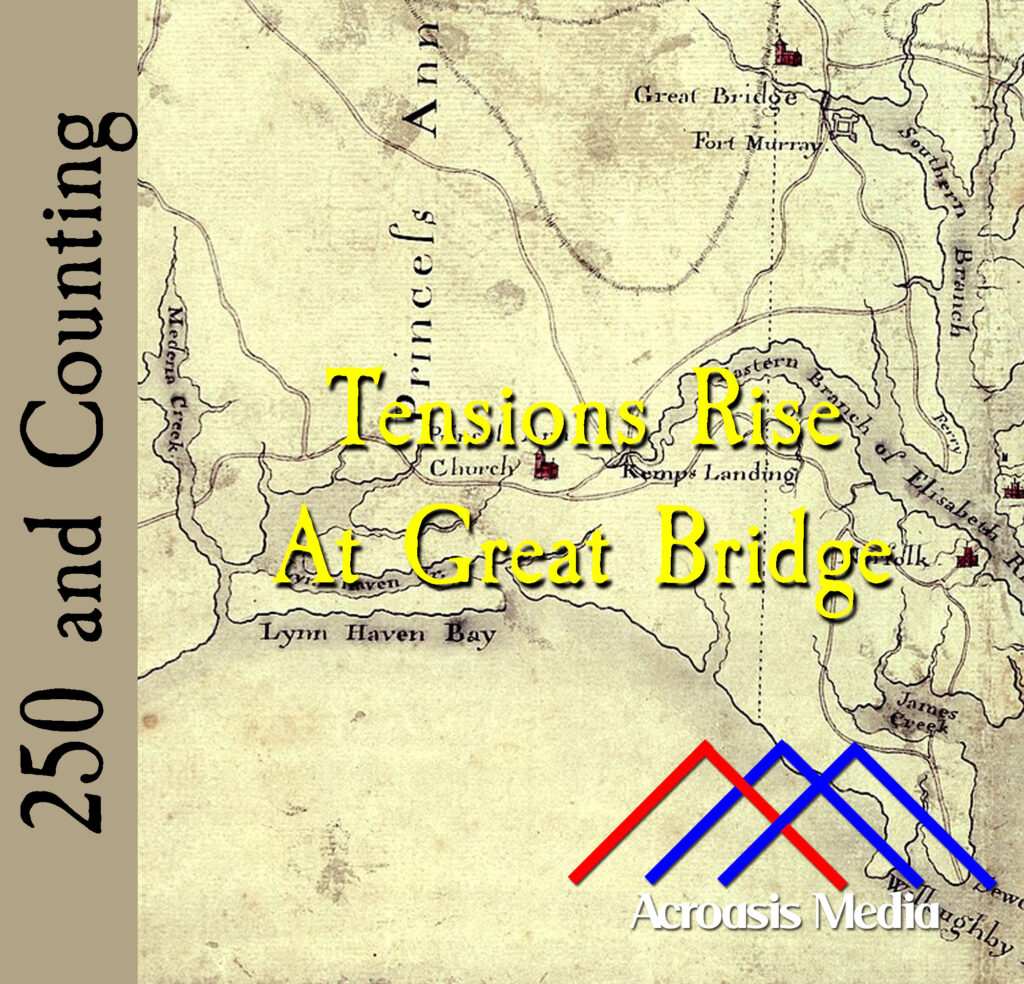
    Cover art for December 7, 1775: Detail from a map circa 1785 showing the Norfolk area. Oriented with North to the bottom, Fort Murray is visible near the top of the map. via Library of Congress Geography and Map Division.

    The map in today’s cover art might be a little confusing to people who live and work in the modern-day Norfolk area. That’s because it’s oriented with North at the bottom. What’s not known is why this was done in this particular case. North/Up South/Down is, of course, the usual convention, and there are arguments that there’s a psychological component to this (e.g. north/up is somehow “better” than south/down).

    From a cartography standpoint, there isn’t much difference between a map oriented one way and a map oriented any other way. In fact, most cartographers consider the matter trivial in nature.

    The bodies are gathering at Great Bridge; in a couple of days the battle begins.

  • Dunmore Assembles Two Regiments–November 30, 1775

    Cover art for November 30, 1775: "A Light Infantry Man and Huzzar of the Queen's Rangers," ca. 1780. From John Graves Simcoe's Military Journal.

    Back on November 14 we told you about the Royal Ethiopian Regiment, which was assembled following Lord Dunmore’s Proclamation. The proclamation offered freedom to slaves belonging to Patriot owners who chose to fight on the British side in the Revolution.

    Dunmore was putting together another band of soldiers at the same time, called “The Queen’s Own Loyal Virginia Regiment,” which suggests that he knew something about George III that wasn’t common knowledge. (Heh, kidding.)

    They both fought in the Battle of Kemp’s Landing, which went very well for the British, but Dunmore took the win as a sign that the Patriots were weak, so he went in to the Battle of Great Bridge, as we’ll see in just a few days.

  • Escape To The War–November 26, 1775

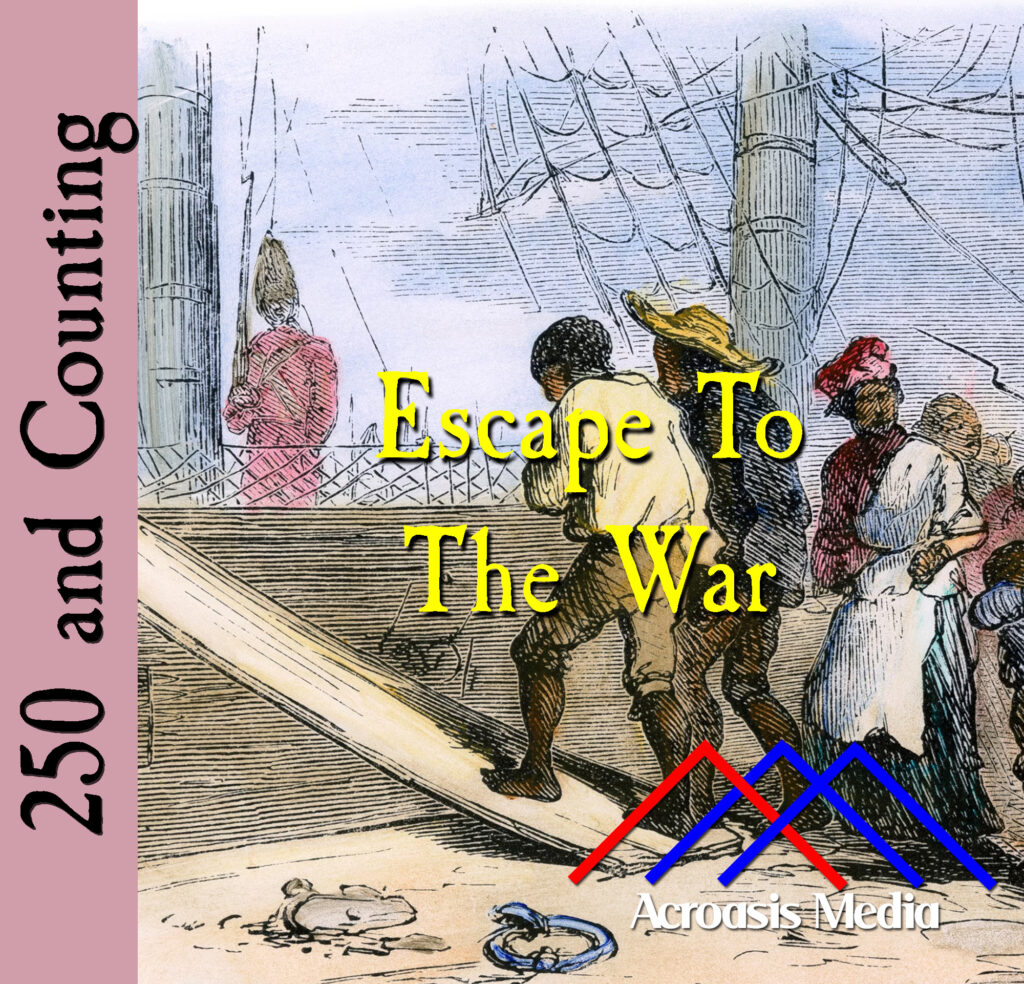
    Cover art for November 26, 1775: colorized image of slaves being corralled by British soldiers (yeah, we cheated on this one.) via NYPL digital archives.

    As we’ve mentioned a couple of times before, Lord Dunmore’s Proclamation offering freedom to Patriot-owned slaves who fought for the British created a stir that was felt in all thirteen colonies.

    Huge numbers of people showed up, not just men, but women and children as well. And of course, because most of them had escaped to join the British forces, that meant that the slave-hunting business experienced a huge boom.

    And, of course, the company formed by these escapees only fought in one battle of any note; many of the soldiers died of illness, some were sent back to their plantations of origin. Very few of them remained free.

  • The Birth of the Black Loyalists–November 14, 1775

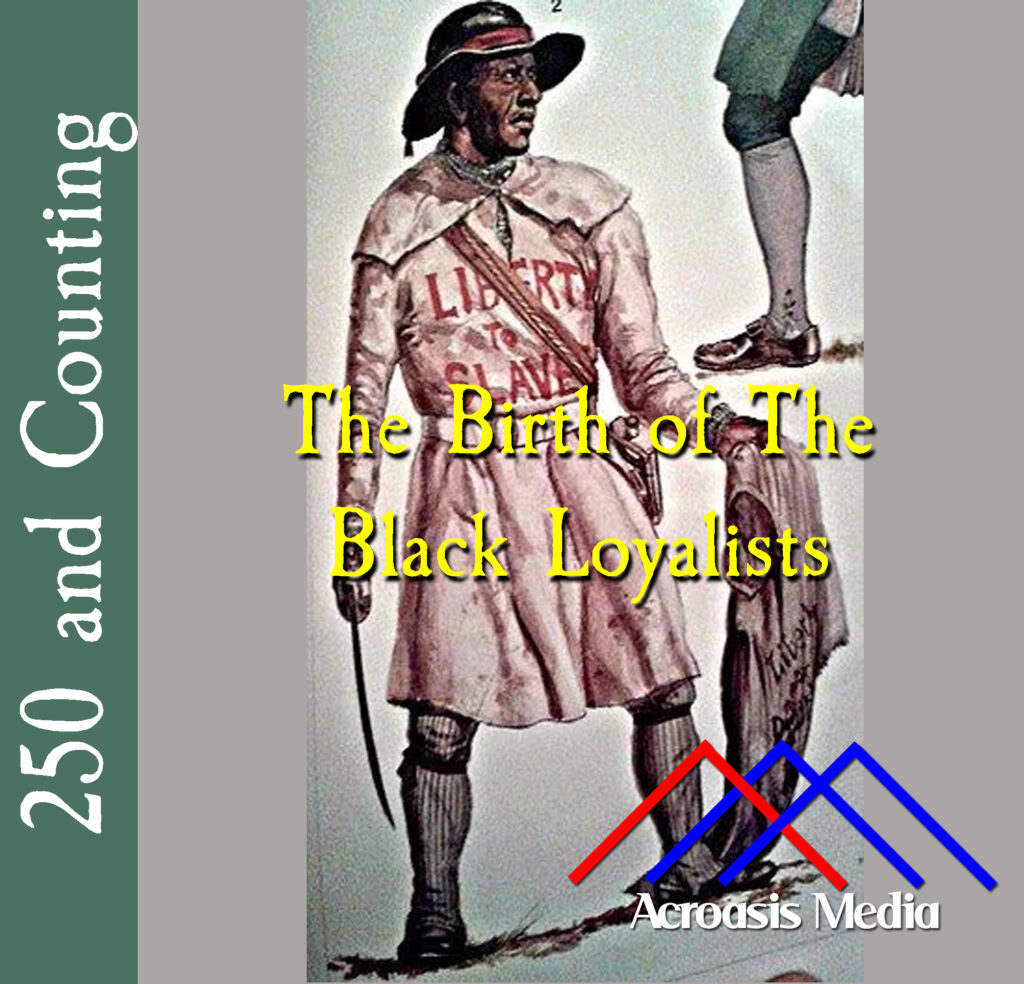
    Cover art for November 14, 1775: art depicting a member of Dunmore's Ethiopian Regiment. Original artist is unknown but this image is frequently used to represent those soldiers.

    Lord Dunmore issued his Proclamation just a week earlier, but the response was much stronger than anticipated, probably because—who knew!—people hate being slaves.

    While the Proclamation only applied to the Virginia colony, because Dunmore had no authority conferred upon him anywhere else, a huge number of slaves and otherwise indentured servants from throughout the thirteen colonies fled to the British side of the lines.

    (We have to say “throughout” because slavery was a thing in the north at this point; it just wasn’t nearly as common as in the south.)

    This led to thousands of “American” blacks living ex-patriate lives throughout the British Empire after the Revolution.

  • Dunmore Has A Tempting Offer–November 7, 1775

    Cover art for November 7, 1775: detail of Lord Dunmore's Proclamation as it appeared in the Philadelphia Journal and Weekly Advertiser, 12/6/1775. Via the Gilder Lehrman Institute of American History.

    Lord Dunmore was driven from the Governor’s Mansion back in June, but he never went far. That same day he took refuge on a British ship near Williamsburg and continued playing the role of Governor, even though the House of Burgesses was already doing quite nicely, thank you.

    Slave revolts were a constant concern in the slave states, and Dunmore was almost certainly inspired by an incident just a couple of days earlier during the Battle of Kemps Landing. An enslaved man, serving alongside the British regulars, came face to face with his former enslaver, Joseph Hutchings, a local militia commander. Hutchings fired at him point blank and missed. In retaliation, the black soldier wounded him with a sword.

    Dunmore and his British compatriots, who were clearly already aware of the power of a general revolt, saw this event as an opportunity.

  • June 8, 1775: Lord Dunmore Checks Out

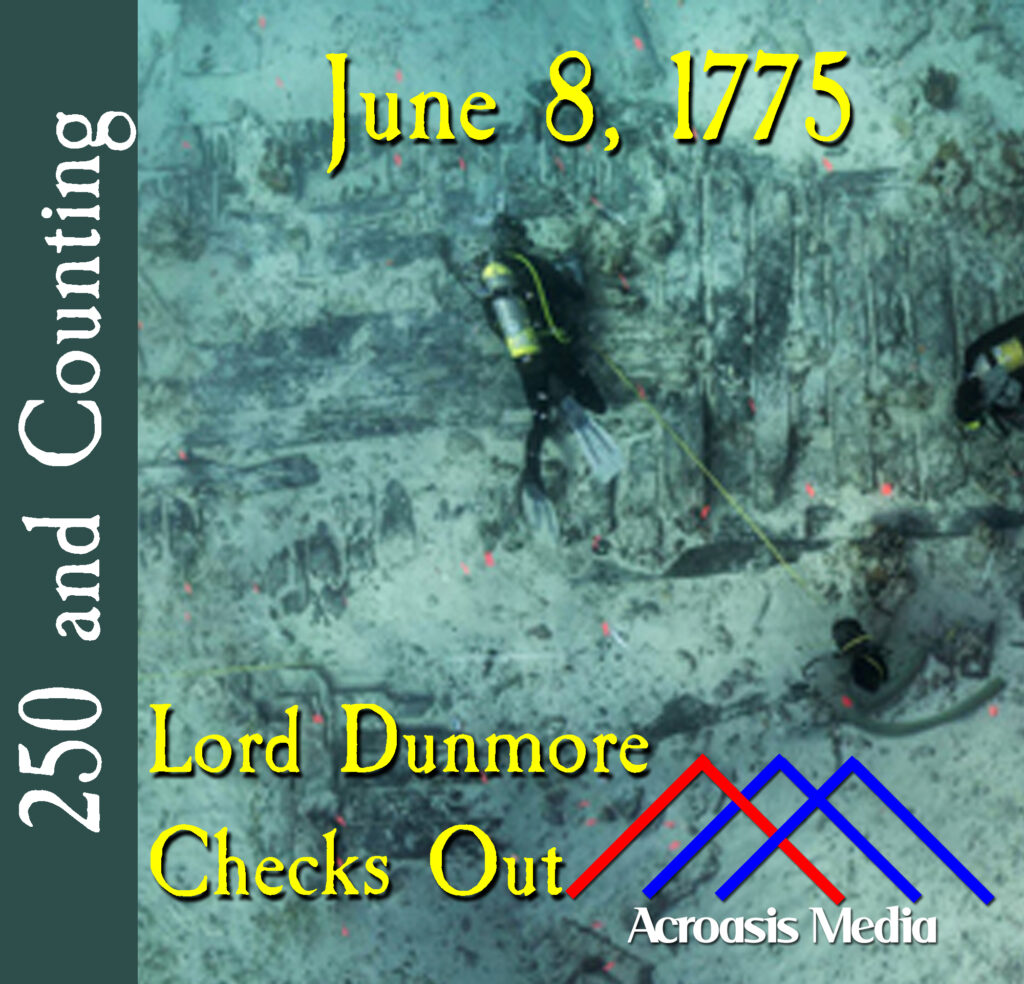
    Cover art for June 8, 1775: divers swim above the exposed timbers of the HMS Fowey, but not the one mentioned in this episode.

    In the aftermath of the Gunpowder Incident, Lord Dunmore decided that the better part of valor involved getting out of town before the locals could get a good lynch mob together, and he left Virginia on the HMS Fowey.

    Here’s the interesting part: the Fowey which Dunmore boarded was not the first of its name; in fact it was the fifth. But the other interesting part is that it was the second one of that name to sink in American waters.

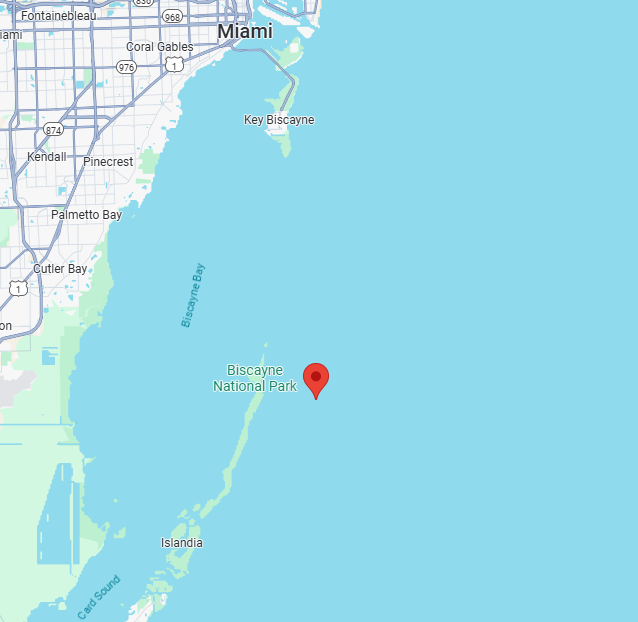
    via Google Maps: the approximate location of the HMS Dowey (1744).

    The fourth HMS Fowey was a fifth-rate vessel (remember, ratings refer to the number of guns, not the quality of the boat) with 44 guns on it. It was first launched in 1744. In June of 1748 the ship struck a coral reef and sank off the coast of Florida (see map). She wasn’t re-discovered until 1975 and, through an agreement with England, is considered a Protected Site by the National Park Service. The photo used for today’s art is of divers swimming over the exposed timbers of that ship. It’s definitely a “look but don’t touch” situation.

    In 1749 another Fowey was built, a sixth-rate frigate with 24 guns. This is the one which Lord Dunmore used to skip town. The remains of this ship are probably in the York River, but it’s not known for sure.

    Why is “Fowey” such a popular name for a ship? It’s not clear. In fact, it’s not clear whether the name comes from the Cornish town of Fowey, or the river Fowey which runs through it.

  • April 29, 1775: The Gunpowder Incident, Part 2

    Cover art for April 29, 1775: Payton Randolph by John Wollaston the Younger, 1775.

    Payton Randolph was the Speaker of the House of Burgesses during this period in 1775, and while what was said wasn’t recorded, he managed to put down two riots in which Virginians were ready to trash the Royal Governor’s place with the Royal Governor inside of it.

    He did it twice.

    No question, this man was a patriot who cared deeply about the soul of its people. And if he hadn’t died just a few months later, he would almost certainly have been a name we’d have heard a lot more often in recent years.

    PlayPlay