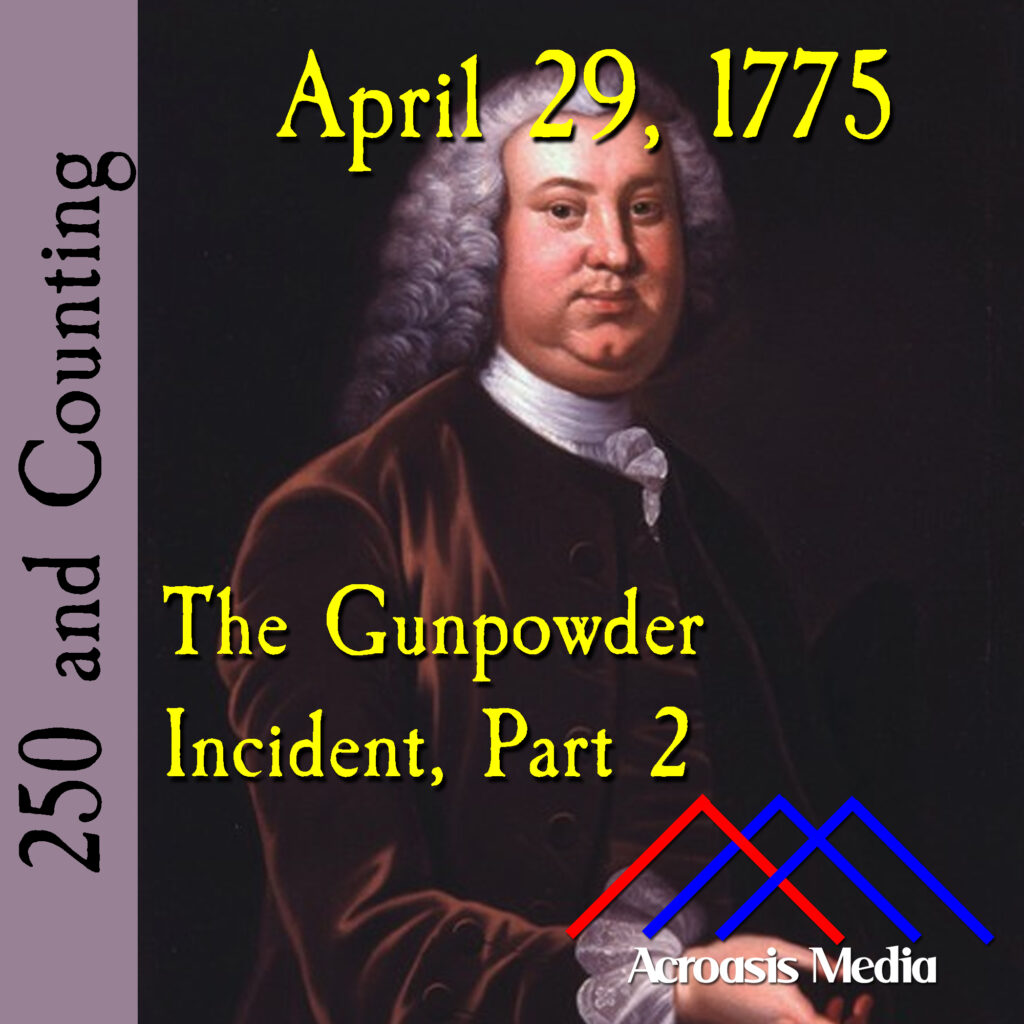
Payton Randolph was the Speaker of the House of Burgesses during this period in 1775, and while what was said wasn’t recorded, he managed to put down two riots in which Virginians were ready to trash the Royal Governor’s place with the Royal Governor inside of it.
He did it twice.
No question, this man was a patriot who cared deeply about the soul of its people. And if he hadn’t died just a few months later, he would almost certainly have been a name we’d have heard a lot more often in recent years.
One of the interesting things about many of the British officials who were around during the early days of the American Revolution is that most of them were actually pretty good at their job. It’s just that they were given rather thankless tasks to do which wound up backfiring on them.
And then there’s John Murray, the Fourth Earl of Dunmore. History has not been especially kind to Lord Dunmore, not should it be. He often acted rashly and without consulting some of the people he should have consulted, and in the end he wound up getting a lot of people very angry, instead of getting a few people a little annoyed.
Lord North, over in London, is often defined as the Prime Minister who lost the Colonies, but Dunmore clearly did his part to ensure that they stayed lost regardless of the outcome. And today in history, Lord Dunmore issued a proclamation against electing delegates to the Second Continental Congress, but the Second Virginia Convention, by now in its last day or so, ignored him and sent people anyway. (They’d already elected a couple, so Dunmore’s proclamation was a little bit of closing the barn after the horse had escaped.)
John Murray, the Fourth Earl of Dunmore, or more commonly Lord Dunmore, came to the Colonies in 1770 to become the Royal Governor of New York, but fate intervened and he wound up as the Royal Governor of Virginia instead.
He might have fared better in New York, but given the events of the Westminster Massacre you learned about yesterday, we’re not sure it would have made much difference. Dunmore wasn’t an especially good politician in general, and he didn’t hold the Colonists in an especially high esteem. And that’s the sort of thing that A) isn’t easily concealed, and B) doesn’t always go over well with your constituents. Not always.