Category: Maryland History

  • Thomas Stone Writes Home–April 25, 1775

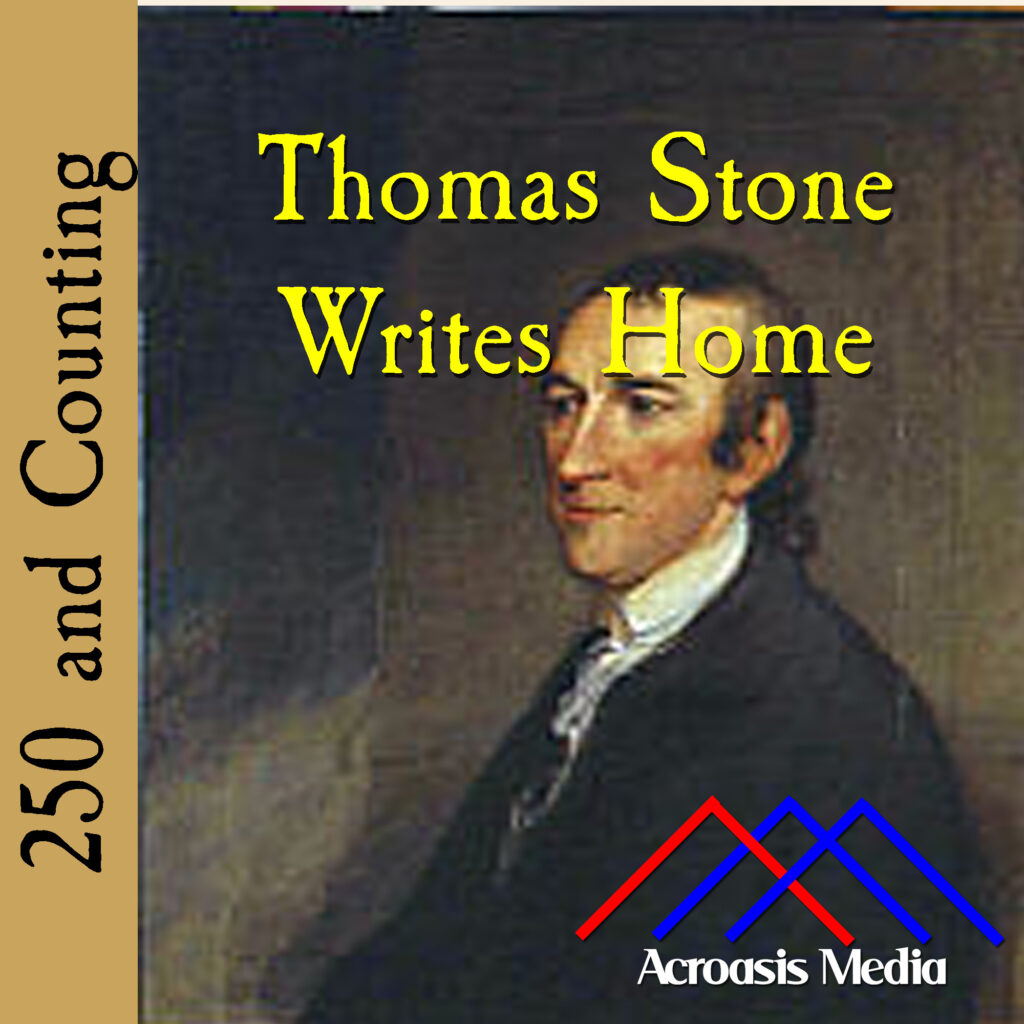
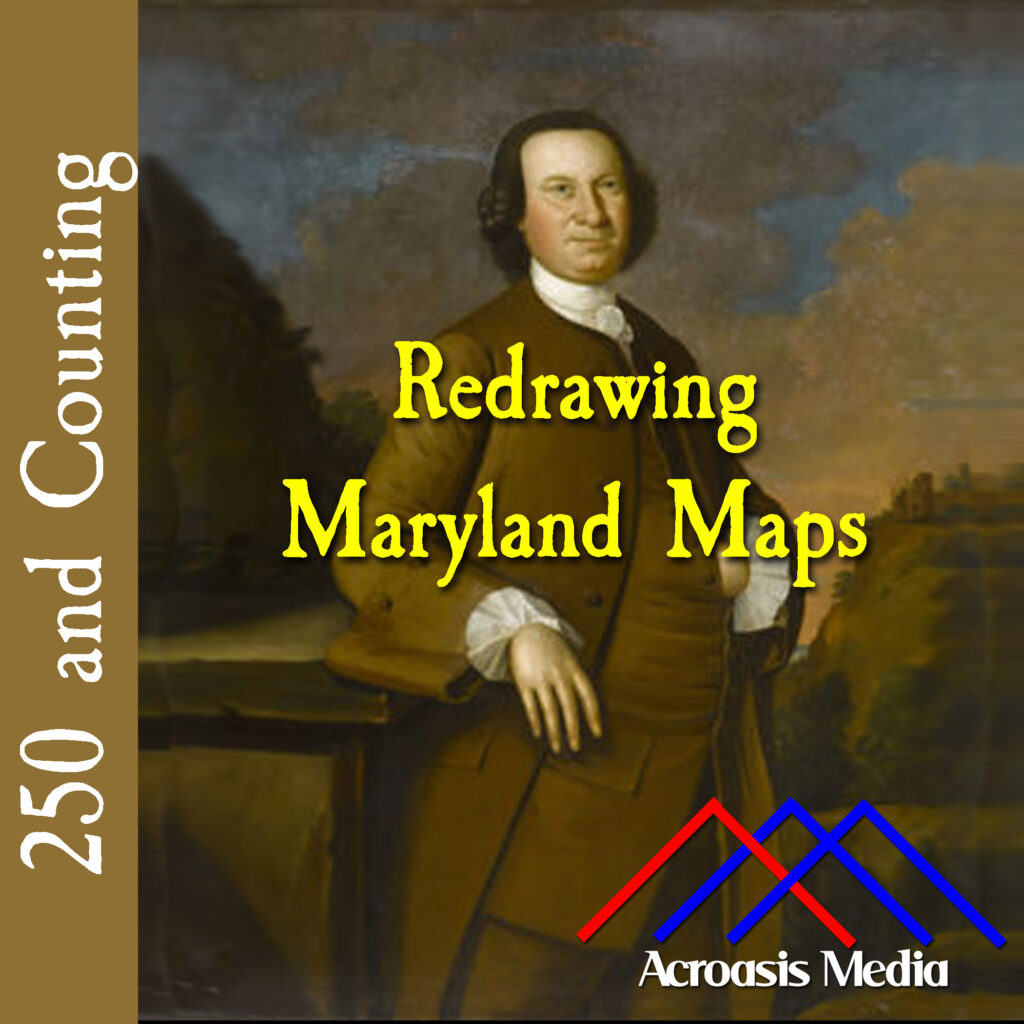
    Cover art for April 25, 1776: portrait of Thomas Stone by Robert Edge Pine, 1785.

    Thomas Stone was a delegate to the Second Continental Congress who served with strict instuctions to “arrive at a happy settlement and lasting amity” with the Mother Country. What’s more, he and his fellow delegates were told not to vote for any proposition that declared independence.

    Fortunately, just a few days before Richard Henry Lee put forth the resolution for Independence in early June 1776, the Maryland government removed that restriction, so the delegates could vote however they wanted. And yes, they did vote.

  • Baltimore Celebrates Women–March 12, 1776

    Cover art for March 12, 1776: "First Blow For Liberty," by Felix Octavius Carr Darley, 1858. I know it's a year later, but this image is meant to depict ordinary citizens as part of the battles at Lexington and Concord.

    Of course it’s coincidental, but it’s kind of cool that we’re able to bring you this episode during Women’s History Month and the same week as International Women’s Day.

    Believe it or not, Mike and I have struggled with the fact that there’s very little representation of anyone from this era who isn’t a white male. We’ve managed to touch on a few women and African-Americans from time to time, but after 435 episodes (including today) we’re probably still in the single-digit range.

    Mike doesn’t concentrate very much on the newspaper notice that appeared in Baltimore this day; he gives us a little perspective on some of the ripples created by events we’ve talked about so far. Sometimes the women’s history angle comes from the things that are mundane in print, but vital to the success of the war.

    It doesn’t make up for the lack of representation, but we hope it helps.

  • A New Job For John Adams–February 9, 1776

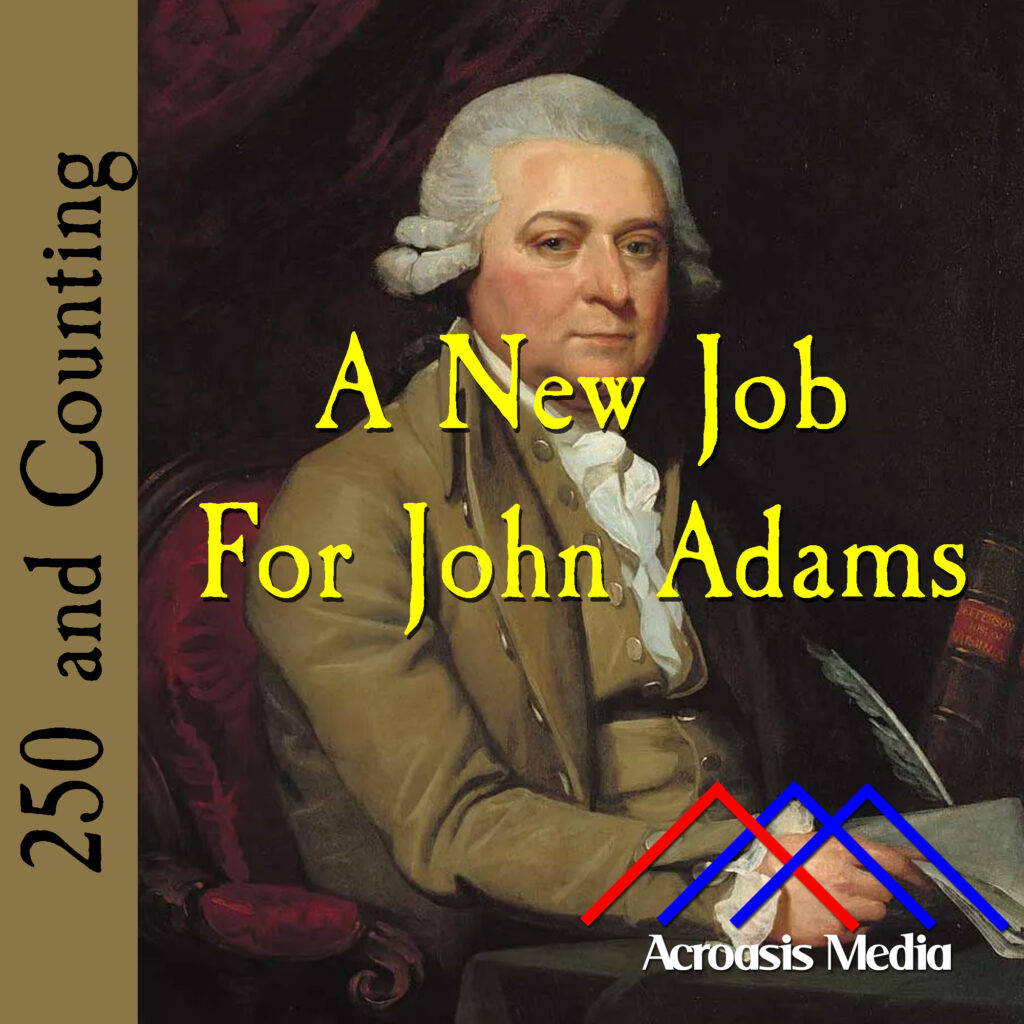
    Cover art for February 9, 1776: John Adams as portrayed by Mather Brown in 1788.

    One of John Adams’ stronger talents was being able to see the motivation behind the action, and because of this he was usually able to thwart unattractive actions somehow.

    In today’s case, he was able to thwart people who opposed him by simply agreeing with them. As a newly-minted Chief Justice of Massachusetts, some Loyalist (if not Loyalist, then certainly in the Don’t Declare Independence crowd) delegates from Maryland suggested that because he worked for Massachusetts, he had an inherent conflict of interest and therefore couldn’t vote in Congress.

    Now, at that time a colony’s quorum was exactly one delegate, so if he was the only person from Massachusetts attending that day, Massachusetts wouldn’t be able to cast a vote. So, Adams did the sensible thing and agreed with the Marylanders. Then he resigned from the position they thought he’d never give up.

  • Fort Whetstone–February 3, 1776

    Cover art for February 3, 1776: aerial view of Fort McHenry. The curved earthworks wall along the bottom third of the picture is a remnant of Fort Whetstone.
    Aerial view of Fort McHenry. The curved earthworks wall along the bottom third of the picture is a remnant of Fort Whetstone. via Wikimedia Commons.

    I was actually rather disappointed not to be able to find any images of Fort Whetstone. Surely there are some pictures from that time, but the Internet was not in a giving mood today.

    In today’s artwork you can see some remnants of the original fort (most of what you see is modern-day Fort McHenry). Those are along the bottom of the photo, but there are other artifacts that are tough to see from aerial photos. For instance, the location of the original barracks is visible at ground level. They’re marked out by the bricks which are still embedded in the ground.

    The end of Whetstone/Locust Point is just out of picture range to the left. And if you visit, look out across the water to the remnants of the Francis Scott Key Bridge. That’s about where the British ships were when they were bombarding Fort McHenry during the War of 1812. It’s also about where Francis Scott Key himself was at that same time. You’re looking at roughly four miles of distance as the crow flies. Those ships’ cannons had some range.

    Fun Fact: as recently as November 2025, an unexploded cannonball, likely from the 1814 battle, was found in the ground. The park had to be closed for a day while the Baltimore Bomb Squad came in and rendered it safe.

  • Sally Scott Murray–October 30, 1775

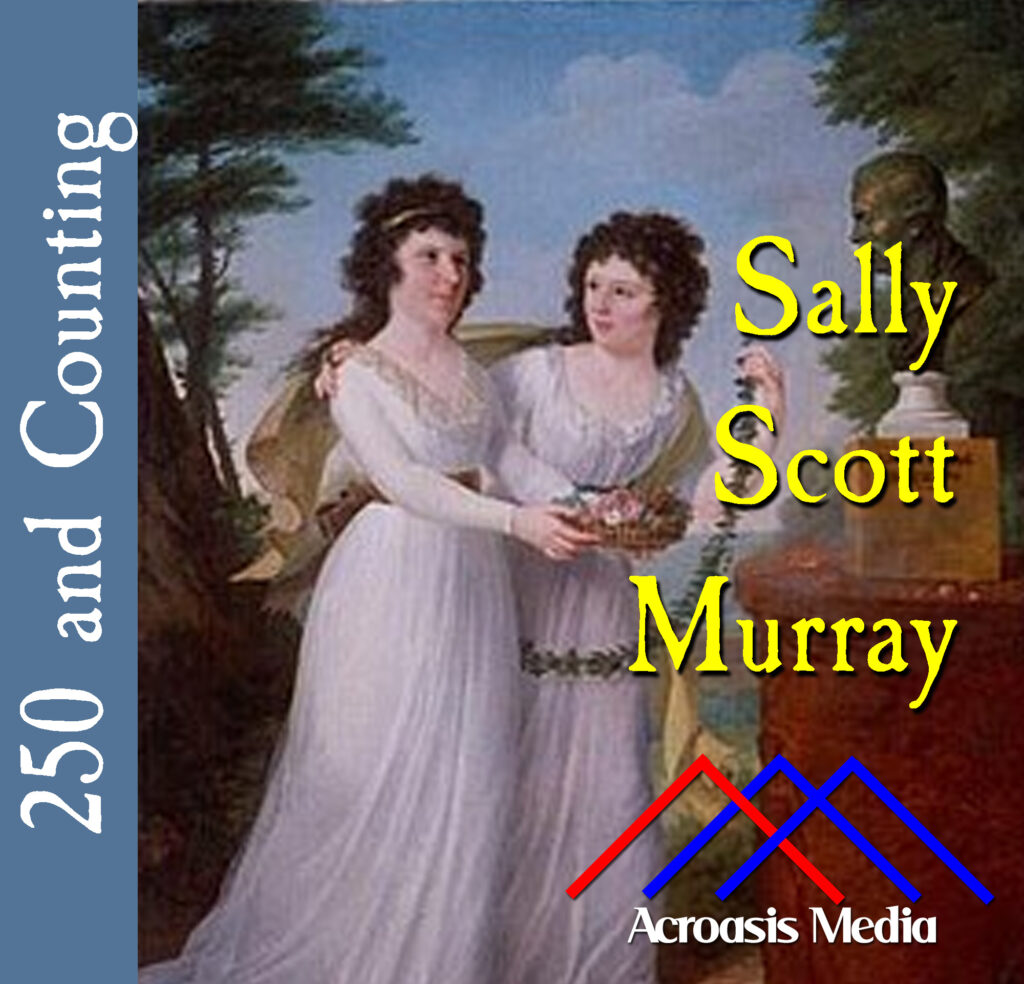
    Cover art for October 30, 1775: Portrait of Sally Scott Murray (left) and her sister Anna Maria Murray.

    Sally Scott Murray was a political wife for the better part of her adult life, given all the different elected offices that her husband Edward Lloyd the 5th held. There were a few years immediately after their marriage when id didn’t hold elected office, and he predeceased her by about twenty years, but in between, Edward’s resume is all over the Maryland State Archives.

    And, of course, there’s a Lloyd Street in Baltimore. Just around the corner on Lombard Street is one of the best places ever to get a corned beef sandwich; a Jewish deli by the name of Attman’s. Stop in and tell them I said Hi. They won’t know what you’re talking about, but we can use the publicity.

  • July 21, 1775: Isaac McKim

    Cover art for July 21, 1775: The McKim School, now a community center in eastern Baltimore. This is a public domain photo (via Wikipedia), and while it looks a little dreary here, it's actually quite nice.

    We know: when an episode is a biography, we typically use a portrait of the person born on this day 250 years ago.

    But this time around is special: the artwork on today’s episode is a building that was erected by the subject of the episode. The McKim Free School is now the McKim Community Center, and it’s just around the corner from McKim Park. In fact, between the time recording this episode and writing this, I learned that the McKim Center was a stop on the Underground Railroad, and while the neighborhood itself is officially called Jonestown, the residents refer to themselves as the McKim Community Association.

  • June 29, 1775: Thomas Boyle, Privateer

    Cover art for June 29, 1775: Picture of Thomas Boyle, source unknown

    Thomas Boyle wasn’t born in Baltimore, Maryland, but when he was a young man he made it his home and became quite successful there, as a merchant marine and an overall businessman.

    And, of course, given Baltimore’s penchant for naming streets after historic people and events, there is a Boyle Street. It’s not very long; in fact you see the entire road in the photo below.

    In this picture the viewer is standing on Fort Avenue looking down toward Key Highway. The green structure in the background is the Baltimore Museum of Industry, and the Inner Harbor is just beyond that. Based on my research, Boyle didn’t live near this location; he’d settled in a part of town called Fell’s Point, which is on the other side of the harbor and about a mile to the east. If a person standing where the camera was for this photo turned to the right, they could probably see the entrance to Fort McHenry.

  • May 19, 1775: From Sam Adams to Samuel Purviance

    Cover art for May 25, 1775: Portrait of Samuel Adams by John Singleton Copney. Adams is probably wondering why everyone is offering him a beer these days.

    Baltimore has a lot of historic pride in its street names. Nearly all of them can be traced back to an historic figure or event: Key Highway, named after Francis Scott Key. (Also the Key Bridge, but we’re all still sad about that.) Fort Avenue, leading to Fort McHenry. And while I’m at it, McHenry Street, about two miles from the fort. The town also has John Street, Eager Street and Howard Streets, all of them named after John Eager Howard. one of the earliest governors of the state.

    During the revolution, a prominent family in the city of Baltimore was the Purviance Family, led by brothers Robert and Samuel Purviance. They were both well-known for their activities to support the Colonists’ side during the Revolution. Where are they memorialized?…Listen in and find out.

    P.S. I do have theories about this but I’m hoping to explore those in a later episode.

  • April 27, 1775: Skullduggery and Rebellion Here & There

    Cover art for April 27, 1775: Robert Eden, by Florence Mackubin after Charles Willson Peale (1914)

    The war was hot in Massachusetts, but it was still cold elsewhere. But that didn’t mean that there wasn’t rebellious activity going on, since by this point everyone knew what was going on up north.

    It manifested itself in different ways. In Maryland, it appeared that Patriots were straight-up lying to the Royal Governor in order to deprive the British troops of some of their arms and gunpowder stores.

    And in North Carolina, the Royal Governor loudly declaimed his disdain for anyone who didn’t agree with him. Unfortunately for him, that included the entire North Carolina Assembly. Their response was to do exactly the opposite of everything he asked.

  • April 9, 1775: Something’s Happening…Maybe Not

    Cover art for April 9, 1775: Portrait of Ann Arrundell (original spelling of her name), artist and date unknown.

    In January of 1775 someone took the time to write a 1400-word account of a riot that took place in Annapolis, Maryland just a few days earlier. The pseudonymous author alleged that a shipload of tea was burned in the harbor as an alternative to destroying the tea and tar-and-feathering the ship’s owner.

    But word got back to the folks in Annapolis, of course, and they countered with a resolution involving a reprinting of that article, plus a refutation of the allegations made. The basic thrust? The guy made it all up, and whatever he didn’t make up still isn’t true; it just happens to be close to the truth.

    Who’s the woman in the cover art? Tune in and find out.