Category: Second Continental Congress

  • May 24, 1775: Congress Elects Its President

    Cover art for May 24, 1775: Portrait of John Hancock in 1770 (Crop) by By John Singleton Copley - Massachusetts Historical Society, Public Domain, via Wikimedia Commons,

    Even though he was President of the Second Continental Congress when the Declaration of Independence was signed in 1776 (whoops…spoiler alert), it’s entirely possible that John Hancock would be just one more guy who signed the document, except for the fact that he signed his name so large.

    His signature is so large and so well-known that you can say to someone “Give me your John Hancock” and they know exactly what you mean.

    Sure, we know John Adams and Thomas Jefferson, because they became presidents of the US, and Ben Franklin was already a living legend. But how many others can you name?

    See what we mean? Even if you’re a fan of 1776, you might only come up with a couple of others, and you’d still be trying to work out the name of the guy from the south with the white outfit on. And Richard Henry Lee doesn’t count because he didn’t sign the thing.

    It’s just some late-night thinking on my part.

    Addendum: for the next few nights I’m not in my usual recording space, so apologies in advance if you pick up some stray background noises.

  • May 15, 1775: The Continental Congress Toughens Up

    Cover Art for May 15, 1775 Official Presidential Portrait of John Adams, by John Trumbull, ca. 1792 (via WIkimedia Commons)

    The Second Continental Congress has only been convened for about five days and things are already heating up for them.

    Delegates are still arriving. Lexington and Concord has upset their original plans so they’re making alternate plans. And even the alternate plans they made five days ago are being amended.

    And then Virginia comes in with some crazy idea about Independence? Will the madness never end?

    (Spoiler alert: it doesn’t, but we’ll tell you if it ever does.)

  • May 13, 1775: Lyman Hall Joins the Continental Congress

    Cover art for May 13, 1775: portrait of Lyman Hall, created ca. 1871

    Dr. Lyman Hall gets a little name recognition because he was a strong supporting character in the play/film 1776, but he was more involved in the Revolution than that.

    While Georgia (eventually) sent five delegates to the Continental Congress, Hall was one of the three who regularly attended and signed the Declaration of Independence.

    For instance, he ensured that food and medicine got to Colonial soldiers, and it was he who convinced the Georgia congress to send official delegates to the Second Continental Congress, himself among them.

    He also became the state’s first Governor and spent that single year establishing the state university.

  • May 11, 1775: The Second Continental Congress Gets to Business

    Cover art for May 11, 1775: The Second Continental Congress in July 1775. Unknown artist, printed by Currier & Ives in 1876.

    When the Second Continental Congress convened, they spent a little time with the formalities of going over credentials and establishing some ground rules. But right after that, they got right down to business. They knew that they were going to move into a wartime footing immediately. They also knew that they wanted to operate in an “official” capacity, so they took the time to review, on the record, the events leading up to and including the battle at Lexington and Concord.

    They then adjourned until the next day, but tabled discussion of the state of America to the following Monday. (May 11 was a Thursday, so this wasn’t terribly out of line.)

  • March 27, 1775: Thomas Jefferson Gets an Important Appointment

    Cover art for March 27, 1775: Portrait of Thomas Jefferson, 1791, by Charles Willson Peale.

    We hate to say it, but Thomas Jefferson was kind of a nepo baby.

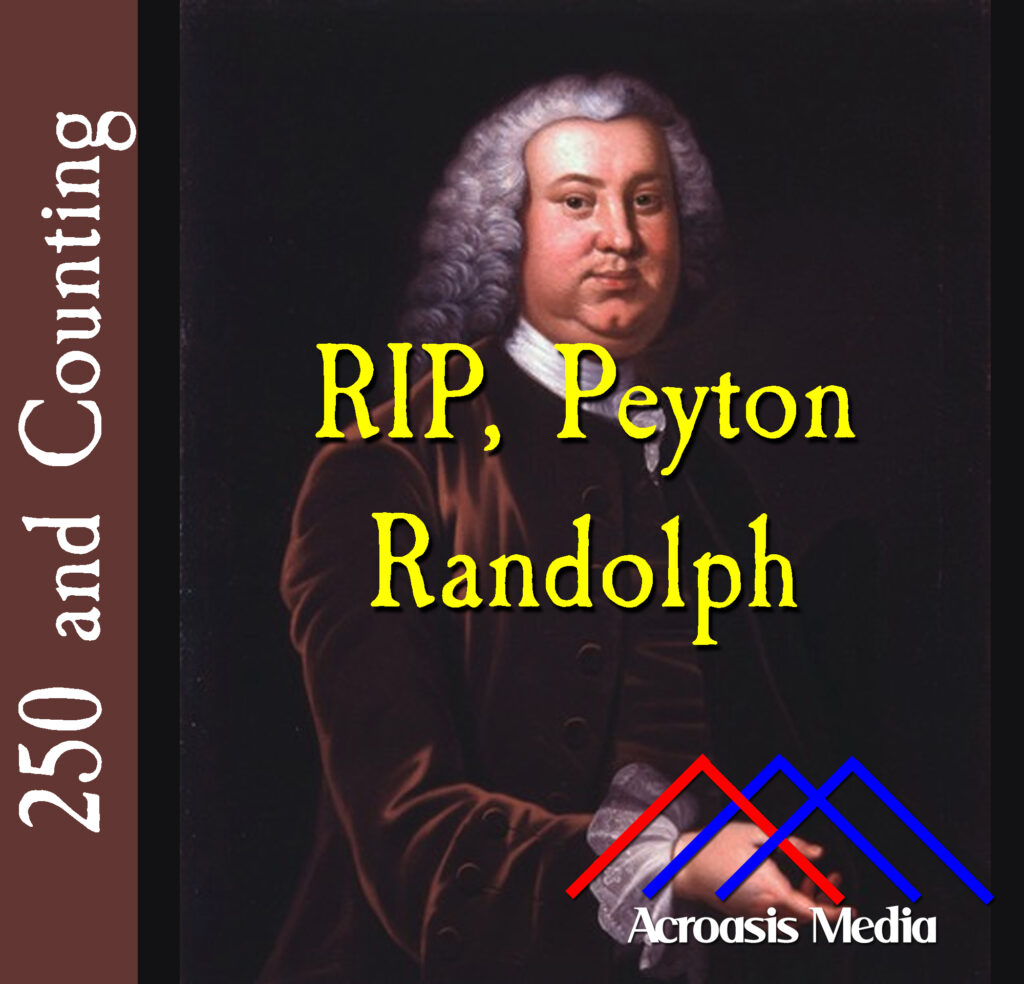
    Jefferson was part of the Second Virginia Convention, and no doubt he got there honestly, as a man who had lots of property and was well-regarded, even at the tender age of 32. But when Peyton Randolph needed someone to replace him in the Second Continental Congress, he called on Jefferson—who was his cousin.

    On the positive side, Jefferson acquitted himself well in both the Virginia House of Burgesses, where he represented Albemarle County, and simultaneously at the Second Continental Congress. So while he probably didn’t need the familial boost, it surely didn’t hurt.