Category: Second Continental Congress

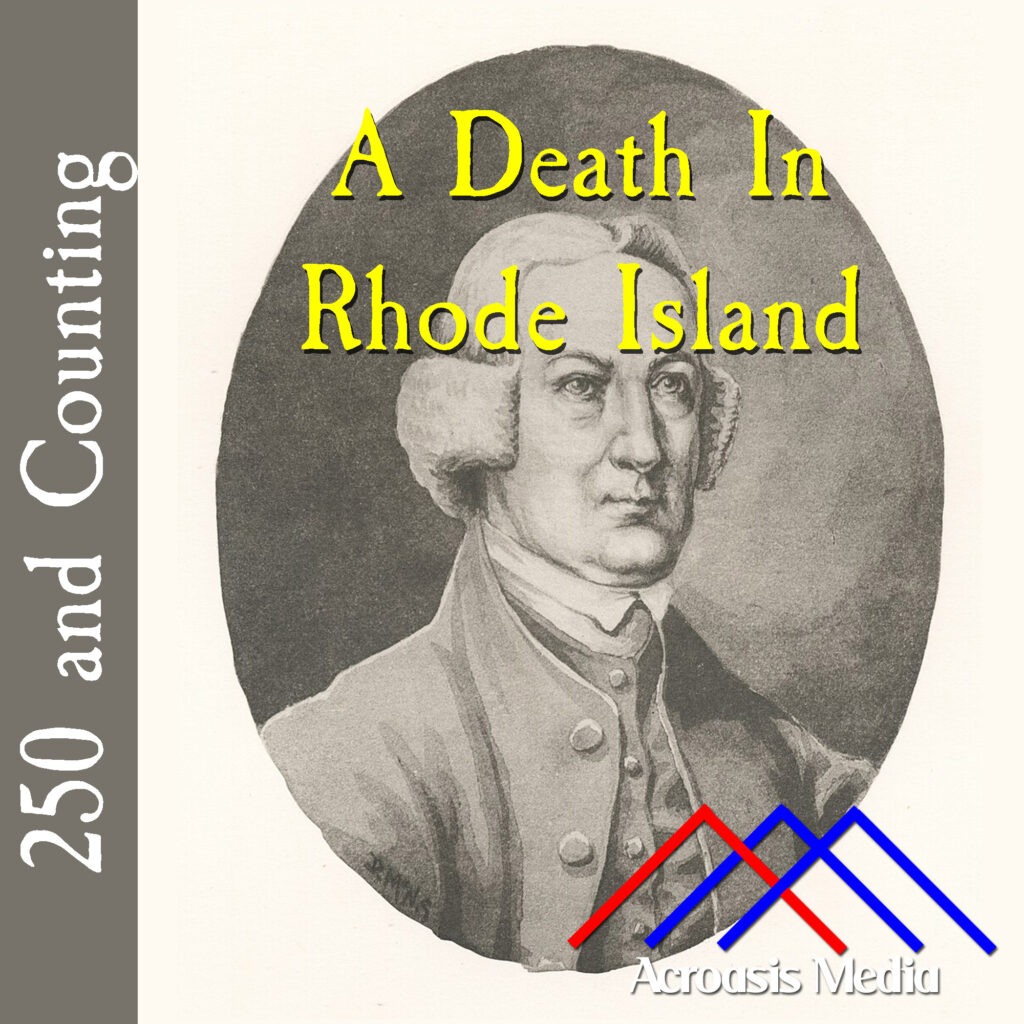
  • July 24, 1775: A Leaked Letter From Someone Who Knows Better

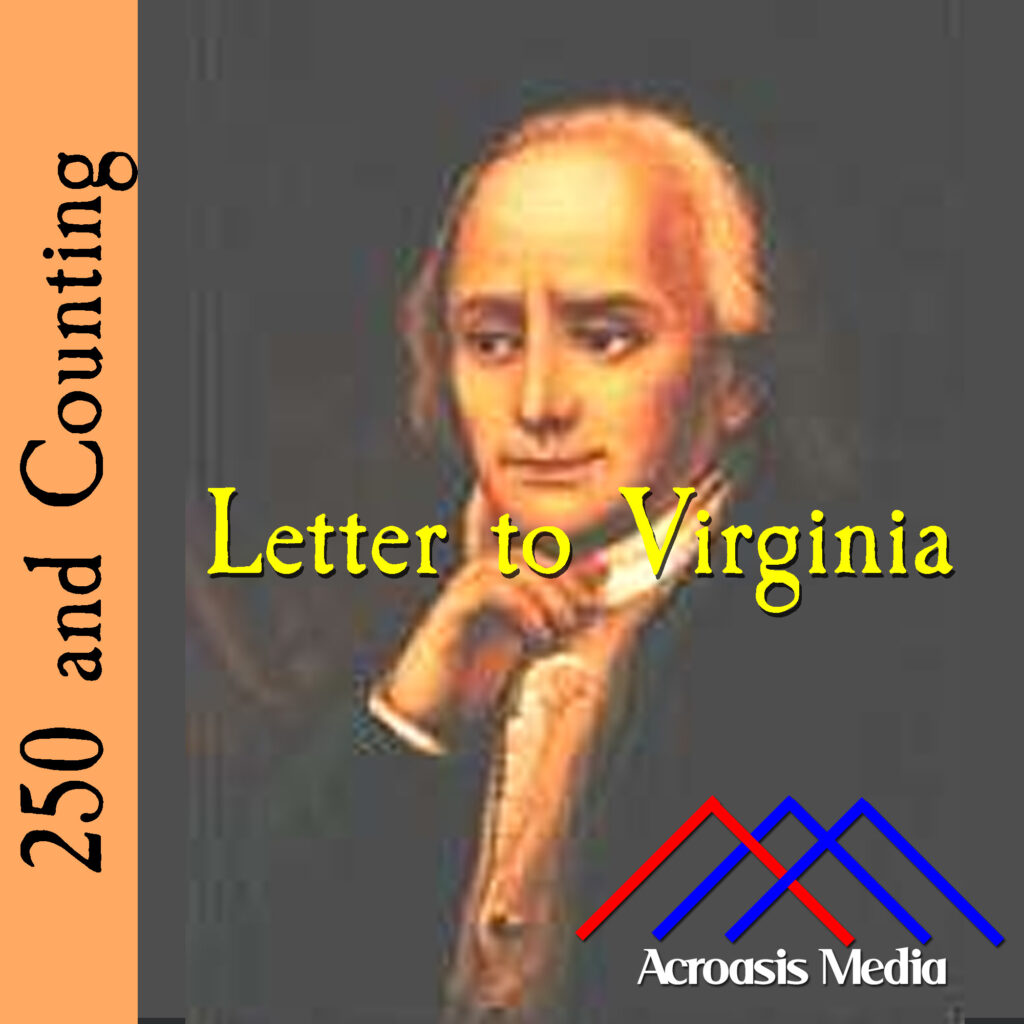
    Cover art for July 24, 1775: Engraving of John Dickinson, approximately mid-1770s, from the New York Public Library Digital Collection.

    Even when it’s Mike’s voice you hear on the episode, it’s Claude who takes the blame for the episode titles.

    It wasn’t a bad thing for members of the Continental Congress to disagree, but some level of decorum was still expected from those members. And almost certainly, one of the commandments was Thou Shalt Not Trash Talk Thy Fellow Delegate. (I may have softened the language a little bit, there.)

    Still, Adams had a right to express whatever frustration he had with John Dickinson, unfortunately the letter in which he did it got intercepted by the British and publicly published; the mere suggestion that there was some dissention among the ranks of a group that typically presented its work as a united front was certainly a Big Deal.

    And it certainly didn’t grease the skids between Adams and Dickinson, nor was that rift ever truly healed.

  • July 23, 1775: John Adams Has Opinions

    Cover art for July 23, 1775: Portrait of John Adams by Mather Brown, 1788.

    John Adams wrote to his wife twice on this day in 1775. What did you do for your spouse that was such a big deal?

    In these letters, the sparks don’t fly the way they do in many others, but the affection he feels for her is still present nonetheless. That he took the time to write a second, more thoughtful letter after dashing off the first one is a nice measure of his esteem for her, and his ability to use her as a sounding board, even when she’s 300 miles and several days’ travel apart.

  • July 20, 1775: A Tradition Begins

    Cover art for July 20, 1775: a copy of the original broadside proclaiming the day of fasting, humiliation and prayer.

    As long as we’ve had a Constitution, the United States has had a nominal separation between church and state. What that means is that Congress isn’t able to establish a state-sanctioned religion.

    For longer than we’ve had a Constitution, Congress has proclaimed days of prayer of some kind or another.

    For a long time, these days were announced not as a National Day of Prayer (the current nomenclature), but rather as “a day of fasting, prayer and humiliation.” Now, this isn’t the old Christian kind of humiliation in which haircoats are worn, or self-flagellation is necessary. In this context, “humiliation” refers to self-reflection and expression of sorrow or remorse before God.

    In 1988 televangelist Jimmy Swaggert (who died just a couple of weeks ago) was caught with a prostitute. When he cried on television and gave his “I have sinned” speech, he was humiliating himself before God. Even if he hadn’t done it in front of an audience, it would still be an act of humiliation. Oddly enough, the national presbytery wasn’t buying it as genuine and stripped him of his credentials anyway. And they were right, considering that he was busted a second time with a prostitute a few years later.

    Anyway.

    “Fasting” and “prayer” retain their meanings to this day, so explanations probably aren’t necessary here. It’s worth noting, however, that fasting is meant to have a spiritual purpose and again, can show some level of humility.

  • July 15, 1775: Breakin’ the Law With Impunity

    Cover art for July 15, 1775: Portrait of Silas Deane by William Johnston, 1766.

    If you’re going to be in rebellion, you may as well do something rebellious.

    Thus was (presumably) the reasoning behind Ben Franklin putting forth a resolution that the Colonies would effectively ignore a ban on the importation of weapons and gunpowder to the Colonies.

    And while we’ve mentioned numerous times that the Congress doesn’t seem to do a lot more than form various Committees, again we need to stress that these were serious men, who gave serious thought to whatever they presented to the larger group, because they knew that any votes had to be unanimous. They took the job with great gravity, and in fact worked long hours. And in Philadelphia in the summer time…that is no joke, my friend. I mentioned it in a Baltimore context during the show, but remember that these cities aren’t very far apart, and thus have similar climates.

  • July 13, 1775: Speech to the Six Nations

    Cover art for July 13, 1775: Line drawing of the approximate locations of the Upstate New York Tribes in the 1700s.

    The Speech to the Six Nations is one of those documents that pretty much answers what was going on with the Native Americans during the Revolution. Athough to be fair, it largely addresses what happened with the Native Americans in Upstate New York. But that area, being a border with Canada, was pretty important to the Independence cause.

    Part of the reason that the tribes took the document seriously is that each tribe received a series of belts which represented our intent and desire for peace. The belts themselves were reportedly larger than usual for such a task, in the hopes that the tribe leaders would understand the gravity of the situation.

  • July 6, 1775: The Declaration Before The Declaration

    Cover art for July 6, 1775: Detail of a broadside published in Portsmouth, NH relating the Declaration adopted on this date. (from Library of Congress digital collection)

    Note: I realized belatedly that the episode that dropped yesterday was titled July 7, as was the audio file itself, but if you’ve listened, you know that it was in fact the July 5 file and what we’ve got here are a couple of typos that have mostly been fixed. My apologies for the error and thanks for your forbearance.

    While the Olive Branch Petition was a step toward reconciliation, and the Declaration that Congress adopted today was meant to be in the same vein, in fact it had the opposite effect. Even though the Olive Branch Petition arrived late, the fact that this one, outlining why we’re willing to go to war, effectively cancelled out the other one. Not that it mattered anyway, since King George III declared the Colonies to be in rebellion before he ever saw either one. Plus, much of Parliament was in the mood to squash the Colonies as flat as possible.

  • July 5, 1775: The Olive Branch Petition

    When the Second Continental Congress convened in May, there was a large faction of delegates who thought that peace with England was still possible, and made a specific effort to draft a message of reconciliation with King George III.

    They finished their document and presented it to the whole body of Congress on this day in 1775, which approved it and it was subsequently prepared and sent to Great Britain. In a few weeks we’ll talk a little bit about what happened at the other end.

    Note: I realize that the file reads “July 7,” as did the headline on this post originally. That was a typo that got carried over from one to the other via copy and paste. This was in fact the July 5 file and apologies for any confusion.

  • June 30, 1775: Army Regulations Take Shape

    Cover art for June 30, 1775: Recruiting poster for the new Continental Army.

    With the army being literally only a few weeks old, it was necessary to put together some regulations for this group, to ensure consistency throughout the Colonies.

    Interestingly enough, as the rules were revised over the next several years, a pattern of using another army’s regulations as a template began to emerge. This isn’t necessarily a bad thing: take what works and build on it, yes?

    A quick note about the cover art: it’s a recruitment poster from about that time, because a true Army Manual did not emerge until the third version was published in 1779.

  • June 28, 1775: A Day of Paperwork

    Cover art for June 28, 1775: Portrait of Jonathan Trumbull by Harry Ives Thompson. Painted in 1880, long after Trumbull's death but it appears that Thompson was trying to re-create Trumbull's appearance at the time of the Revolution.

    It feels like we’re selling the day a little short, but not every day has to be Bunker Hill. Also, we’re discovering (and we hope you are, too) that sometimes it’s the smaller moments between the bigger ones that give us better insight into the hearts and minds of the people who lived during that time.

    Cover art for April 28, 1775: portrait of Governor Jonathan Trumbull, artist unknown.

    Today’s artwork is a portrait of Jonathan Trumbull (brother of John Trumbull, the guy who painted so many of the Founding Fathers), but this painting—which was created in 1880, long after he died—appears to show him as he was around the time of the Revolution. Compare that to the image we used for him back in April (right), which showed him in his later years as Governor of Connecticut.

  • June 24, 1775: The Committee of Seven

    Cover art for June 24, 1775: Portrait of Roger Sherman by Roger Earl, 1768.

    With the war in full swing and a Commander-in-Chief on his way to Boston, the Continental Congress took the next step of finding a way to organize the troops.

    So naturally they formed a committee. The Committee of Seven (maybe all the good names were taken?) worked diligently for about three weeks to put together a plan that would indicate just who could fight and how they would be organized. There were still some details to iron out, but in the meantime the disaggregated militias were getting the job done. All that remained was to aggregate them into a single fighting force.