Category: Second Continental Congress

  • Board of War and Ordnance–June 21, 1776

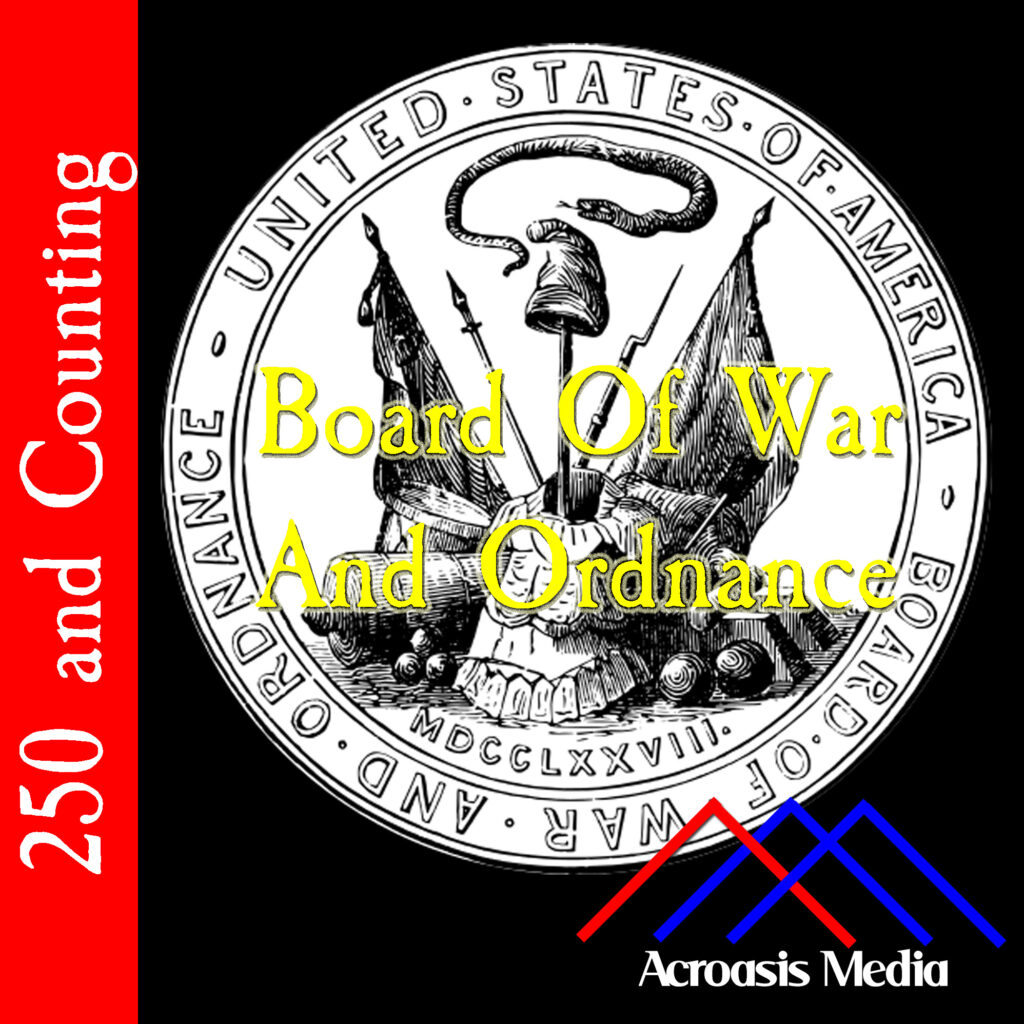
    Cover art for June 21, 1776: Seal of the United States Board of War and Ordnance, created in 1778. It was used by the U.S. War Department until 1880.

    We’ve spent a bunch of episodes describing a day in the life of the Second Continental Congress, and many of them were almost exclusively dealing with military matters.

    In January 1776 George Washington recommended that the Congress designate a specific office for these dealings, and Edward Rutledge picked up the idea and suggested it to the Congress. It took a little time, but the Congress ultimately agreed and set up a Board of War and Ordnance, which began operating on this day in 1776.

    The original Board of War and Ordnance was five delegates to the Congress, plus a secretary who wasn’t a delegate. After only a few months they recognized that they couldn’t do their jobs as delegates and keep up with the War workload, so they had themselves replaced with a permanent Board.

    The Board operated until the war ended, after which it was dissolved, but the logo (see cover art) persisted in the War Department until 1880. Incidentally, note the Phrygian Cap in the artwork. We haven’t talked about that in a while, but in those days the Cap was a universally-recognized symbol of freedom dating back to ancient Rome, when it was given to former slaves. In the Revolutionary Era, it specifically symbolized freedom from British tyranny.

  • The First Draft–June 18, 1776

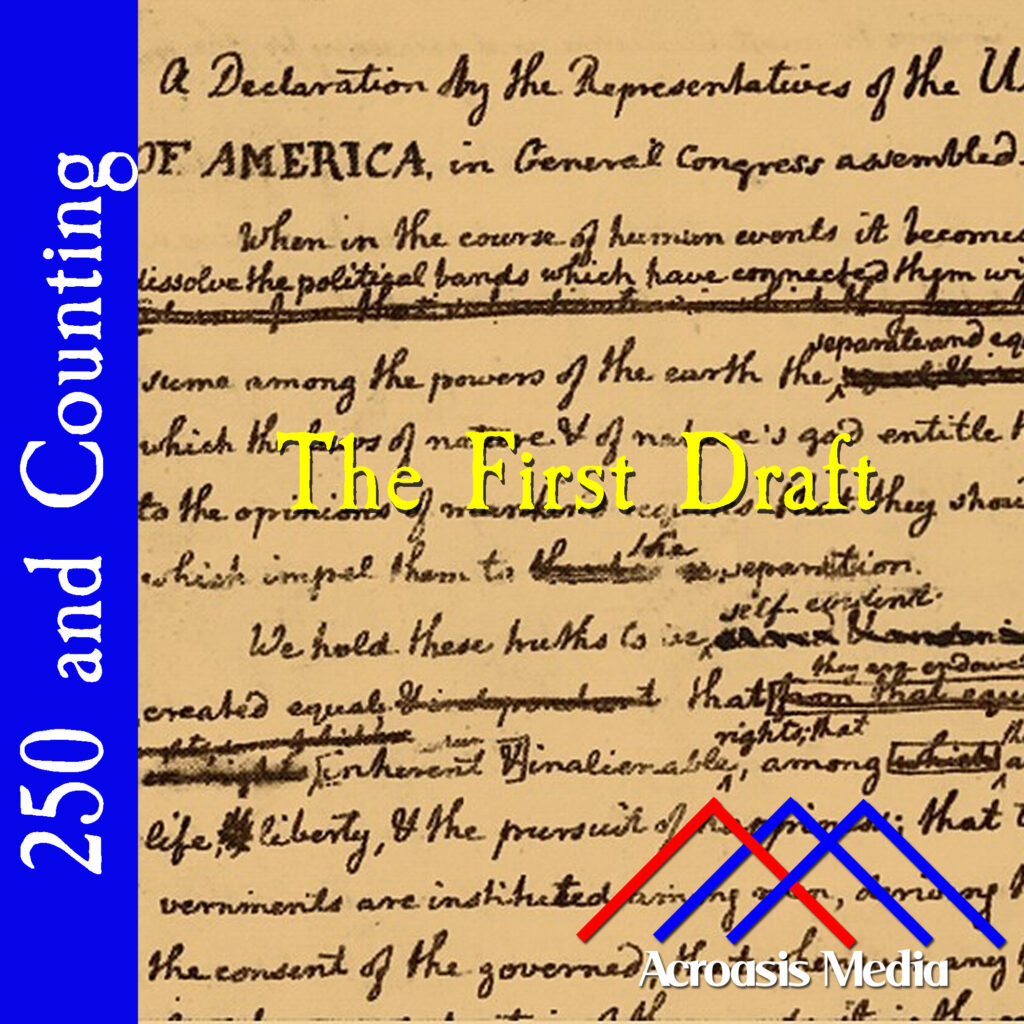
    Cover art for June 18, 1776: Detail of the original first draft of the Declaration, in Thomas Jefferson's handwriting. The finished engrossed version (what you're used to seeing) has Timothy Matlack's handwriting.

    As Mike notes, marking today as the day that the first draft of the Declaration of Independence was presented to Congress is largely a matter of interpoloation on the part of historians working from incomplete information. But who are we to argue?

    The writing you see in today’s cover art is, in fact, Thomas Jefferson’s, mostly. Some of it is corrections made by Benjamin Franklin. It’s also worth noting that this image came from Wikimedia Commons and is color-adjusted. The original image has the paper looking much whiter, but the parchment coloring makes for a little bit better contrast against the ink.

    Incidentally, some documents from this era do look very good still while others are quite faded. The original Declaration of Independence, for example, is rather faded. This is because over time, the ink oxidized from black to a brownish color. In addition, it was displayed under relatively bright light for many years, and the ultraviolet radiation from those lights further faded the ink. The specific paper can also have an effect; some documents are written on a kind of cotton rag, which allows the ink to “bleed” over time and start to look rather smeared, whereas other documents written on vellum (which was basically calfskin) hold their shape better. In both cases the color holds better unless UV gets to it.

    Oddly enough, paper from the 19th through mid-20th centuries made use of wood pulp, which turns color and becomes more brittle over time, and is more acidic, which will damage the ink as well. So it’s possible that there could be a “hole” in our historical records unless steps are taken to preserve, or at least digitize, some of them.

  • Delaware, The First State–June 15, 1776

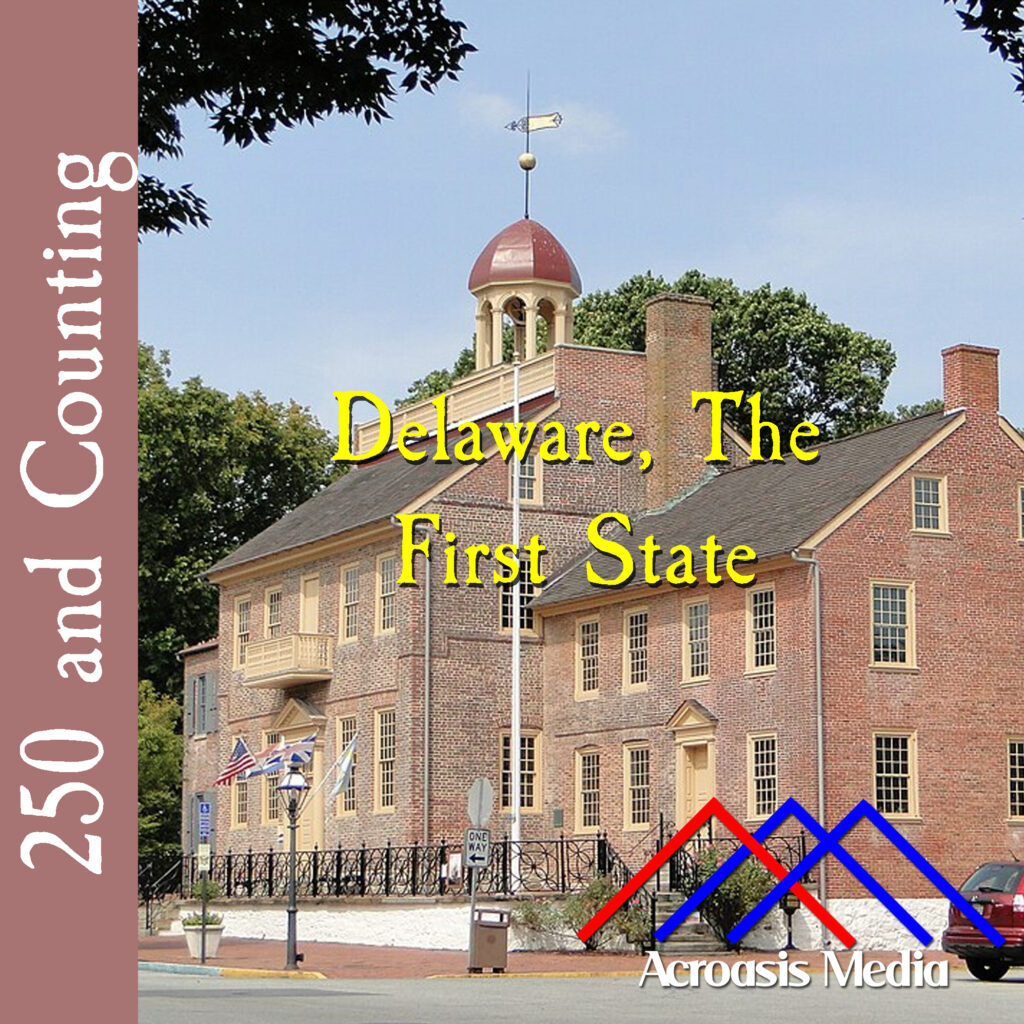
    Cover art for June 15, 1776: 2012 photo of the New Castle County Court House, where the original Separation Day events took place. Photo by Wikipedia user Pknelson.

    Separation Day is a genuine holiday in Delaware, during which the day is marked with parades and historical reenactments, though of course they (like the rest of the world) took a couple of years off because we had that little global pandemic thing.

    And like most good niche holidays, there’s a small faction of people who call themselves “Unificationists,” most of whom can trace their roots back to the Finns, Swedes and Quakers who settled in the region before 1776. Their message is that Delaware, as a whole, oversells the Separation Day thing. They also like to hold demonstrations advocating for a “Reunification Day”, which would mark a re-joining with Pennsylvania. Those folks are acting facetiously.

    Mostly.

    What do Pennsylvanians think about Separation Day? Most of them don’t care, since most of Pennsylvania didn’t exist until later on. Also, most of them had no idea that Delaware was once part of Pennsylvania. And the ones who do care, usually cite family or cultural connections that cross the border. (It just occurred to me that this also puts a little more credence into former President Biden’s claim of a kind of dual citizenship.)

    At any rate, it’s more of an observance day than anything else. Nobody’s getting a paid day off for it. I’m not even sure whether the local Hallmark store offers “Happy Separation Day” cards to send to friends and family. (Or is it “Merry Separation Day”? I can never keep it straight.)

  • Connecticut Goes Fourth–June 14, 1776

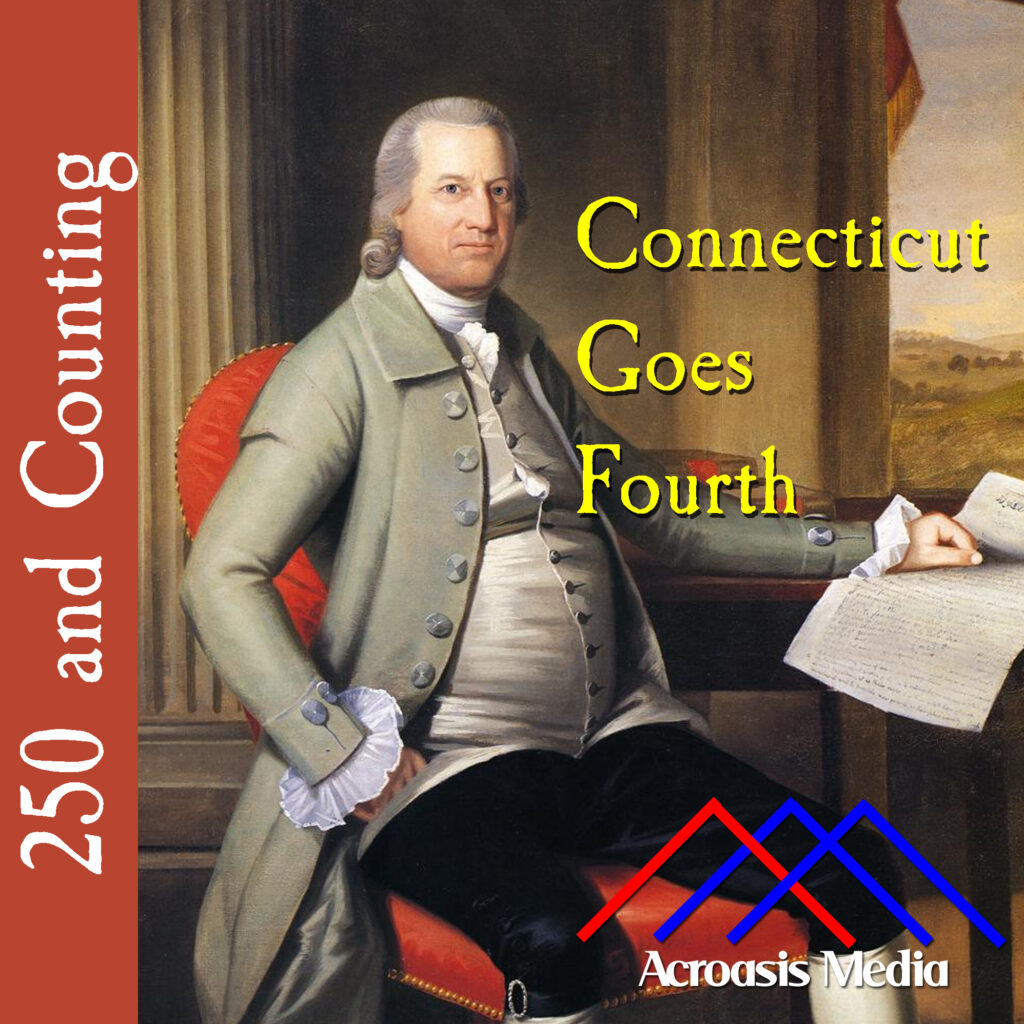
    Cover art for June 14, 1776: a 1789 portrait of Connecticut Founding Father Oliver Wolcott by the American painter Ralph Earl, oil on canvas. via Wikimedia Commons.

    It’s not a misspelling; it’s a pun—oh, forget it.

    Connecticut had already been fighting the war for independence since Bunker Hill, but that’s not the same thing as separating politically from Great Britain. In retrospect, we made it look relatively easy, but once again, remember: something like this hadn’t been done before, and sending instructions to their delegates to vote in favor of Independence was literally directing them to commit an act of treason. So let’s give the individual colonies a little bit of grace, here.

    Now, New York is going to bump into a different kind of trouble, but we’ll talk about that in a few days.

    (It was a little bit funny though, right?)

  • The Declaration Begins–June 11, 1776

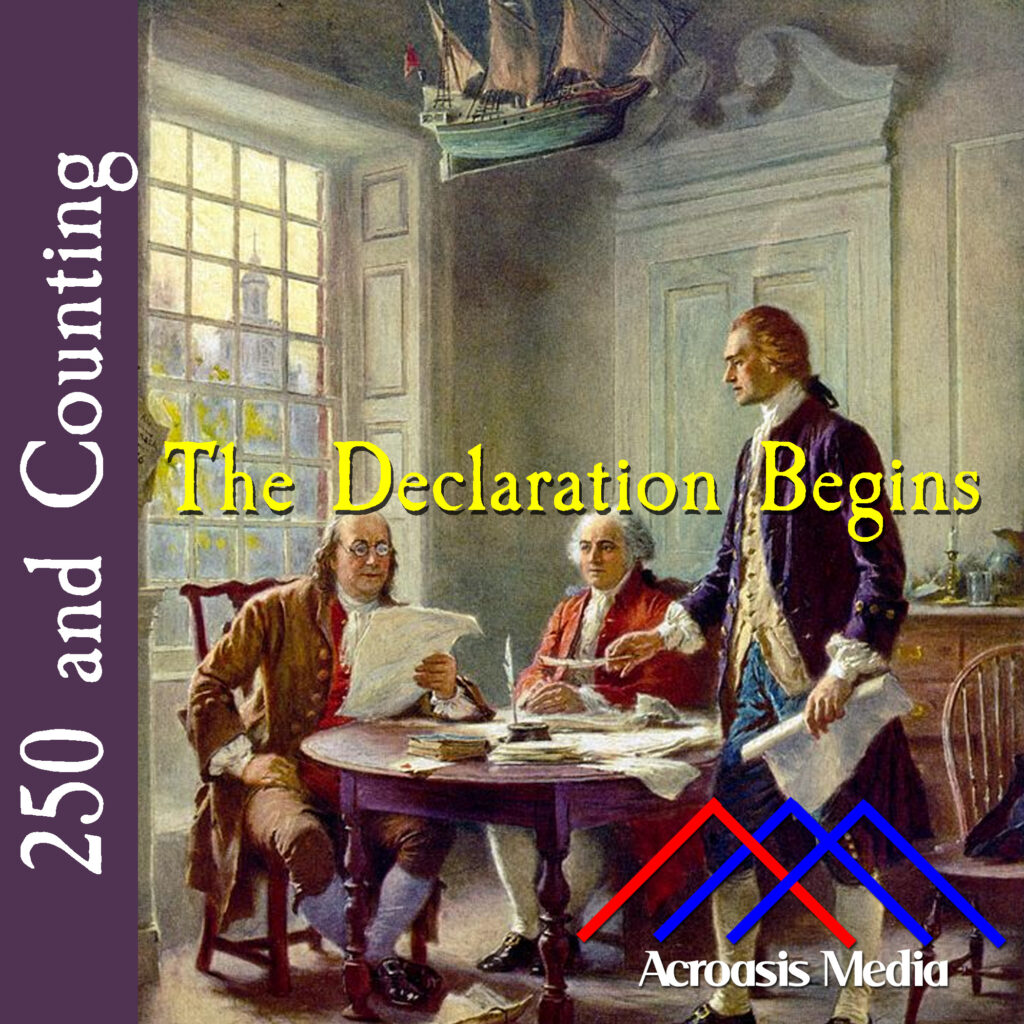
    Cover art for June 11, 1776: "Writing the Declaration of Independence 1776" by Jean Leon Gerome Ferris, 1900. via Wikimedia Commons.

    After temporarily tabling the Lee Resolution, which called for our independence from Great Britain, the Second Continental Congress identified its Declaration Committee. Five men were chosen to articulate why we were asking King George to go screw himself in the politest possible terms.

    While the Committee involved five men—John Adams, Benjamin Franklin, Thomas Jefferson, Roger Sherman and Robert Livingston—most of the work fell to three of them: Jefferson, Adams and Franklin. Jefferson spent a few days working on the first draft in isolation, then Adams and Franklin began reviewing and revising his work.

    The Declaration Committee worked steadily for over two weeks before presenting their finished product to the Congress, though John Hancock did get to see an earlier draft.

  • Who Wants To Write A Declaration?–June 10, 1776

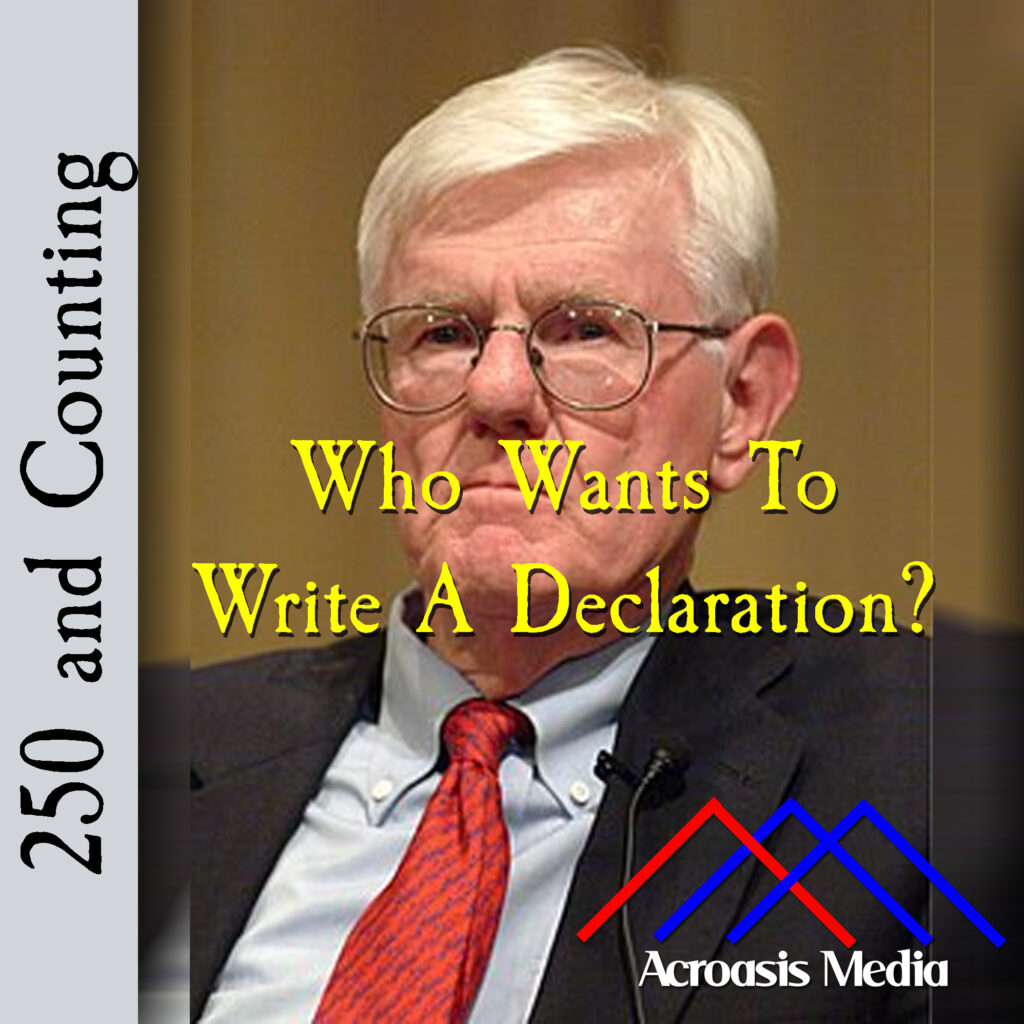
    Cover art for June 10, 1776: photo of Gordon S. Wood (1933-2026) in 2008. Photo by Earl McDonald, NARA.

    With the Lee Resolution on hold for the time being, but still a very real thing, the Continental Congress needed to get organized with regard to how this was going to be presented and effected. As we told you a few days ago, some delegates needed hard instructions. Others needed a little more clarity regarding the structure. Still others determined that a formal declaration was necessary.

    Why? You have to remember, this kind of thing had never been done before. And even though some other nations saw what was going on and were sympathetic in some way, it was still necessary for us to lay out the argument, and in such a way that the entire world could look at it and say “Well yeah, that makes sense.”

    (Maybe not in so many words; they probably said archaic stuff like “ye” or something, but you get the idea. Also: catch me on a slow show notes day and I’ll dive into the whole “ye” thing.)

    Now, you may be wondering why Lee’s proposal was presented on the 7th and only on the 10th did they decide that a Declaration Committee was necessary? I have two reasons off the top of my head. First, June 7th, 1776 was a Friday, and while they did do some business on Saturday, the whole thing needed greater consideration so it was probably tabled to the 10th. Second, remember we’ve been telling you for many months that the Second Continental Congress was a very thoughtful, deliberate body of men. They considered many, many things before making decisions, and it’s likely that they had to arrive at consensus regarding the need for a declaration at all. So in that respect it does make sense.

    And tomorrow, while one guy gets most of the credit, we’re going to meet all of the men responsible for the declaration.

  • The Question is Called–June 7, 1776

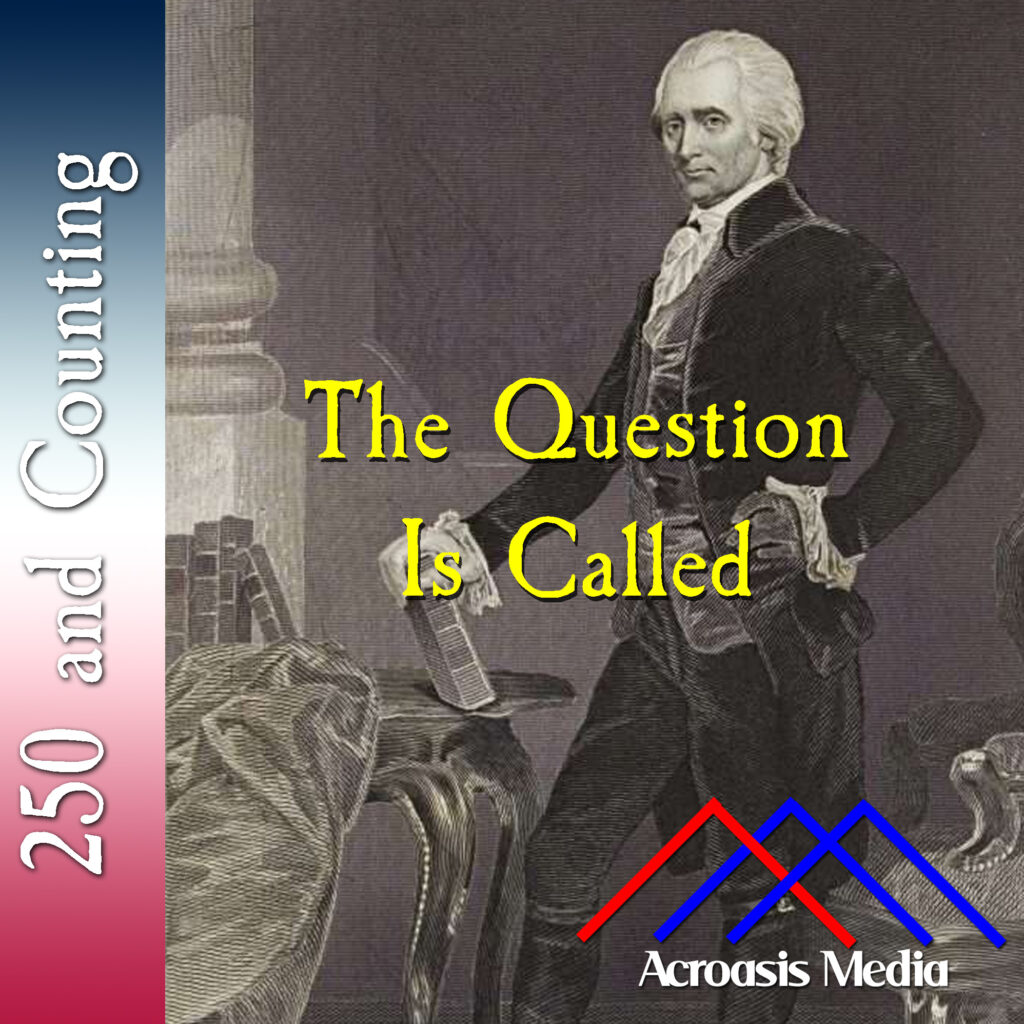
    Cover art for June 7, 1776: An 1861 steel engraving of Richard Henry Lee, based on an 1860 painting by Alonzo Chappel. Part of the Massachusetts Historical Society Online Collection.

    It was one of the last major steps before the Declaration, and it happened on this day. The Lee Resolution, as it came to be known, was named after Richard Henry Lee, delegate from Virginia, who was given instructions from his government to propose that the Colonies become designated as free and independent states.

    Now, because some of the delegates didn’t have specific instructions on the Lee Resolution, and because Congress had long ago decided that votes needed to be unanimous, the vote was postponed for three weeks to give everyone an opportunity to get instructions from home. It took 26 days rather than 21 to get everyone to the point of voting, with the exception of New York, which was under instructions not to vote at all, so they abstained from voting until mid-July, at which point they finally also cast their Yes vote because a new legislative body was in place.

  • Congress Does Some War Business–June 5, 1776

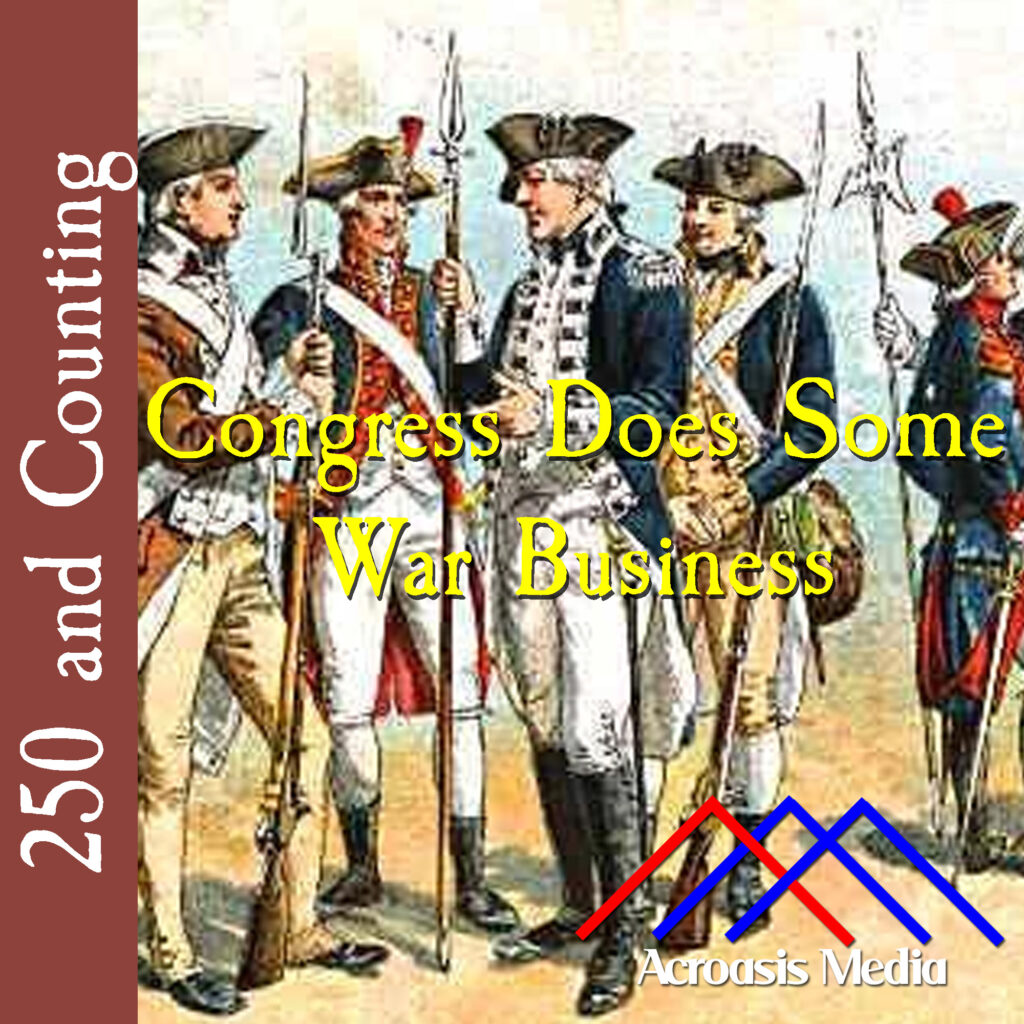
    Cover art for June 5, 1776: "American Uniforms, 1775-1783" by H.A. Ogden, 1889, as part of a larger series documenting the evolution of American uniforms.

    Using the input of George Washington from just a few days earlier, the Second Continental Congress wasted little time putting together some Continental Army protocols to ensure that this relatively ragtag group of men would adhere to some kind of formalized behavior.

    But the Continental Army protocols they worked on also helped to establish better pay for some personnel, or set up protocol ranks for some otherwise non-officer personnel.

    And, of course, getting everyone paid was important so they talked about that as well.

    And as we creep closer to a formal declaration announcing the break with Britain, more Congressional delegates are convinced that reconciliation was always on the table, at least until quite recently. Robert Morris wrote as much to Silas Deane of Connecticut, and likewise Oliver Wolcott wrote to Roger Newberry, a Connecticut military officer, that he was of the opinion that the army is undertaking a Mighty Cause, and that as far as he could tell, the people support it.

  • Congressional Mail–June 3, 1776

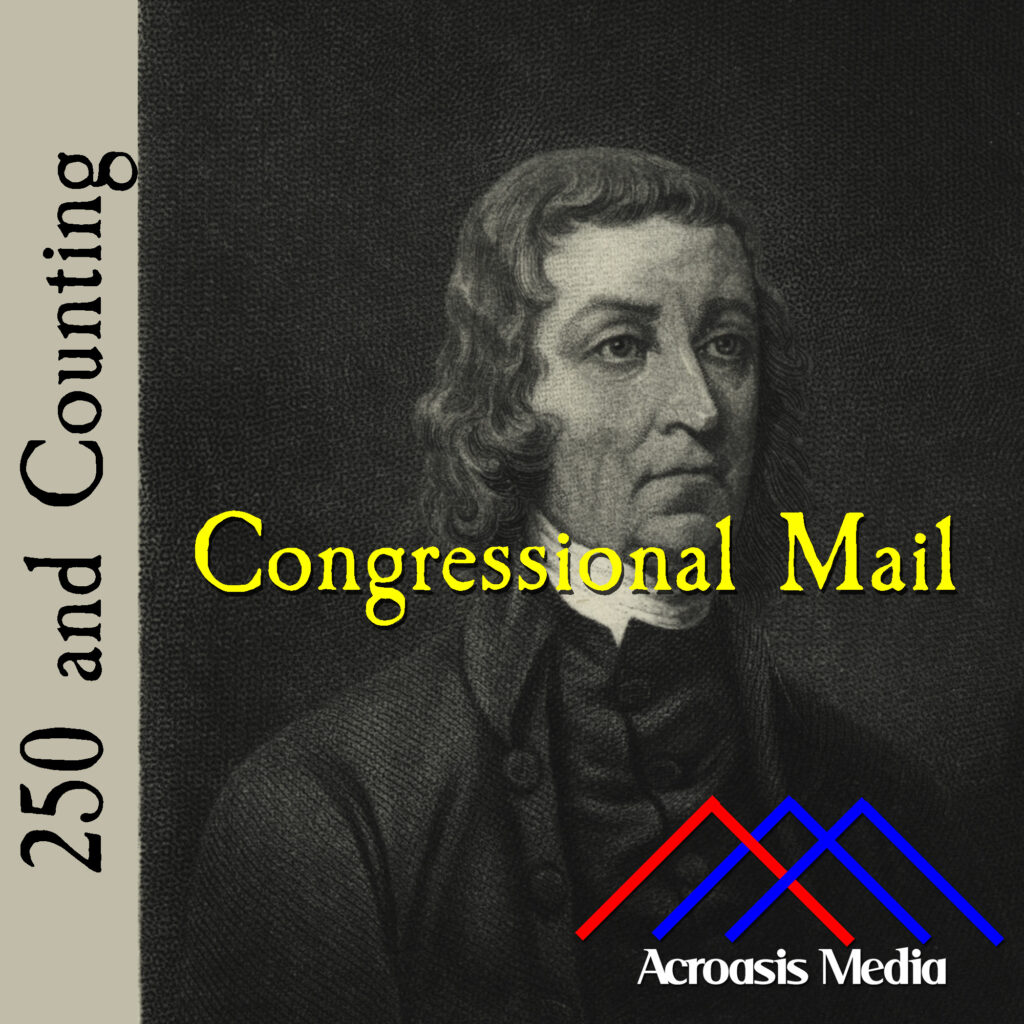
    Cover art for June 3, 1776: portrait of Josiah Bartlett. Painted by Edwin Tryon Billings, mezzotint, after a portrait by John Trumbull. The original by Trumbull hangs in the State House in Concord, New Hampshire

    Josiah Bartlett was, in fact, the inspiration for the presidential character who appears in the TV show The West Wing. The modern day president, Jed Bartlet only spelled his name with a single T at the end, but it was only around this time that the spelling of English words was starting to standardize, so Bartlett gets a pass.

    Bartlett, of course, was involved in the creation of the state constitution, and while he declined the position of US Senator in 1789 despite the vote, he accepted the position of Chief Executive in 1790. When New Hanpshire adopted a constitution and became a state, Bartlett’s title changed to Governor. In 1794 he resigned because of his health, and in 175 he died.

  • Back From Canada–May 30, 1776

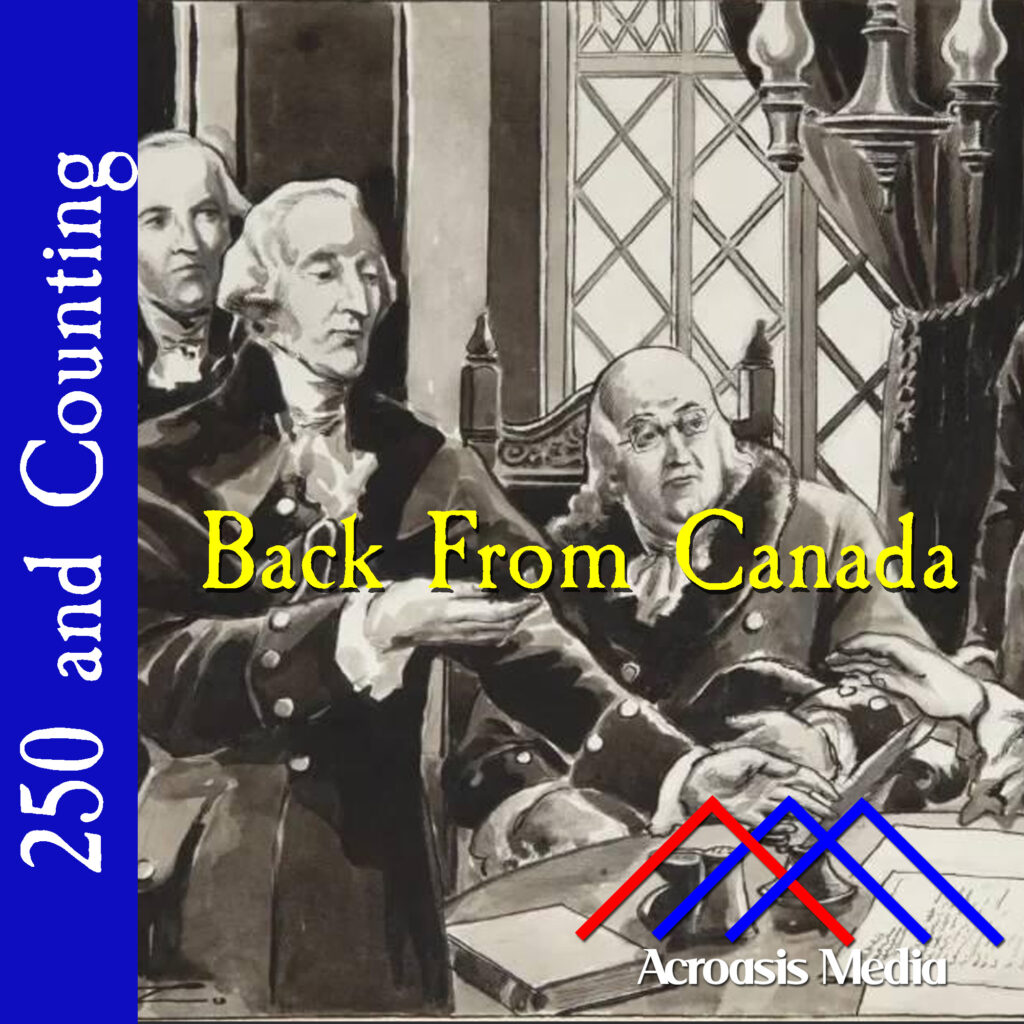
    Cover art for May 30, 1776: Detail of an oil sketch depicting Samuel Chase, Charles Carroll and Benjamin Franklin on their diplomatic mission to Canada. Father John Carroll's hand is entering from right. Created by J. Carroll Mansfield, probably for an exhibition called Cavalcade of Colonial Maryland, 1943.

    Ben Franklin in Canada isn’t completely unreasonable, even though he was already the oldest delegate to the Continental Congress at 70. He was America’s first diplomat and a very skilled one at that, with oodles of charm.

    But Franklin in Canada was also a bad idea, because his health was bad and it’s not like he could just shoot up the New York Thruway to get there. He had to head up the Hudson River through Albany and Saratoga, and then across Lake Champlain. And he had to do it in wartime, in hostile territory.

    For all that, however, Franklin’s failure in Canada eventually led to the Battle of Saratoga and in turn got the French on our side.

    So maybe it wasn’t such a crazy idea after all.