Coming up with a model treaty wasn’t John Adams’ idea, but it turned out to be a very good idea that he was responsible for implementing.
Once Adams had it in his head, he began to work on the model treaty along with the committee, and while it was intended to be used for commercial trade, it could be (and eventually was) adapted for soliciting military support in the form of weapons and other ordnance (rather than troops).
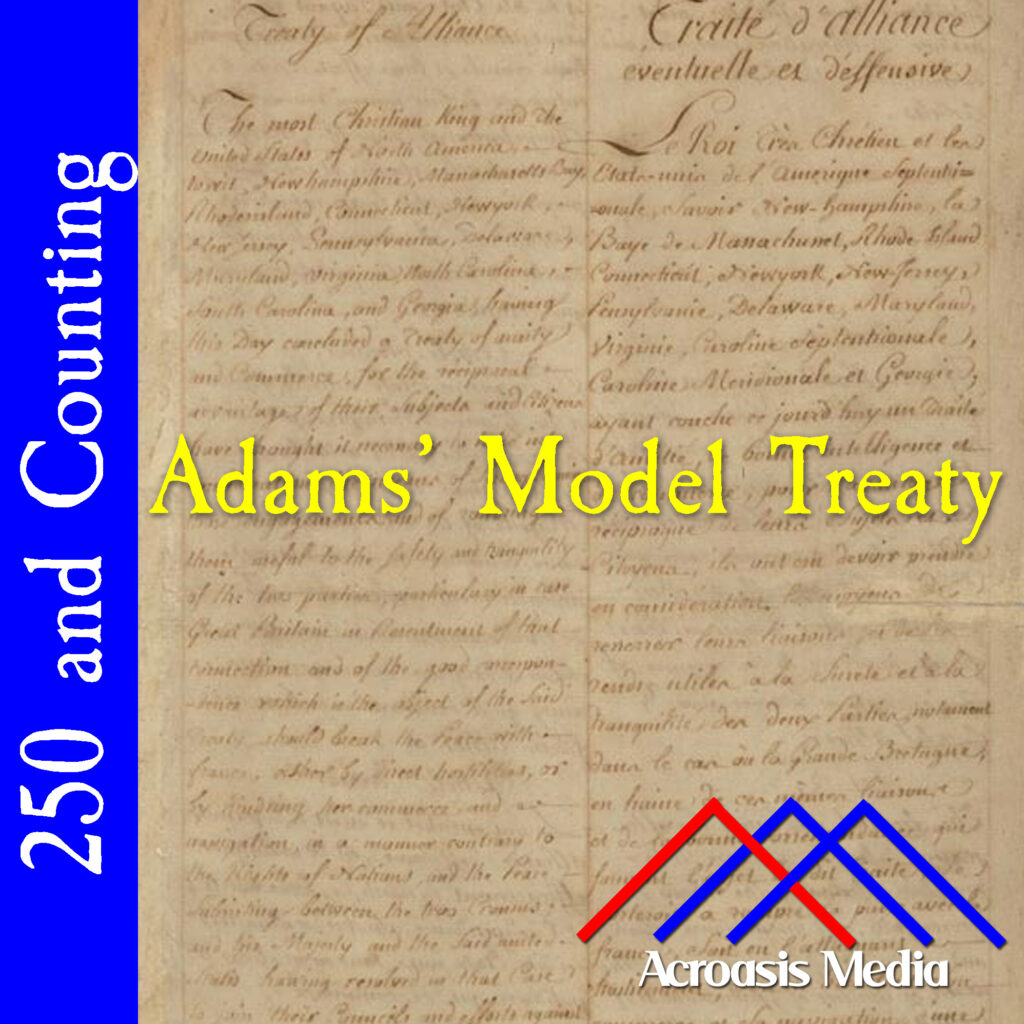
Today’s artwork, incidentally, is the Treaty of Amity and Commerce from 1778 that the US signed with France. If you look closely you’ll see that the left side is in English and the right side is the French translation. This is just most of the first page, of course, but it’s interesting to see how such things were handled.
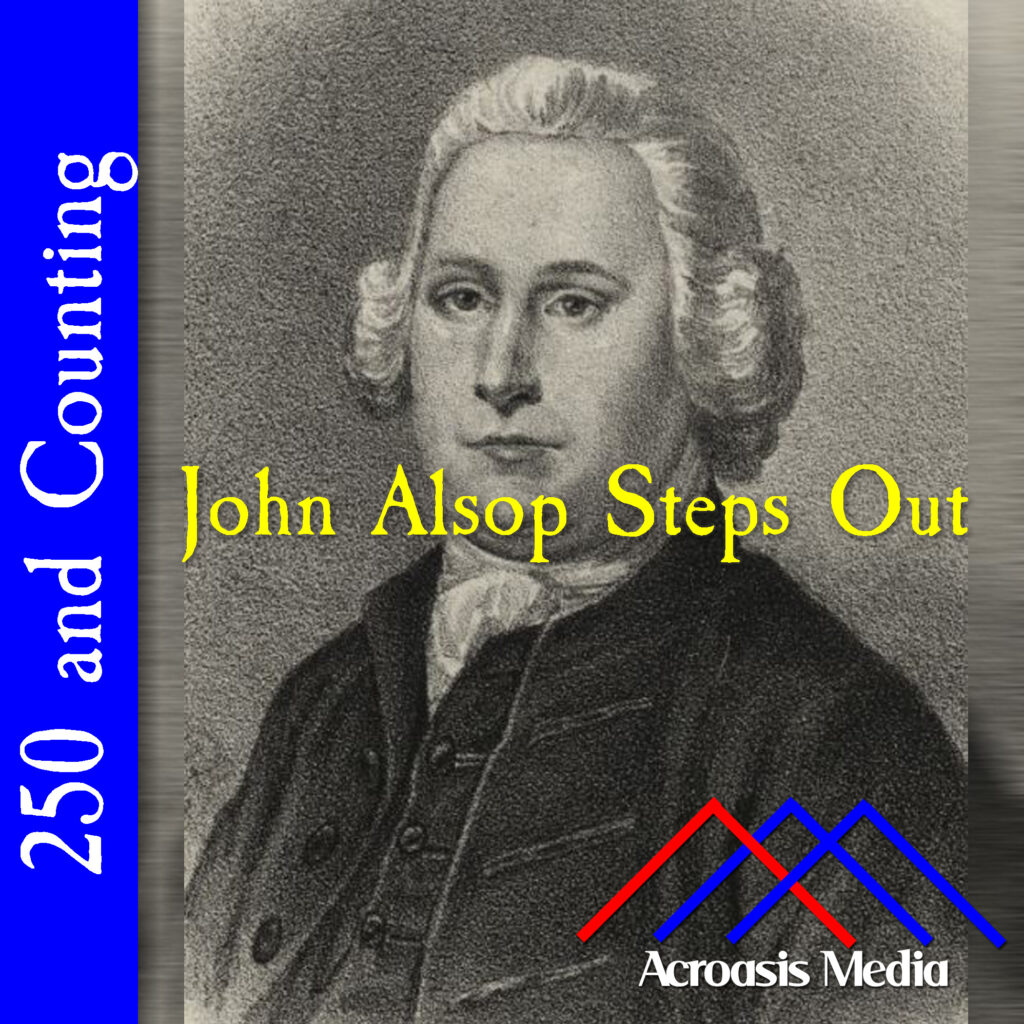
John Alsop was born in 1724 in New Windsor, Orange County, in the British Province of New York. He was the son of John Alsop, Sr. and Abigail Sackett. His father was a lawyer in New Windsor and later New York City, where he was largely interested in real estate.
As a young man he moved to New York City, where he entered the mercantile world with his brother Richard. The brothers became importers and merchants in cloth and dry goods. John became interested in civic and political activities. He was elected by New York County to serve in the Province of New York Assembly. He was one of the civic leaders that incorporated the New York Hospital Association and served as its first governor from 1770 to 1784. In 1757, his brother Richard retired from business and removed to Middletown, Connecticut.
Early in the Revolution, the Province of New York Assembly could not reach a conclusion about the Continental Congress. As a result, delegates were selected by the revolutionary committees in each county. In 1774, Alsop, along with James Duane, John Jay, Philip Livingston, and Isaac Low, was named as a delegate. When the First Continental Congress convened on September 5, Jay presented their credentials, and the Congress accepted. Alsop arrived in Philadelphia on September 14.
Alsop returned to the Second Continental Congress, and while he assisted in the war effort prior to the Declaration, he never lost his hope for reconciliation with Britain and he wound up resigning from the Congress rather than sign the Declaration. He did continue supporting the Continental Army, from his home in Newtown, NY until that town was overtaken by the British, then he continued to work from Manhattan. When they took Manhattan as well, Alsop fled to Connecticut and stayed there until 1783, when the occupation ended.
Alsop died at his home in Newtown, Queens County, New York, on November 22, 1794, and is buried in Trinity Church Cemetery in Manhattan. His considerable fortune, which he managed to rebuild, was passed to his daughter and son-in-law after his death.
In the play/film 1776, John Dickinson is portrayed as a Loyalist from the Pennsylvania Colony whose goal is to obstruct any efforts at achieving Independence. When his efforts fail, he resigns from the Congress and leaves, though John Adams publicly admires his integrity before Dickinson departs.
(Leave us alone; 1776 is a delightful film and we both like it, plus it’s many people’s only lens for viewing the story of that time.)
As usual, however, the truth is far more complicated than could be well-conveyed, especially when cramming several weeks’ worth of story into 168 minutes. So let’s dive in a little bit.
Dickinson, to begin with, actually represented the Delaware colony, whose delegates were divided on the cause of Independence. But remember that Delaware and Pennsylvania were the same colony as far as Britain was concerned.
Now, Dickinson argued that while the British Parliament had the right to regulate trade in Europe, they did not have the right to raise revenue via taxing the Colonies; furthermore if the Colonies didn’t resist this, then Parliament would only push their agenda further. But while he felt that the Colonies had the right to seek redress for whatever grievances they had, AND he felt that the Colonies were right in defending themselves against the British, they did not have the right to separate themselves from Britain. Part of this stand involved the fact that Dickinson was immersed in Quaker beliefs for most of his life, though he never officially joined a Quaker meeting.
Now, because it had been previously agreed by the Congress that no man could serve without signing the Declaration, Dickinson stuck to his principles and voluntarily left, but he did join the Pennsylvania/Delaware militia afterward, though he never actually saw combat. It’s also worth reminding you that the Declaration was still largely unsigned at this point, and would remain so for a few more weeks, so it’s not a contradiction that he was working on a new Constitution at this point.
Dickinson was re-appointed to the Continental Congress in 1779 and he did sign the Articles of Confederation, which arose from the document submitted by his committee on this day in 1776.
John Dickinson was a complex and fascinating man, and you can learn a lot about him by visiting the John Dickinson Plantation, part of First State National Historical Park.
I don’t know if we ever mentioned this, but People of a Certain Age may remember that back in the Bicentennial Days, on our television every night during the 8:00 PM hour there was a one-minute (two, if you count the commercial) which offered up some snippet of history from that day 200 years previous, told to us by a famous person (whose identity changed every day).
Does that sound familiar? It should. The “Bicentennial Minute,” as it was usually called, ran from July 1974 to 1976, and was meant to end on July 4, 1976, but instead ran through the end of that year. So they did 912 episodes. At any rate, this was the inspiration for 250 and Counting. I wanted to revive the Bicentennial Minute in podcast form.
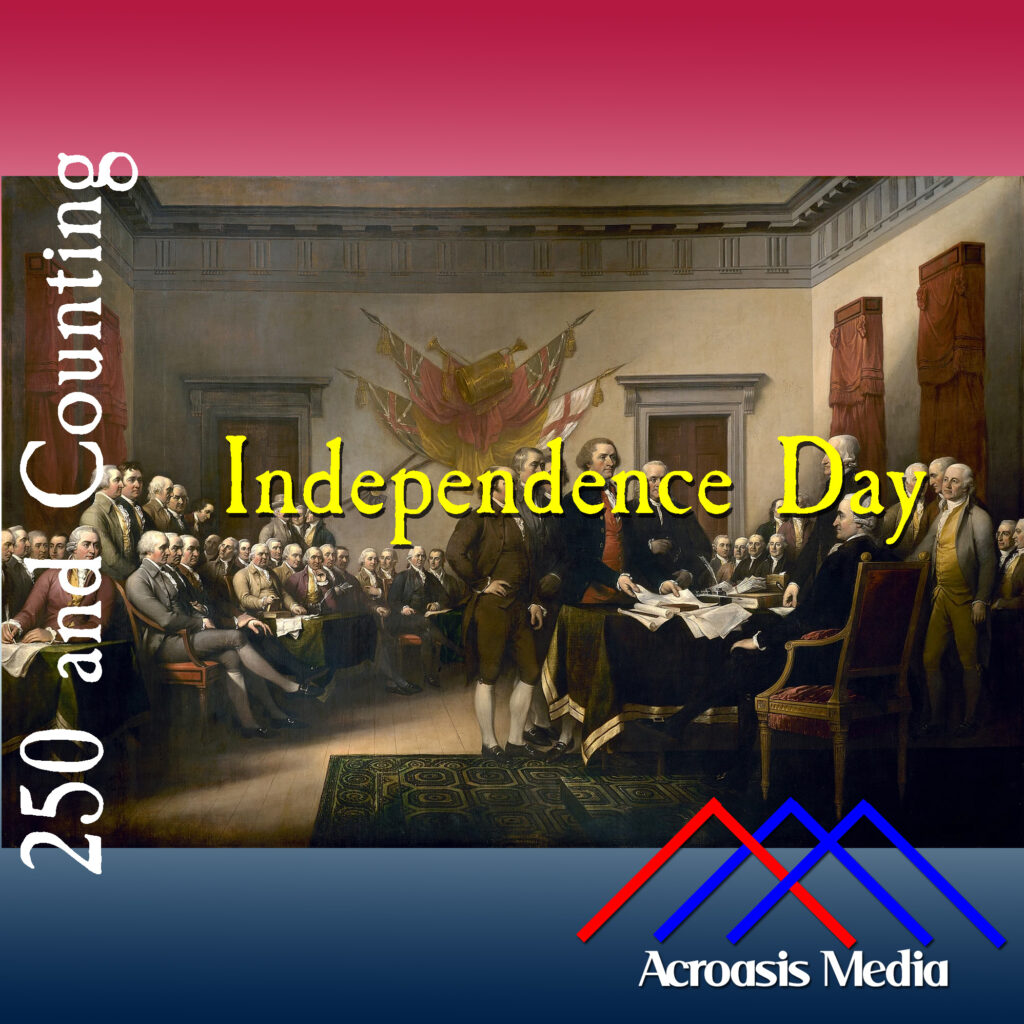
Now, there was a lot of anticipation as we got closer to July 4, 1976/1776, because after all, that was the big day, yes? The July 4 episode was narrated by First Lady Betty Ford. But of course, the Lee Resolution had already been approved, the editing of the document was yesterday, the signing of the finished Declaration wouldn’t happen for some time…all there was for Independence Day was the vote to approve the Declaration as edited, so it wound up being a little anticlimactic. (We did try to warn you about not getting too excited. Learn From My Fail and all that.)
Mike and I have committed to 729 episodes, from January 1, 2025 through the end of this year. After that, who knows? Maybe we’ll keep it up, maybe we’ll move on to another project. That largely depends on your level of interest. But there’s still lots of American History to look into as word gets out about this bold step our Founding Fathers took, and the repercussions for the war. We still have a couple of major battles to deal with (Long Island and Trenton, NJ come immediately to mind), the launching of the first military submarine attack, the Cherokee-American Wars are heating up, and so much more. We hope you’ll continue to ride with us. And thank you for riding so far.
In the play/film 1776, with nearly every vote cast throughout the show, a delegate from New York (Lewis Morris) steps up to announce New York’s abstention from the vote, “courteously.”
It’s played for comedy, and at one point even the explanation is rendered comedic, when Morris tells the assembled delegates that the members of the legislature in New York “speak very fast and very loud, and nobody listens to anybody else with the result that nothing ever gets done.” He also says that the New York legislature has never given him explicit instructions. Now, the first thing may or may not be true (I’m from New York, so it’s possible), but the second item is not, as you learn in today’s episode.
When it came to the question of Independence, New York did, in fact, abstain. And they were probably courteous about it besides. But New York’s abstention from the votes, over and over, were derived from explicit instructions, not their absence.
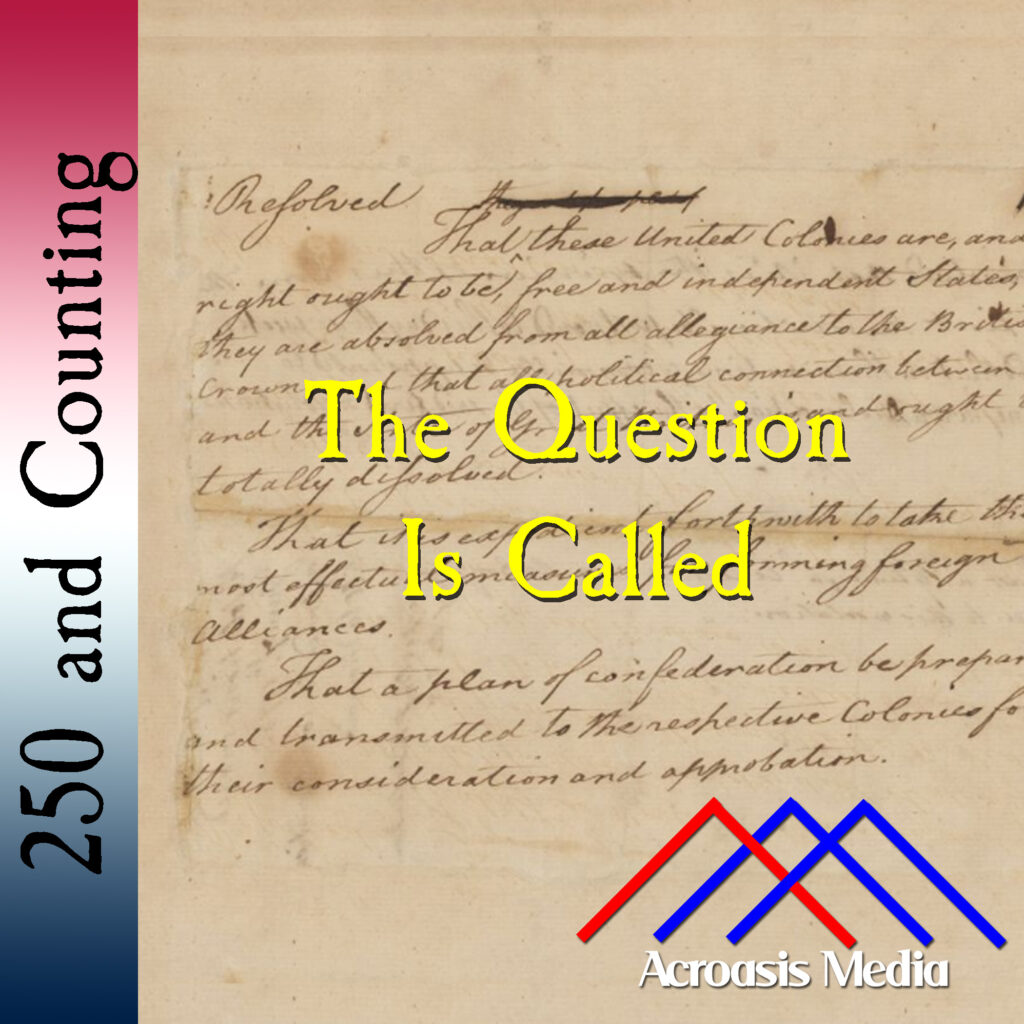
It’s been twenty-five days since the Lee Resolution was introduced, asking the delegates of the Continental Congress to vote for Independence from Great Britain. Some of the delegates returned to their homes to get the formal instructions in the affirmative, others stayed behind and worked on drafting a Declaration.
Finally all the stars have aligned, and the votes come in: twelve in favor, none against, and one abstention. (In tomorrow’s episode we’ll talk about why that abstention happened.)
This was a huge move on the part of the Continental Congress; people like to say that it hadn’t been done before, but that’s not quite correct. San Marino broke away from the Roman Empire in the year 301. But since then it had only happened five times, and while one or two of the others also involved bloodshed, the other new nations weren’t under threats of treason and the punishments associated with that particular crime. So it wasn’t quite unique, but it also wasn’t something that was common. And breaking away from the British Empire? Well, that had certainly never been done before.
In being asked to vote for Independence, these men were literally putting their lives on the line, and that’s the thing it’s important not to forget.
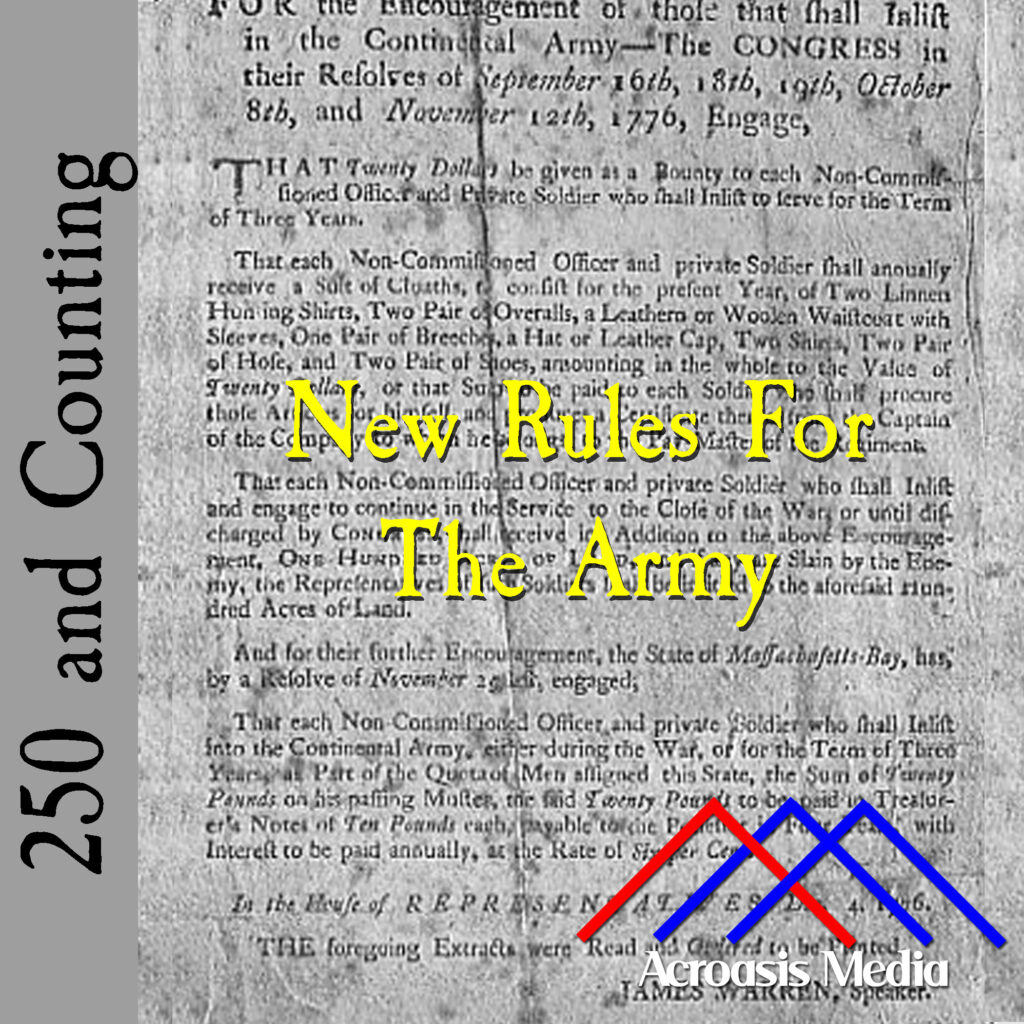
Setting new Continental Army rules was oftentimes rather tough, because at that time the enlistments were relatively short. Soldiers would get trained, of course, but because they were undisciplined they didn’t always stay trained, and then their enlistment would be up and now it’s time to train the next set of guys and hope some of it sticks.
The Continental Army rules that were approved today were designed to affect soldiers’ overall behavior, perhaps in the hope that comporting themselves appropriately would lead to a more disciplined man in general. This met with limited success (that is, not much).
Interestingly, when Baron von Steuben came along later in the year, the company that he led was visibly different from the others encamped at Valley Forge, with regard to drills, self-policing and preparedness, and it was likely this that caught George Washington’s eye and led to von Steuben writing the manual that Mike cites in today’s episode.
The big story today is about the Pennsylvania Delegation finally getting new orders, but I admit that I buried the lede on this one, largely because the Board of War and Ordnance had a lot going on, and the Pennsylvania story was a relatively simple one to tell.
But as you can tell in today’s episode, the note we gave you the other day about the sheer volume of material they had to deal with is evident in the minutes of the Continental Congress for today; what’s more, a bunch of it was items that needed to be addressed immediately, so the business of the Congress was halted for several hours until the Board could report back.
But the fact that the Pennsylvanian government had finally gotten past whatever they needed to get past, made it possible for the Pennsylvania Delegation to be able to vote in the affirmative on the question of Independence, which left exactly one colony about to vote “Yes” and another one unable to do so. And that’s something we’ll talk about in just a few days.
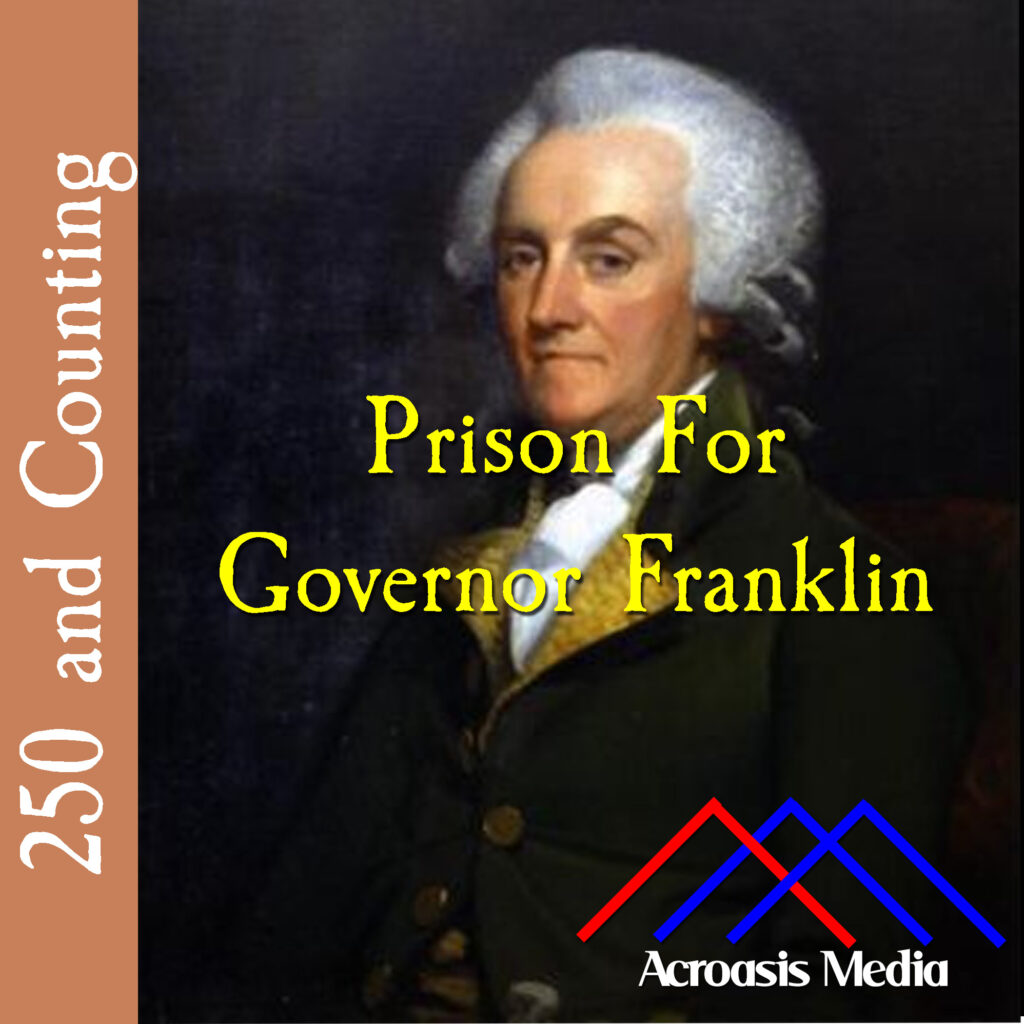
As Mike notes, we haven’t talked about the Royal Governor of New Jersey, William Franklin, in quite some time. But matters were quickly coming to a head, and it was decided that he needed to be imprisoned. The biggest reason for this is that he not only remained loyal to the Crown, he actively reported to the British anything he heard about American movements and plans.
William Franklin was finally placed under house arrest in January for these shenanigans, but as things heated up and New Jersey replaced its provincial government, it was determined that he still posed a threat to operational security, and he was sent to Connecticut for imprisonment. And, as Mike also tells you, even prison in Connecticut wasn’t quite getting the job done.
I guess we have to admire his ability to commit to the bit.
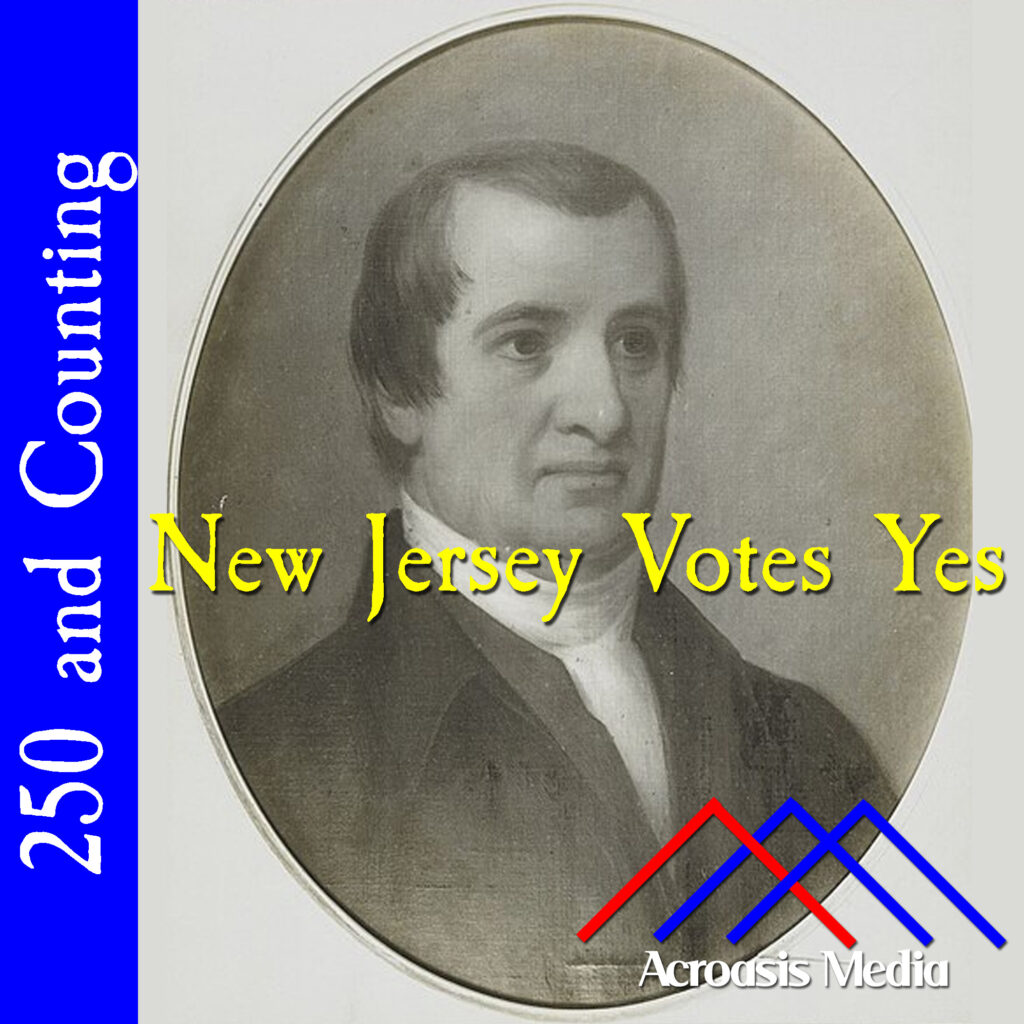
How the Jersey Five got its name isn’t especially mysterious, but what’s interesting is that one of the Five, Abraham Clark (pictured in the cover art), was not a new delegate to the Continental Congress. In fact, he was the only one retained because he was also the only delegate who was in favor of Independence.
So when the new Provincial Congress took over in New Jersey, they retained Clark and appointed new delegates around him. And thus was the Jersey Five born.
Clark is the namesake of the New Jersey township just south and west of Newark, and that’s pretty cool. But Richard Stockton has a rest area on the New Jersey Turnpike named after him, so there’s that. For what it’s worth, Francis Hopkinson left New Jersey shortly after signing the Declaration, so he doesn’t have a lot of legacy there. John Hart has several streets bearing his name, and John Witherspoon has memorials all over the state, so I guess he wins this contest I just now invented.