Category: South Carolina History

  • Busy Day For Mr. Rutledge–September 27, 1776

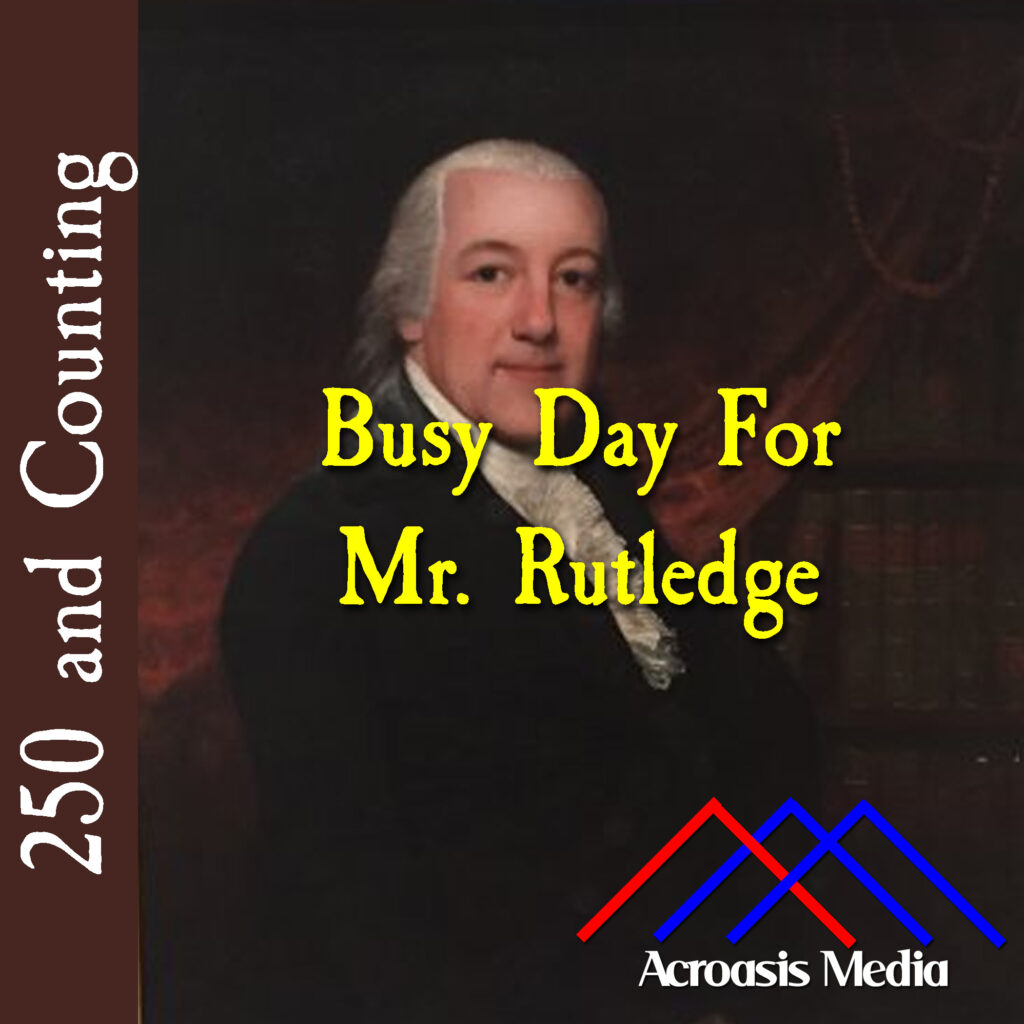
    Cover art for September 27, 1776: Portrait of Edward Rutledge by James Earl, 1791. via Gibbes Museum of Art in Charleston, SC.

    In putting this episode together, I realized that I used this same image of Edward Rutledge back in the September 9 episode. However, I neglected to put the information for the image in the alt text. And that’s something I do try not to overlook. On the other hand, I was still hopped up on cold medication, so there’s that.

    And before I forget, I mentioned the censure of Esek Hopkins during the episode, so I wanted to ensure that I linked back to that as well.

    In addition to being the youngest signer of the Declaration of Independence, at the tender age of 26, Edward Rutledge was also a governor of South Carolina. By my count he was their ninth governor, from 1798 to 1800, but that’s if you count his brother John Rutledge twice, since John served twice, non-consecutively. Also, he was the ninth governor of the state of South Carolina; if you count the colonial governors, he’d be thirty-ninth.

    After leaving the Continental Congress, Rutledge did fight in the Continental Army. He was captured during the Siege of Charleston in 1780 and released in a prisoner exchange the following year.

    I should note that while Rutledge was governor he suffered from an attack of gout and went home to Charleston to recuperate. Not long afterwards, he heard the news of George Washington’s death and was so upset by this that he had an attack of apoplexy and died. (Modern-day medical types would probably say that he had a cerebral stroke.) Rutledge had been the Governor for 401 days.

  • Battle of the Black Hole–September 19, 1776

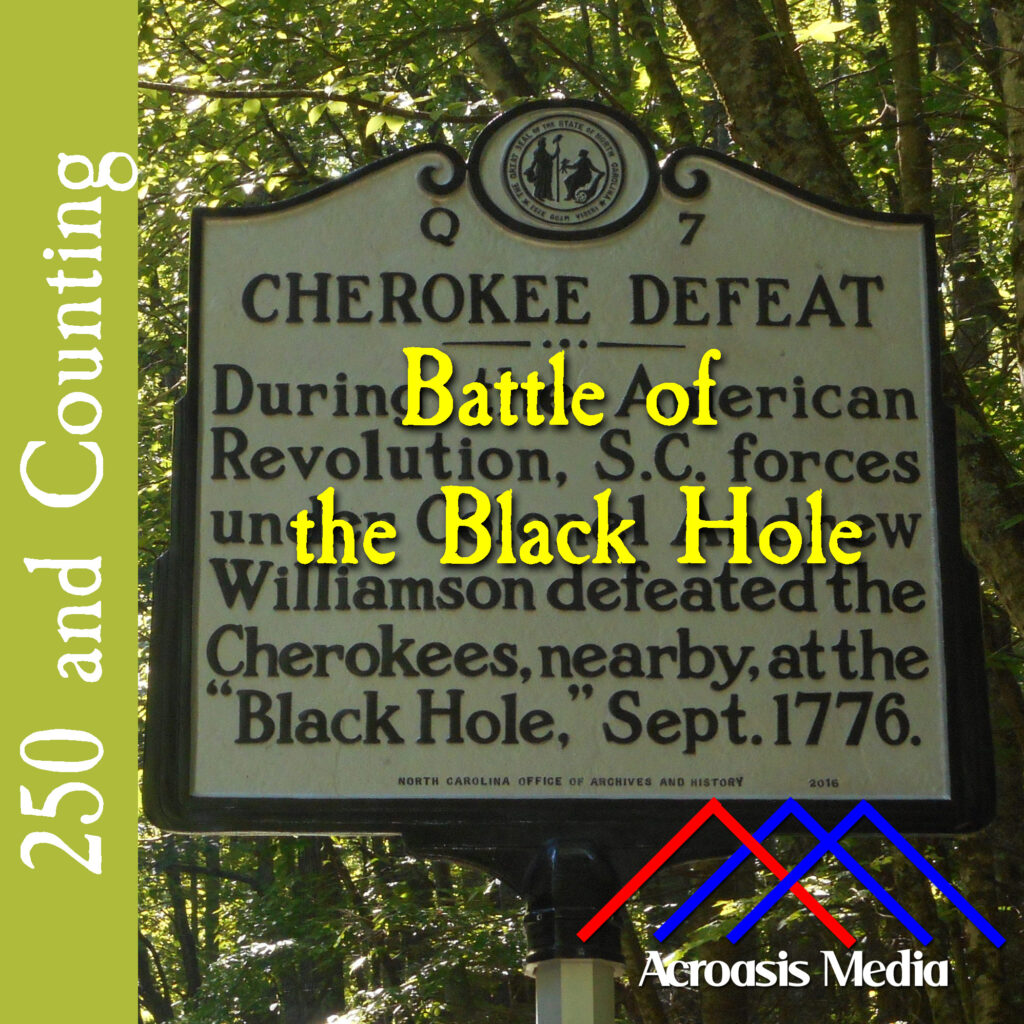
    Cover art for September 19, 1776: Historical Marker noting the location in Wayah Creek (west of Franklin, NC) where the Battle of the Black Hole took place. via NC Department of Natural and Cultural Resources.

    The Battle of the Black Hole, also known as the Battle of Coweecho River, lasted about two hours and had surprisingly few casualties, considering its location and just how fierce the fighting was.

    Colonel Andrew Williamson essentially marched into an ambush in a deep gorge, and had to fight their way out. They began by using a circular formation because they found themselves surrounded. But because they were in such a tight spot geographically, they realized that the only way out is through, as the expression goes. Williamson led a bayonet charge, which drove out the Cherokees, who were low on ammunition anyway.

    Four Cherokees were killed altogether, and eleven militiamen were killed, plus twenty-four men were wounded.

    Interestingly, the exact location of the battle is not known, but based on contemporary accounts, historians have placed it at or near Wayah Gap in Macon County, NC. For some time there was an argument that it took place further north, in Swain County, a place called “Indian Grave Gap.” But given the militia groups’ respective destinations as they moved, this location doesn’t make sense.

    The fact is, much of the correct information for this battle had to be painstakingly teased from contemporary reports. At one point it was thought that it was General Rutherford’s men who had fought the battle, but that was based on a single article written nearly a hundred years later. Furthermore, that article was based on sketchy research.

    So the Battle of the Black Hole was brief, it was relatively bloodless, and it was the last battle in the Cherokee-American War that would take place in North Carolina, though many more were to come in other states.

  • Langdon Cheves–September 17, 1776

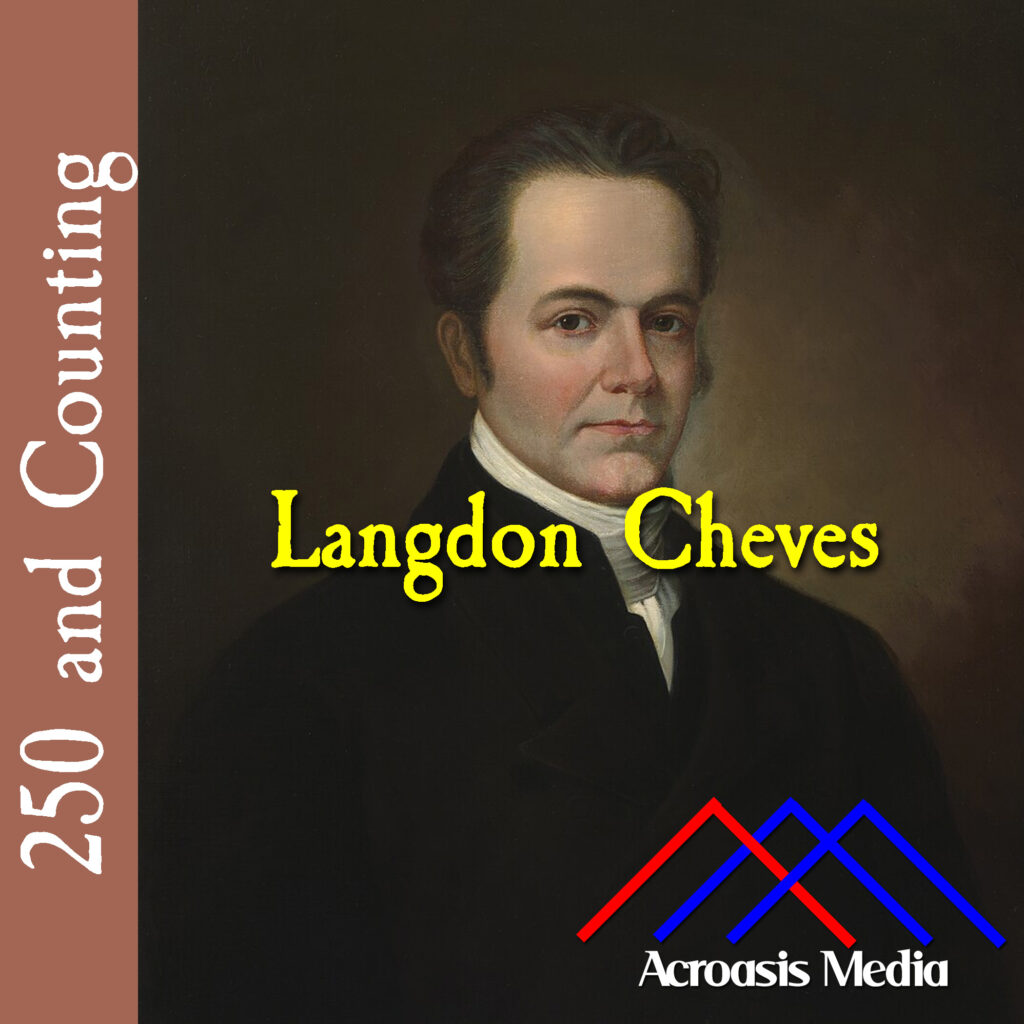
    Cover art for September 17, 1776: portrait of Langdon Cheves by Hal Morrison, ca. 1912, based on an earlier portrait by Charles Fraser. via US House of Representatives.

    Langdon Cheves had a bit of a rough start in life, but he managed to pull himself up and become quite the influential man in the early 1800s.

    Despite the fact that few people have heard of him, Cheves was an active member of the House of Representatives, and managed to make the best of bad situations. When the 1810 embargo on European goods had the effect of collapsing rice and cotton prices, Cheves was able to channel the voters’ dissatisfaction into returning him to Congress. He was considered a War Hawk as 1812 rolled around and still managed to get re-elected.

    Cheves was in the House of Representatives when Henry Clay was appointed Speaker, but while they generally followed similar attitudes, Clay and Cheves had a falling out over the seizure of merchants’ bonds during the War of 1812 and he found himself stripped of all committee assignments, Unfortunately for Clay, when he was asked to negotiate peace with Britain in 1824 he had to resign his position, and Cheves found himself elected Speaker. Cheves essentially went from Worst To First in the space of a year.

    After leaving Congress, Cheves returned to his law practice but found himself appointed the presidency of the Bank of the United States, a position he held for longer than he’d planned because the Board of Directors had a hard time finding his replacement when he wanted to retire. After leaving the bank, he returned to South Carolina to become a rice planter and continued to engage in public debate, at one point arguing against South Carolina seceding from the Union unilaterally, believing in Southern unity.

  • Do The Fight Ring–August 12, 1776

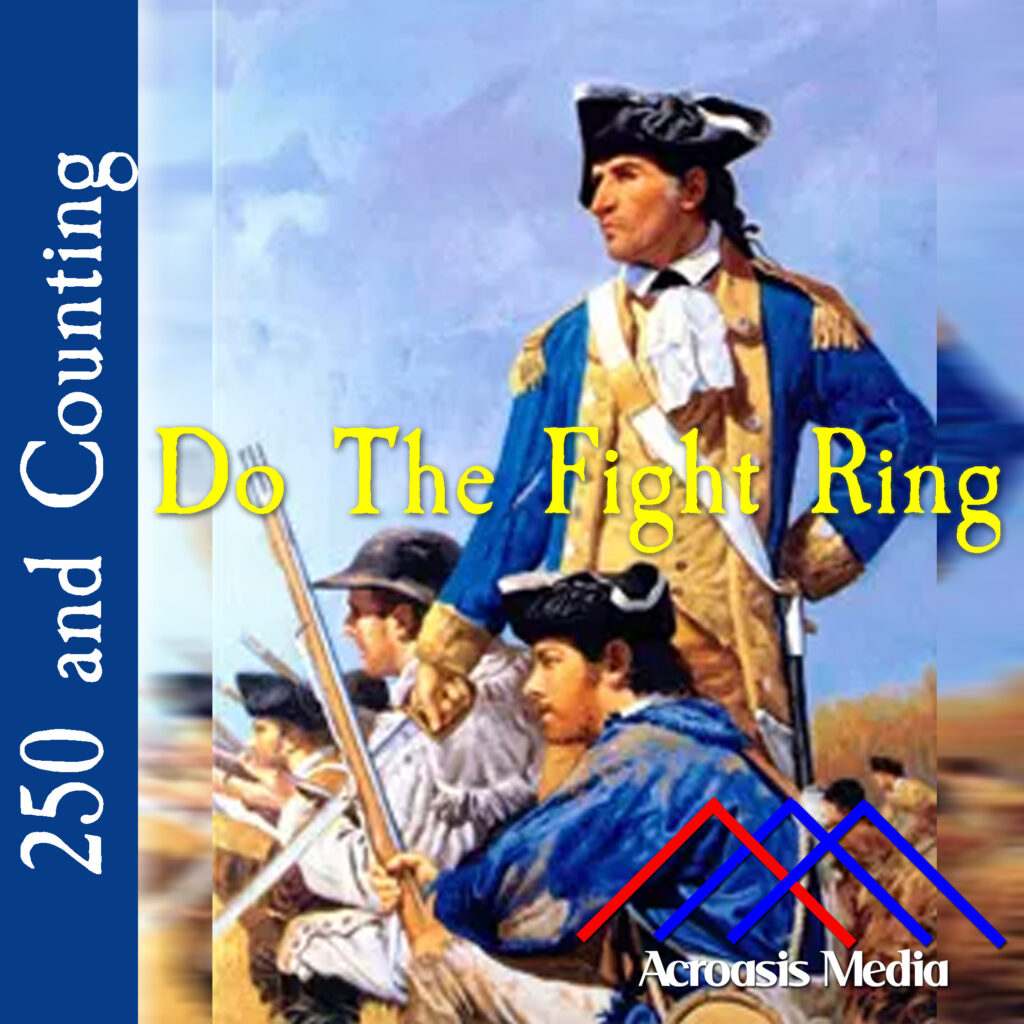
    Cover art for August 12, 1776: "Brigadier General Andrew Pickens With SC Militia", by Robert Wilson, 1977. via National Park Service at the Ninety-Six Historical Site.

    Andrew Pickens was a plantation owner whose property was near Seneca, South Carolina, which is almost as far west as you can go and still be in South Carolina.

    As the Cherokee-American wars wore down, Pickens was able to sign peace treaties with the tribe, which was known as the Treaty of Hopewell.

    Meanwhile, in the American Revolution, Pickens had to surrender the fort in the Ninety-Six District. He agreed to sit out the war as part of his parole, but when the British later destroyed most of his property, all bets were off. He led numerous campaigns in South Carolina and Georgia, making him popular enough the he was elected to the House of Representatives from 1781 through 1793.

    It’s worth noting that some of his Revolutionary War battles were the basis of some scenes in the 2000 film The Patriot.

    Andrew Pickens was one of only nine Representatives to vote against the Eleventh Amendment to the Constitution, which prevents states from sovereign immunity in lawsuits against them by citizens of another state. For example, under the amendment a private citizen from Virginia is allowed to sue the state of Tennessee, and Tennessee cannot claim that the person has no standing because they’re not a citizen of Tennessee.

    And no, I do not apologize for the title of today’s episode.

  • The Charleston Liberty Tree–August 5, 1776

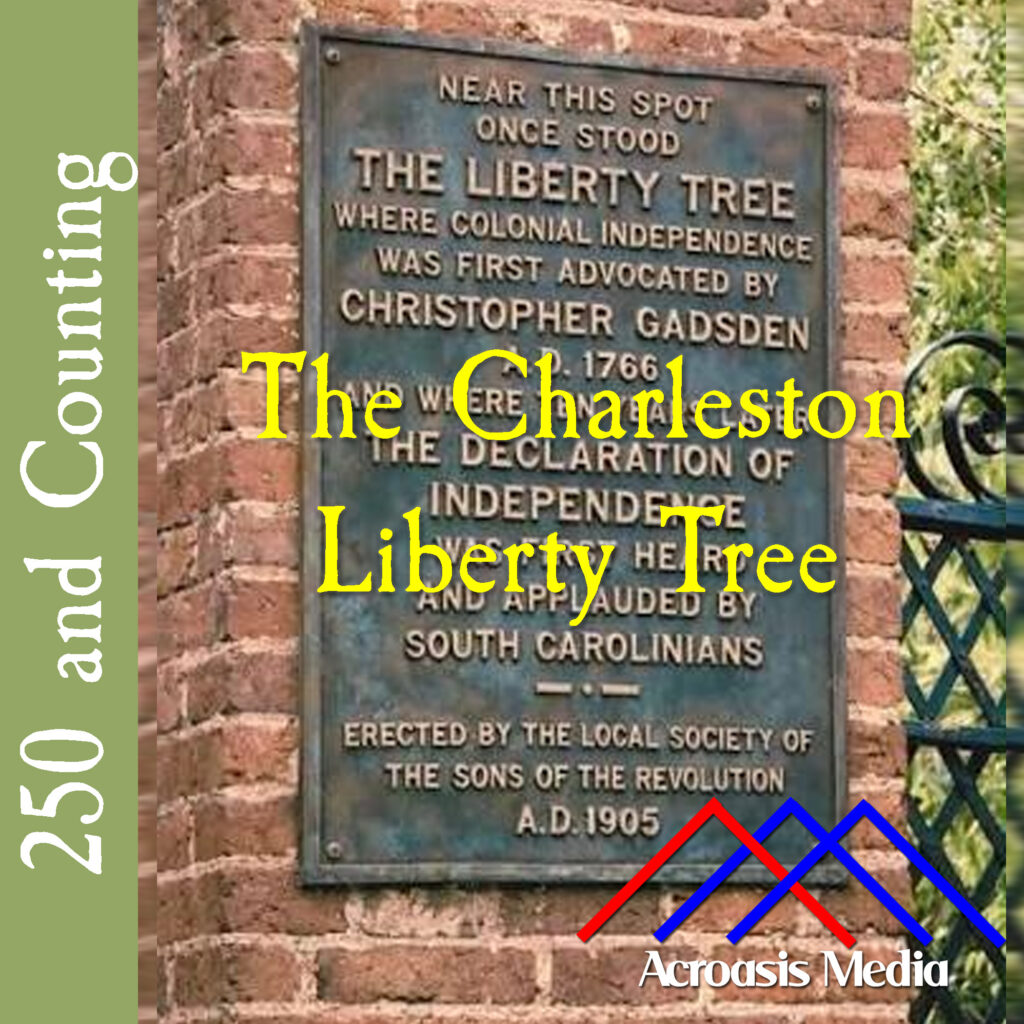
    Cover art for August 5, 1776: The Charleston Liberty Tree marker. via Instagram/Bulldogtours

    The Charleston Liberty Tree has something in common with its more famous counterpart in Boston: neither tree made it to the end of the Revolutionary War.

    The Boston Liberty Tree was cut down by Loyalists in 1775, and the Charleston Liberty Tree was burned down by the British in 1780.

    In researching these trees and their ultimate fates, I couldn’t help but laugh: the trees are meaningless. They’re literally landmarks, not secret meeting houses. Removing the trees does nothing whatsoever to prevent the Patriots from doing the Patriot thing; in fact, it’s entirely possible that it spurred the “victims” to rebel all the harder.

    It’s just a weird thing for Loyalists to get upset about, right?

    And then I realized that things really haven’t changed very much since then. Politically active people of all stripes these days also get kind of overwrought over relatively stupid stuff.

    Just saying.

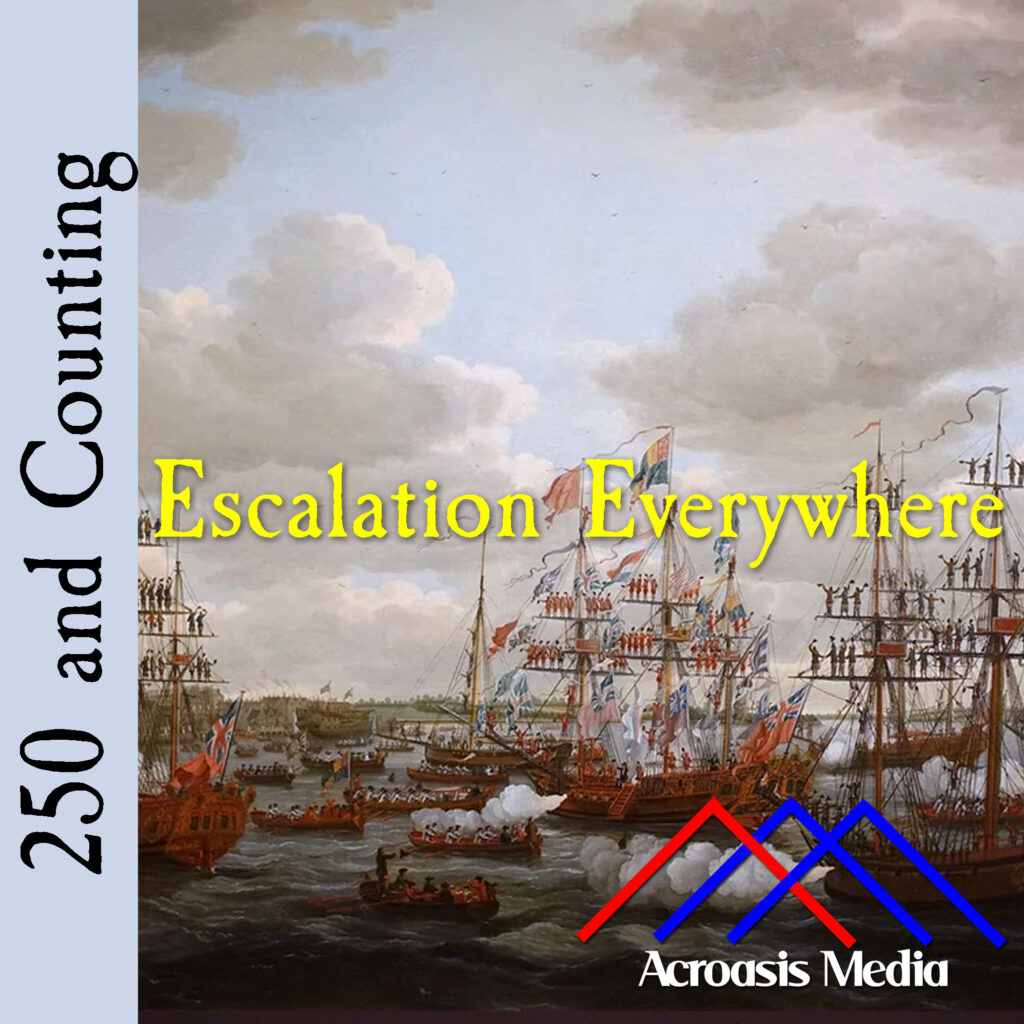
  • Escalation Everywhere–August 1, 1776

    Cover art for August 1, 1776: "The Arrival of Princess Charlotte at Harwich" by John Clevely the Elder, 1761.

    At this point, Americans were fighting a two-front war. More accurately, they were fighting two wars against different enemies: the Cherokee in the southwest areas of the country (so far), and the British…well, practically everywhere else. But today we’ll focus on the British in New York.

    After yesterday’s disaster in the Ninety-Six District of South Carolina, the Cherokees, plus a bunch of Loyalists, moved east about 30 miles to Seneca, which at that time was called Esseneca Ford.It was there that they met up against Andew Williamson, who they outnumbered by something like four-to-one. But with the assistance of some men on horseback, plus another batch of reinforcements, the Cherokees were forced to retreat.

    In New York, the British, along with a huge number of Hessian mercenary soldiers, were massing in Staten Island with an eye toward taking Manhatten, Long Island and the Hudson Valley in an effort to cut off New England. George Washington will be facing an enormous battle very soon, but on Monday we’ll be telling you about something at least as important fo the General.

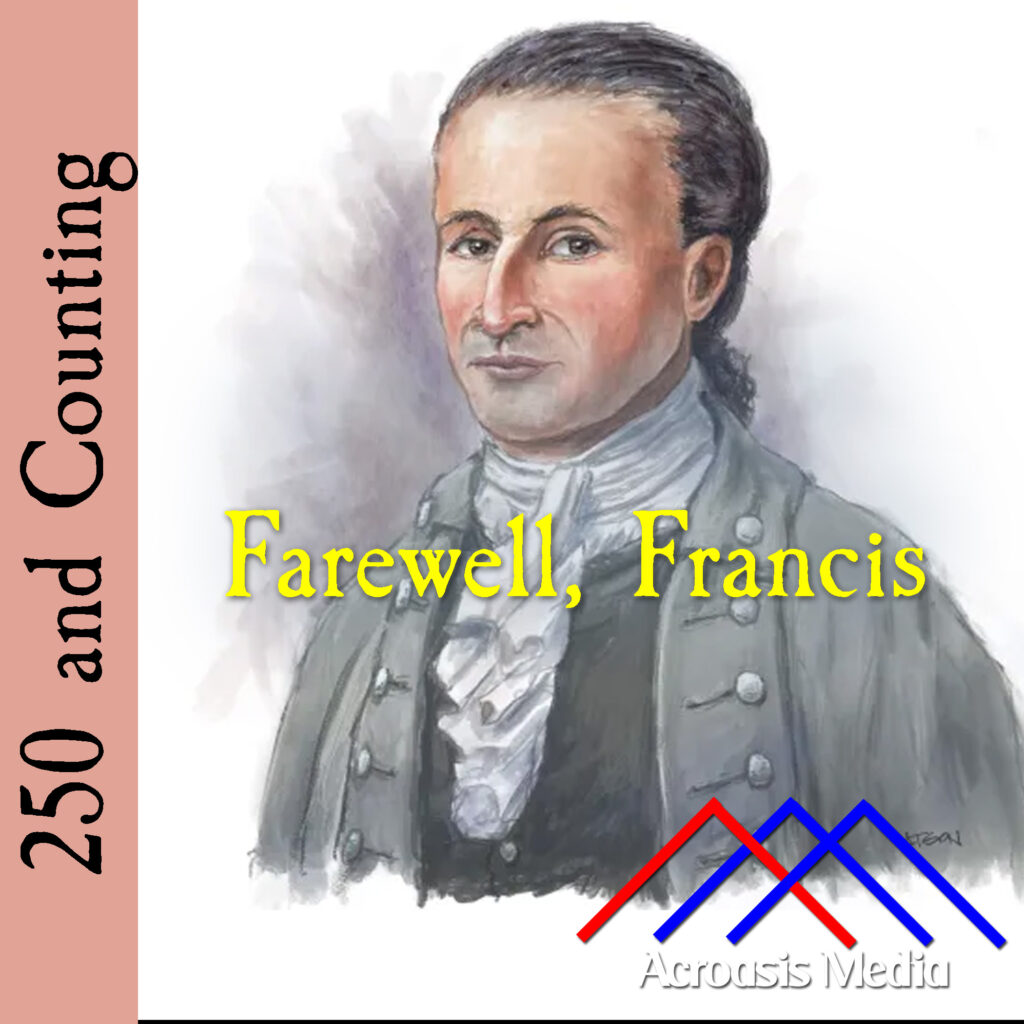
  • Farewell, Francis–July 31, 1776

    Cover art for July 31, 1776: watercolor art of Francis Salvador. Via American Battlefield Trust.

    As I mentioned very early in this podcast, Francis Salvador’s life was especially notable for two things: the day he was elected to public office, and the day he died. And in his case, the dates were notable largely for the fact that Francis Salvador was a Sephardic Jew, making him the first man of his faith to be elected to office in America, and the first of his faith to die in the Revolution.

    Francis Salvador was born in London, but his family were part of a Portuguese and Spanish Sepharidic Jewish enclave in that city. Salvador had an uncle who’d invested heavily in the British East India Company, and they still owned lots of land in Portugal, so they were pretty comfortable financially.

    Until, that is, the Great Lisbon Earthquake of 1755, and the subsequent failure of the East India Tea Company. They were in much worse shape after those two blows, but by that point Salvador had already purchsed some land in South Carolina. In 1773 he emigrated to America, intending to bring his family over when he had the money to do so, but he was killed before they could make the move.

    P.S. Thanks to Mike for stepping in and recording this episode when I had a power failure preventing me from getting it done.

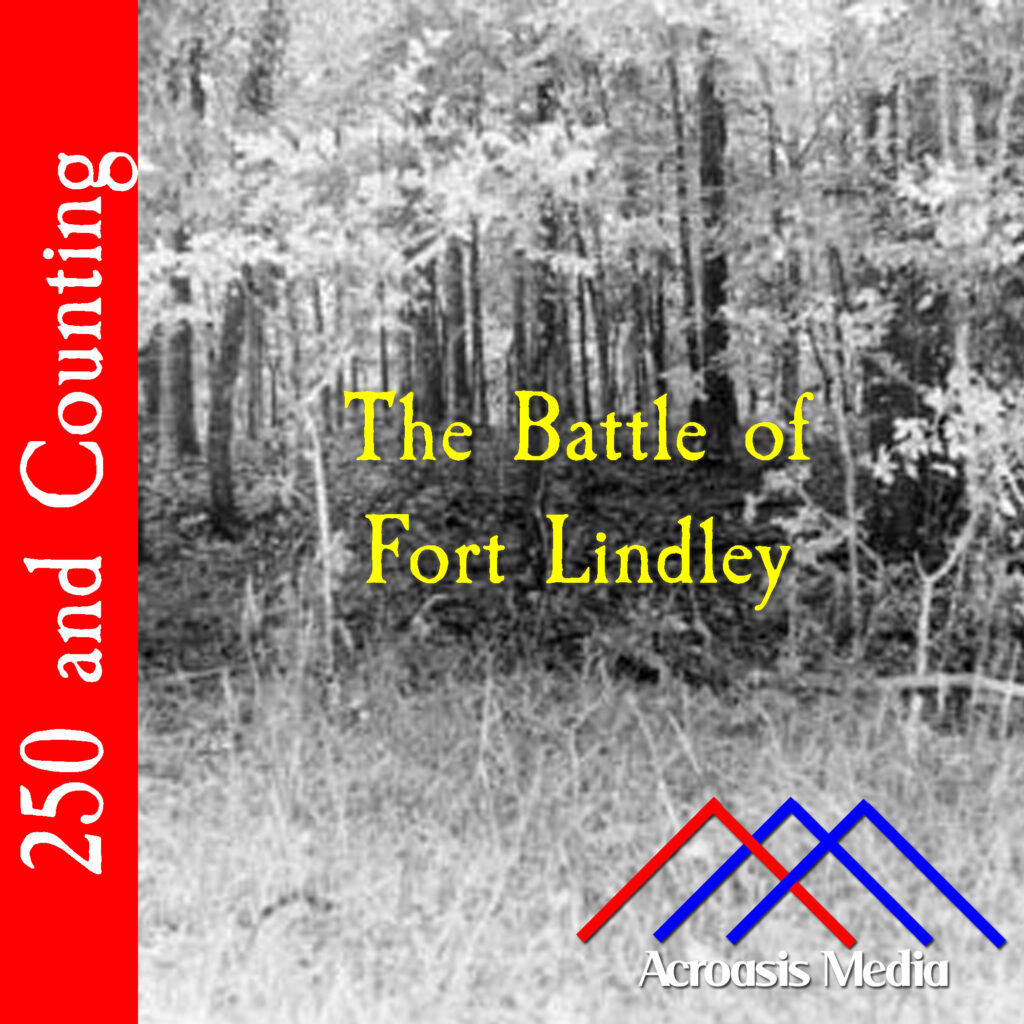
  • The Battle of Fort Lindley–July 15, 1776

    Cover art for July 15, 1776: part of the vacant field where Fort Lindley once stood. Via SC Department of Archives and History.

    The raids along the Catawba River in North Carolina we talked about on July 1 were just the beginning of the Cherokee-American Wars; the next major effort was an attack on Fort Lindley, not far from modern-day Greenville, South Carolina.

    It’s not entirely clear when Fort Lindley was first constructed; there are indications here and there that it was already considered “old” in 1776. In the 1760s there were some Native American disturbances going on in the area, so it’s possible that the fort was built by an individual looking for personal protection.

    The structure was called Fort Lindley, or “Lindley’s Fort” because at the time it was most recently owned by a Loyalist named James Lindley. Unfortunately for him, when the Patriots fled to the fort and Major Downs moved in to assist, Lindley, who was part of the battle, essentially wound up attacking his own home.

    As noted in the episode, the attack was unsuccessful and Downs pursued his attackers, eventually capturing about ten men. They were immediately brought to the jail in the Ninety-Six District, which we talked about a little bit back in November.

    The photo in today’s artwork was probably taken in the 1970s as part of the application for the site’s historical marker; it’s a photo of the land where the fort most likely stood. What’s not entirely clear is what happened to it after the 1770s, as no efforts have been made to excavate the site and determine what parts of Fort Lindley still remain to be found, or even what sort of layout it had. There is evidence of a ditch about three feet wide, and possibly two rock pits nearby, but not much else. And given that the historical marker notes that the fort was about “600 yards south” of its location, chances are that the site itself is on private land rather than a public park of some kind.

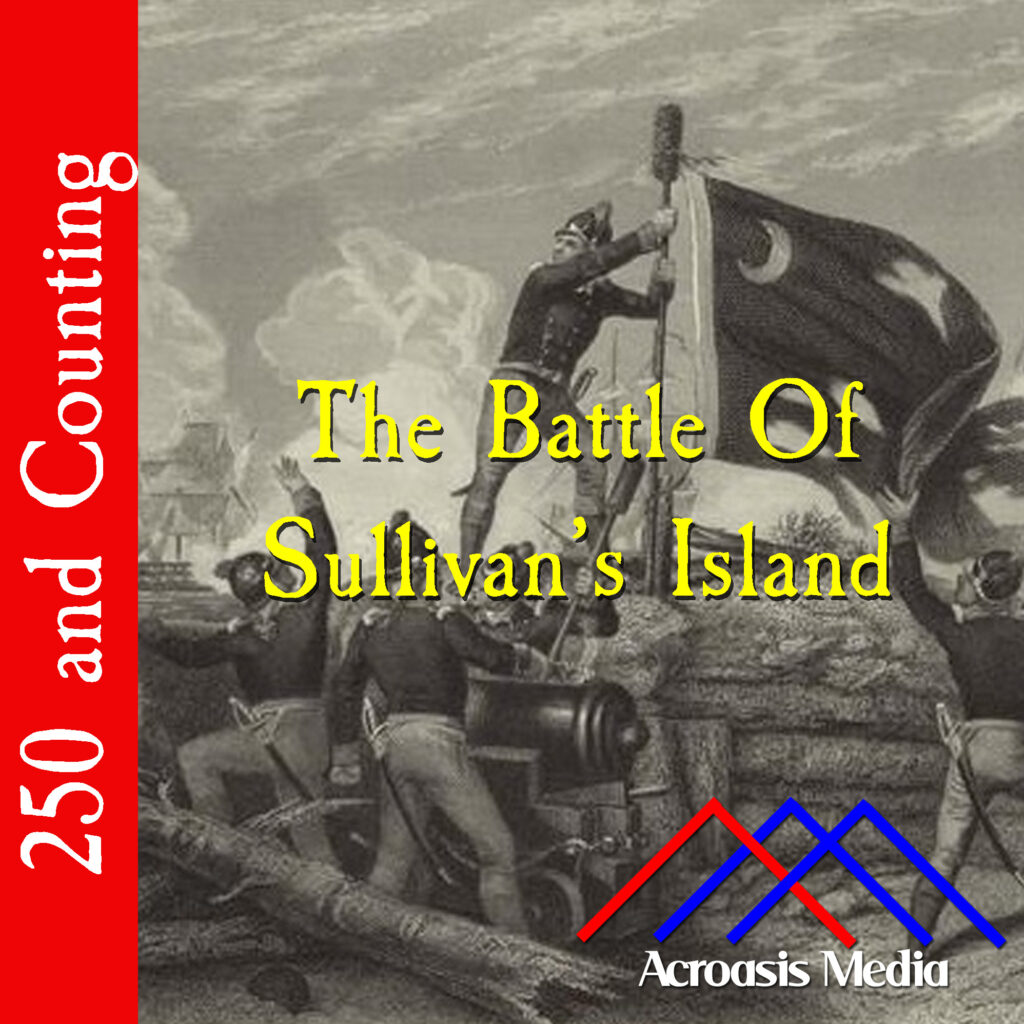
  • The Battle of Sullivan’s Island–June 28, 1776

    Cover art for June 28, 1776: "Defense of Fort Moultrie, SC" by Johannes Oertel, 1858. via New York Public Library Digital Collection.

    The Battle of Sullivan’s Island was part of Great Britain’s first attempt to take the city of Charleston, South Carolina.

    Unfortunately for the British, too many things went wrong for them, and there were logistical problems that they somehow hadn’t accounted for as well.

    Sullivan’s Island was (is, really) not an impressive piece of land. It’s a barrier island that’s a couple of miles long but only a couple of hundred feet wide. But because of its location at the mouth of Charleston Bay, it was an ideal place from which to defend the city.

    Now, if you look at a modern-day map of the bay, you’ll see Fort Sumter in the dead center of the bay’s channel. Fort Sumter, however, was little more than a sand bar in 1776, and was artificially built up in the 1830s so that the fort could be constructed there. Insterestingly, although Fort Sumter gets credit for the first shots of the Civil War, the structure was never finished. Construction began in 1829 and hadn’t been completed as of 1861, when the war started.

    Oddly enough, when the Battle of Sullivan’s Island took place, Fort Moultrie wasn’t completed either. Then in 1798 the Army decided that it needed updating, so they started over, building a new structure atop the old one. That fort was destroyed in a storm in 1804 and was rebuilt again in 1809. During the Civil War it was reduced to rubble by Union forces but was rebuilt again in the 1870s.

    Fort Moultrie was taken out of service in 1947, then decommissioned and became part of the National Park Service in 1960.

  • New Kids In Town–April 24, 1776

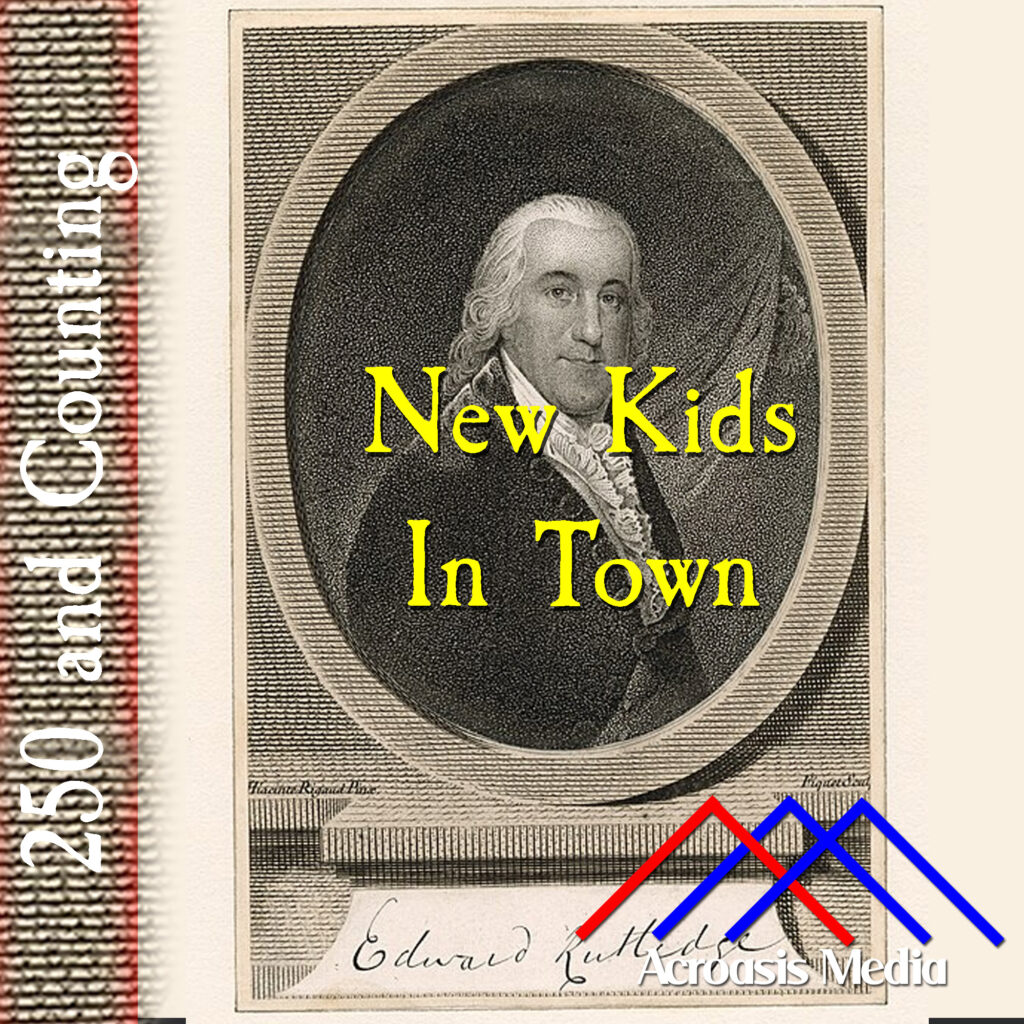
    Cover art for April 24, 1776: Portrait of Edward Rutledge. Engraved by James Barton Longacre in 1822, based on a painting by Ralph Earl. via New York Public Library's Digital Library.

    It may seem as though a large number of men were suddenly being appointed as South Carolina delegates to the Continental Congress, but in fact they weren’t all new appointees. Some of them had already been delegates and were re-appointed.

    It’s also worth noting that while many of them were supporters of Colonial rights, they were also under instruction to oppose motions for independence. Specifically, when Richard Henry Lee’s motion comes down on June 7, Edward Rutledge specifically was told to oppose it. According to lore, his superiors in South Carolina’s government weren’t sure that the time was “ripe” for independence.

    Arthur Middleton was not only a supporter of Colonial rights, he was said to think ruthlessly when it came to Loyalists.

    Thomas Heyward didn’t distinguish himself very much in the Congress but in 1780 he was captured by the British and held for a year. The loss of the year and his “property” (i.e., slaves) made him a martyr for the Revolution.

    Thomas Lynch was instrumental in helping George Washington organize his army in the early days, but illness kept him from signing the Declaration of Independence.