Category: South Carolina History

  • One Thing Ends, Another One Begins–December 21, 1775

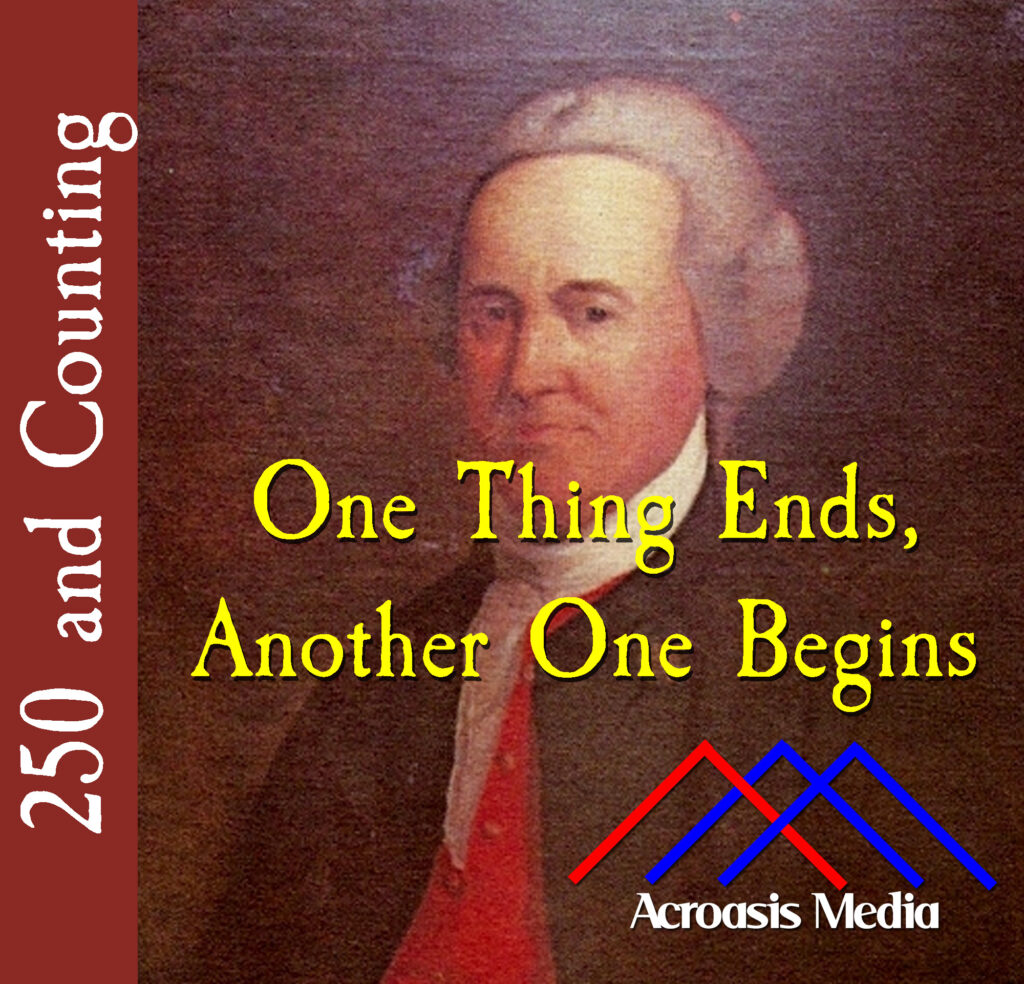
    Cover art for December 21, 1775: portrait of Richard Richardson, attributed to Jeremiah Theus.
    Undated portrait of Richard Richardson, attributed to Jeremiah Theus.

    General Richard Richardson was a delegate to the Provincial Congresses in South Carolina in 1775 and 1776, and he served in both the South Carolina Militia and the Continental Army during the Revolution. He was instrumental in the Americans winning the Battle of Charleston in 1776, but doesn’t get much else attention, perhaps because he was captured a few years later and then sent home, essentially to die.

    But the fact that he spent time driving Loyalists out of the western areas of South Carolina led directly to that province getting on board with the Independence movement more quickly. He also left behind a legacy of descendants who would affect the state well into the twentieth century.

    Incidentally, I have no idea if there’s any truth to the rumor that Richard Richardson was so poor as a child that he couldn’t afford a different last name. Largely because I made that rumor up just now.

  • The Gadsden Flag Debuts–December 20, 1775

    Cover art for December 20, 1775: one variation of the flag.
    One variation of the flag. Some of them have an apostrophe in “DONT”, some use a non-serifed font, some don’t have any greenery under the snake. A few have the snake facing right.

    It’s arguably the most recognizable and popular symbol of the Revolutionary Era, and its debut turns 250 years old today. Ladies and Gentlemen, it’s the Gadsden Flag.

    The concept of the snake image representing the Colonies is a little older than this by about twenty years, with the “JOIN OR DIE” image of the snake broken into nine pieces, each representing some portion of the colonies. In either case it’s a means of using a uniquely American species of snake to represent the Colonies.

    Not only did Christopher Gadsden design the flag, he did it on his own, without anyone prompting him to do it. While the Join or Die snake was probably a little more generic, Gadsden specifically chose a rattlesnake largely because he was from South Carolina, and the rattlesnakes in the Charleston area had the good grace to warn you before taking a bite out of you. To that end, the rattlesnake was considered an honorable, “glorious” creature.

  • Escape To The War–November 26, 1775

    Cover art for November 26, 1775: colorized image of slaves being corralled by British soldiers (yeah, we cheated on this one.) via NYPL digital archives.

    As we’ve mentioned a couple of times before, Lord Dunmore’s Proclamation offering freedom to Patriot-owned slaves who fought for the British created a stir that was felt in all thirteen colonies.

    Huge numbers of people showed up, not just men, but women and children as well. And of course, because most of them had escaped to join the British forces, that meant that the slave-hunting business experienced a huge boom.

    And, of course, the company formed by these escapees only fought in one battle of any note; many of the soldiers died of illness, some were sent back to their plantations of origin. Very few of them remained free.

  • SC Troops Get Organized–November 18, 1775

    Cover art for November 18, 1775: the 2nd Couth Carolina Regiment.

    In retrospect, it appears that most of the action in the early days of the Revolution took place in Massachusetts and South Carolina.

    What was so important about South Carolina? New York wasn’t a big city yet, nor was it strategically important (yet). Baltimore was a small-time port at the time; so was Norfolk. Georgia was deeply divided. North Carolina and New Hampshire didn’t have any strategic advantage. Pennsylvania was inland. Neither Delaware nor New Jersey nor Connecticut were especially important yet. Rhode Island saw some action but not as much as the others.

    But Charleston was a huge port city, as was Boston. The Charleston Bay was ideal for moving materials in and out of the area, which made it fiscally and strategically important.

    The South Carolina Provincial Congress figured this out, and also realized that they had about thirteen militia groups moving in about thirteen different directions. It was time to get everyone moving in the same direction.

  • The Battle Of Hog Island–November 11, 1775

    Cover art for November 11, 1775: map dating to the mid-1700s depicting Fort Johnson and Hog Island in the Charleston Bay.

    The Battle of Hog Island was the first of two major events early in the Revolution that got South Carolina firmly on board with the Independence cause.

    Hog Island caused the South Carolina Committee of Safety to expand their navy; in this respect they were way ahead of the Continental Congress.

    But when King George III approved the American Prohibitory Act in December, that really irritated South Carolinians. The Act act declared that any vessels captured by the Royal Navy after January 1, 1776, would now be considered lawful prizes. When this news reached Charleston, it was taken as an act of war.

    And sure enough, it wouldn’t be long before another confrontation took place that would help to shape the overall look of the war.

  • An Intercepted Gift–October 29, 1775

    Cover art for October 29, 1775: A contemporary path through old growth forest in Congaree National Park.

    One of the most fascinating things about this event, and we only got to touch on it briefly in the episode itself, is that some important parts of the story are under dispute.

    What’s not debated is that the order went out to transfer gunpowder and lead to the Cherokees on October 29. What is debated, however, is the date and the place where the materials were confiscated.

    By some accounts, this incident took place on November 3, 1775 in a place called Mine Creek. This is farther inland (by over 70 miles) than reported by Moses Cotter ON November 3, who said it took place at Congaree on October 31. Other than the date and the place, the two stories are nearly the same, right down to the names of the people involved. And, of course, there are historical marker plaques in both locations.

  • Keeping The British At Bay–October 19, 1775

    Cover art for October 198, 1775: "1775 Map of Charleston Owned by Henry Laurens - American"

    There were two events marked today. One of them involves the continuation of a ban on exports of weapons to America. This was something that had to be formally declared every few months.

    Meanwhile down in South Carolina, a brief fight between two ships in the Charleston Harbor got local leaders thinking about the best way to keep the harbor protected. Their solution: set it up that the only way you can get in or out of Charleston harbor is by ensuring that you remain within range of Fort Johnson’s guns.

  • September 15, 1775: The Occupation of Fort Johnson

    Cover art for September 15, 1775: the brick powder magazine, nearly all that remains of the three Fort Johnsons that stood on James Island, SC.

    Since the early 1700s there have been several Fort Johnsons on James Island in the Charleston Bay. The curious thing is that few people know what happened to each fort as it was destroyed, with the exception of the third one, which was definitely damaged in a storm.

    But the first two? Who knows.

    Today’s episode focuses on the second version of the fort, which still has a few vestiges of the old walls around. But it’s much like visiting Fort McHenry in Baltimore, where the location of the barracks are marked off by the presence of some bricks in the ground rather than some actual walls.

    The fort was taken on this day in 1775 and remained occupied until 1780, when the British came back for it and found it abandoned.

    Today the island hosts a marine research center operated by the state in partnership with several federal and state agencies, all of which have already stood longer than any fort (though the powder magazine from its third incarnation–see the photo–still remains).

  • September 13, 1775: A Flag Makes Its Debut

    Cover art for September 13, 1775: Image of the South Carolina flag with the blue field extended to fit the canvas parameters. retrieved from https://en.wikipedia.org/wiki/Flag_of_South_Carolina#/media/File:Flag_of_South_Carolina.svg

    Let’s talk state vexillology.

    Believe it or not, there are people who are very passionate about state flags. (Not me, he said, about to go into a mini-rant.)

    Most states have a very utilitarian purpose. They kind of lean in, announce themselves, and lean out again.

    Some flags are weirdly cluttered (New York, New Jersey, West Virginia, Delaware).

    Some flags are rather boring (Alabama, Minnesota).

    Some have heavy symbolism but it’s lost on most viewers (Arkansas, Utah)

    I’ve lived in Maryland almost 25 years and I don’t think I’ve seen a people more obsessed with their state flag:

    Maryland Flag

    Colorado’s flag is all over that state so they must be kind of obsessed, too:

    Colorado Flag

    South Carolina’s flag has symbolism and simplicity going for it, and I have to agree with people who put it in the top tier of state flags.

    Here’s the story of the South Carolina flag and how it got that way.

  • June 19, 1775: The Father of Greenville

    Cover art for June 19, 1775: painting of Vardry McBee by William Garl Browne, Jr., 1854.

    Sometimes when you’re watching a movie or listening to music, you find yourself in the awkward position of separating the artist from the work, because it turns out that the artist has some shady stuff going on in the past, or even in the present. But the song/movie/book is just so good that you need to temporarily overlook that.

    Such is the case, we think, with Vardry Echols McBee, an entrepreneur and philanthropist who basically invented the town of Greenville, South Carolina. He was also a slave owner who sided with the Union but provided material assistance to the Confederacy.

    Mixed messages! Conflict of loyalty!

    But it’s also clear that he was instrumental in making the town of Greenville what it is today, even more than 150 years later. What’s more, by all contemporary accounts he did it “without pride, pretense or ostentation.”