
Category: Thomas Jefferson

  • Notes From Around The Colonies–June 27, 1776

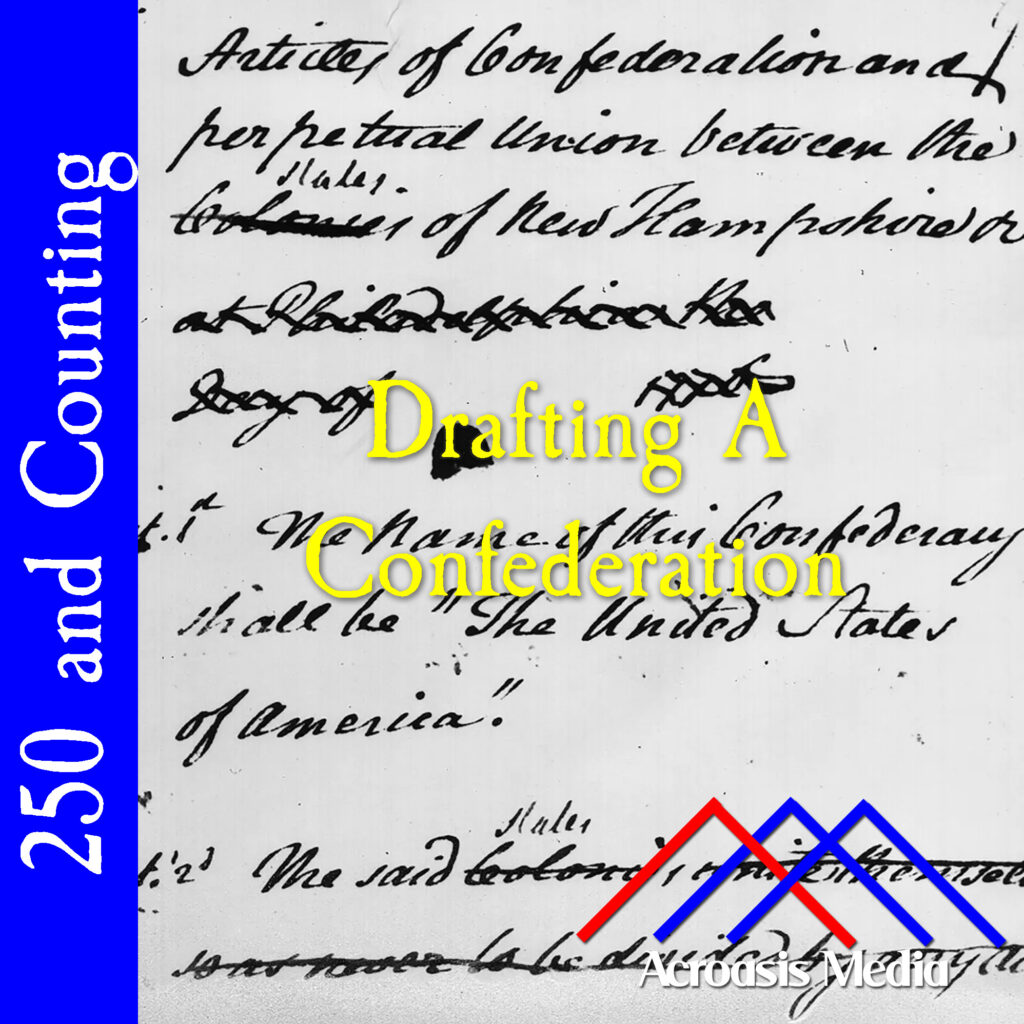
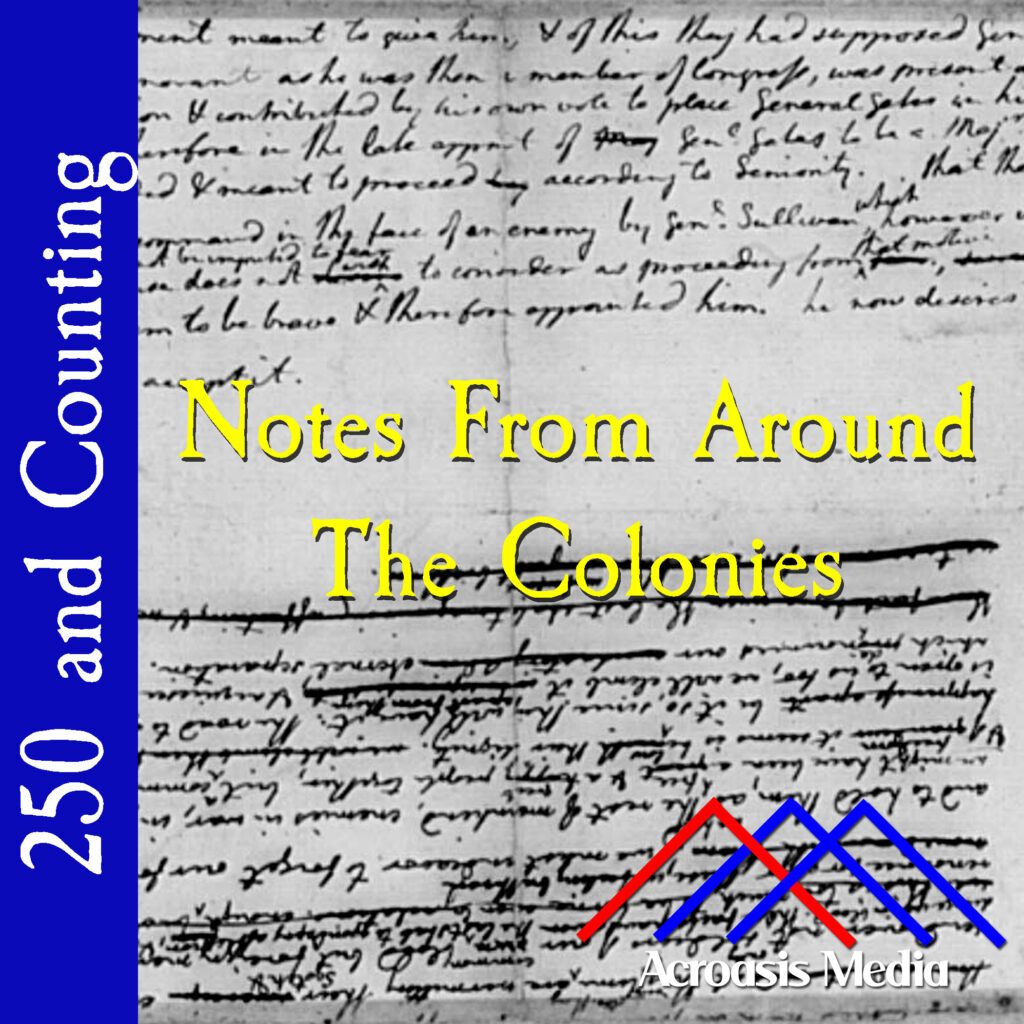
    Cover Art for June 27, 1776: A fragment of the earliest known draft of the Declaration of Independence. This is all that remains of his work during that time. via PBS

    Today’s episode covers a couple of events that took place today, and a couple that will take place tomorrow, largely because there isn’t a ton to say about any of them but they are noteworthy. Also, I wanted to clear the deck a little bit so that Mike can concentrate on events in South Carolina.

    We start with a letter that Joseph Hawley wrote to George Washington about potential troop movements, though to our heads it’s a little bit of odd advice.

    We visit the Committee of Five, which has a homework assignment due tomorrow, and they’re working frantically to finish it. Like so many group projects, only a few of them are really working here, while all five are going to get the grade for it. Yeah, we’re on to you, Sherman and Livingston.

    We finish the saga of Thomas Hickey, which started here only yesterday. There’s some confusion about the specific date, so be gentle with us for splitting the difference.

    And we finish in Maryland, where Samuel Chase manages to get the job done. Now it’s back to Philadelphia to cast a vote.

  • The First Draft–June 18, 1776

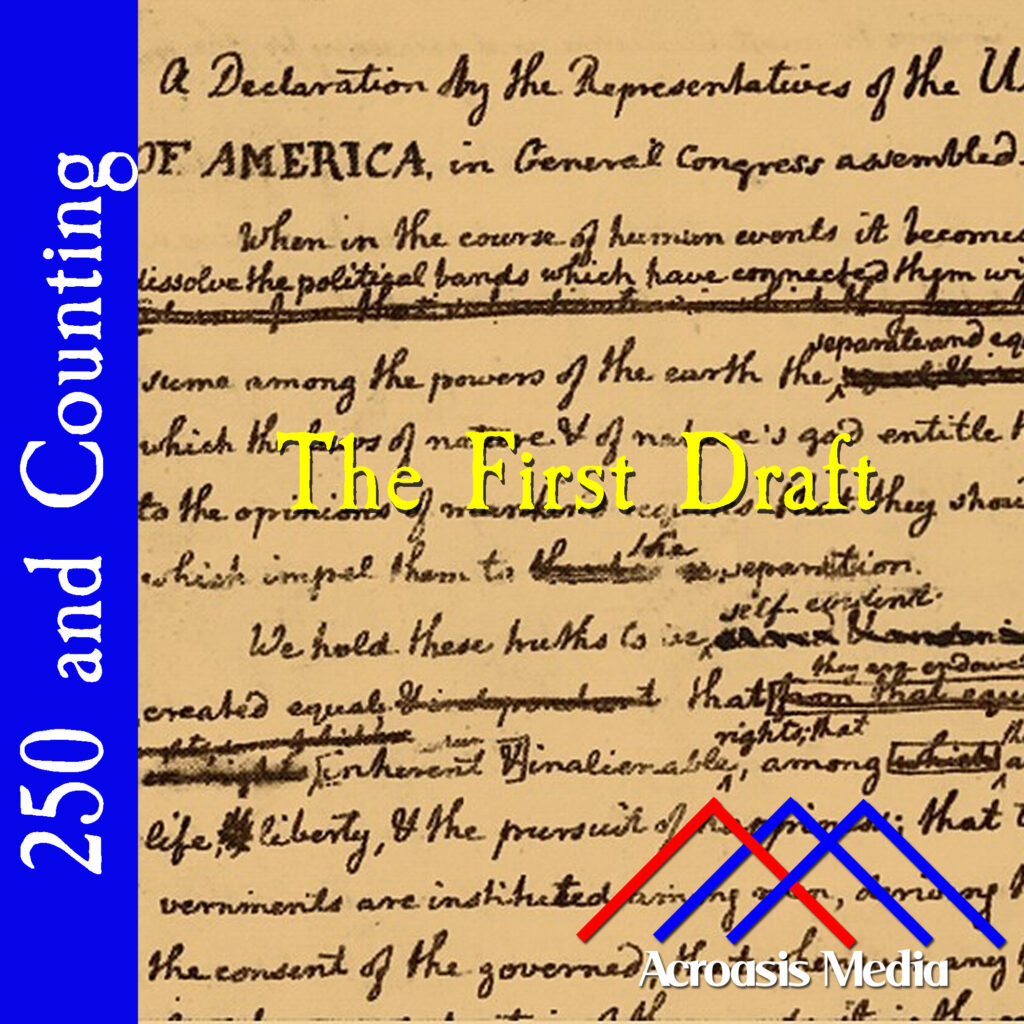
    Cover art for June 18, 1776: Detail of the original first draft of the Declaration, in Thomas Jefferson's handwriting. The finished engrossed version (what you're used to seeing) has Timothy Matlack's handwriting.

    As Mike notes, marking today as the day that the first draft of the Declaration of Independence was presented to Congress is largely a matter of interpoloation on the part of historians working from incomplete information. But who are we to argue?

    The writing you see in today’s cover art is, in fact, Thomas Jefferson’s, mostly. Some of it is corrections made by Benjamin Franklin. It’s also worth noting that this image came from Wikimedia Commons and is color-adjusted. The original image has the paper looking much whiter, but the parchment coloring makes for a little bit better contrast against the ink.

    Incidentally, some documents from this era do look very good still while others are quite faded. The original Declaration of Independence, for example, is rather faded. This is because over time, the ink oxidized from black to a brownish color. In addition, it was displayed under relatively bright light for many years, and the ultraviolet radiation from those lights further faded the ink. The specific paper can also have an effect; some documents are written on a kind of cotton rag, which allows the ink to “bleed” over time and start to look rather smeared, whereas other documents written on vellum (which was basically calfskin) hold their shape better. In both cases the color holds better unless UV gets to it.

    Oddly enough, paper from the 19th through mid-20th centuries made use of wood pulp, which turns color and becomes more brittle over time, and is more acidic, which will damage the ink as well. So it’s possible that there could be a “hole” in our historical records unless steps are taken to preserve, or at least digitize, some of them.

  • The Declaration Begins–June 11, 1776

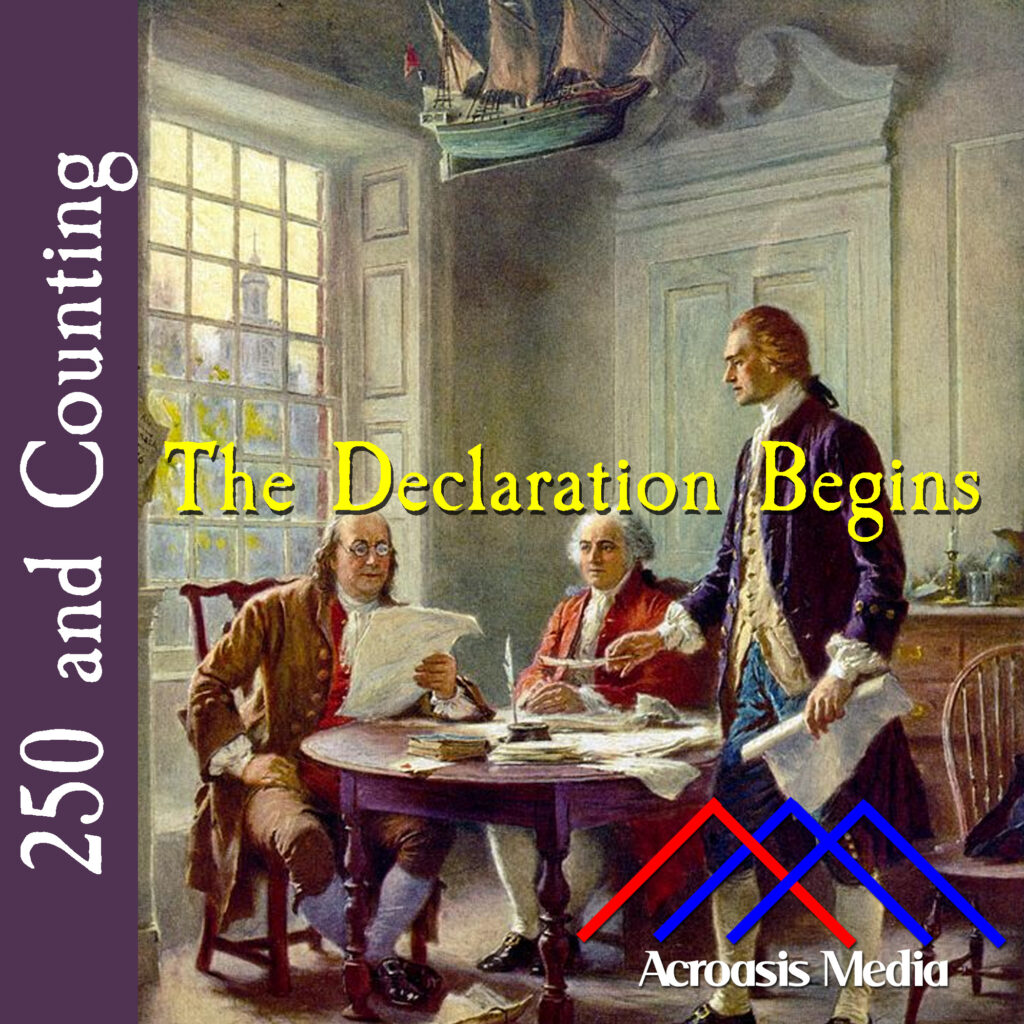
    Cover art for June 11, 1776: "Writing the Declaration of Independence 1776" by Jean Leon Gerome Ferris, 1900. via Wikimedia Commons.

    After temporarily tabling the Lee Resolution, which called for our independence from Great Britain, the Second Continental Congress identified its Declaration Committee. Five men were chosen to articulate why we were asking King George to go screw himself in the politest possible terms.

    While the Committee involved five men—John Adams, Benjamin Franklin, Thomas Jefferson, Roger Sherman and Robert Livingston—most of the work fell to three of them: Jefferson, Adams and Franklin. Jefferson spent a few days working on the first draft in isolation, then Adams and Franklin began reviewing and revising his work.

    The Declaration Committee worked steadily for over two weeks before presenting their finished product to the Congress, though John Hancock did get to see an earlier draft.

  • The Address That Didn’t Happen–May 29, 1776

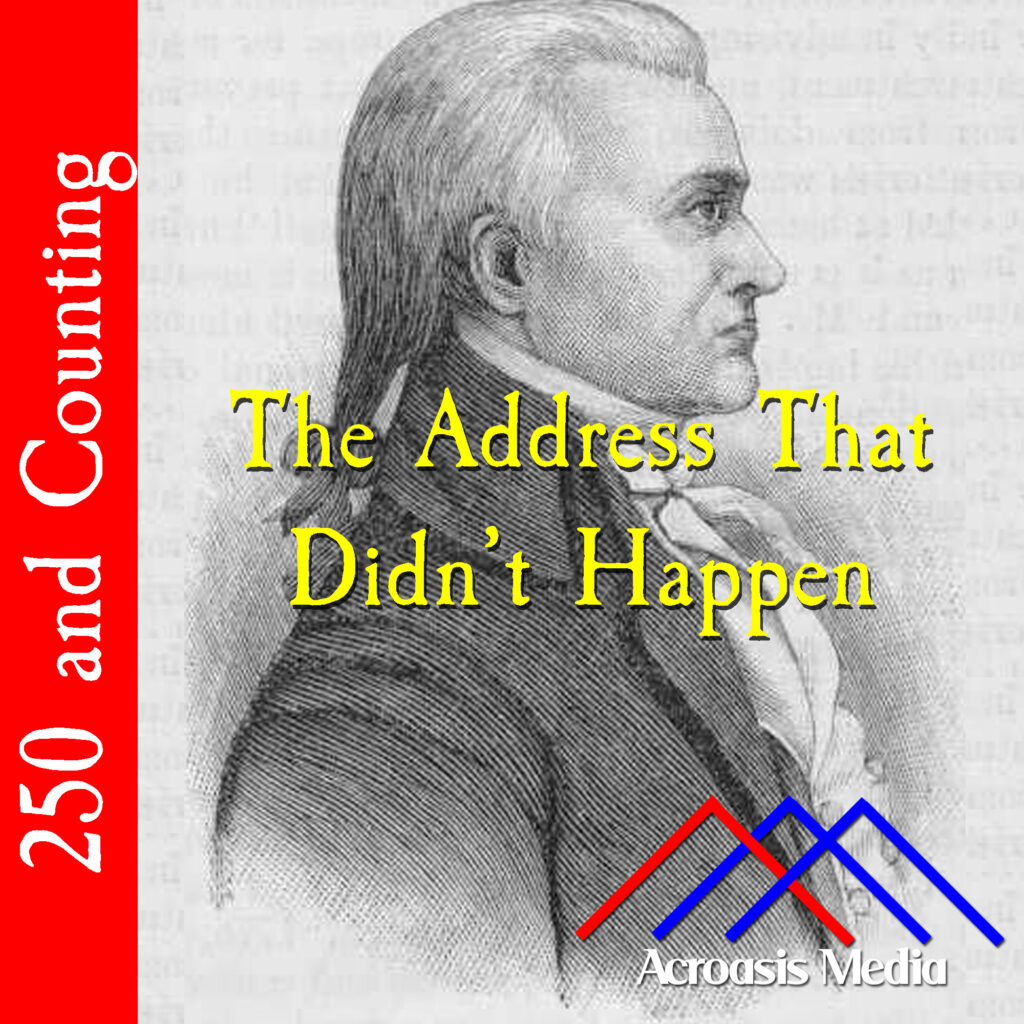
    Cover art for May 29, 1776: Portrait of Caesar Rodney, possibly by John Thomas Scharf, circa 1888. There are no contemporary portraits of Rodney known to be extant.

    While the Second Continental Congress always had a lot going on, not creating “an animated address” to make the Independence movement appearent to everyone seems like an odd failure.

    But sure enough, when it was recommended that such an address be created, this specific committee came up with nothing. Other committees appear to have presented addresses without problems, and many delegates worked on multiple committees, so was this an oversight? Was it overwork? Or perhaps the need to actually write a Declaration of Independence obviated the need for creating “an animated address”?

  • Thomas Jefferson’s Origin Story–May 14, 1776

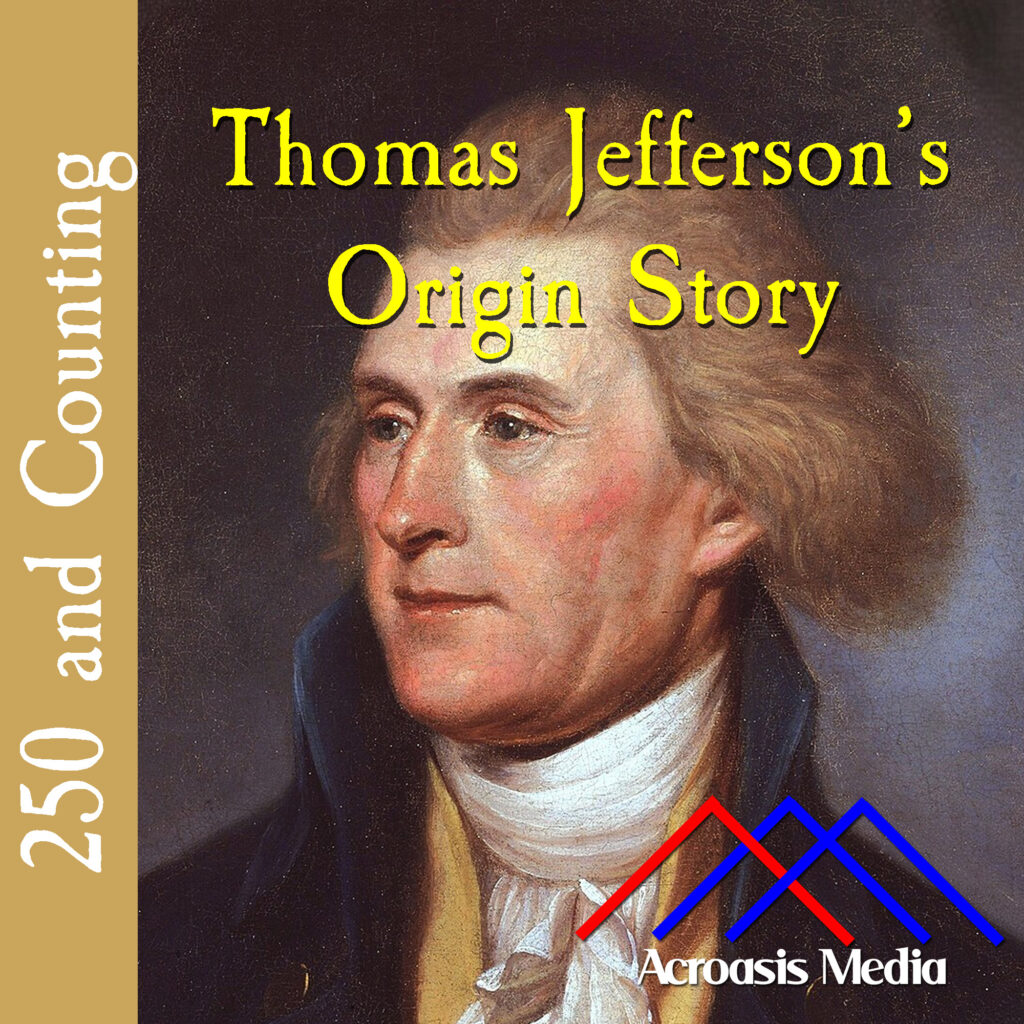
    Cover art for May 14, 1776: Portrait of Thomas Jefferson in 1791, by Charles Willson Peale. Now hanging in Independence Hall.

    Thomas Jefferson gets most of the credit for writing the Declaration of Independence, but Thomas Jefferson’s background clearly informed his writing of that document. That’s what Mike talks about in today’s episode.

    In this space I’d like to tell you a little about Declaration House. The building was newly erected at the time Jefferson rented out a room from its builder, a bricklayer named Jacob Graff (which is why it was originally called the Graff House, go figure).

    Jefferson lived in the space with his 14-year-old enslaved valet, Robert Hemmings. Between 1776 and 1883, the house underwent several remodelings until it was finally torn down. It was reconstructed in 1975 by the National Park Service, and when it’s open, it has some museum exhibits on the first floor along with a short film about the drafting of the Declaration. The second floor is a reproduction of the space Jefferson used, containing period furnishings.

    As this is published, the site has been closed to the public since 2025 as part of a comprehensive rehabilitation project.

  • Farewell, Mother Jefferson–March 31, 1776

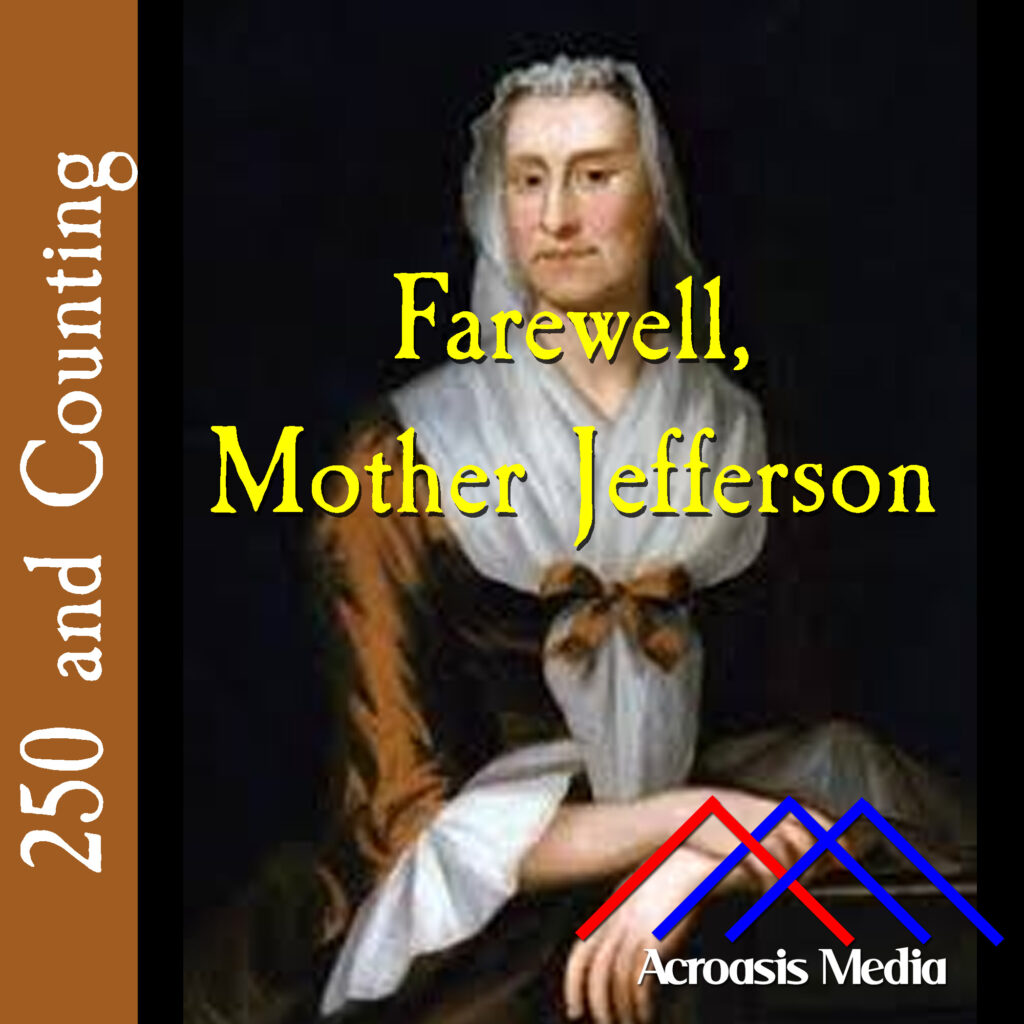
    Cover art for March 31, 1776: to be fair, this image has been identified as being one of several women, but Jane Randolph Jefferson comes up more often than others, so we're sticking with it.

    In discussing the life of Jane Randolph Jefferson, I mentioned during the episode that Thomas Jefferson rarely discussed her.

    This is not, however, to suggest that he lacked affection for her, or that he was somehow ashamed of her. There are family remembrances and contemporary biographies that show that Jane was a revered family member. It’s also worth noting that Thomas Jefferson, unlike Benjamin Franklin, was not in the habit of retaining correspondence, even with people important to him.

    Jane is credited by many historians as the person responsible for his love of music and for his writing abilities. And after all, he didn’t leave his family home until it burned down. Furthermore Thomas named his second daughter after his mother (his first was named after his wife).

  • Thomas Jefferson Has Bad News–November 29, 1775

    Cover art for November 29, 1775: portrait of Thomas Jefferson by Mather Brown, 1786.

    Thomas Jefferson wasn’t as prolific with the letters as John Adams was with his own wife (over ten thousand letters between them during the course of the Revolution!), nor as much as George Washington, but he was still a deep thinker and he did write well and with purpose.

    In today’s example he has to convey some unfortunate news to a political rival; specifically that the rival’s brother had died unexpectedly. His letter to John Randolph about Peyton’s death was rather brief and matter-of-fact. He also wrote Randolph his analysis of the battle at Hampton and the overall effect he thought it was having on attitudes in general toward Loyalists and the British. Most of this he pins on King George III, whose behavior he felt was inappropriate and is only going to push the Colonies farther away from England.

  • September 26, 1775: Commander Thomas Jefferson

    Cover art for September 26, 1775: Portrait of Thomas Jefferson by John Trumbull, 1788 but depicting Jefferson in 1776

    Thomas Jefferson was a writer, an inventor, a lawyer, a philosopher, a statesman, and of course a soldier.

    Wait, what?

    Yes, indeed. Thomas Jefferson was named commander of the militia in Albemarle County. It could be argued that the title was little more than ceremonial, but then again…Jefferson saw no combat. It’s entirely possible that his mere presence was a deterrent to the British, who wanted no part of this fierce warrior.

    It’s not likely, but it’s possible.

    OK, I’m kind of in a mood today, I admit. Go listen to Mike and his story of Jefferson the Soldier.

  • August 25, 1775: Eyewitness To The News

    Cover art for August 25, 1775: Detail of the second page of the letter that William Prescott wrote to John Adams.

    Today we take a look at two letters composed today:

    The first was an account of the activities around the Battle of Bunker Hill, from the time they were assigned to protect the hill, to the time they were finally defeated by the British—because they were out of ammunition.

    In the other letter, Thomas Jefferson composes a letter to a fellow Virginia politician in which he writes very specific prose, knowing that sooner or later it will fall into British hands. The intent was that the letter go public and let people who weren’t politicians that their leaders might not be telling the whole truth.

  • July 25, 1775: Early Drafts of History

    Cover art for July 25, 1775: Portrait of Thomas Jefferson. 1791, by Charles Wilson Peale

    First off, let me note that sometime this week we cracked the 1,000-download mark, and we have you to thank for that, especially inasmuch as 40% of that took place in the last 30 days or so. We’re grateful that you’re giving us this little slice of your life each day. We’re also happy to see that the number of daily downloads has grown, slowly but surely, so consider yourself ahead of the curve. You’ve got bragging rights, my friend.

    In yesterday’s episode, Mike teased the commandeering and re-outfitting of a British ship, but further research revealed that that took place on a different date, so we went with this short story plus my longer rant about historical documents.

    Okay…it’s not so much a rant as it is a hissy fit.

    It’s not even that. Look, just listen to it, all right?