
Category: Virginia History

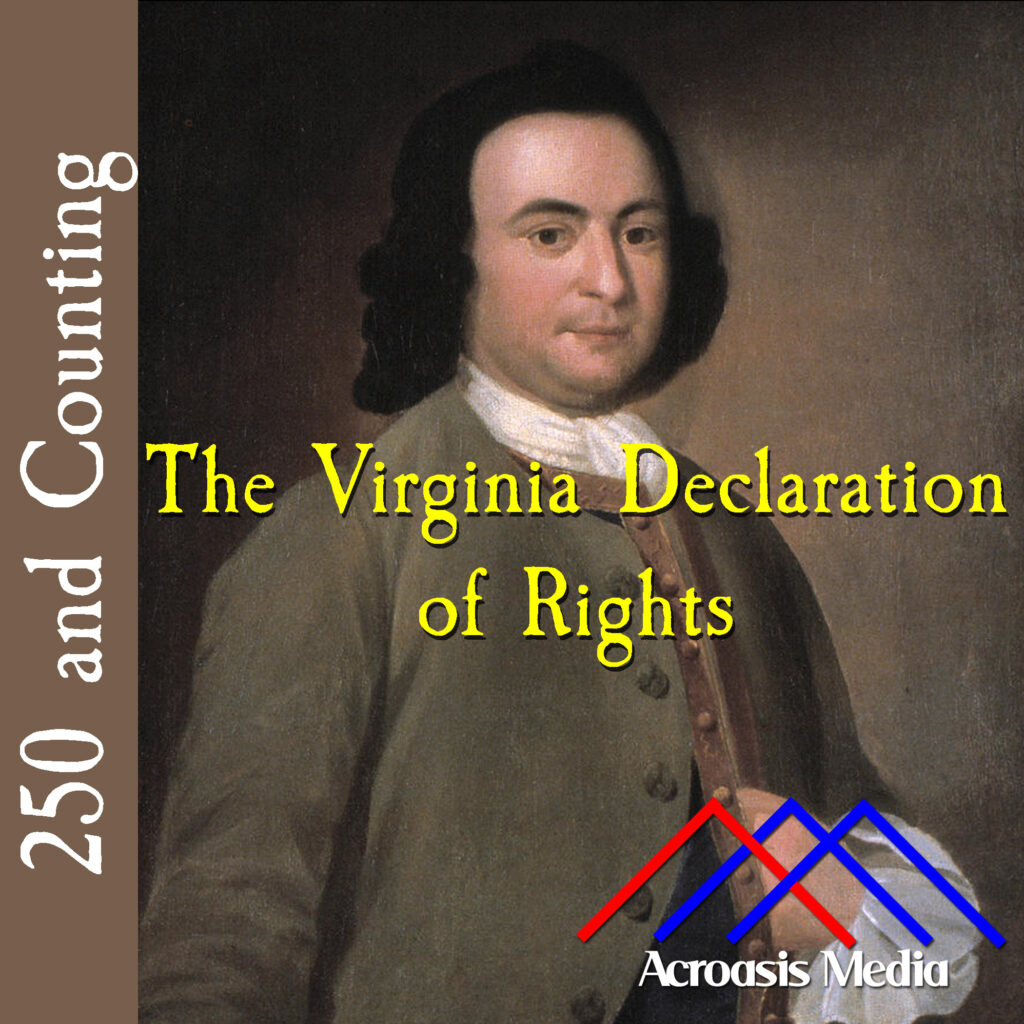
  • Letter to Virginia–April 9, 1776

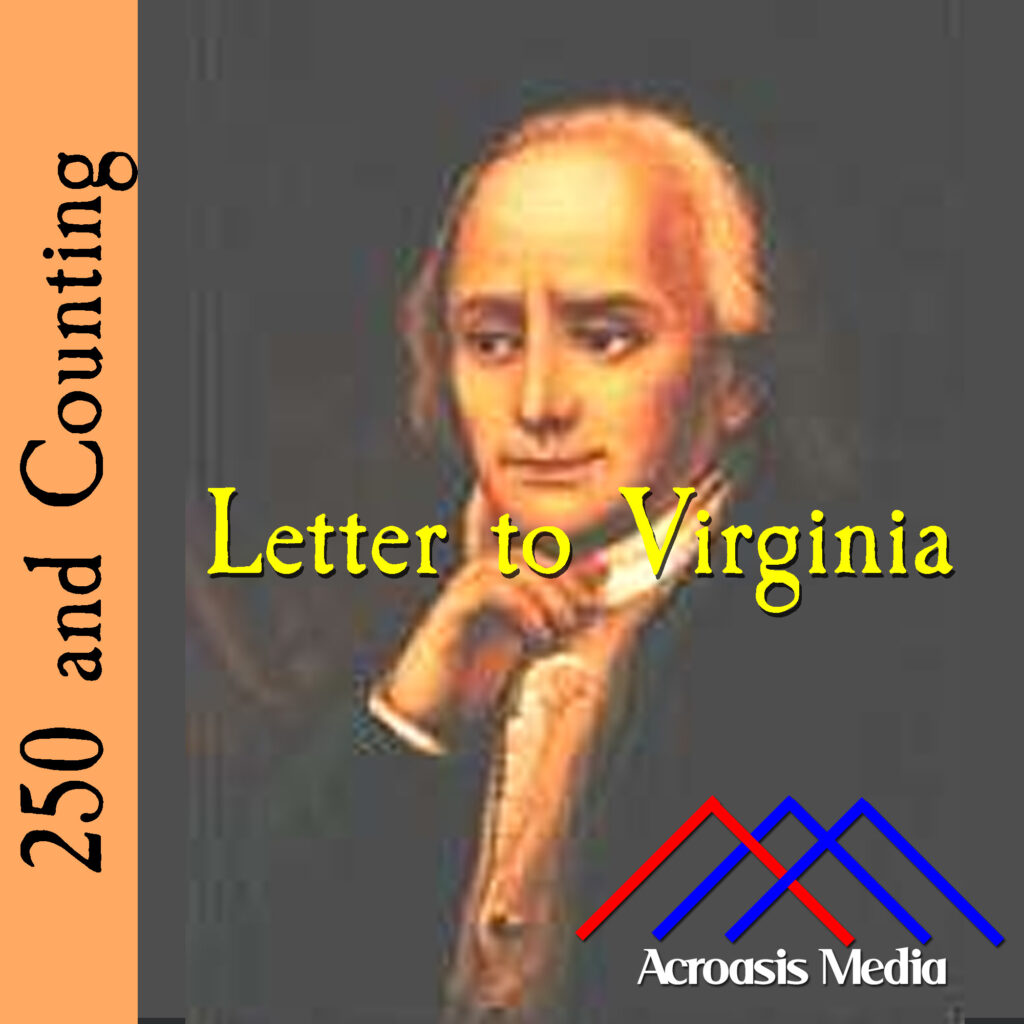
    Cover art for April 9, 1776: Portrait of Francis Lightfoot Lee by Willie Arthur Pepoon, date unknown. This is generally considered to be a definitive image of Lee, even though he died long before Pepoon was born.

    We need your love! Don’t forget to share this show with your friends. Likewise, share it with your enemies; maybe they’ll become your friends as a result.

    The Lees were a very prominent family in Virginia, connected to most major events in that era of American History. So it makes sense that Francis Lightfoot Lee sees American Independence on the horizon, and that it was Richard Henry Lee who first put the question (or, as the Founding Fathers wrote it, “The Question”) before Congress.

    Incidentally, it’s worth noting that Francis and Richard were the only brothers to sign the Declaration of Indepenence.

  • Farewell, Mother Jefferson–March 31, 1776

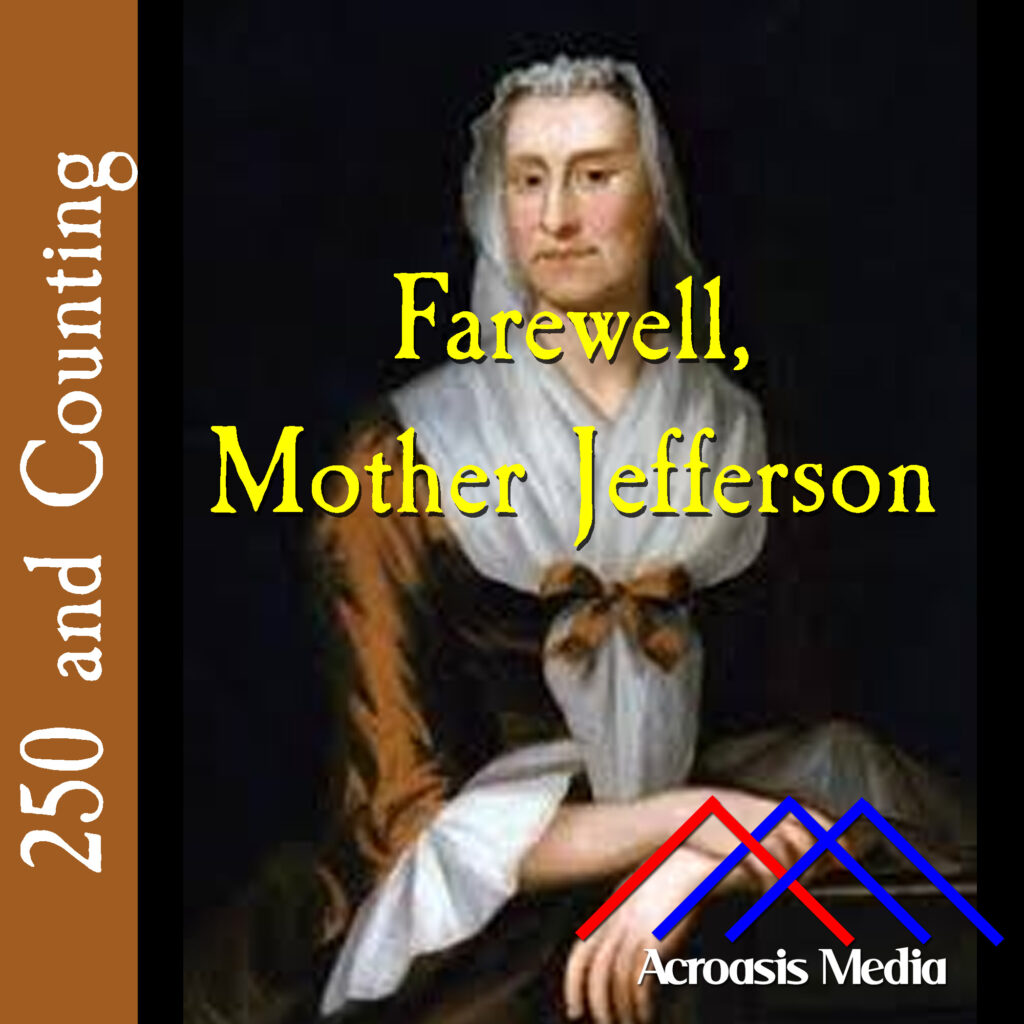
    Cover art for March 31, 1776: to be fair, this image has been identified as being one of several women, but Jane Randolph Jefferson comes up more often than others, so we're sticking with it.

    In discussing the life of Jane Randolph Jefferson, I mentioned during the episode that Thomas Jefferson rarely discussed her.

    This is not, however, to suggest that he lacked affection for her, or that he was somehow ashamed of her. There are family remembrances and contemporary biographies that show that Jane was a revered family member. It’s also worth noting that Thomas Jefferson, unlike Benjamin Franklin, was not in the habit of retaining correspondence, even with people important to him.

    Jane is credited by many historians as the person responsible for his love of music and for his writing abilities. And after all, he didn’t leave his family home until it burned down. Furthermore Thomas named his second daughter after his mother (his first was named after his wife).

  • Another Washington in Uniform–February 25, 1776

    Cover art for February 25, 1776: portrait of William Augustine Washington, ca. 1795, by Rembrandt Peale. via WIkimedia.

    I mention in today’s episode that William Augustine Washington lived on a Virginia plantation he’d inherited, and that his first house burned down.

    The second house he moved to, on the same property but a mile away (yow!), was called Blenheim. Washington used some of the bricks from the original house to add on to the Blenheim house, but he also used a bunch of them to start on a house and barn on a separate property.

    What a thrifty fellow!

    For what it’s worth, Blenheim is still standing and is on the National Register of Historic Places. You may be able to see it from the street but it is privately occupied and not open to the public.

  • Our New Man in Virginia–February 23, 1776

    Cover art for February 23, 1776: engraving of Carter Braxton by Ole Erekson, ca. 1876. via the Library of Congress.

    Carter Braxton was born into money, as his grandfather was probably the wealthiest man in Virginia. This gave him the “in” he needed to become a gentleman farmer and a public official.

    In 1761 he was elected to Virginia’s House of Burgesses, and in 1769 he was a signatory to the Virginia Resolves, which protested parliamentary interference with colony affairs. While he was a Patriot at heart, as 1776 rolled around and he replaced Peyton Randolph as one of Virginia’s delegates to the Continental Congress, he thought that independence from England was a little premature, but he did sign the Declaration of Independence when the time came. Not long after that he returned to Virginia and resumed his term in the state legislature.

    Carter Braxton had some notable progeny. His second great-grandson was William Tyler Page, composer of the Amercan’s Creed, which reads:

    I believe in the United States of America as a government of the people, by the people, for the people; whose just powers are derived from the consent of the governed, a democracy in a republic, a sovereign Nation of many sovereign States; a perfect union, one and inseparable; established upon those principles of freedom, equality, justice, and humanity for which American patriots sacrificed their lives and fortunes.

    I therefore believe it is my duty to my country to love it, to support its Constitution, to obey its laws, to respect its flag, and to defend it against all enemies.

    This was accepted by the US House of Representatives on April 3, 1918.

  • A More Organized War–February 13, 1776

    Cover art for February 13, 1776: a posthumous portrait of Patrick Henry by Thomas Sully, 1815. Sully was clearly cribbing much of this painting from a portrait of Captain Cook by his brother, made 20 years earlier.

    So nearly a year ago, in March 1775, Patrick Henry said “Give me Liberty or give me death.” Today the Continental Congress said “Bet,” and sent him to lead troops in Virginia.

    That was a coincidence, of course: practically anyone who showed any real leadership skills was given the opportunity to lead troops. Henry had the leadership and the oratory skills to get his troops into shape.

    We mentioned the various committees and their reports today. One of them was the committee that was directed to draft an address to the Colonies. John Dickinson wrote the first draft; James Wilson wrote the second. His version was much like the first, except he added the part about preparing for eventual separation from England. Dickinson was still mostly in denial about that but while Wilson wasn’t a strong personality, he was pragmatic in the end and figured he could see that ending coming.

  • “Which Will Be Your Choice?”–January 22, 1776

    Cover art for January 22, 1776: portrait of Francis Lightfoot Lee. Artist and date unknown, however the original painting is thought to have been created during his lifetime. This is the basis for many images of Lee.
    Portrait of Francis Lightfoot Lee. Artist and date unknown, however the original painting is thought to have been created during his lifetime. This is the basis for many images of Lee.

    Francis Lightfoot Lee is another one of those Founding Fathers who was there for much of the main action, but who doesn’t seem to get as much press as Jefferson, Franklin, Adams and a few others. That’s not to say he didn’t have any influence.

    In fact, as we learn today, he was one of the first to suggest the inevitability of a clean break with Britain. At least, one of the first to actually put it in writing, which was pretty brave considering the British habit of reading people’s mail.

  • The Burning of Norfolk–January 1, 1776

    Cover art for January 1, 1776: "Incident in the Burning of Norfolk," engraving, artist unknown. Originally appeared as an illustration in Cassell's History of the United States in the late 1870s.
    “Incident in the Burning of Norfolk,” engraving, artist unknown. Originally appeared as an illustration in Cassell’s History of the United States in the late 1870s.

    Happy New Year to you!

    The burning of Norfolk was the follow-up to the Battle of Great Bridge and the Patriot occupation of that town. Colonel Howe probably overplayed his hand with this one, and the consequences were catastrophic for the town.

    The Declaration of Independence is just a few months away, now, and (spoiler alert) the part you may be most anticipating doesn’t happen on July 4. But in the meantime, there’s lots and lots of extremely historic things for us to talk about in the run-up to the Declaration, and the immediate aftermath.

    Running through 1775, one day at a time, has been a huge privilege for us, and we hope you’ll stay with us through 1776. This was a project that I’d been thinking about for a long time, longer than I’ve known my partner, Mike Messner. And when I suggested to him that we team up, he jumped on the idea immediately. He’s been instrumental in helping with the research, with brainstorming the ideas, and with keeping me committed to the idea of actually doing a podcast that runs every single day.

    We put a couple of hours into researching, writing, recording, (sometimes re-writing and re-recording) and editing these episodes, and I hope the effort shows. Thank you so much for taking this ride with us, and here’s to the next year.

    Have a wonderful 2026!

  • Protecting the Chesapeake–December 19, 1775

    Cover art for December 19, 1775: The Fry-Jefferson Map of the Chesapeake Bay area, commissioned in 1750 and completed in 1753.
    The Fry-Jefferson Map of the Chesapeake Bay area, commissioned in 1750 and completed in 1753. This was also one of the first maps of the area that had the “North is Up” orientation.

    The Great Chesapeake Bay, which is protected by the Delmarva Peninsula (DELaware, MARyland, VirginiA, get it?) is a watershed area that is hugely important for these three states, plus New York, Pennsylvania and New Jersey.

    Because of its importance, there are sensor buoys all over the place, measuring water temperature, salinity levels, turbidity (how clear the water is), air pressure and maybe a dozen other factors. They’re connected to NOAA (National Oceanic and Atmospheric Administration), and you can actually get the data for your own research here. I’ve actually used it in the classroom to demonstrate how bad weather can affect things like salinity, or how fertilizer-laden water runoff from farms can lead to algae blooms.

    It’s been called “Chesapeake” for so long that historians and etymologists aren’t quite sure where it derives from. It could be a corruption of the Algonquin word Chesepiooc; it could refer to the Chesepian people a tribe from the modern-day Hampton Roads area of Virginia. According to Wikipedia it’s the seventh-oldest place name in the US, but they weren’t telling what #1 through #6 are.

    It’s also—especially in the 18th Century—rather hard to defend. And while the Continental Congress dragged its feet a little bit to get the Navy raised, the more-nimble Virginia Convention commissioned a few ships of their own. Their first was a ship aptly named the Patriot.

  • Washington Has Some Intel–December 18, 1775

    Cover art for December 18, 1775: A hand-colored printed halftone of a 19th-century illustration of George Washington writing at his desk.
    A hand-colored printed halftone of a 19th-century illustration of George Washington writing at his desk.

    Military Intelligence is a peculiar thing, if only because you never know where it’s going to come from, and/or what it’s going to affect.

    And that’s where today’s episode comes in, because Congress received a letter written today which detailed some plans for British military activity in Virginia. What’s surprising is that the intelligence came from…George Washington, in Cambridge, Massachusetts.

    Washington was the lucky recipient of food that had been intercepted on its way to the British folks under siege in Boston. He also received several documents outlining plans that were afoot in Virginia, and he dutifully passed them along.

    Most of it was related to Great Bridge, which had already seen some action, but it still put Congress wise to the fact that the war wasn’t only taking place in the northeast, and that military intelligence can come from anywhere.

  • The Battle of Great Bridge–December 9, 1775

    Cover art for December 9, 1775: Sketch of the Battle of Great Bridge by Lord Rawdon. Title: A view of the Great Bridge near Norfolk in Virginia where the action happened between a detachment of the 14th Regt: & a body of the rebels. Key: A. A stockade fort thrown up by the regulars before the action. B. Entrenchments of the rebels. C. A narrow causeway by which the regulars were forced to advance to the attack. D. The church occupied by the rebels. Once again, the map has North toward the bottom.
    Note once again that the map is drawn with North on the bottom. Hover to get the guide to the markers.

    The Battle of Great Bridge is a little bit overlooked these days, and more’s the pity. It was the first battle in Virginia, it was a big victory for Patriot troops, the Royal Governor and his crowd got pushed out altogether, and nobody died on the Patriot side.

    On the British side, about 100 soldiers were dead. The last time the British lost a substantial number of troops, it was at Bunker Hill, which they won. (The vocabulary word you seek is “Pyrrhic Victory.”)

    Best of all, it fueled Virginia’s moves toward independence.