This day in American History, 250 years ago.

  • August 1, 1775: The Ammunition Crisis

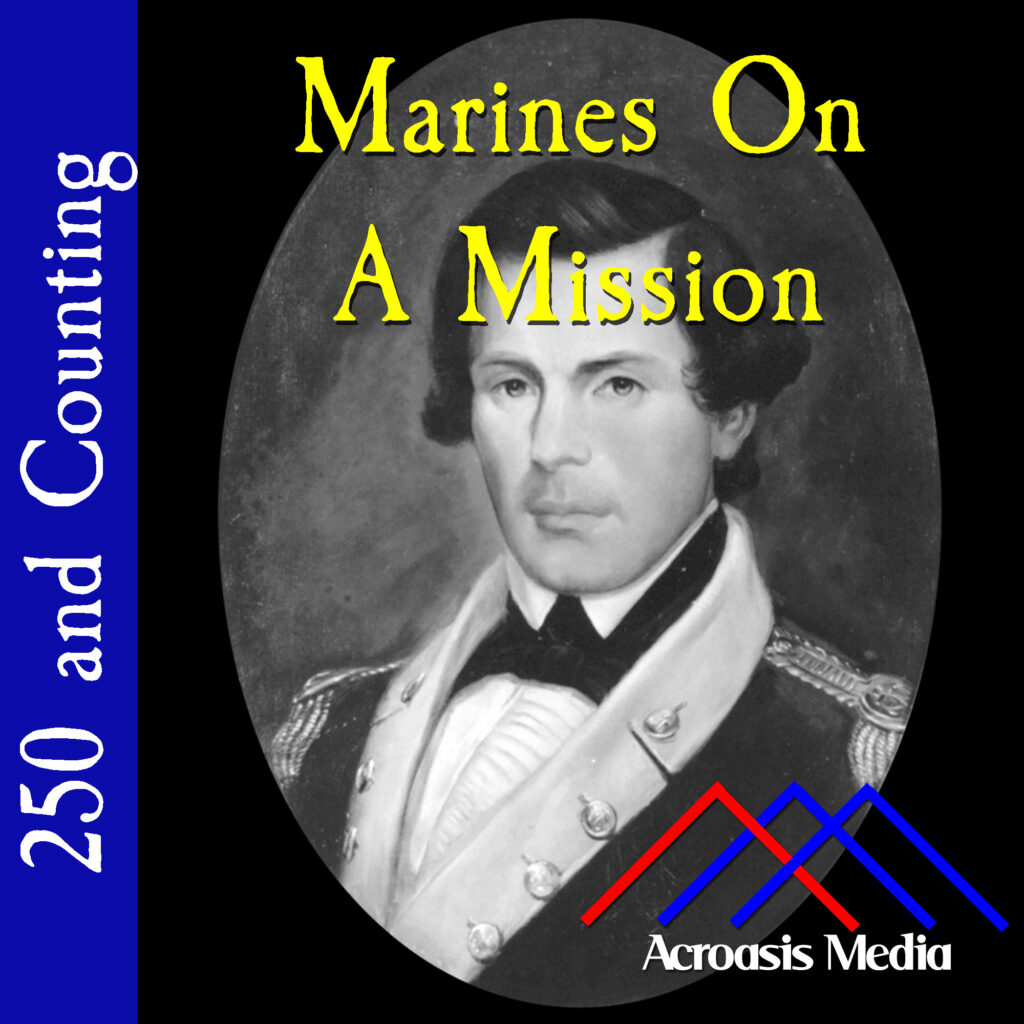
    Cover art for August 1, 1775: Portrait of Elbridge Gerry

    For those of you who are coming here from Hamilton Radio for the first time: welcome to 250 and Counting!

    Each day we spend just a couple of minutes telling you about some event that took place exactly 250 years ago today, to give you an idea of some of the events leading up to, and then beyond, our nation’s 250th birthday next year.

    For those of you who aren’t new to the show, you may remember a couple of days ago, when the British tried to break out of the Siege of Boston by launching an attack at Charlestown Neck. Their attempt failed, but George Washington and the Continental Army got very lucky, because they had no idea that they were low on gunpowder and the raw materials needed to make ammunition. In a couple of days we’ll learn what they did to address the problem.

  • July 31, 1775: Congress Responds to the North Proposal

    Cover art for July 31, 1775: Response of the Continental Congress to the Conciliatory Resolution, published in a New England newspaper in 1775.

    It’s not entirely Lord North’s fault that his proposal for securing peace took so long to get to the Colonies; messages took a long time to get across the ocean.

    It is his fault that he sent it to individual people across the Colonies, thinking he could demonstrate that the Colonies are divided and aren’t on board with the revolution.

    It’s also his fault for not counting on someone from the New Jersey delegation (in this case; it could have been any delegate) bringing the proposal to the Second Continental Congress.

    Unfortunately, before anyone on this side of the Atlantic saw it, fighting had broken out at Lexington and Concord, and the document was seen as far too little, far too late.

  • July 30, 1775: A Battle at Charlestown Neck

    Cover art for July 30, 1775: OK, we'll level with you. This is a painting of the Battle at Bunker Hill from June. There are no significant images of the battle described today.

    Boston had been under siege since Lexington and Concord. Of course the British felt that they needed to break out of it from time to time, and today was one of those attempts.

    Now, this was a success for the Continental Army, but the fact is, few people realized at that time just how close they were to losing that battle, and badly. But that’s for a couple of days from now, on August 1st.

    Coincidentally, August 1st is the day that this podcast begins airing on Hamilton Radio!

    Tune in to HamiltonRadio.net to hear our show, and a bunch of others. We’re in good company over there.

  • July 29, 1775: Law and Moral Order

    Cover art for July 29, 1775: the insignia of the Army JAG Corps and the United States Army Chaplain Corps Branch Plaque (via Wikipedia)

    George Washington didn’t have a ton of military experience when he was named Commander-in-Chief of the Continental Army. But it’s clear that he gave the position a great deal of thought as he made his way from Philadelphia to Boston. When he arrived, he clearly had a lot of ideas about what an army should look like. Furthermore, he had ideas regarding the overall structure of things and the institutions that should be in place.

    Shortly after officially taking the position, Washington began petitioning Congress for various titles and positions, and groups. And it appears that Congress recognized that his ideas had merit, because there was very little that they actively turned down. (Obviously, there were some things that they were unable to provide because of shortages here and there, but they were typically behind him.)

    And today, Washington was able to get the ball rolling on two of them.

  • July 28, 1775: Reaching Out to Ireland

    Cover art for July 28, 1775: Detail of a broadside of Congress' July 28 declaration to Ireland, as published in a Connecticut newspaper on August 16, 1775

    We told you a short time ago about a document sent to Canada by the Second Continental Congress. It outlined the reasons we got into a shooting match with Britain. It also made a point of noting that we’re not asking them to join us, but we wouldn’t complain too loudly if they did. The Canadians declined and they maintain a connection to Britain even as an independent nation. (As this is written, King Charles III is considered the King of Canada.)

    Some time later, Congress sent a similar letter to Jamaica. For what it’s worth, Jamaica is still a “commonwealth realm”, with Charles III as king. (We didn’t do an episode on that one, but it also happened around this time.)

    And on this day in 1775, Congress sent yet another letter to Ireland. The Irish also managed to stick with the Mother Country for a while, but finally broke away themselves a few years ago.

  • July 27, 1775: The Army Hospital is Born

    Cover art for July 27, 1775: Posthumous portrait of Dr. Benjamin Church, based on "contemporary description."

    The Continental Congress thought they had a strong candidate in Dr. Benjamin Church as their Surgeon General. And while Church was a generally good doctor as such, and a loyal member of the Sons of Liberty, he wasn’t especially good at leading others to do the same. This eventually turned into a big problem that came to a head in October, when George Washington needed to step in.

  • July 26, 1775: Mailing It In

    Cover art for July 26, 1775: a 2006 stamp commemorating Benjamin Franklin as postmaster, one of over 130 stamps with his image on them.

    When the US Postal Service first began, it couldn’t even be called that, since there wasn’t a US yet. There was, of course, a postal service, but it was the Crown Post and it was subject to interception and investigation, and we really couldn’t have that and a revolution, now could we?

    In fact, there were competing services to the Crown Post, but there were also gaps in that service and general inefficiencies. For instance, most services transported parcels at a lower rate than letters. So, people worked around the rule by attaching letters to small, mostly empty parcels just to save money. One service, run by a man named Benjamin Mumford, carried both Royal Mail and that of his own service, which was cheaper than the King’s rates.

    About the artwork: that’s a picture of a 2006 stamp issued commemorating Ben Franklin’s tenure as the first Postmaster General. It’s marked “B. FREE FRANKLIN” because that’s how he often signed his name while in that position. Why? Because as the Postmaster General, he had franking privileges and didn’t have to pay his own postage. It was a privilege he took great advantage of.

  • July 25, 1775: Early Drafts of History

    Cover art for July 25, 1775: Portrait of Thomas Jefferson. 1791, by Charles Wilson Peale

    First off, let me note that sometime this week we cracked the 1,000-download mark, and we have you to thank for that, especially inasmuch as 40% of that took place in the last 30 days or so. We’re grateful that you’re giving us this little slice of your life each day. We’re also happy to see that the number of daily downloads has grown, slowly but surely, so consider yourself ahead of the curve. You’ve got bragging rights, my friend.

    In yesterday’s episode, Mike teased the commandeering and re-outfitting of a British ship, but further research revealed that that took place on a different date, so we went with this short story plus my longer rant about historical documents.

    Okay…it’s not so much a rant as it is a hissy fit.

    It’s not even that. Look, just listen to it, all right?

  • July 24, 1775: A Leaked Letter From Someone Who Knows Better

    Cover art for July 24, 1775: Engraving of John Dickinson, approximately mid-1770s, from the New York Public Library Digital Collection.

    Even when it’s Mike’s voice you hear on the episode, it’s Claude who takes the blame for the episode titles.

    It wasn’t a bad thing for members of the Continental Congress to disagree, but some level of decorum was still expected from those members. And almost certainly, one of the commandments was Thou Shalt Not Trash Talk Thy Fellow Delegate. (I may have softened the language a little bit, there.)

    Still, Adams had a right to express whatever frustration he had with John Dickinson, unfortunately the letter in which he did it got intercepted by the British and publicly published; the mere suggestion that there was some dissention among the ranks of a group that typically presented its work as a united front was certainly a Big Deal.

    And it certainly didn’t grease the skids between Adams and Dickinson, nor was that rift ever truly healed.

  • July 23, 1775: John Adams Has Opinions

    Cover art for July 23, 1775: Portrait of John Adams by Mather Brown, 1788.

    John Adams wrote to his wife twice on this day in 1775. What did you do for your spouse that was such a big deal?

    In these letters, the sparks don’t fly the way they do in many others, but the affection he feels for her is still present nonetheless. That he took the time to write a second, more thoughtful letter after dashing off the first one is a nice measure of his esteem for her, and his ability to use her as a sounding board, even when she’s 300 miles and several days’ travel apart.